Anarchy in India

4%

Pacific Press Publishing Association · Mountain View, California · Mar 31, 1909

FromSigns of the Times, Vol. 36, No. 13.

Read the full edition

Anarchy in India

Senate House, Madras, India.
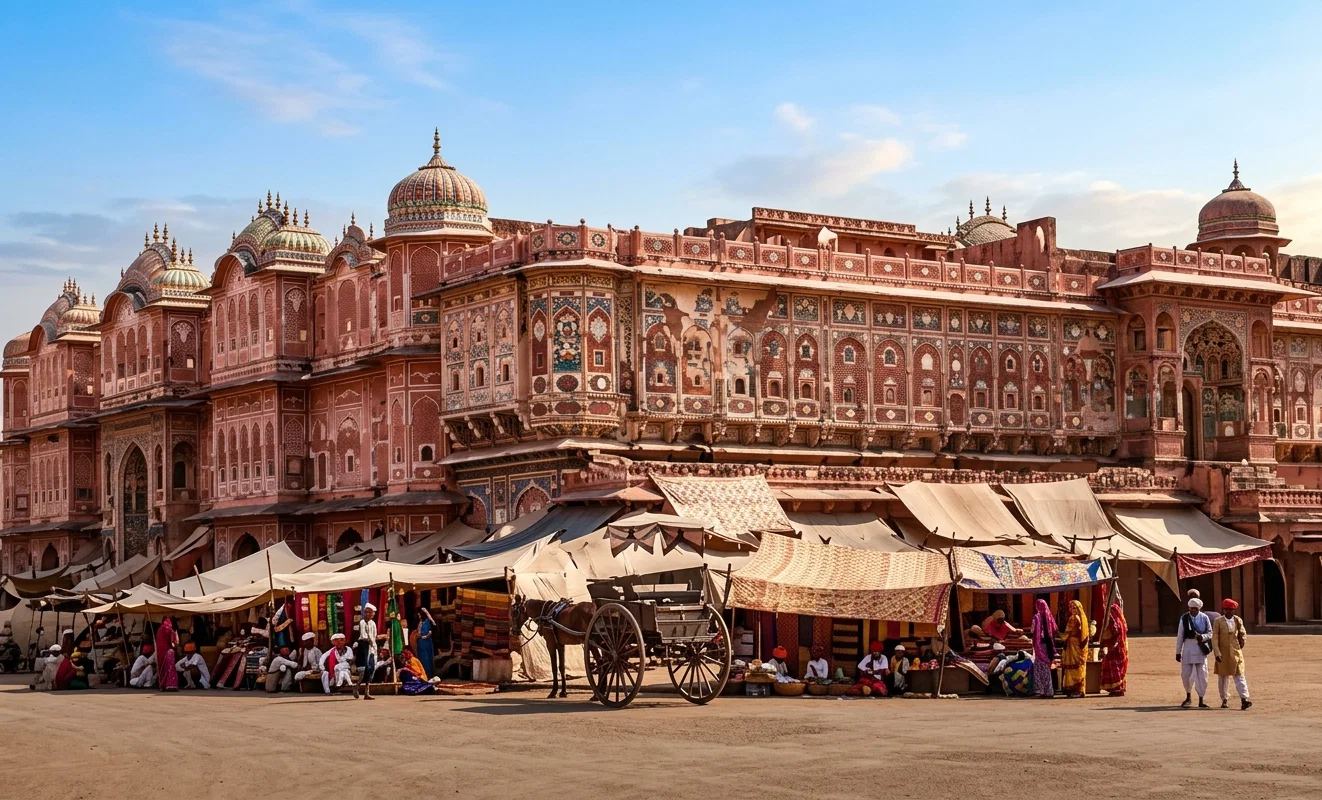
Palace, Jeypore, India.
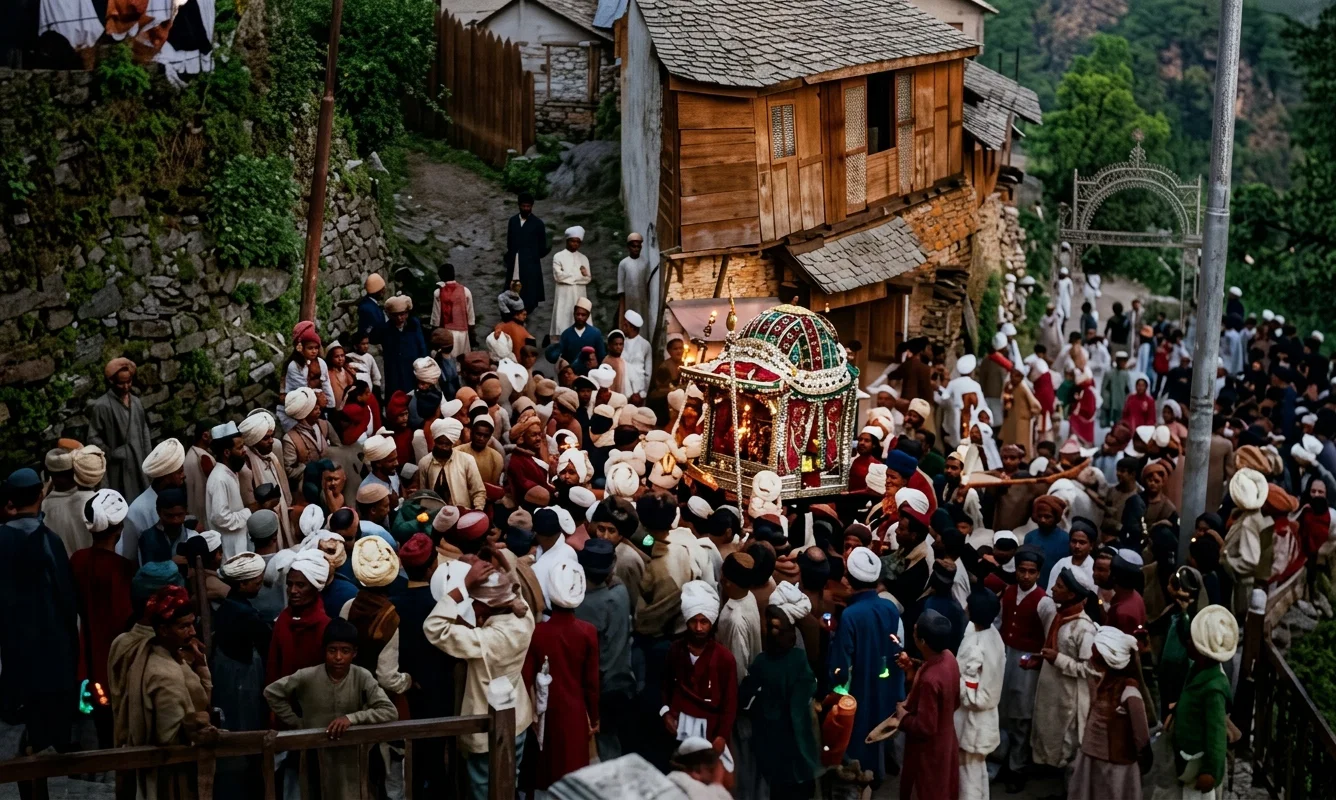
The Mohurrum, a Mohammedan Religious Procession at Mussoorie, India.
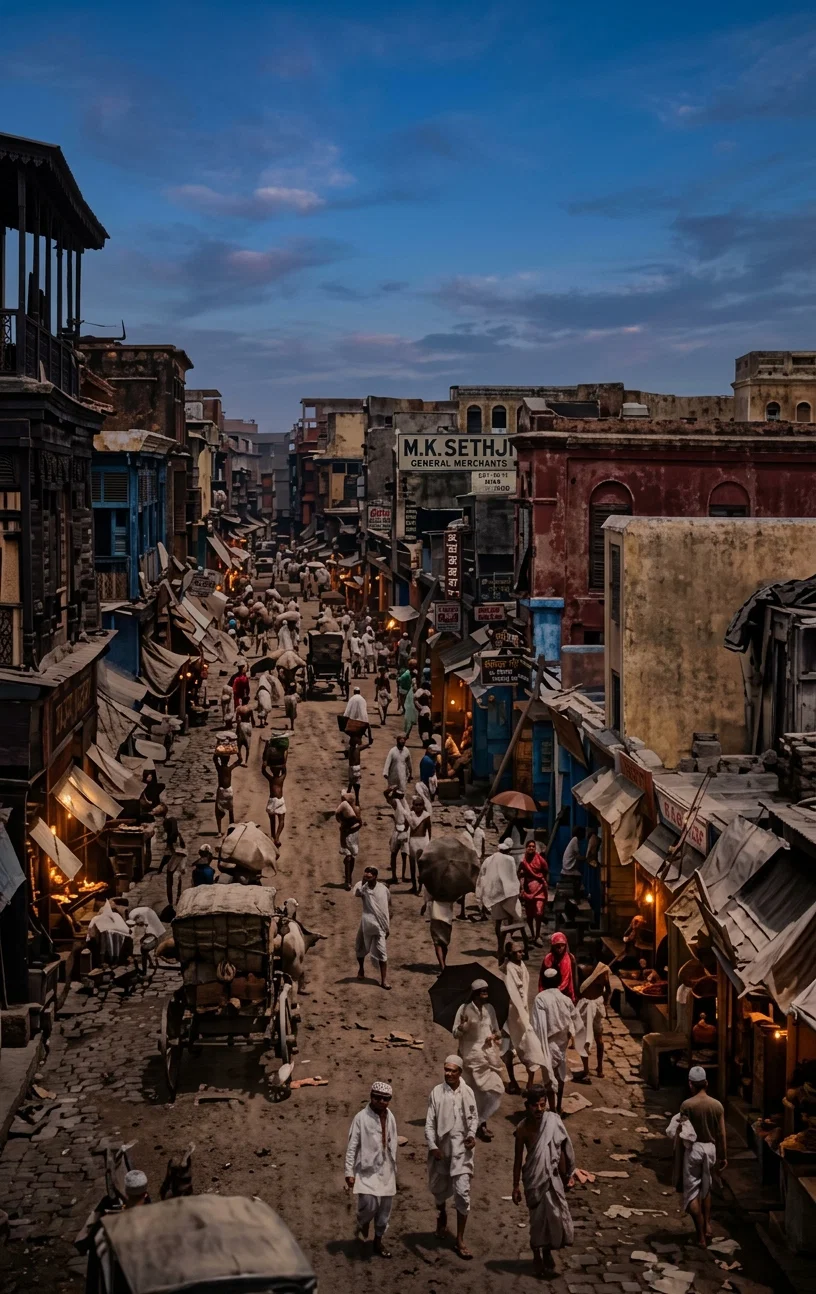
Calcutta, Burra Bazaar.
England is not having an easy time. First of all, she feels it necessary to keep up her tremendous war burden; to keep a navy that is up to date and equal to any other two European powers. This is a tremendous load on her resources.
Secondly, she formerly manufactured for the world, and especially for her colonies. These colonies are becoming powers in the world themselves now and are manufacturing for themselves, as to a greater extent is all the rest of the world.
Thirdly, Germany through selfishly wise laws has been able to carry a great deal of British manufacture and trade. She has taken English discoveries, inventions, and patents, manufactured them in Germany, and is selling them in England cheaper than England can make them. These conditions have brought great hardship upon the working classes in England, and the result is thousands upon thousands out of work, seemingly with little promise for work in the future.
This discontent does not stay at home. It would not be so bad if it did, but it spreads to other parts of the great Empire. One of the quarters that is feeling it now perhaps as much as any is India, represented in some parts to be great hotbeds of seething unrest and agitation.
We have been repeatedly told that there are two powers in the earth that are fostering this condition of things in India. One of these is Russia on the North through her secret agents, and the other is Japan from the Northeast, sending her emissaries down through China and Tibet, and working among the disaffected tribes subject to England, and in the principalities which are independent. For there are really but few English controlling the great territory and nations and principalities and tribes of India. If these Indian tribes and principalities were coherent and homogeneous, they would soon sweep English rule out of existence, and control the situation. Fortunately for England, this is not the case. India herself is divided into various idolatrous sects and cults, and there seems to be little if any tendency to unite their forces; yet the uprising and the constant ebullitions of rebellion against proper authority have indeed a menacing tone.
Not long ago four rebels were executed, and from all reports they were eminently worthy of it. Yet the Socialists of India, and the friends of those who died are counting them as martyrs to a noble cause for the freedom of India.

Difficulties in Governing.

India is a difficult country to govern. The system of caste divides it into as many different peoples as there are castes, and these have no union with each other. Corrupt though England's administration may have been at times in the past, and seemingly unjust though it may be in some particulars, yet at the same time it is a thousand times better than Indian rule would be. Among the most cruel, heartless landlords and rulers in the great times of famine are natives. While on the other hand among the most sacrificing, benevolent and kind are the British who are there. Notwithstanding all that India suffers she suffers less now than she did under Indian rule.
There is one scholarly Indian just now residing in Paris, issuing a paper called “The Indian Sociologist,” and yet sending it throughout all England, sowing constant seeds of rebellion against the British government, so that we are told from those who live in India that some of the worst revolutionists who are there are Indians who are receiving their education in England.
Presumably the Irish question does not help matters. It could hardly be believed that the constant agitation and difficulties between Great Britain and Ireland would be calculated to engender peaceful sentiment in the hearts of those East Indians who were receiving an education in London. This paper has openly advocated raising monuments to the four criminals and bomb-throwers who were recently executed in India.

A Religious Basis.

The center of this movement in India seems to be within and around Calcutta. There seems to be a religious basis in all this agitation. The London “Times” of March 1 remarks: “Nobody who knows anything of Hindu [religious] beliefs will fall into the error of supposing that this spirit is on that account a moral spirit. The Hindu pantheon is comprehensive, and amongst the powers which it includes are those of evil as well as those of good. It is not a little significant to note which are the deities whom the Extremists, and large numbers of the reformers who would refuse to describe themselves as Extremists, have selected for the special cult conducted in connection with the movement. [That is, the anti-British movement.] It is to Kali, the terrible goddess of death and destruction, to whom they pay particular homage. It is in the precincts of her great temple at Calcutta that the agitators have held their chief political meetings. It is she whom many of them invoke with the equivocal cry of ‘Bande Mataram.’ No fitter deity could be chosen as the patroness of anarchists.
“Not less remarkable is the revival and the spread into Bengal of the worship of Sivaji. The name of the great Mahratta conqueror was for generations a name of terror in that land. Bengali mothers used it, as readers of Macaulay will remember, to terrify their unruly children. Why is Sivaji’s memory now celebrated with divine honors in the province which he and his hordes used to plunder and devastate with all the horrors of Eastern warfare year after year? The explanation is not far to seek. It is from Poona, the old center of Mahratta greatness, that the Extremist movement is inspired and guided. It is amongst the Decani Brahmins that the brains which organize it are to be sought. The worshipof Sivaji and of Kali are strange symptoms in an agitation which is recommended to ‘advanced’ thinkers in Europe on the pretense that it is liberal and progressive, which glibly uses all the catchwords of Western democracy, and which purports to be intent upon the moral and intellectual regeneration of India.”

Oriental and Occidental.

This movement, “The Times” tells us, is different from earlier movements. Those earlier movements were purely Oriental, but this movement, in all but its religious connections, is admittedly borrowed from the West. “It represents an attempt to graft Western ideas and Western methods on an Indian stem. Anarchism, in its modern shape, is a distinctive and characteristic disease of Western societies; but it seems not impossible that the poisonous growth, once transplanted into Eastern surroundings, may prove to be even more venomous than in its earlier home.”
These anarchists, we are further told, “pore over a Russian manual of anarchy. They choose, as the Russian anarchists do, weak and hysterical natures as their tools. They slavishly copy Russian and Irish systems of political propaganda. They circulate the same kind of malignant and carefully fabricated falsehoods against the authorities. They indulge in the same sophisms. They employ the same weapons, and resort to the same devices.”
The strength of this movement “The Times” does not attempt to estimate. It has permeated to quite an extent all grades of society, and numbers among its sympathizers all gradations of discontent and rebellion. The great London paper intimates that it has taken for its working theory a formula suggested by the late Mr. Parnell, quoting from him as follows: “A true revolutionary movement in Ireland should in my opinion partake both of a constitutional and an illegal character. It should be both an open and a secret organization, using the Constitution for its own purposes, but also taking advantage of its secret combination.” And we may remark that that is true Jesuitic casuistry. “The Times” continues: “It is doubtless this combination of the open and the secret, of the constitutional and the illegal, which so long hid from the police and from the authorities the real nature and extent of the anarchist movement. They did not discern the inner organization within the ample bounds of the far larger bodies which surround it in concentric rings. What may be the true relation between those rings remains to be discovered.”
What makes it seem that the movement is far larger than a limited inner circle, is the fact that so very few among the prominent Indians express their abhorrence in unmistakable terms of the deeds which have been committed; and none of their leaders have taken any prominent part in assisting the authorities to detect and extirpate the inner conspiracy.
Doubtless there have been grave mistakes made in India by the men who have ruled in behalf of the Court of St. James. It would be inconceivable that it could be otherwise. The training, environments, education, race-instinct, religion of the rulers, have been cast in such entirely different molds from those of the ruled that it is a constant wonder that England has done as well as she has. It is really not a question as to whether any other power on earth could have done so well. Much as England may be disliked by rival powers and people of rival nations, she has without doubt given a better administration over the foreign elements of her kingdom than could any one of the nations that so cordially condemn her.
Looking at the great field in the light of fulfilling prophecy, one can easily see that these uprisings and outbreakings in India, taken in connection with the wonderful military progress of Japan and the complete reorganization of the Chinese Empire, are the beginnings of the risings of the kings of the East which will some day meet the kings of the west in the great Battle of Armageddon in the historic Holy Land.