Federal Council of the Churches of Christ in America
By W. H. Heckman
Held in Philadelphia
Dec. 2 to 8, 1908
From Our Own Correspondent
[This report is from an experienced Gospel minister, a president of a conference, one fitted by experience to weigh principles and measures. It deals with a subject of not only nation-wide, but of world-wide importance. — EDITOR.]
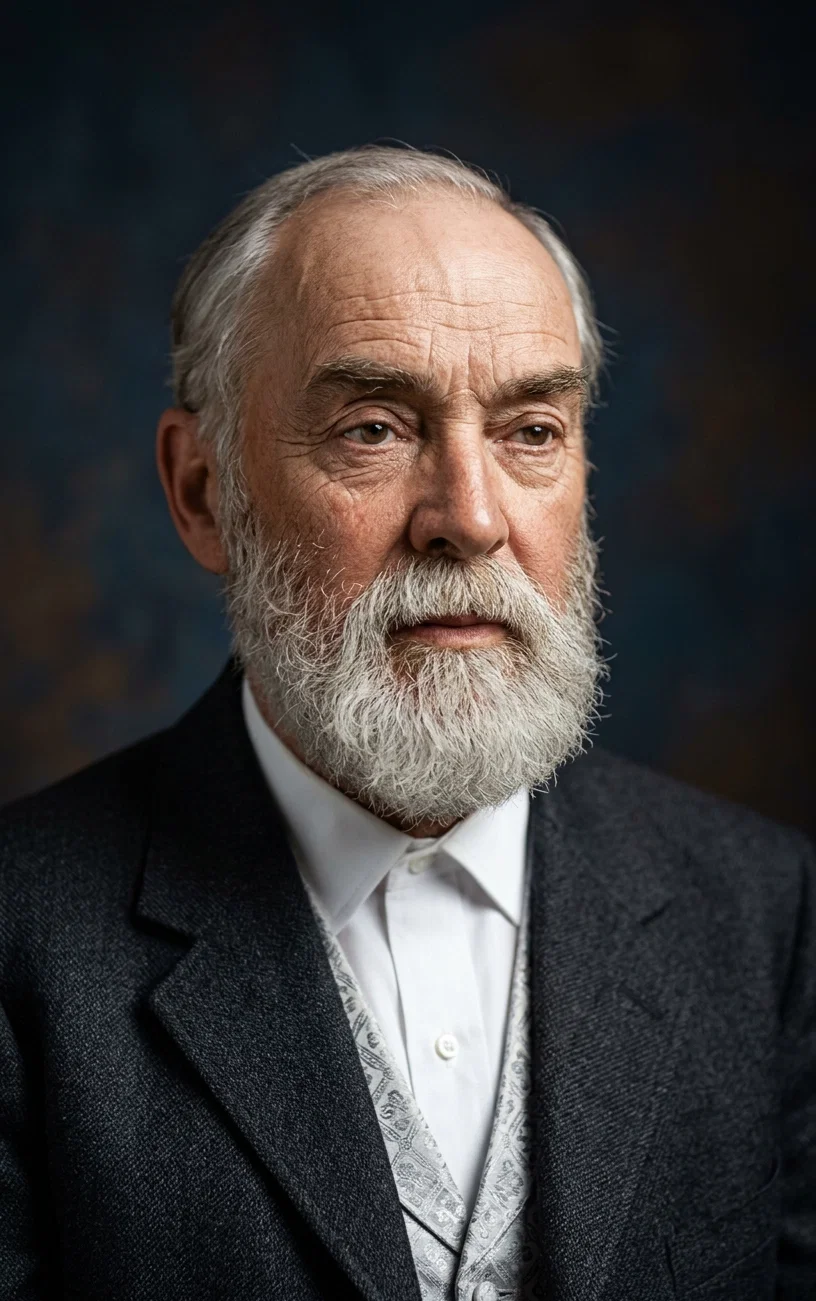
Rev. W. H. Roberts, D.D., Chairman.
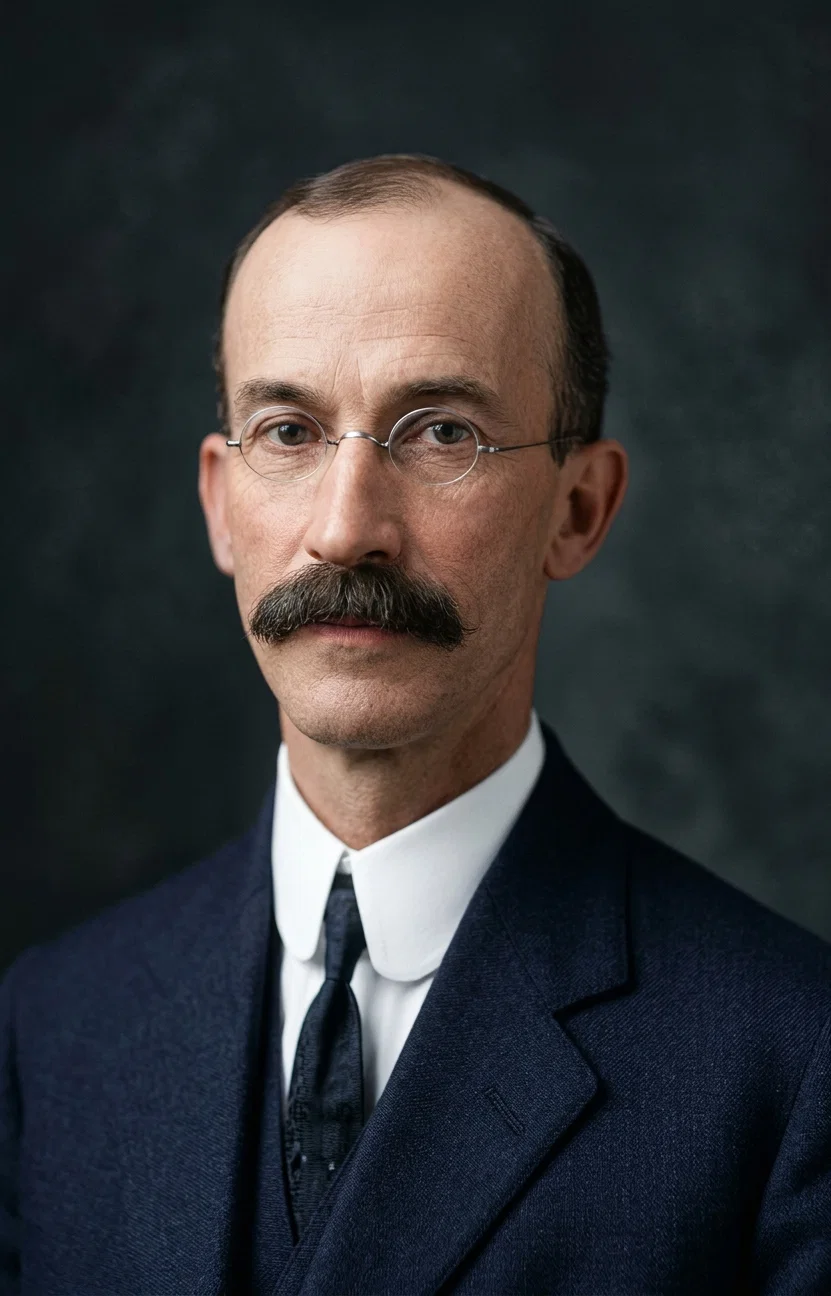
Rev. L. B. Hafer, Secretary.
Lyric Theater, Philadelphia, where a part of the meetings were held.
American Academy of Music, Philadelphia, where the opening meeting was held.
One of the most important and significant events in the religious world took place in the city of Philadelphia, Dec. 2 to 8, 1908, when for the first time in the history of Protestantism there convened a large body of delegates chosen by the highest legislative bodies of over thirty denominations, representing eighteen million adult communicants, and fifty million adherents. It marked a new era in American church history, for at this time the dream of the religious thinkers of the nation for many years became an accomplished fact; namely, “The Federation of the Churches of Christ in America.”
Like the other great confederacies of our day, this one can only be explained in the light of Biblical prophecy. During the past decade the most gigantic combinations among capitalists and among laborers have been effected. A few years ago the American Federation of Catholic Societies was formed, and now, behold, to cap the climax, we see launched this new combination—a union of Protestant churches in America.
A Representative Gathering.
That the federal council did not act unadvisedly in its deliberations is evinced by the fact that there were present hundreds of the most distinguished churchmen—recognized leaders in religious thought, including bishops, famous evangelists, secretaries of church boards, presiding elders, professors of colleges, and editors of religious journals,—who carefully discussed the various resolutions presented for their consideration and decision.
The Purposes of the Federal Council.
The chairman, the Rev. W. H. Roberts, D.D., LL.D., at the great opening meeting in the Academy of Music, in his introductory address, first outlined the history of the movement of which this council is the consummation, and then in speaking of the character, purposes, and spirit of the organization, among other things said:
“We believe that the great Christian bodies in our country should stand together, lead in the discussion of, and give an impulse to, all great movements that make for righteousness. We believe that questions like those of marriage and divorce, Sabbath desecration, foreign immigration, modern industry, the moral and religious training of the young, indeed, all great questions in which the voice of the churches should be heard, demand their united and concerted action if the church of Christ is to lead effectively in the thoro Christianization of our country.”
And so throughout the entire council, the striking feature of the speeches was a mighty appeal, not to get together on differences in doctrines and rituals, or governmental forms, but for unity on certain reforms as the maintenance of the “Christian Sunday,” the relation of labor to capital, temperance, the moral and religious training of the young, etc.
A Significant Statement.
In the speeches made for this unity, if there was one statement more significant than another, we must credit it to the Rev. Dr. Arthur S. Lloyd, general secretary of the Domestic and Foreign Missionary Society of the Protestant Episcopal Church, who said:
“THERE NEVER WILL BE ANYTHING LIKE UNITY UNTIL THE GREEK AND ROMAN CHURCHES UNITE WITH US.
“The Roman church has its old traditions which are hard to break down. But some of the greatest minds in these bodies are now thinking on this question.”
Bishop Rudolph Dubbs of the United Evangelical Church evidently saw danger in such a union, for the following day, in speaking to a certain resolution, he became very eloquent and took occasion to say the following, “I do not want to see absolute unity, and hope the day will never come when we will have a Protestant-Roman Church.”
Danger in Federation.
There is no question but what the majority of those who spoke in favor of these reforms were well-balanced, well-meaning men; men who have the interests of humanity at heart and who realize that in unity there is greater strength and the possibility of more successful warfare against wrong-doing.
But there is a danger in the federation of churches even in the matter of presenting a united front to all influences that are unmoral and unspiritual, which does not appear on the surface—the danger that these very same sincere and conscientious men, in their zeal and enthusiasm to obtain certain reforms, will seek the arm of the state in securing them.
That this conclusion has not been reached without well-authenticated facts upon which to base it, will clearly be seen from the following significant statement by the president of the council and the resolutions which were discussed and adopted.
Dr. Roberts in an interview given to the Philadelphia “Evening Bulletin” said that the11churches are losing their hold on the people, and the church federation will enable the churches to retain their hold. He says:
“For instance, our action on Sunday labor will be put on an economic basis. We will try to have the Sabbath as a day of rest established by law for the same reason that it is established by law in France—the need of the working men for a day free from toil.”
Cooperation in Mission Work.
Among the significant resolutions adopted, was that on “Cooperation in Home Mission Work.” This practically gives the federal council or its executive committee, through its various local federations, a grand monopoly of the United States in missionary endeavor. They are to decide which communities are overchurched and relieve them, and supply unchurched communities. Joint committees are empowered to hold mass meetings and to take such action as they may deem expedient in the interests of the federated home-mission work.
The resolution on “Cooperation in Foreign Missions” was presented by Rev. Dr. James L. Barton of Boston, corresponding secretary of the American Board of Commissioners for Foreign Missions, in which a much more liberal policy was set forth, recommending even the elimination of denominational distinctions and the establishment of single native national churches composed of all denominations.
Such a policy, as can readily be seen, put to full operation, would abridge the inherited and inherent rights and liberties of individuals and religious bodies differing with the federation of churches. No matter how essential to the people at large the truths preached and practised by others, this federation, if dissenting, will be prepared “to take such action as they may deem expedient in the interests of” their “work.” With the tremendous influence behind this religious union—18,000,000 members and 50,000,000 sympathizers—what opportunity will the minority have to promulgate its doctrines if considered peculiar? And yet there have been times when God’s truth was with the minority. This aspect of the picture is not hard to foresee by those who know the prophecy of Holy Writ respecting this very movement.
Council Indorses Crusade of Labor.
“With a view to an increase of power and of results in all Christian work,” special overtures, by way of an invitation to unite with the church in its work, have been made to the labor organizations. At a mass meeting on Sunday afternoon, twenty-seven labor organizations were represented. It may be of interest to state in this connection the fact that the chairman of the meeting, Mr. Dennis A. Hayes, fifth vice-president of the American Federation of Labor, is a Roman Catholic. Mr. Hayes urged the labor men “to appreciate the stand the church had taken,” and to show the same by supporting the church in its battle for souls. The labor union represent a constituency of 2,000,000 members.
The resolutions adopted by the federal council, in its purposes to aid the labor unions, certainly contain many excellent declarations, among them being the following: “The Abolition of Child Labor,” “The Suppressing of the Sweating System,” “Abatement of Poverty,” etc., all of which appeal to every true-hearted Christian. Yet, beneath it all, it does not require special prophetic insight to observe that the church is depending very materially on the support of union labor to secure a legal Sunday; for when Dr. Frederick D. Power brought in the report on Sunday observance, he expressed appreciation of the efforts made by the American Federation of Labor to safeguard Sunday as a day of rest, and also of the work of the National Drug Association to have the sales of drugstores confined strictly to medicines. But the enforcement of such a law will abridge the freedom of those it is supposed to liberate. The outcome of ENFORCED SUNDAY IDLENESS is written on the pages of history of the fourth and fifth centuries. A recurrence of those experiences is before the working men of the 20th century.
W. H. HECKMAN.
[The second article from Mr. Heckman will report the action of the council on the matter of sabbath observance and the attitude of the council regarding religious liberty.]