Calamities in Japan

7%

Pacific Press Publishing Association · Mountain View, California · Dec 15, 1909

FromSigns of the Times, Vol. 36, No. 49.

Read the full edition

Calamities in Japan

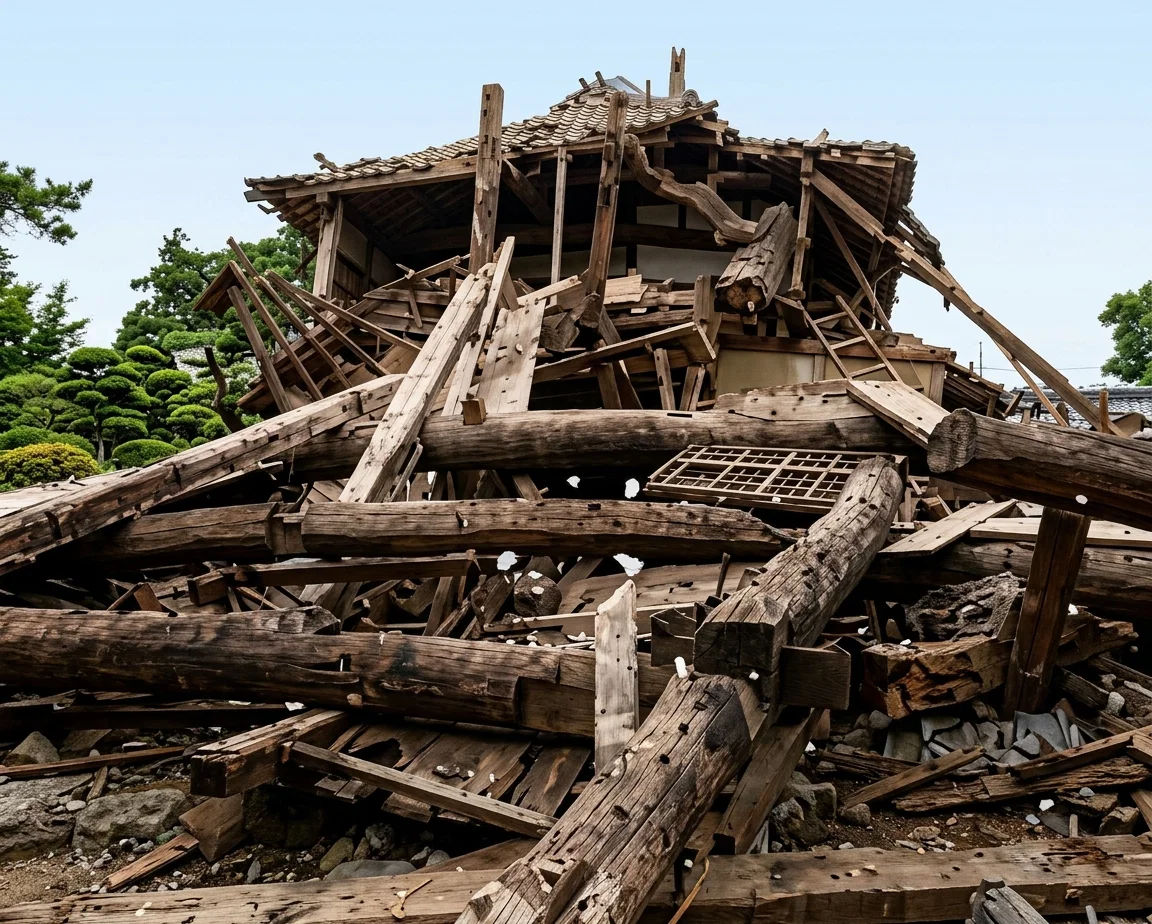
The Ruins of a Temple Caused by the Earthquake
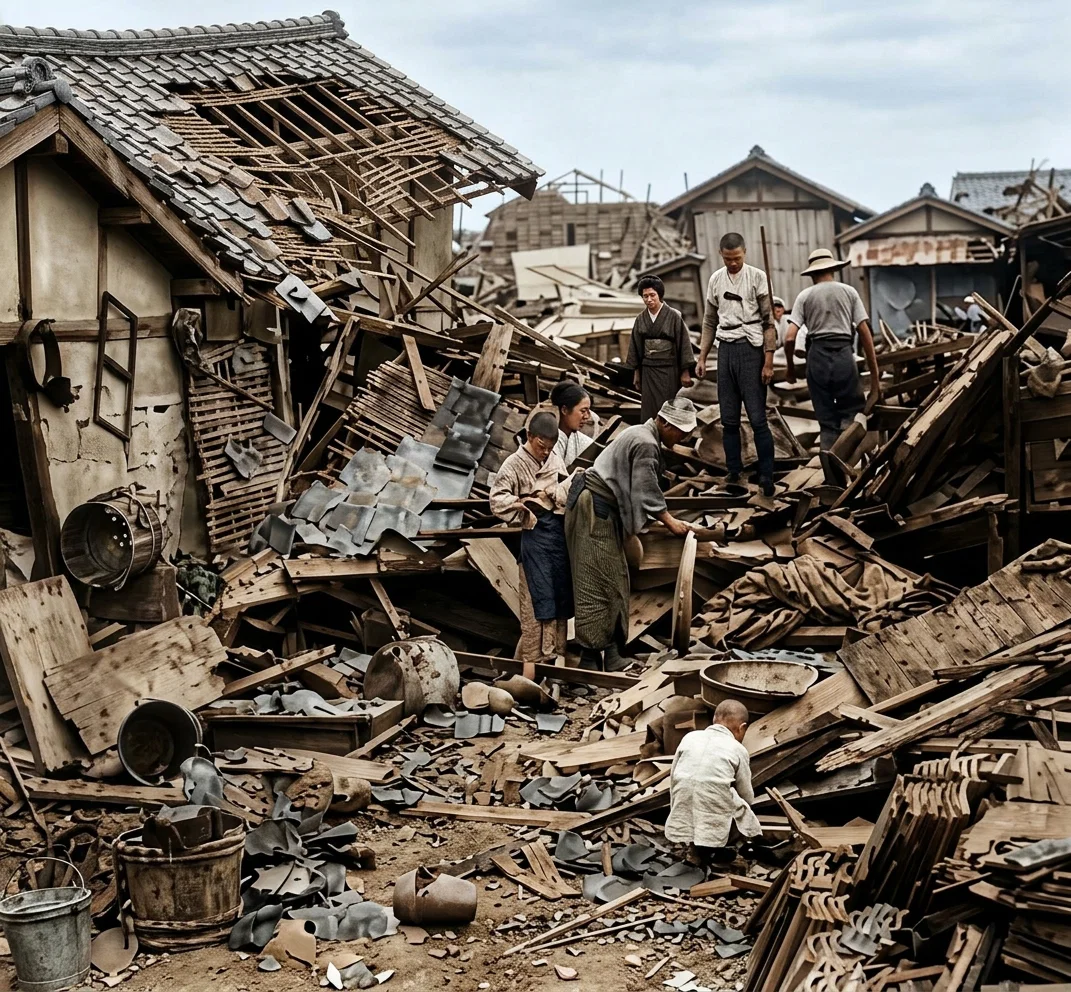
A Complete Wreck by Earthquake
JAPAN is well known as a land of earthquakes. Slight shocks are of frequent occurrence in certain parts of the country, including the vicinity of Tokyo. But these shocks cause little or no damage, and destructive earthquakes are no more common in Japan than in many other parts of the world.
In 1891 a very destructive earthquake occurred in Central Japan, the center being a little to the north of Lake Biwa. The shocks were felt over a wide area; Gifu, Osaka, Kyoto, Nagoya, and many smaller places were seriously affected. Nearly ten thousand persons were killed, and twice as many injured.
Since that time no serious earthquake has affected Japan until the 14th of last August. At 3:30 P.M. on that day occurred an earthquake that will go down in history because of its severity and destructiveness. The center and area of this earthquake were almost identical with that of 1891. But it was not nearly so severe, nor was the loss of life so great.
This recent earthquake occurred at the time of the Buddhist obon festival, or feast of all souls; and many of the people of the country villages were assembled at the various temples. When the first shocks occurred, the people rushed out of doors. The strongest shocks, which did most of the damage, came several minutes later, after the people had escaped into the open air. Consequently the loss of life was much less than it otherwise would have been. The vibrations accompanying these first shocks continued for nearly an hour. There were frequent shocks felt during the following night and day.
The losses to life and property reported up to the close of the day following the earthquake, were as follows: 31 persons killed, and 168 injured; 20 temples and shrines totally wrecked, and 59 partially destroyed; 470 dwellings wholly destroyed, 1,367 partially so; 636 other buildings wholly wrecked, and 992 partially destroyed. Later reports raised the number of killed to 40.
The center of the disturbance seems to have been Ibuki-yama, a mountain to the northeast of Lake Biwa. It is said that at the time of the earthquake, terrible rumbling noises were heard issuing from this mountain. About one hundred farmers were working near by at the time, and a number of them were quite seriously injured by falling stones. Extensive landslides were reported in the neighborhood of the mountain. At one place a piece of the hillside 5 miles long and 600 feet wide had slipped down like an avalanche. At another place there was a similar landslide 3 miles long and 1,800 feet wide; and still another, on the south side, 5 miles long and over 400 feet wide.
Thousands had their homes either wholly or partially destroyed, and thousands more deserted their houses for the time for fear of further shocks. But as the weather was warm, and no rain fell, there was little suffering from exposure. The people were very watchful lest fires should break out, and no loss from fires was reported. The authorities furnished prompt aid to those in immediate need; and the nurses of the Red Cross Society did good service in caring for the injured.
An earthquake is a terrifying, awe-inspiring thing. But a calamity worse in some respects than the one just described, was the great Osaka fire, which occurred only about a fortnight before the earthquake. An overturned lamp, a hurricane wind, and a sad lack of facilities for fighting fire, made a combination of circumstances that resulted in one of the most destructive conflagrations ever known in Japan.
The fire started early in the morning of the 31st of July, and raged all that day and the following night, and was not checked till the forenoon of August 1. About one third of the area of the city was burned over; 12,000 buildings were destroyed, and 60,000 persons rendered homeless. The property loss was variously estimated at from twelve and a half to twenty millions of dollars. The larger structures destroyed included school buildings, temples and shrines, banks, bridges, the court-house, and the rice exchange. The path of the fire extended for 3 miles, and the burned portion covered an area of 305 acres. For a time the wind blew at the rate of 40 to 60 miles an hour. Those who visited the ruins afterward, remarked upon the complete destruction wrought by the fire. Even where buildings of brick and stone had stood, there remained little but ashes.
Accounts of earthquakes, floods, fires, and other calamities are becoming so common as to attract but the passing notice of many, and are soon forgotten. These two great calamities in Japan are only a few months in the past; yet already they are seldom mentioned. But thoughtful people are inquiring the meaning of the frequent calamities that are afflicting mankind. The judgments of God are falling upon a guilty world. Nothing short of such catastrophes will arrest the attention of many in their mad rush after worldly gain and pleasure. Happy is he who learns from the Word of God the meaning of these events, and prepares for that great event of which these are but feeble premonitions. Is it not wise to take warning, and prepare for the coming of Him before whose presence the whole earth shall shake, and whose glory is a consuming fire? There is still time in which to prepare to meet Him in peace.
F. W. FIELD.
Tokyo.