RESPIRATORY ORGANS

8%

Pacific Press Publishing Company · Oakland, California · Apr 22, 1903

FromSigns of the Times, Vol. 29, No. 16.

Read the full edition

RESPIRATORY ORGANS.

We rarely stop to think of the number of forces operating, or the amount of work done within the body, in order to bring oxygen to every part of the tissues. The lungs, blood, heart, arteries, and veins are all busily engaged, constantly and unconsciously, with wonderful power within, while the individual is quietly breathing the pure or impure air by which he is surrounded.
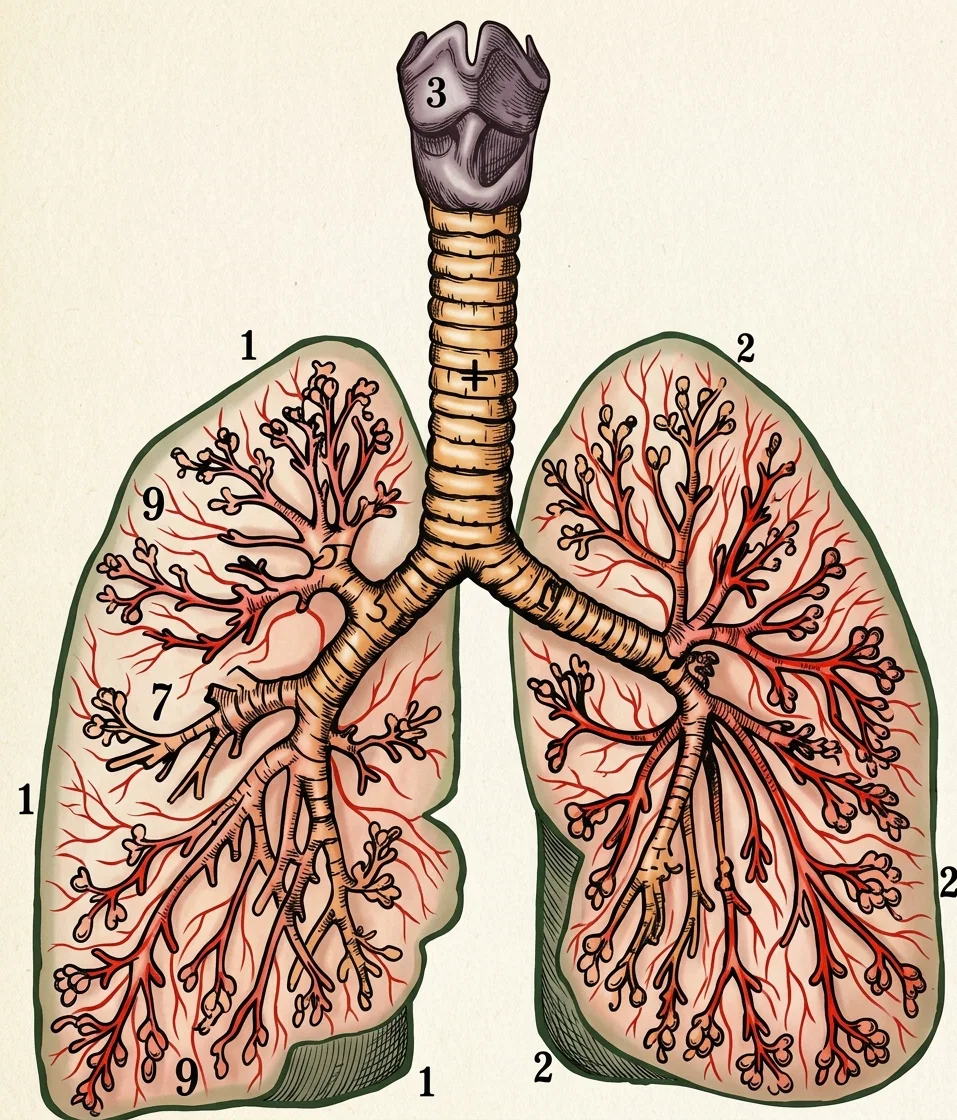
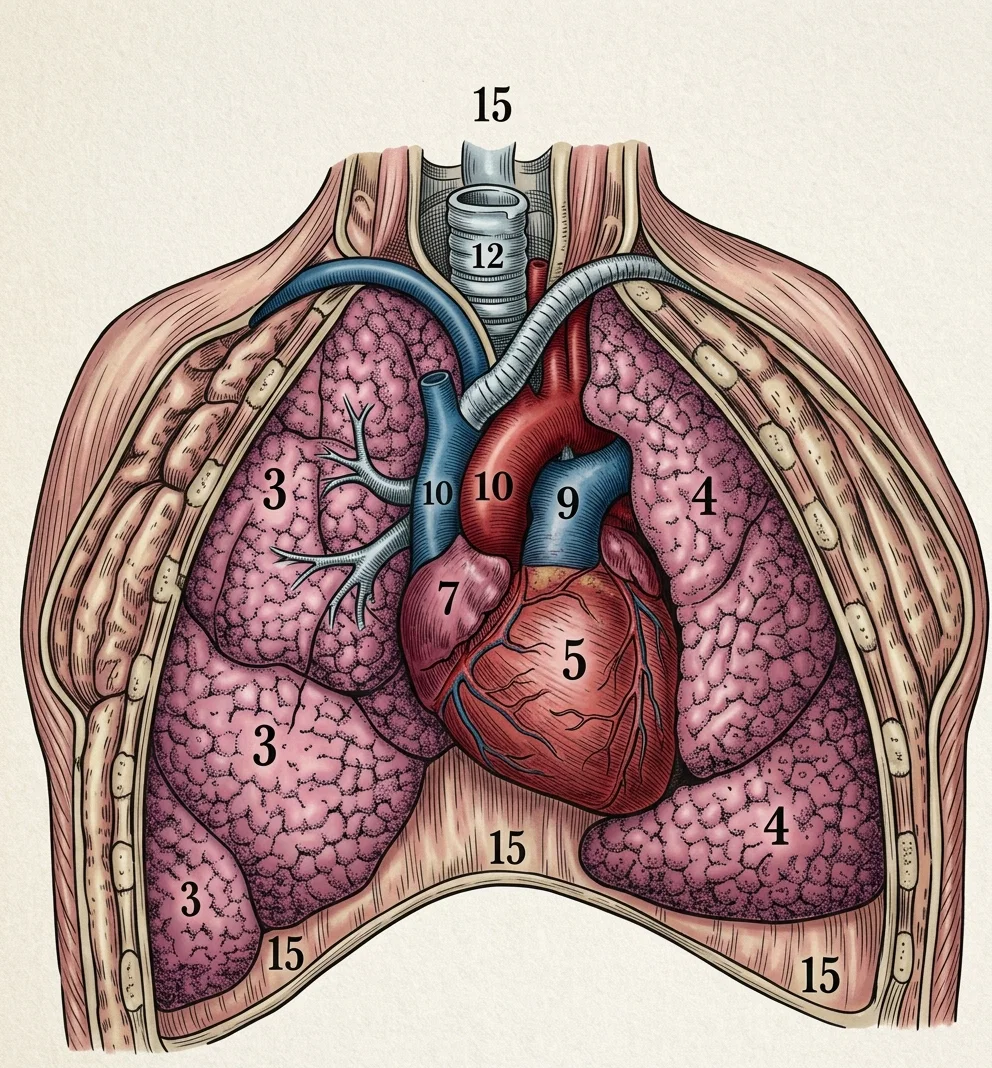
The first organs to receive the air that furnishes oxygen to the body, are the lungs. They are situated in the chest, the cavity of which they nearly fill. The right and larger lung is divided into three lobes, while the left has only two, a part of the space on this side being occupied by the heart and larger blood-vessels. The chest cavity grows to the size and shape that is necessary to give room for the expansion and contraction of the organs within. If, by improper breathing, clothing, or disease, we fail to develop the lungs, and do not through vigorous exercise create a demand for oxygen, then the chest will necessarily become proportionately contracted.
The air properly enters the respiratory organs through the nostrils, which are so formed as to produce certain important changes before it enters the more delicate organs below. Little ciliary, or hair-like projections, on the surface of the mucous membrane of the walls, by their movement, tend to cleanse the atmosphere by removing from it all particles of dust or other impurities. The fluid that is constantly secreted by the mucous membrane moistens the air and renders it more soothing to the sensitive mucous membrane in the lungs, while the warm air-chambers in and about the nasal cavity raise the passing air to a temperature more nearly equal to that of the interior of the body. These important changes in the air are not made when one breathes through the mouth. Hence mouth-breathing has a very deteriorating influence on the functions of respiration and is sure to produce diseased conditions in the lungs.
After leaving the nostrils, the air crosses the pharynx, and enters a beautifully constructed chamber known as the larynx. This has a set of muscles and cords so arranged that the return current of air from the lungs performs the function of producing sound, with all the multitude of variations of the voice. The air passes from the larynx into the trachea, and on into the lungs by a large number of bronchial tubes, which divide and subdivide until the air finally reaches the ultimate air-chamber, known as the air-cells, or vesicles. For the purpose of providing more surface with which the air may come in contact these air-vesicles are arranged in little compartments, which gives them somewhat of a honeycomb appearance. The surfaces of the cells are thin and delicate, and are very vascular on account of the millions of tiny blood channels which ramify them.
The purpose of this close relation between these blood-vessels and the surface of the air-vesicle, is to have the air come so close to the blood that an interchange of gases may take place, the oxygen passing into and combining with the elements of the blood, while the carbonic acid gas and poisonous vapors are expelled from the blood into the rarer medium of the atmosphere, and are exhaled. It is estimated by our best physiologists that there are 725 millions of these air-vesicles in a pair of lungs, the total surface of which, spread out in one sheet, would cover an area of 200 square meters, or from 100 to 150 times the area of the skin which clothes the outside of the body.
This enormous provision of nature, which is far larger than is ordinarily required, is sufficient to meet every emergency in life, and to have a large reserve force for old age when, as the elasticity of the chest is lessened, a reserve is necessary to the preservation of health. This extra provision of nature often becomes a curse to the individual, simply because he fails to use this surplus room, and the contracted portions, being poorly ventilated, become a fruitful field for the establishment of disease.
The ordinary individual has a capacity for exhaling, with forced exhalation, from 200 to 300 cubic inches of air. This, however, does not represent the total lung capacity, as there is always a certain amount of residual remaining after extreme exhalation, which is not less than 100 cubic inches. This large chemical laboratory within the lungs requires regular and systematic deep breathing in order to be kept active, clean, and free from disease.
In quiet respiration during rest, we inhale only about twenty cubic inches of air; but if the lungs are in a healthy condition, this will intermix within all the open air-chambers, and be distributed throughout the lungs. But unless all these various air-compartments are kept open by proper breathing, made necessary by hard work or systematic practise in deep breathing, it will not be thus equally distributed. If life is to be preserved to a mature old age, one must see that his chest is not contracted by any artificial means, or that it does not fail to properly develop through lack of physical exercise, or through improper habits of work, or assuming unnatural and cramped positions while standing, sitting, or lying.
A. J. SANDERSON, M.D.