FERNANDO COLLEGE

7%

Pacific Press Publishing Company · Oakland, California · Jan 28, 1903

FromSigns of the Times, Vol. 29, No. 4.

Read the full edition

Faculty and School of First Year, Fernando College.

FERNANDO COLLEGE.

SEVENTH-DAY ADVENTISTS have ever exalted temperance and education. They believe that a true education is a better heritage for their children than thousands of silver and gold. The one, if really true education, wrought into, and having an influence on, the character and being, will last through all time, passing with the possessor into the city of God. The other, even when used well (and how seldom this is the case), will be helpful but a short time and then perish.
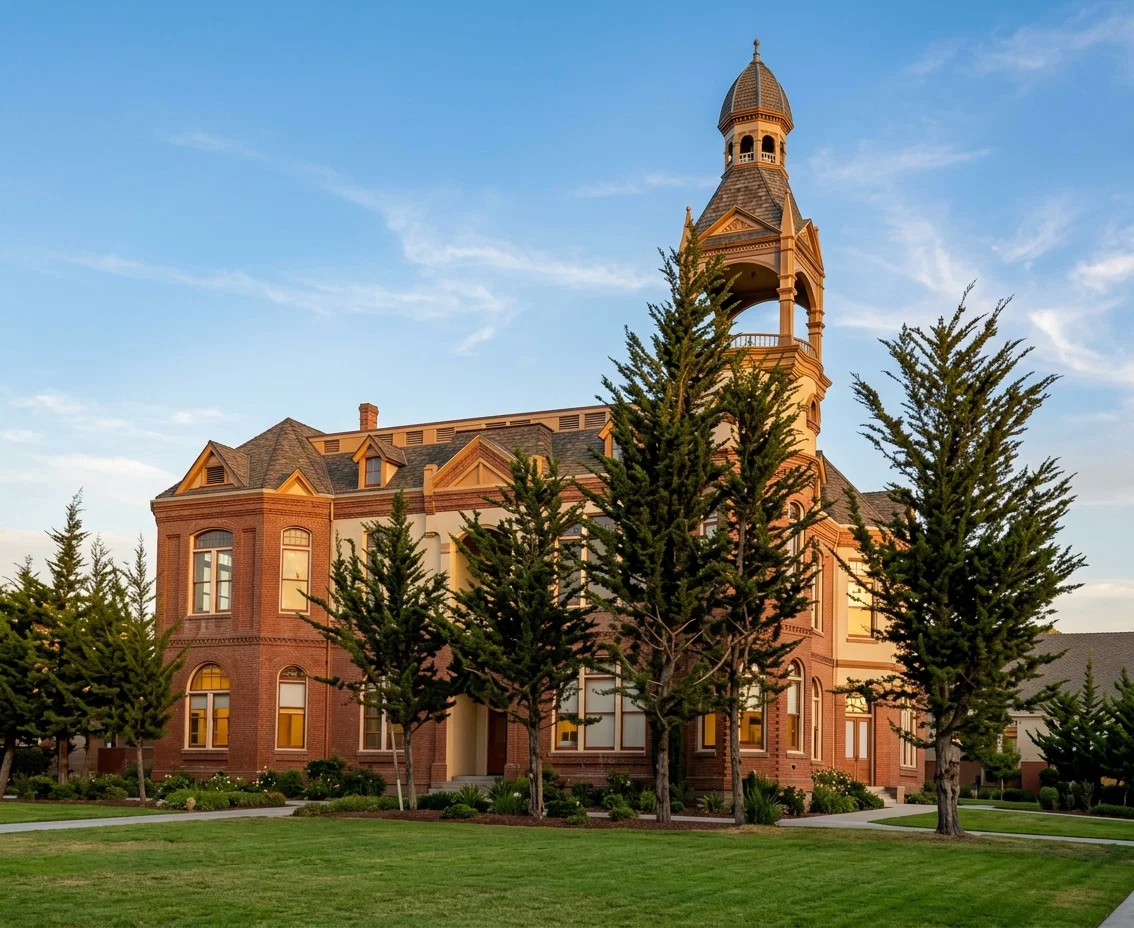
Fernando College, Fernando, Cal.
For years there was but one Seventh-Day Adventist college in California, altho this is, in reality, a State of “immense distances.” Because of this fact, many of our young people have been debarred from the privilege of attending a school in which the higher branches were taught, and especially was this true of Southern California.
Upon organizing this part of the State into a separate conference, the question of a Southern California Conference school became one of vital interest. This was deferred for one year, when it was voted to open such an institution in Southern California, teaching the higher branches and useful trades, and preparing young people, by a course of Bible instruction, to become workers in the Master’s vineyard. While mentioned last, this feature has been first in the minds of those planting the school.
The selection of a location was a matter of great importance, as the Lord teaches that our schools should be placed where, separated from the tumult and temptations of the city, the student will have a better opportunity to become acquainted with nature, and with nature’s God.
After visiting different places, Fernando, a small town, twenty miles north of Los Angeles, was called to our attention. At this place the Methodists had built a college near the foot of the mountains, and one mile from the railroad station, at a cost of $35,000; but for several years this large brick structure, ninety by seventy feet (in the shape of an L) and three stories high, had been abandoned and vacant. The building, with the ten acres upon which it stands, was purchased for $7,250. Another building of sufficient capacity to be used as a general dining room and a girl’s dormitory, standing just off the college grounds, was purchased for $1,100. An additional five acres of land was purchased later, making fifteen acres owned by the college. This, with ten acres of rich land that has been leased for five years by the college, at the nominal sum of one dollar a year, gives twenty-five acres of land for the raising of berries, fruits, vegetables, and grain.
At an elevation of eleven hundred feet, mountains for the background, olive and orange orchards surrounding, pure mountain water, a place where rust or scale have never appeared to blight the fruit, situated in the practically frostless belt, and where the servant of the Lord could say, “This is the place the Lord has chosen,” the Fernando College was opened October first.
The cost to each student was placed at $10.00 cash when paid monthly, or $9.00 per month, if paid in advance for the whole term, and fourteen hours’ work per week in addition to the regular domestic work. This basis will be changed somewhat, with the opening of the second term February 2. From that date the teachers will be paid from the second tithe, the same as other church school-teachers, and students will be charged only for room and board, the tuition being omitted. The room and board will cost $7.50 per month in cash, besides the fourteen hours’ work per week. This brings all church school-teachers of the Southern California Conference under pay from the second tithe, which is sent to the Conference treasurer.
The accompanying illustrations give some idea of the college, dormitory, and the school family at the present time.
Prof. H. E. Giddings, who has been for years connected with the school at Keene, Texas, is in charge of the school. Eld. R. S. Owen, who was for ten years the Bible instructor in Healdsburg College, has charge of the classes in Bible study. Those acquainted with him will understand the privilege granted students who get the benefit of his class instructions.
The largest room on the ground floor of the college, fifty-three by thirty-four feet, is used for religious services. The Tract Society and Conference offices occupy another large room just off from the main entrance, where also the books of the institution are kept. Opposite this, is a storeroom for our health foods and the needed line of groceries we carry. This makes it possible to purchase at dealer’s prices, thus saving a good per cent to the College Home. Another pleasant room has been used for the church school, which is entirely separate from the college work.
The second floor consists of the main study hall, a large room just off from this (to be used for natural history collections and a library), a parlor, and recitation rooms. The third floor is divided into suites of rooms, and is the young men’s dormitory.
So now, we can say to the brethren and sisters of Southern California, Send your young men andyoung women to the school, and all will be done that a united faculty can do to return them to you better prepared to face the battles of life, and better prepared to assist in the work of saving their fellow men. CLARENCE SANTEE.