Last week a lady—a real lady—rang my door bell. She could speak only the most broken English. I soon saw from her troubled face that she expected me to recognize her; but more than thirty years had passed away since, with her father, she came from the banks of the Tigris to our school in Harpoot, and I naturally could not recall her. But I needed only to be told that she was the daughter of Shemmas Hanna, of Cutterbul, Turkey, to open my arms and welcome her to my home. What a panorama passed before me as I gazed upon this sweet, refined woman, who as a girl of twelve came to our school in the earlier days of my missionary life. For her noble father determined to educate his daughter, even tho it brought reproach upon him; and he had to go three days' journey to put her in our school beyond the Tarsus Mountains.
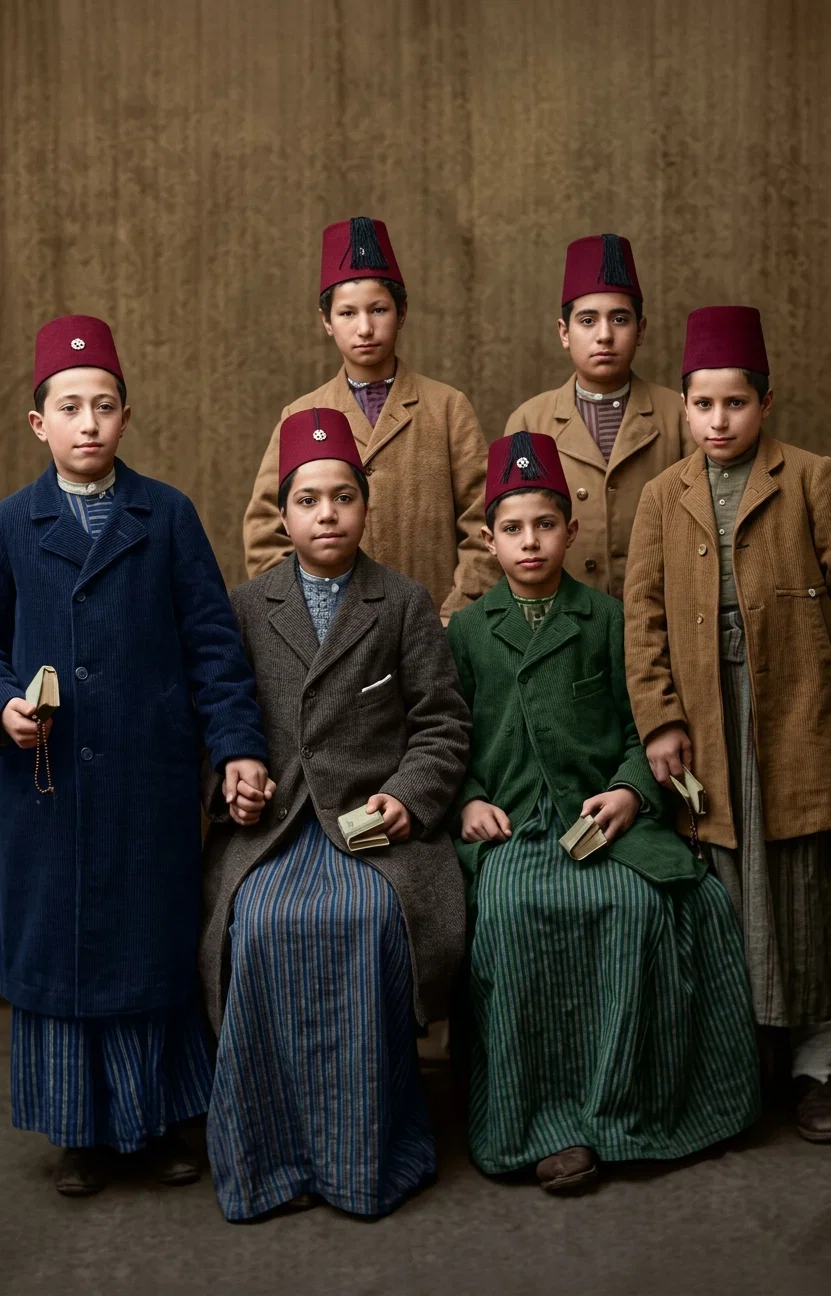
The Turkish Orphans after a few months in a Christian Orphanage.
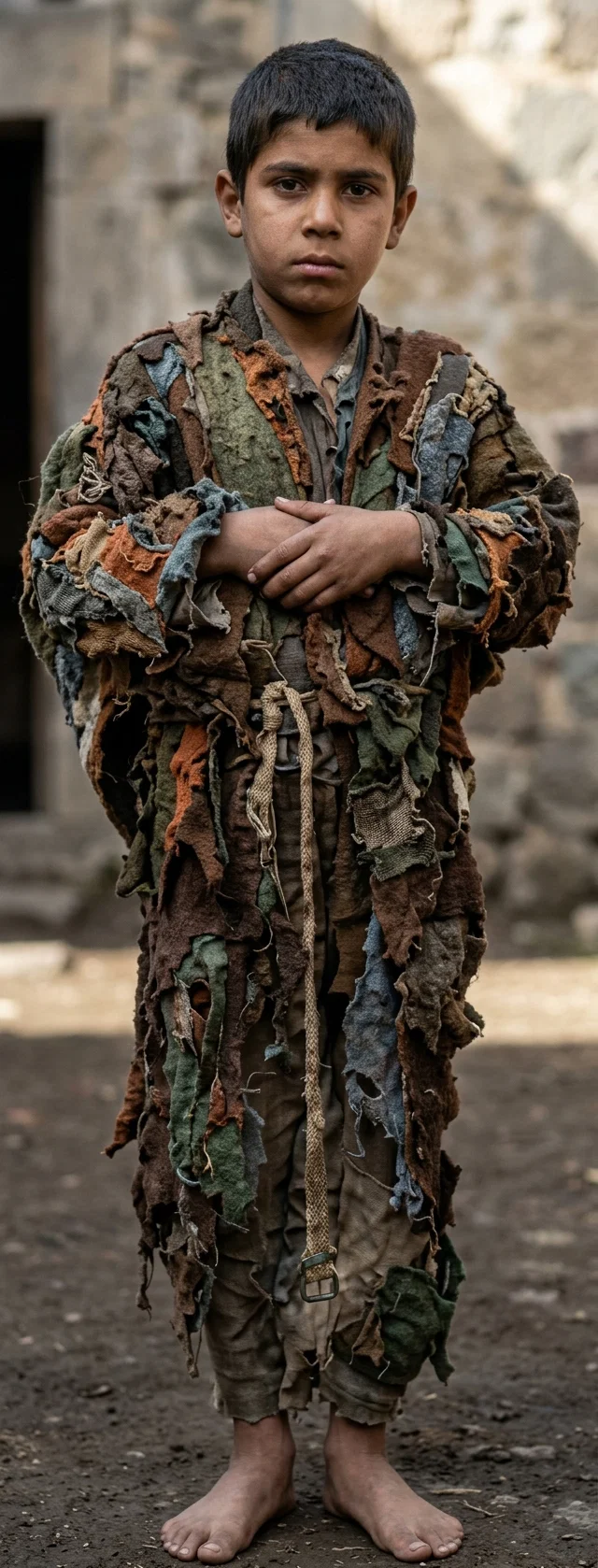
Garabed, Turkish Orphan, as he appeared in his winter suit when admitted to a Christian Orphanage.
During this first year she was ill with typhoid fever, and as we had no doctor then, I watched her through her long sickness. And now she had come all the way from New Jersey to thank me for my care so long ago.
After spending three years at Harpoot this dear girl returned to her home in Cutterbul, and was married to a young man in the village who was a member of Mr. Andrüs' theological class in Mardin, where with her husband she spent three more years in study, giving her six years of training for a pastor's wife.
When Mr. Abooshe finished his course in theology he was chosen as the pastor of the Cutterbul church that Shemmas Hanna, the father of Shimoon, had watched over with the greatest care; and the dear old father was happy as his grandchildren grew up about him. And here, honored by all, and loved by most, the dear old father died. But for Shimoon darker days were in store. For one evening in November, 1895, while the peaceful villagers were at their evening meal, the cruel Turks and Kurds14rushed into the village, and men, women, and children were slaughtered before their eyes. Shimoon and her husband gathered their children and in the darkness fled with others to the Syrian church, hoping for safety there. But Pastor Abooshe was shot in the church; and soon the awful cry went up, “The church is on fire!” (at the hand of some incendiary). There in her excitement Shimoon was separated from all her six children, for excitement had made her blind for the time being; and distracted and alone she found herself at last in a temporary hospital. Here she found her oldest married daughter dying from her wounds; she also heard that her oldest son had been saved by jumping into a well. But the dead body of her son of five was found murdered outside the village, and her daughter of seven was carried into the mountains by the Kurds, and never returned; while among the dead in Cutterbul and in the surrounding towns there were in all seventy-two persons who were related to her by birth or marriage. Is it any wonder that her hair has whitened too soon, and that the smile that still beautifies her face is full of sadness? And yet there are many such mourning mothers left alone with their orphan children. May God bless them and all who try to help them!