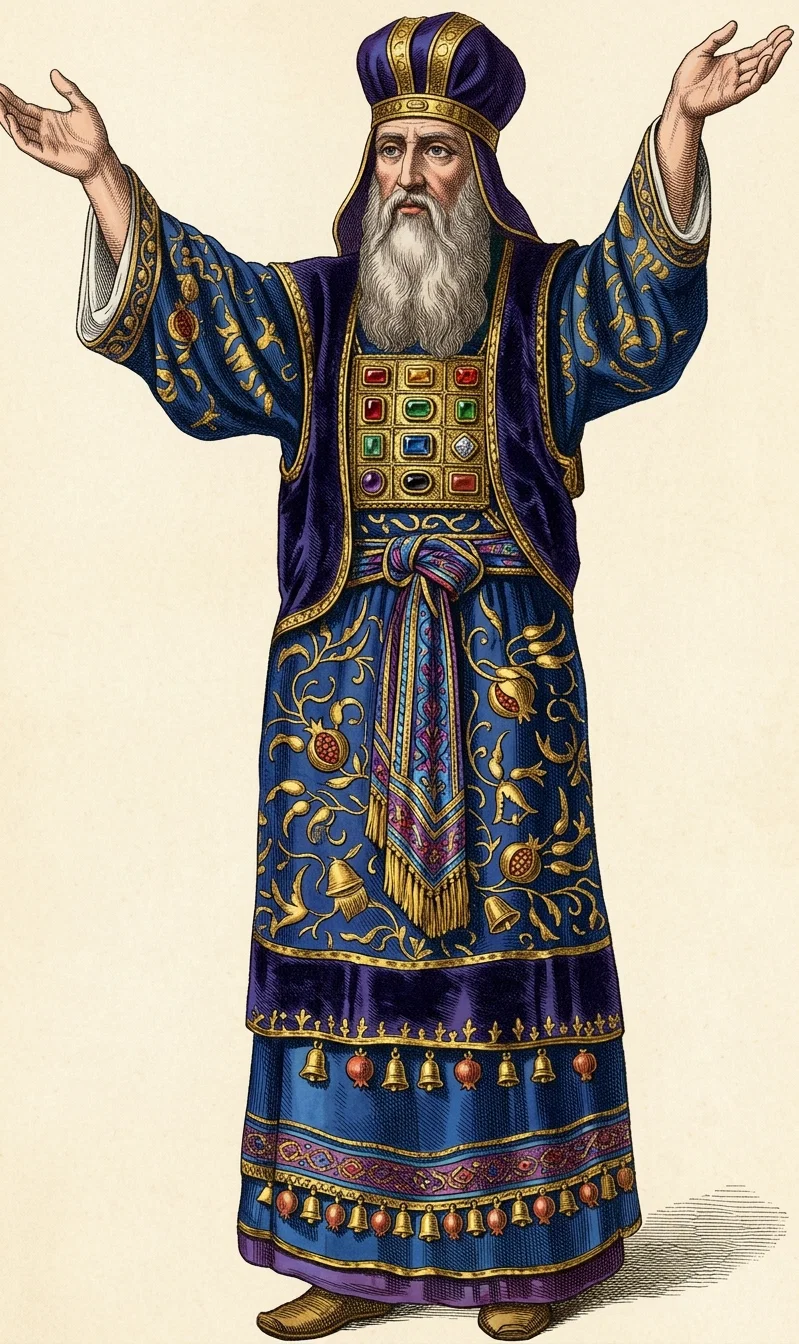
OUR GREAT HIGH PRIEST

7%

Pacific Press Publishing Company · Oakland, California · Dec 10, 1902

FromSigns of the Times, Vol. 28, No. 50.

Read the full edition

OUR GREAT HIGH PRIEST.

In a preceding discussion we noted that Christ “through the eternal Spirit offered Himself without spot to God,” from all eternity; that He is the Lamb (the Sacrifice) of God, slain from the foundation of the world. We can now understand why Christ was declared to be a priest forever after the order of Melchizedek. From the ages of eternity down to the cross, Christ was an anticipatory sacrifice, and therefore an anticipatory priest. His blood was shed by the immutable promise of God; and, as “God can not lie,” the prospective death of the Lamb of God was just as potent for the remission of sins, for the cleansing of the human heart, as was His actual death. Christ is, and always has been, the only inherently efficacious priest that the universe of God knows. No sinner was ever actually redeemed through the mediation of any priest except God’s everlasting High Priest. He Himself is His sole offering. His offering alone can atone for sin. He Himself must offer that offering. Hence He alone can be an inherently meritorious priest—a priest in fact.

The Greater Priesthood.

We need now to inquire into the significance of Christ being a priest after the order of Melchizedek, rather than after that of Aaron. In the first ten verses of Hebrews 7, is given a series of particulars in which Melchizedek was superior to Abraham, and therefore to Abraham’s posterity, to which Aaron and his descendants belonged. The most of these particulars taken literally are applicable to Jesus alone, and are applicable to Melchizedek only in a secondary and metaphorical sense. Melchizedek was greater than Abraham, and therefore than the priestly tribe of Levi.
I. Because even Abraham gave him tithes.
  1. Because the yet unborn Levi paid him tithes in the person of his ancestor, Abraham.
  2. Because the Aaronic priests died, but Melchizedek stands as a type of an undying priesthood.
  3. Because he who blesses is superior to him who is blessed, and Melchizedek blessed Abraham.
  4. Because Melchizedek was king as well as priest.
These distinguishing characteristics mark the essential superiority of the priesthood of Christ—the antitype of Melchizedek—over that of Aaron. Jesus’ priesthood was also greater than the Aaronic in that it was founded on the oath of God (Ps. 110:4), which was not true of the Levitic priesthood. Again, the Levitical priests were necessarily many, requiring to be constantly replenished to fill up the vacancies made in their ranks by death; but Jesus’ priesthood is untransmissible, because of His endless life; whence “He is able also to save them to the uttermost that come unto God by Him, seeing He ever liveth to make intercession for them.” Heb. 7:25. The Levitical priests were sinful; Christ is “holy, harmless, undefiled, separate from sinners, and made higher than the heavens.” Verse 26. They were weak; He almighty. They had to offer daily sacrifices; He offered Himself once for all. They offered sacrifices and served a tabernacle which were but the shadow, the type, the figure of the true, the eternal, the heavenly; He is the Minister “of the true tabernacle, which the Lord pitched, and not man.” Heb. 7:27; 8:1, 2; 9:9-11, 23, 24. They ministered the blood of bulls, and goats, etc., which was powerless to take away sins (Heb. 10:4); He ministers His own blood, which is all-potent to purge the sinner’s conscience “from dead works [sin] to serve the living God.” Heb. 9:14. Their dispensation being merely typical and illustrative, is declared to be old, i. e., obsolete, and so passed away when the true, the real, was ushered in by the appearing of the King-Priest Himself. His priesthood, tho eternal, is declared to be ever new, being founded upon better promises, and after the order of an endless life.
Let us never forget that, as priest, Christ offered Himself in sacrifice unto God for the sins of all men; that His offering was made once for all through the eternal Spirit; that it was an all-sufficient oblation and satisfaction for the sins of the whole world; that the offering once made need not and can not be repeated; that when He passed into the heavens the priestly office passed with Him; that “since His ascension there is no priest or priestly office on the earth; and, finally, that all pretended priesthoods and all pretended offerings of Christ in any sacrament or ceremony in the church on earth, are vain deceits and delusive superstitions.”
Yes, the death of Jesus was His own priestly offering. While His slayers were active in His condemnation and crucifixion, He was passive only as to their designs, but active in His priestly function of offering Himself unto God for the sins of mankind. The Son spared not Himself, but yielded Himself unresistingly into the hands of His smiters, and was led as a lamb to the slaughter. “No man taketh it [My life] from Me. . . . I have power to lay it down, and I have power to take it again.” This is His own assertion, and is proof positive that He voluntarily—as a free priest—humbled Himself, and became obedient, even to the awful death of the cross. His blood was His life, and His life He laid down as an expiation for our sins.

Our All-sufficient High Priest.

And now, as our only true and all-sufficient high priest, Jesus stands before the throne of the eternal Father, in the true sanctuary in heaven, as an intercessor and advocate. “And if any man sin, we have an Advocate with the Father, Jesus Christ the righteous.” I John 2:1. He there pleads and ministers His own precious blood in behalf of every penitent sinner. Not that His pleadings and intercessions are always formal, and vocally uttered; but the very fact that He stands there with pierced hands, and feet, and side, our Representative, is the pledge that our prayers are heard and answered. In one of his sermons Dr. Pierson cites a beautiful story in Greek history, which illustrates this thought. Eschylus, a Greek dramatist, had been charged with treason, and was brought for trial before the judges of the State, who sat in a semi-circular row. They were about to say, “Condemn him!” with one voice, when in came a brother of Eschylus, who, on the battle-field of his country, had lost an arm. He instantly saw the jeopardy in which his brother stood; he stepped before the judges, and without a word raised the stump of the arm that had been sacrificed for his country. The judges looked on Eschylus, and then at his brother, and with one voice they cried, “Acquit, acquit!” So likewise our Advocate, as He stands before the Supreme Judge of all hearts,—
“Five bleeding wounds He bears, Received on Calvary, They pour effectual prayers, They strongly plead for me. ‘Forgive him! O, forgive!’ they cry; ‘Nor let that ransomed sinner die.’”
How ineffably glorious is this wondrous truth. The awful eloquence of those “wounds” are all-prevailing for every believing sinner. Infallibly efficacious are their prayers and pleadings. O what a High Priest you and I have! And forget not that God heareth Him ALWAYS. He that through Him cometh to God will not, can not, be cast out. As God looks upon our Advocate, our High Priest, He sees you and me in Him,—that in Him you and I have been crucified,—that in Him we have been raised from the dead—that in Him we keep His commandments, and do those things that are pleasing in His sight.—And “in Him ye are COMPLETE.”
[The next article in the series is “The One to Whom All Judgment Is Committed.”]
and Jewish High Priest in Full Dress.