DROWNING THEIR GODS

10%

Pacific Press Publishing Company · Oakland, California · Nov 12, 1902

FromSigns of the Times, Vol. 28, No. 46.

Read the full edition

DROWNING THEIR GODS.

“The gods that have not made the heavens and the earth, even they shall perish from the earth.”
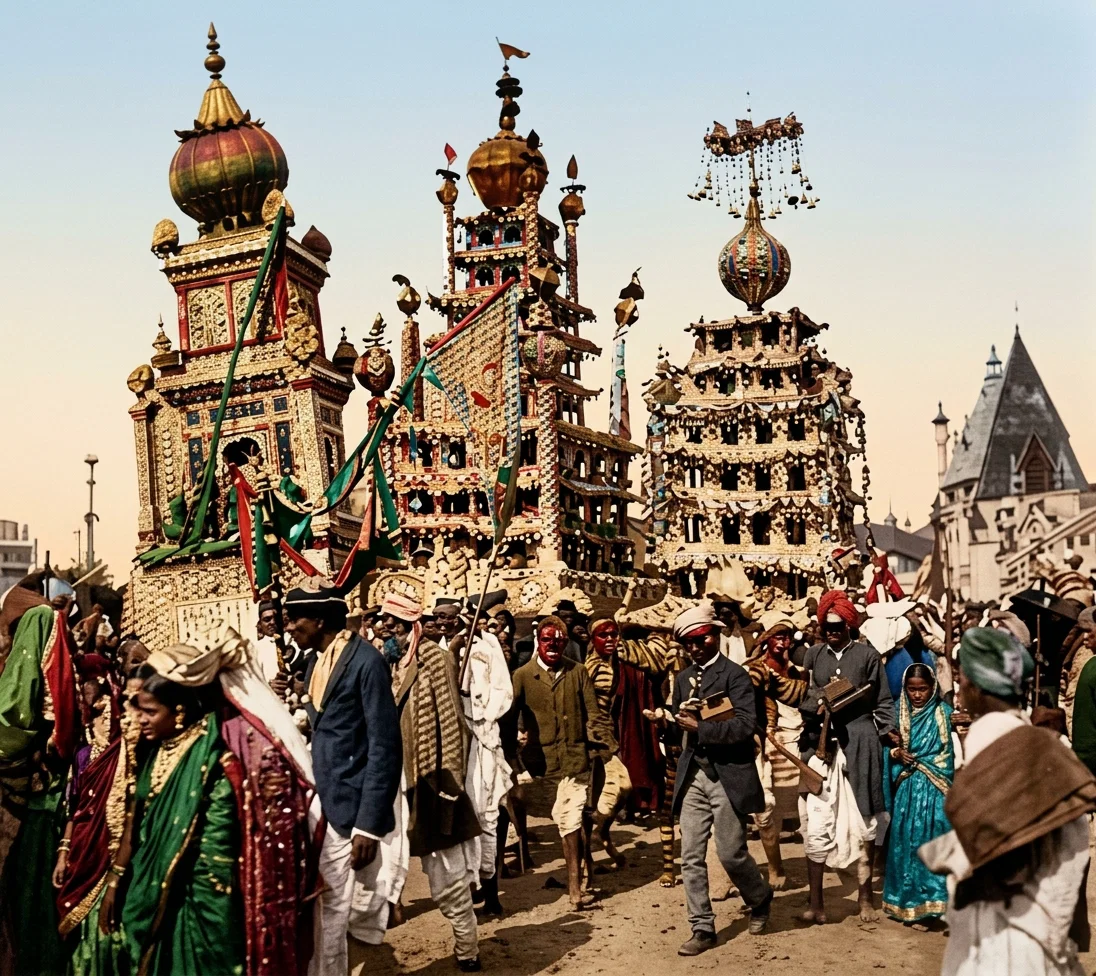
Procession of Hindu residents in Durban, South Africa, carrying pagodas and idols.
All heathen nations “observe days.” That portion of the population of Natal known as East Indian “Coolies,” observe the twenty-first day of April as a high religious festival, called by the Europeans in South Africa, “Coolie Christmas,” but by the cult, “Mohurrum.” It is said that the occasion originally called forth a great demonstration of sorrow, as it was instituted to commemorate the death of two prominent characters in heathenism, Hassan and Hussein. The lower caste Indian devotees, the “Soonis,” however, have caused the ceremonies connected with the celebration of the day to degenerate into a disgraceful caricature of their earlier practises, much to the disgust of the “true followers,” the Moguls and other Shehas.
Now, the festivities partake of the nature of the old Saturnalia of Pagan Rome. The devout in the city of Durban turn out to join in the orgies and procession, to the number of from 15,000 to 20,000. The women and children vie with each other in loading themselves with gaudy jewelry, and soft silken apparel of the most gay colors obtainable. The men come armed with sticks and “knobkerries,” some of them posing as “coolie tigers,” and others as demons. These figures make an indecent and altogether disgusting spectacle, as, with the exception of a loin cloth, they are entirely nude, and painted with stripes to represent tigers. At the beckon of one of the demons, these tigers, with their faces, breasts, and beards smeared with blood-red paint, and wearing strange, weird headgear, will go through with meaningless contortions, rolling in the dust like the classes of animals which revel in filth.
Priests, appearing half human, half demon, with quaint wooden treasure boxes made sonorous, so that a chain may be clanked loudly against their sides to attract attention, press hurriedly through the throng rudely begging coppers, silver, or gold from their deluded followers, making hideous grimaces, meanwhile . As an accompaniment to this scene, which reminds one of Dante’s Inferno, the air is rent with unearthly yells and wails, horrid savage war songs, and nerve-grating sounds of “tom-toms.” At a recognized signal this pandemonium-let-loose, forms into a typical Oriental procession, and marches through the principal coolie streets of the city. A band of ghostly appearance, their dark faces smeared with white paint, renders unearthly—but not heavenly—music for the exhilaration of this deluded mass of humanity. Chosen men carry on their shoulders a number of pyramidal-shaped thrones, covered with glittering tinsel, on which are seated the “gods that see not or hear,” which have served their purpose for one year. These must now be drowned in the river, and new ones must be secured for another year’s blessings and curses. One would naturally think that the latter must predominate, hence the delight in destroying them with the hope of obtaining better gods for the new year.
As soon as these graven images are thrown into the river, scores of fanatical coolies will plunge into the water to batter them to pieces. The women and children have by this time gotten out of the raging mob as if in anticipation of a fearful battle, and their tears are well grounded, for all at once, as if inspired by Satan, but without other apparent cause, they begin throwing stones and sticks in all directions. The mounted European police charge the rioters, and inflict painful, bleeding wounds on many of them. In the center of the disturbance last April were a number of European sight-seers, many of them women and children. Some of these were injured by the missiles, but happily none were killed.
Their high religious carnival over, the excitement past, they now disperse to their homes, many of them to nurse wounds for days to come, but they have the satisfaction and the blessings (?) which come from knowing that they are devout worshipers of their gods.
After all, these are our brothers, and just as “near of kin” to Father Adam as other members of the family, and we are certainly debtors to them, in that the light of the glorious Gospel of Christ has shown upon our pathway. But for this, doubtless we would be serving other gods in some such senseless manner.
“Shall we, whose souls are lighted With wisdom from on high— Shall we to men benighted, The lamp of light deny? Salvation! O, salvation! The joyful sound proclaim, Till earth’s remotest nation Has learned Messiah’s name.” Johannesburg, South Africa. G. W. REASER.