CROWNS AND CORONETS

7%

Pacific Press Publishing Company · Oakland, California · Jun 11, 1902

FromSigns of the Times, Vol. 28, No. 24.

Read the full edition

CROWNS AND CORONETS.

The crown is a symbol of royalty, the coronets are worn by peers and peeresses who are not of royal rank. Just now, when “England is a-quiver from center to circumference over the coronets of dukes, marquises, earls, viscounts, and barons,” many of the British nobility are unpleasantly conscious of this latter fact.
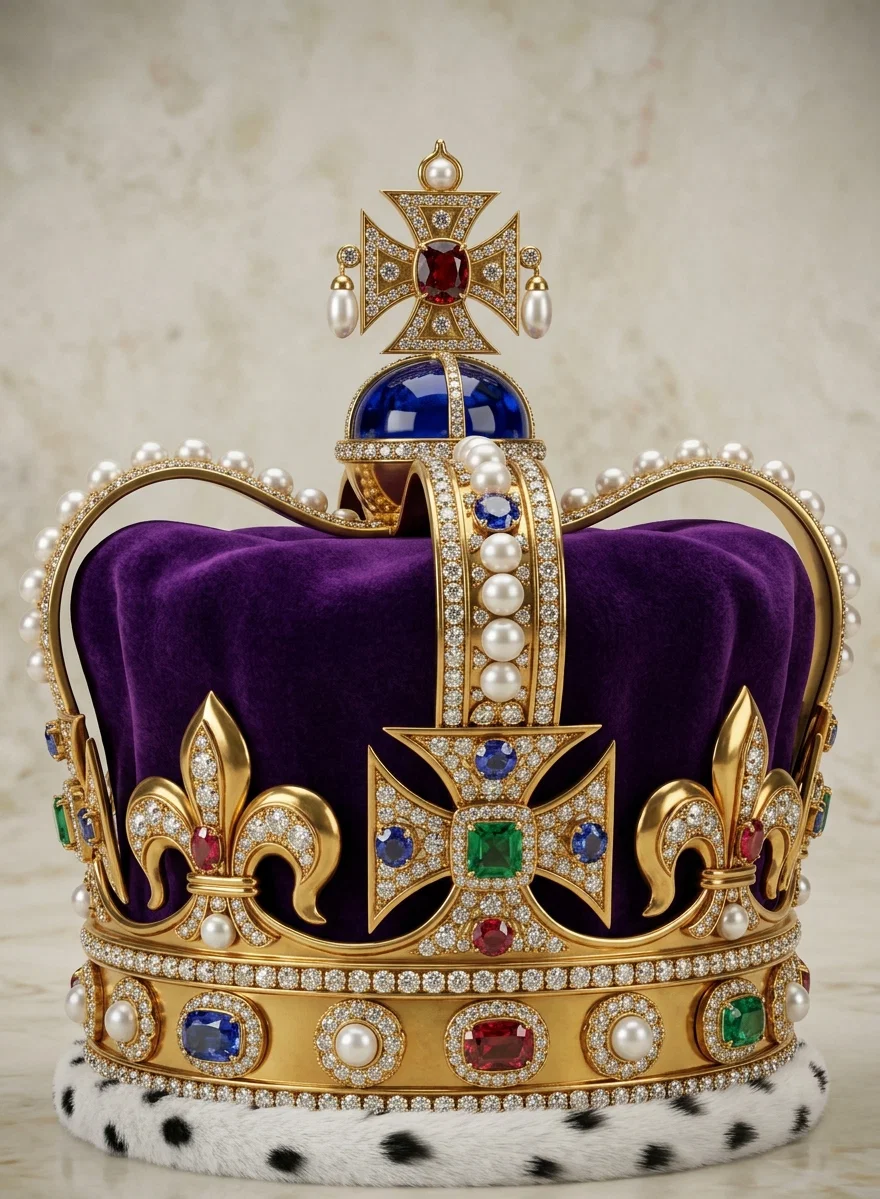
King Edward’s crowns are two, and they will be worn at different times in the course of the long ceremony. They are known as St. Edward’s crown and the imperial or State crown.
St. Edward’s is the oldest of English crowns, and as a historical relic is of inestimable value. It is a copy of one made for Edward the Confessor and destroyed in 1649 by order of Cromwell’s Puritan Parliament, though it is said that the original pattern was found in the tomb of a fifth-century king.
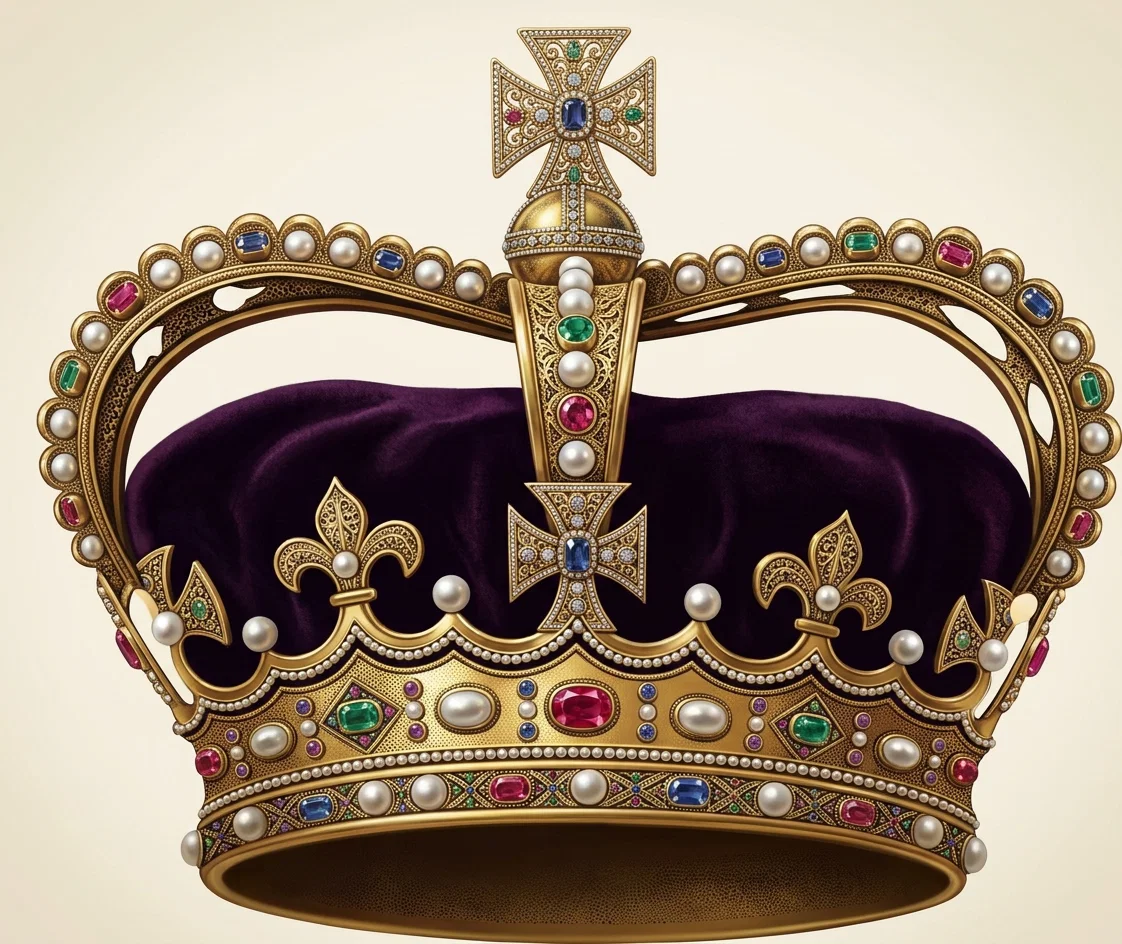
The crown is a circle of gold, adorned with pearls and precious stones. From the rim rise four broad crosses alternated with fleurs-de-lis, and above these are four arched diadems that close at the top under a mound and cross. Elaborate as was this royal headgear when first made, succeeding monarchs have added to it rare pearls and precious stones. George IV. added so many that its weight was increased to five and a half pounds and its value to $700,000. Among these gems was a magnificent sapphire of purest blue, and a “glorious ruby” once the property of Edward the Black Prince. This made the crown of the gallant old king the finest in the civilized world; and his queen, unwilling to be outdone, spent about $600,000 from her own purse in decorating her own crown, adding to it pearls and diamonds until the gold foundation was almost entirely hidden.
The styles of the coronets worn by the peers and their wives have been settled by long usage, and indicate the rank of the wearers. That worn by the prince of Wales shows the same alternation of broad crosses and fleurs-de-lis as the royal crown, and two of the crosses are connected by a diadem surmounted by a mound and cross. The younger children of the king wear coronets like that of the prince, but without the diadems.
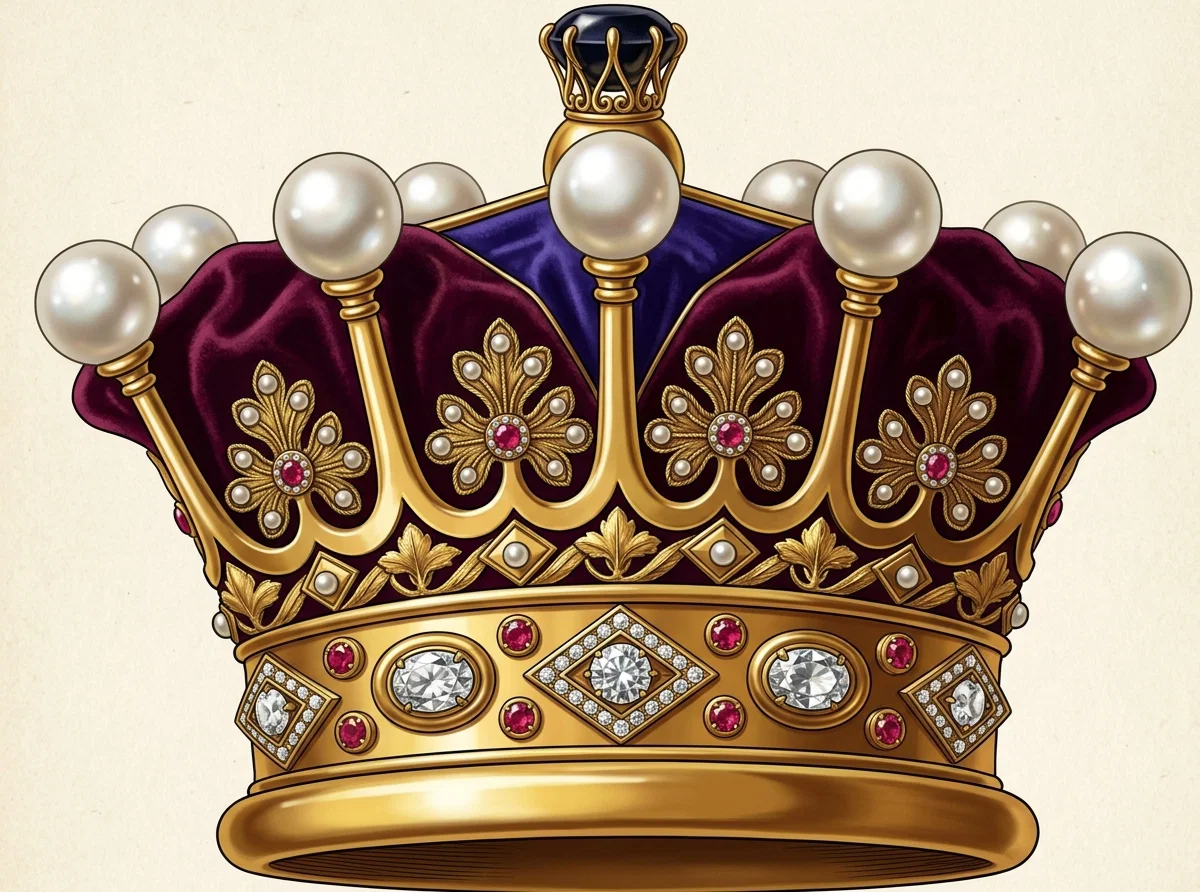
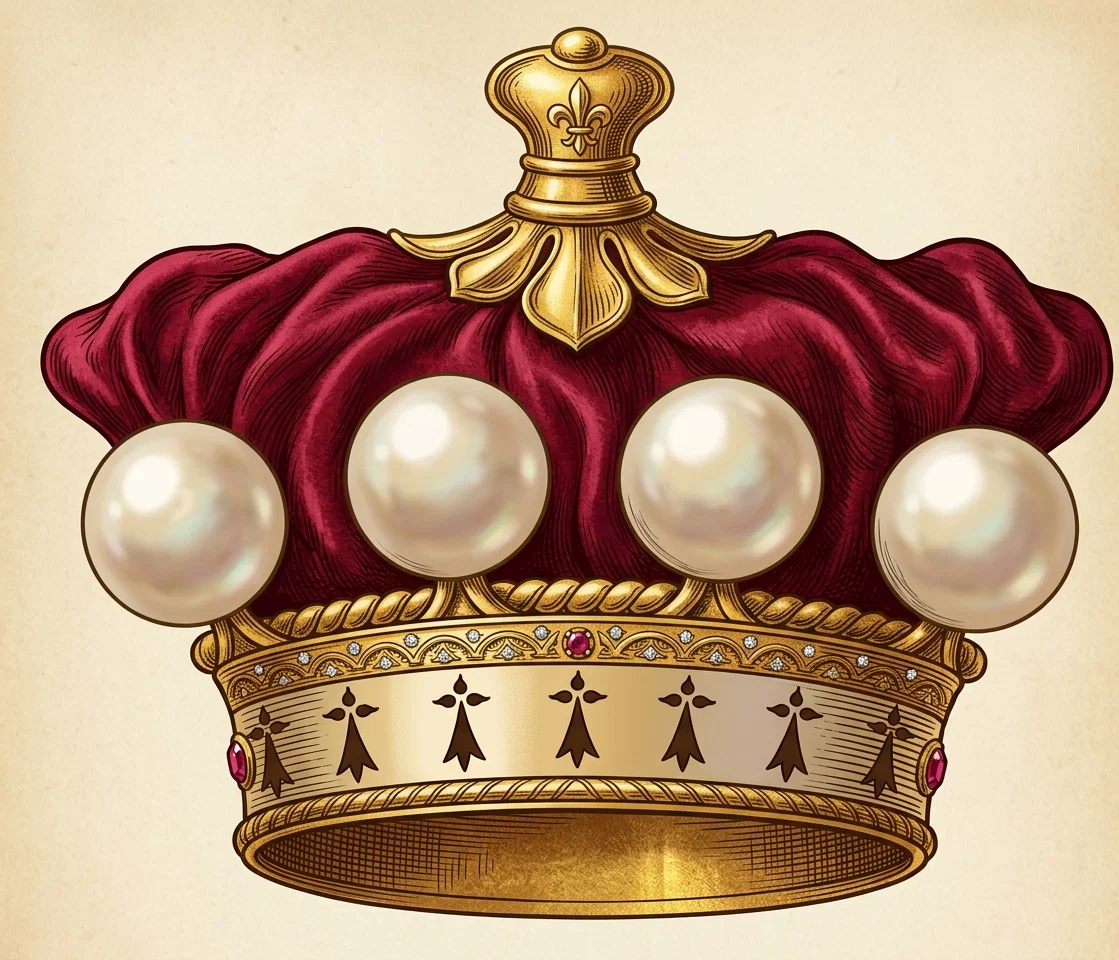
In the ducal coronet, above a rim of gold rise eight strawberry leaves of equal height. The coronet of a marquis displays only four strawberry leaves, but alternated with these are four pearls or silver balls. An earl may wear eight pearls or silver balls, raised on golden spires, between eight small golden leaves. A viscount wears pearls or silver balls only, but there are eighteen of them. A baron may wear six pearls or balls only.
All, both crowns and coronets, are made over a cap of crimson velvet, which is lined with white silk, edged with ermine, and, when the mound and cross are not used, surmounted by a golden tassel. The peers will don their coronets when the crown is placed on the king’s head, and the peeresses when the queen is crowned.
About two thousand coronets will be required by the peers and peeresses who are entitled to attend the coronation. Custom has fixed the style of each; but they may be simple or elaborate according to the taste or purse of the wearer. A silver coronet is estimated to cost about $80, while those of gold may cost $300 or more. Some of the peers are wealthy, and can well afford elegant coronets, while to others even the cheapest will seem dear; so there is sure to be heart-burning and jealousy. Then, too, while large sums are being lavished for display, thousands, even in the island kingdom, are suffering for the necessaries of life. Thus it is that a minor strain runs through all notes of human festivity and rejoicing.
And yet it is not hard to imagine that King Edward’s heart will thrill with proud joy, when, as the heir to a long line of mighty “kings of the sea,” the priceless historic crown of the great British empire is placed upon his brow, amid a brilliant throng of princes, dukes, and nobles who are glad to do him homage.
The coronation will be a grand pageant, but it is of the world, and “passeth away.” But when the Man of Nazareth and Calvary receives His “many crowns” as “King of kings and Lord of lords,” there will be “given Him dominion, and glory, and a kingdom, that all people, nations, and languages should serve Him; His dominion is an everlasting dominion, which shall not pass away.” And there will be no bitterness or heart-burning connected with the crown of “life” (James 1:12) and “glory” (I Peter 5:4) which He will then bestow upon His people. E. J. BURNHAM.