TIDINGS FROM AFRICA

5%

Pacific Press Publishing Company · Oakland, California · Dec 25, 1901

FromSigns of the Times, Vol. 27, No. 52.

Read the full edition

TIDINGS FROM AFRICA.

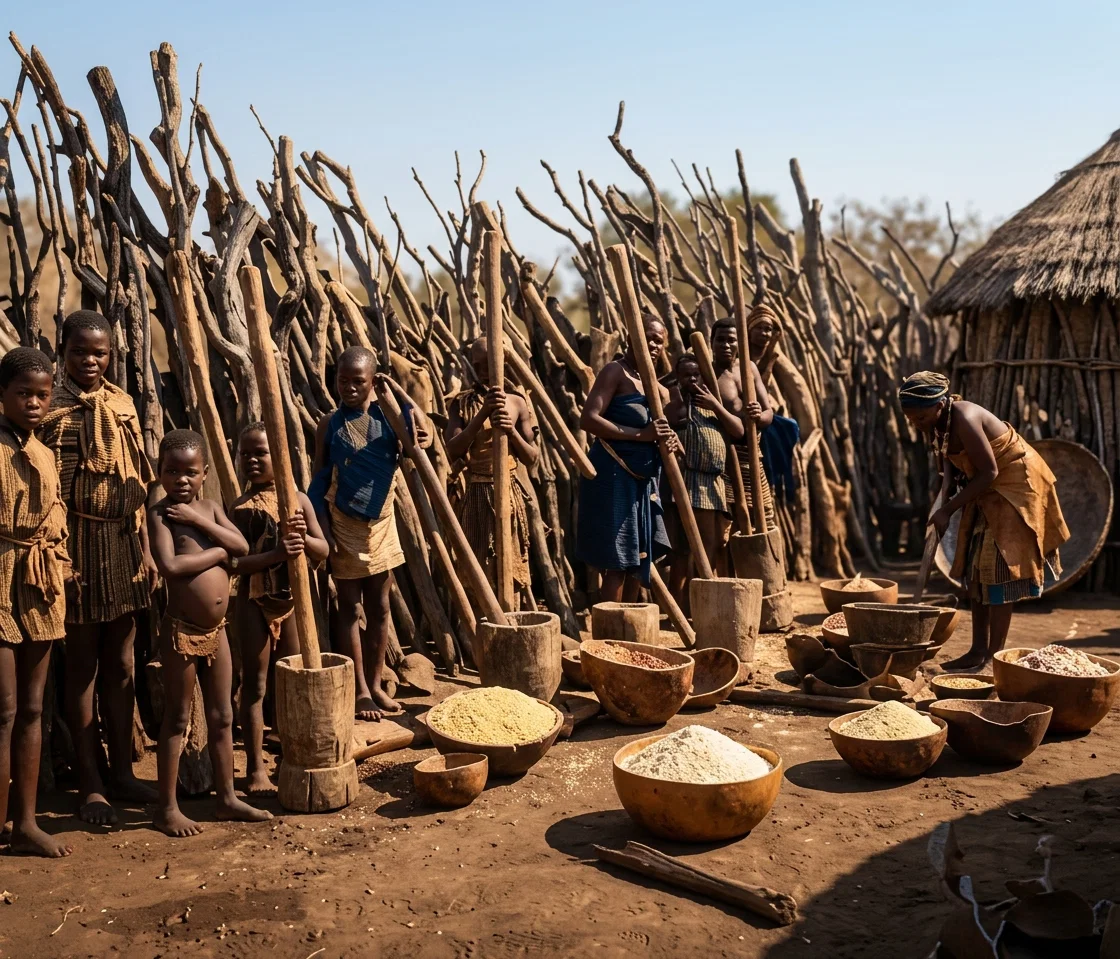
Natives Grinding or Stamping Corn Outside of Village Fence, So. Africa.
NO PART of the great harvest-field yields richer returns, in proportion to the amount of labor performed, than the needy fields abroad. Why?—Because these fields are already ripe for the harvest, and the set time has arrived, just before the coming of the Son of man, when this Gospel of the kingdom is to be preached to all the world. We see the signs in the sun, and in the moon, and in the stars, and in the earth, and rejoice, because they portend the return of our Saviour. But the progress of this last message of mercy to earth’s remotest bounds is no less a sign,—yea, it is an earnest,—that He is coming quickly. True, “upon the earth distress of nations, with perplexity,” exists. Yet in the midst of all this distress, the Gospel message goes forward. This has been demonstrated by the experiences of the missionaries who are laboring in South Africa. One would naturally think that such circumstances as have existed there for the past two years would retard the work. But in spite of these discouraging conditions, the present year in many respects has been one of the most successful. True, what might have been done in times of peace and comparative prosperity is now being done under discouraging, forbidding circumstances; but the results are no less sure.

The South African Conference

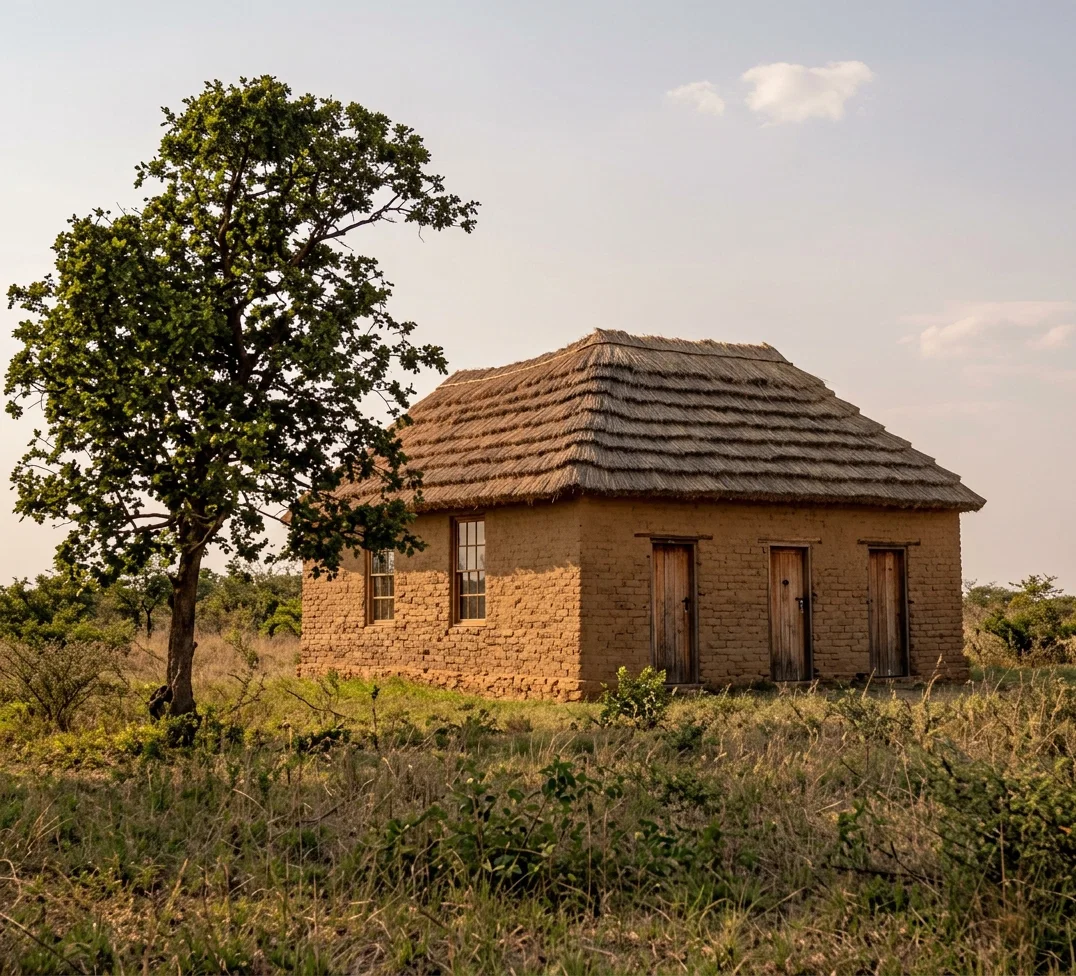
S. D. A. Church in Rhodesia, So. Africa. Erected in July, 1899.
of Seventh-day Adventists has just closed one of the most prosperous years of its existence. Souls have been converted. Altho military surveillance has of necessity prevented the general circulation of literature, that which has been sent out has been received gladly, and has been the means of calling the attention of some to the Christian’s hope soon to be realized. The fact that because of the war, laborers were not able to move freely from place to place, gave them opportunity to work more thoroughly the fields where they were located, and as a result churches have been organized or companies of believers developed. The following testimony concerning meetings held at one point gives an idea of the nature of the work going forward in that field:—
I held meetings on three Sabbaths and Sundays in succession, and each evening of the first week. A mighty outpouring of the Holy Spirit began with the very first meeting, at the close of which three young souls yielded themselves to the Lord for the first time. This was a signal for many new consecrations, which continued throughout the course of the meetings, culminating on the afternoon of the second Sabbath, when a large number of church-members were lifted out of long-standing clouds, and gained victories over stronghold besetments. I have never before seen such a manifestation of God’s power as came into that meeting. I had the joy of burying five young sisters in the watery grave.
At the conference recently held, steps were taken to enlarge the work. The territory of South Africa was divided, and mission fields embracing the Orange River Colony, Natal-Transvaal, Basutoland, and Rhodesia, were formed. Among the heathen nations the Lord has blessed in a remarkable degree. The mission among the Basutos, which began about two years ago, is assuming interesting proportions, and some of this tribe are rejoicing in the truth for these times.

In Rhodesia,

altho the ranks of laborers have been repeatedly broken by death, and only recently by the death of the superintendent, Pastor F. L. Mead, who could ill be spared, the efforts have been prospered beyond the expectation of the laborers located there. The work has been placed on a substantial basis. Some true conversions have been experienced, and to-day four young men are among their own people, teaching what they were taught at the mission. Two have a school of twenty-five members, and the other two have thirty enrolled. One chief, two hundred miles to the northeast, has sent two of his boys to be educated at the mission farm, and calls anxiously for a teacher. How sad to say, “We can not supply your demand.” Yet such is the reply that has been made. May He who has called us to this work touch the hearts of those whom He is fitting for these needy fields. One new mission station has been opened one hundred and forty miles northeast of the present mission farm, and only for lack of men and means have other points been passed by without the help they should have, and for which they have entreated.
The thorough work that has been done for the young men in the school at the mission farm is illustrated by the earnestness of one who walked seventy miles to another mission station and back again, in order to secure a Zulu Bible, paying for it out of the small earnings he had saved from his work at the mission farm. Another walked fifty miles and returned, to pay from his earnings a debt which he had contracted before his conversion. And even the children who are in the orphanage show an interest in carrying the Gospel to those of their people who have not had the privilege of hearing it, by going without breakfast one morning during the week, that the cost of the meal may be used for missionary purposes. Plans are now on foot to assist the young men who have been converted, but who can not be sent out as evangelists or teachers, to form Christian homes in the vicinity of the mission, where their surroundings may tend upward, and where they may be strengthened by the Christian influence of their teachers.

The White Man’s Grave.

On the West Coast, familiarly known as “The White Man’s Grave,” a little company of Sabbath-keepers is rejoicing in the hope of the soon-coming of the Saviour, and pleading that some one be sent to assist them in warning their fellow-men. Altho they have not had the help of a missionary for four years, they have remained faithful, and have been able to add a few to their number. This location must soon receive attention; for the last message of mercy is due to the people of the West Coast of Africa, as truly as it is to any other part of the world, and reports indicate that there are some in that part of the harvest-field who are hungering for light on the Word of God.

In Egypt

the message of truth is progressing, altho the enemy has seemed to leave no stone unturned to thwart the work. The mere handful of laborers, however, are enjoying the blessing of the Lord, and earnest believers in the second coming of Christ are being developed. A captain who for many years had kept the Sabbath of the fourth commandment amidst bitter opposition, having discovered from the Word of God that it was binding, was recently found by one of our missionaries. It was known throughout his entire neighborhood that he observed the seventh day. A minister of the Gospel has been stirred upto assist in proclaiming the closing message, and many are inquiring. The little that has been done has created a stir in this ancient land of the Nile, even as far south as Assouan. One interesting conversion is that of a man about thirty years of age, who lost his sight five years ago, and has been in the institute for the blind two years. He professed to be an infidel. He has asked for baptism, and is keeping the commandments. He understands seven languages, and has been appointed to take charge of an institute for the blind in that country. He is very anxious to do something to give to the blind in Egypt and other countries the message which is so precious to him.

Need of Laborers.

In the dark continent of Africa, with almost two hundred million souls, only five ordained ministers are laboring to proclaim the last message. With these are associated several licensed ministers, Bible workers, and colporters. But what are these few to the vast numbers that must be warned? As the progress reported brings good cheer, because it betokens a completion of the work entrusted to the church, at the same time it should inspire to greater activity. The one work before the church to-day is to send this Gospel to earth’s remotest bounds. When that is done, her mission on earth is finished. There need be delay no longer. Where once we waited for the open door, now the open door invites. There is no country so closed but that the messenger may enter, and no people so hardened but that a few may be gathered out for His name.
Not one individual here and another there, is called to this work, but he who claims the promise, “Lo, I am with you alway,” must also accept the commission, “Go ye into all the world.” Like the Macedonians, may we who profess to love His coming first give our own selves to the Lord, then all we possess, for the advancement of His work, and so do with our might what our hands find to do, that His coming may be delayed no longer.
ESTELLA HOUSER.