A HUMBLE HEROINE

3%

Pacific Press Publishing Company · Oakland, California · Dec 11, 1901

FromSigns of the Times, Vol. 27, No. 50.

Read the full edition

A HUMBLE HEROINE.

Elizabeth Egede.
[Mrs. F. D. Burrell, in the Gospel Message.]
A HUNDRED and fifty years ago, in the quiet village of Faagen, which clings to the edge of a deep fjord in the Lofoden Islands, dwelt a Moravian pastor, Hans Egede, and his frau-pastorin, Elizabeth. Here he had come in his early manhood, filled with the love of souls, and with his gentle wife had ministered to the small necessities of the simple Northern folk, content to love and be loved by them, with no thought of the busy world beyond. There was no disturbance of this outward peace until,—“by chance,” as the world would say, by God’s providence, as the sequel showed,—an ancient chronicle fell into the pastor’s hands. Therein he read of a distant land, hemmed in by seas and bergs of ice, but so rich in meadows and flowers that they called it Greenland—and there was no Gospel there.
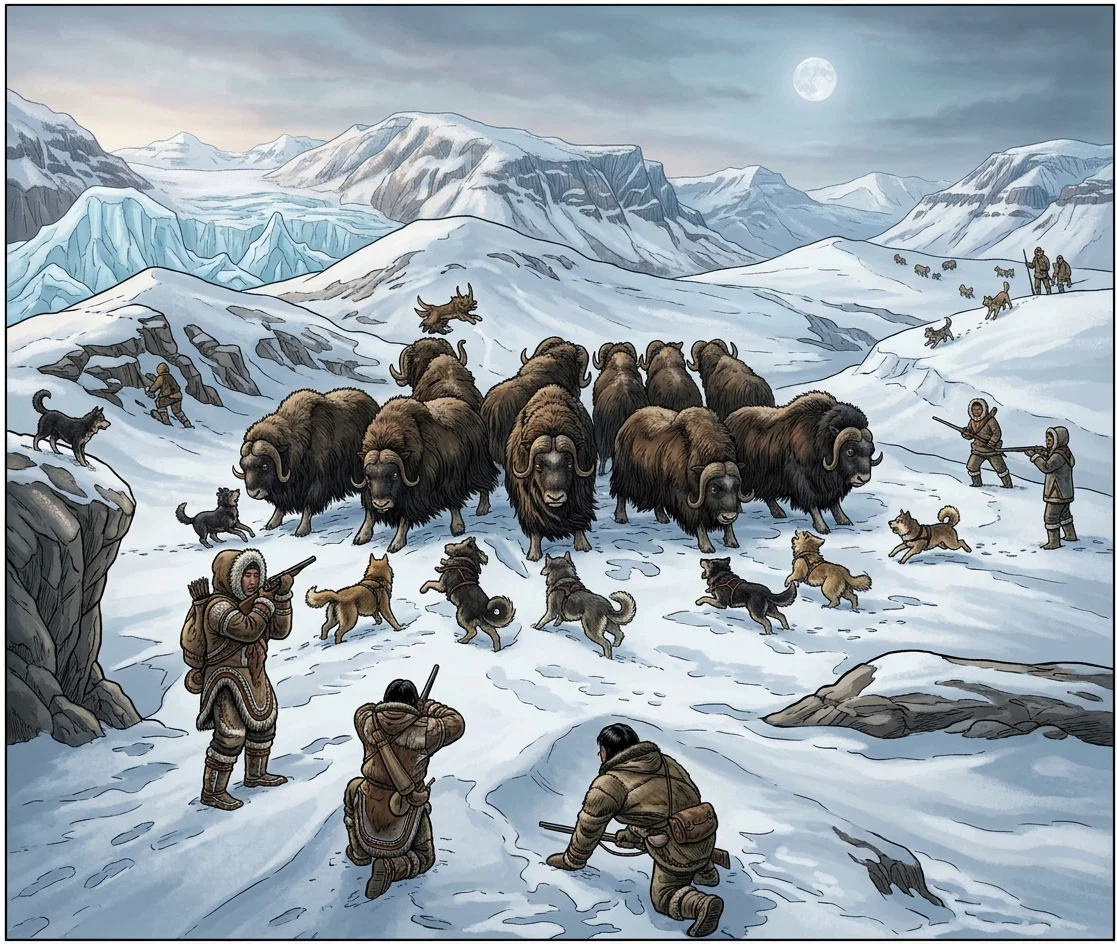
Hunting the Musk-ox in Greenland.
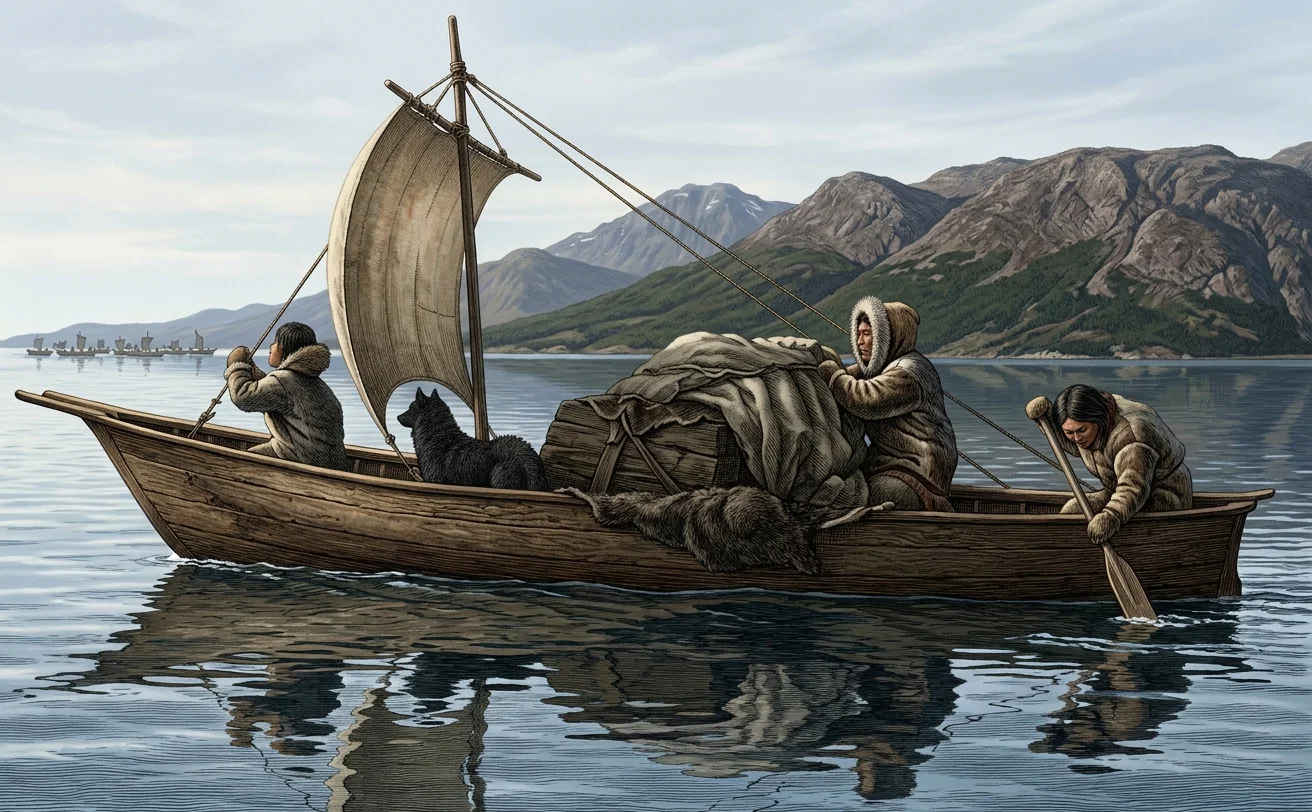
Traveling in Greenland.
The heart of simple Hans was touched. His conscience began to say, “Hast thou no lamp for this darkness?” At length he could no longer forbear to speak to his good wife, Elizabeth. He told her of those people, a thousand miles away, shut out from the world by crystal walls and barriers, and said, “Elizabeth, can I refuse to go?”
Her heart was stunned by the sudden appeal. She wrung her hands, crying, “No, no! It would be tempting God! The people love you here, and the dear household would be broken up, and the Greenland is a thousand miles away amid the ice.”
And he could only smile sadly, and answer, “I have thought of it all; the people, and the wife, and the little ones, and the graves in the churchyard; but over it all I hear again and again the Master’s words, ‘He that loveth father or mother more than Me is not worthy of Me; and that loveth son or daughter more than Me is not worthy of Me.’”
But Elizabeth’s pleading, her tears and reproaches, prevailed at last, and the pastor in silence went about his accustomed tasks.
Four years rolled on; unknown to each other, the pastor and his wife were both thinking hard on the darkness of those ice-bound people. One morning Hans suddenly spoke,—
“My wife, I have received a three-fold sign from heaven!”
With a sinking heart she cried,—
“Ah, good pastor, is it concerning the Greenland?”
“Yes, God will be heard! Here is a letter from our good Bishop Krog. He writes me that I must go, and promises all possible support. And here is another from Bergen, from Bishop Randuff. He writes also that I must go, and, most wonderfully, in almost the very words of Bishop Krog.”
“And the third sign?”
“Ah, that is the most wonderful of all. This is from both Denmark, my old fatherland, and Norway, my adopted land. The richest of our merchants have undertaken to reopen the trade with Greenland, and promise one of their ships for me and my family. Elizabeth, is it not the hand of God?”
It was then that the heroic faith of Elizabeth proved itself stronger than her woman’s fears. Her eyes were filled with a sudden grief; there was a reaching forth of the hand as if to offer sacrifice, and she said,—
“O my husband, if the Lord calls, I will no longer hold thee. But like Ruth to Naomi, I will say, ‘Whither thou goest, I will go; and where thou lodgest, I will lodge; thy people shall be my people, and thy God my God.’”
That day a faith was born which no hindrance, discouragement, or apparent failure was ever able to destroy.
But the voyage to Greenland was not plain sailing yet. No sooner was it noised abroad in the village than the people began to besiege their good pastor with entreaties to remain. “For the sake of our households, our dear church, our souls, leave us not!”
Oftentimes his resolution would have failed, had not the brave Elizabeth enheartened him. He was reluctant to surrender his pension and give up the comforts of home. He shrank from exposing his four little-ones to the rigors of an Arctic climate. But his helpmate spoke many comfortable things. “Fear not, Hans,” she would say, “the God of the sparrows will not suffer us to want.” So he was moved again to say, “The Lord bless thee, dearest wife!” Her faith constantly rebuked him.
In the spring of 1721, the ship that was to carry away the dear pastor of Faagen cast anchor in the bay, and the people began to say one to another, “It is true, it is true.” Sad indeed were those days of leave-taking. Groups of tearful men and women stood by the parsonage doors. Frequently had Elizabeth to repeat for Hans’ encouragement, “He that loveth father or mother more than Me is not worthy of Me; and he that loveth son or daughter more than Me is not worthy of Me.”
The little procession at last came down from the village to the beach, and pastor Hans set his foot on the plank to embark; at that moment a sailor accosted him,—
“May I make bold to ask whither you sail?”
“To Greenland.”
“Then in God’s name tarry at home.” And he proceeded to relate what his own eyes had witnessed of hardship and suffering in that far-off land, telling of distasteful food, of plagues, and, worse still, of cannibals inhabiting this land. The minister’s heart failed him. “O Lord, how can I take my loved ones to a land so desolate and cruel?” He turned his face toward his weeping parishioners who besought him, “Stay with us, it is God’s will.”
This was the moment of great trial of Elizabeth’s faith. She stepped boldly upon the plank, and laid her hand upon her husband’s arm.
“Hans, be a man and a true servant of God! Listen, listen, O people of little faith! I hear from far away the voices of the souls that perish in the Greenland! I hear them calling, ‘Come and help.’ Will ye hinder? Husband, in the name of God, we must go!”
Then she walked aboard the boat, and the people through their tears saw the herr-pastor and the frau-pastorin, with the light of holy consecration on their faces, sail away to their appointed work.
Space does not permit a narrative of the trials and privations endured by the missionary’s family and the little colony of traders who accompanied them to their home amid the dreary ice plains and mountains of the North. They met little success. A stolid race was the Eskimo, and seemed to have no perception of spiritual things. But Hans and his faithful wife toiled on. At the end of a year their provisions were exhausted. No news came from home, no reinforcements nor supplies for the approaching winter. The colonists determined to return. They were endeavoring to persuade their pastor to cease his labors among the dull Eskimos, when Elizabeth suddenly confronted them. “Are ye men, thus to counsel a retreat from the blessed work of God? What is it that hath broken your courage? Hunger? Then take the food which we have kept for our children! Take it, go and leave us peacefully to our Lord’s will! The sails will come! God will not forget us!” They stood silent and ashamed, then resolved to wait yet a little while. On the third day a ship was sighted, and at evening the little colony had news from home, and food—and courage.
There is little more to tell. In 1735 Elizabeth died at the Lord’s work, but not until her eyes had seen an earnest of that mighty harvest of souls which was soon to follow her death. In the church of St. Nicholas, at Copenhagen, is a stone bearing the simple name, “Elizabeth Egede.” The marble tells naught of her self-denial, her faith, but these are written in the book that contains the record of all faithful lives. May God write our names therein!