CONSIDER the lilies of the field, how they ‘grow; they toil not, neither do they spin; ‘and yet I say unto you, That even Solomon ‘in all his glory ‘was not arrayed like one ‘of these. ‘Wherefore, ‘if God so ‘clothe the ‘grass of the ‘field, which ‘to-day is, ‘and to-morrow is cast ‘into the ‘oven, shall ‘He not ‘much more ‘clothe you, ‘O ye of little ‘faith?”
Everything in nature, both animate and inanimate, is intended of God to teach us most valuable lessons.
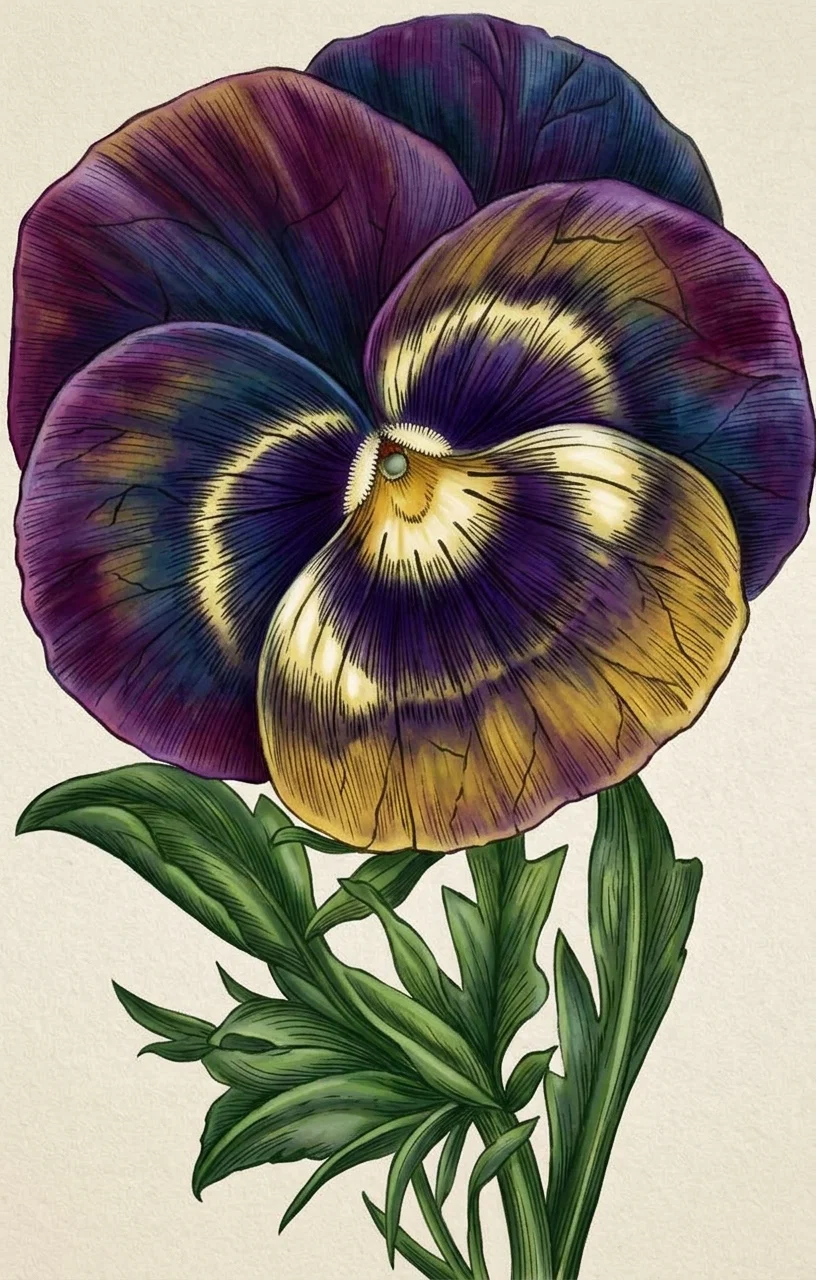
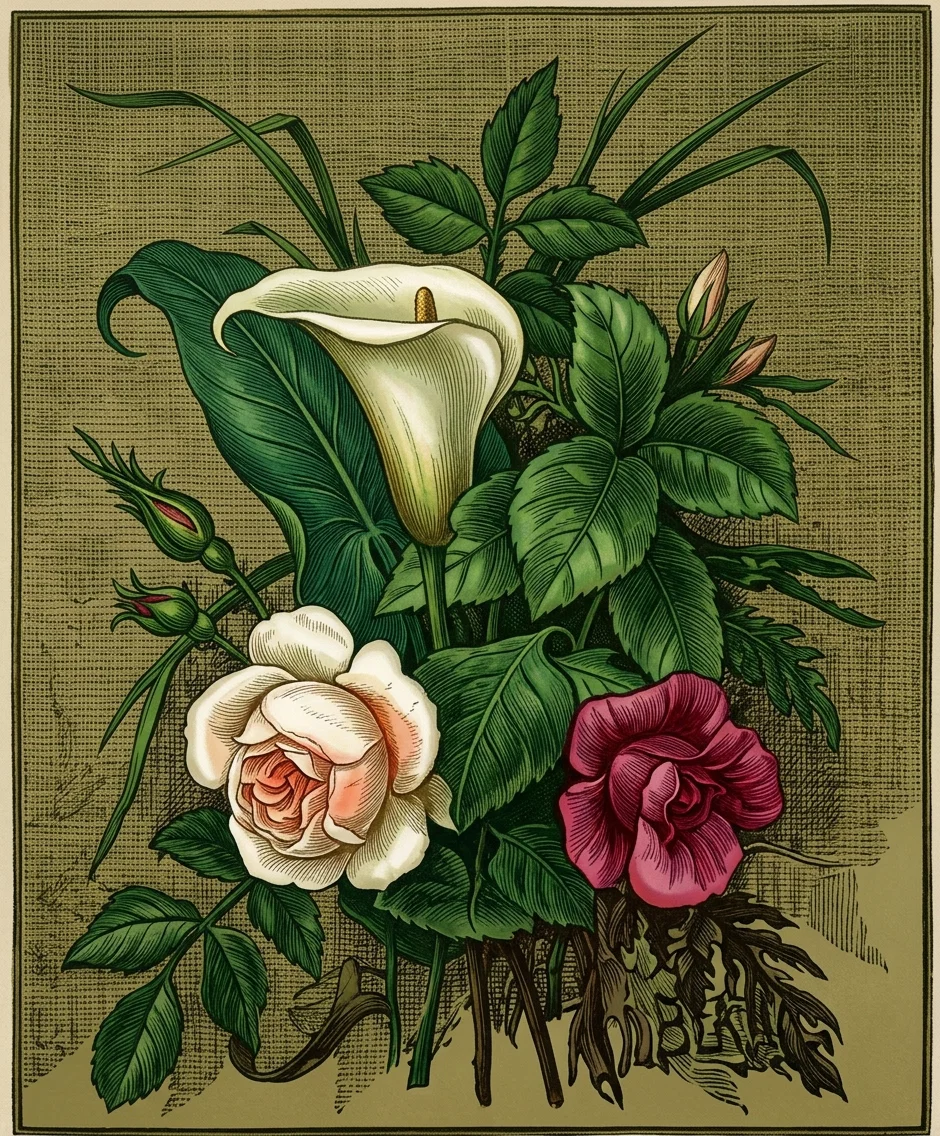
In these words of the Saviour above quoted, two ideas regarding flowers and their study stand out prominently. One is that we are to consider how they grow, and the other is that of their beauty, which was so great that even all the splendor of Solomon’s court was not to be compared to it. It is this point of beauty that I wish first to consider in our study of plant life. The first command of the Saviour to consider how plants grow will apply with equal force to all plant life, for all plants grow. But all plants do not have equally bright coloring, and are not to us equally beautiful.
We should consider the color of plants. Our appreciation of their beauty will thus be increased. A little child will often enjoy color more than one who is older. This ought not to be. As one grows older, he should have an increasing love for all that is lovely. This taste for the beautiful can be increased to a surprising extent, and in a very easy manner. We have simply to consider. And it is such a delightful study—this study of color. Take the universal color of green; no other is so restful. If red were as universal a color as green, the nerves of the world would soon be worn out; indeed, the majority of the people might be driven into the insane asylums. Our whole nervous organization would have to be reorganized to live with such a color. We can think of nothing more restful than a landscape of green, reaching from the velvety lawn at our feet away to the hills and mountains in the distance. Many tints and shades are thrown together in the wildest confusion, and yet there is perfect harmony in this confusion.
The majority of people appreciate very little the value of the beautiful. It does not possess for them that intrinsic value—dollar-and-cents value—which to them is so important. In this they greatly err, for much of the sweetness of life is thus lost. True beauty, whether of color, form, or sound, is always harmonious. Harmony is a union of individual elements into one perfect whole. This is well illustrated by the landscape of which we have spoken. No one ever saw a natural landscape that was inharmonious; and yet every variety of tint and shade may appear in it.
Now this idea of harmony, in connection with the study of color, has, indeed, a very practical application to life. A love for that which is harmonious in nature without, will assist in giving a love for inward harmony. I say assist, for it can never give it. Harmony of soul can only result from perfect at-one-ment with the God of all harmony. There is, then, the greatest need for a study of color from this point of view, than which no other view can be more practical; “for is not the life more than meat, and the body ‘than raiment?”
It will be readily observed that three colors, green, and red, and yellow, predominate in nature. When plants are young, their quite universal color is green. As they mature, the color changes, generally to red, but often to yellow. The cause for this is not far to seek. It is well illustrated by fruits. Green fruit is usually unripe, therefore unfit to be eaten, and it is concealed from the hungry eye of men and birds by its color. When ripe and fit for use, however, its color is changed so as to attract their attention. Here, at least, it can be seen that color has a dollar-and-cents value to man.
The study of color pursued from childhood brings not only many practical lessons, but continual pleasure. There are seven primary colors. From these seven primary colors are variations—tints and shades—to the number of between five and six hundred. A beautiful and interesting study for children is found in making collections of different shades and tints of the same species as of an apple, or a leaf, or a blade of grass, etc. The different shades and tints may be arranged in the order of their growing light or shade from the primary color. One of the most interesting teachers I ever knew told me that he had had whole classes that were able to arrange and name in their order the five or six hundred tints and shades of the seven primary colors—violet, indigo, blue, green, yellow, orange, and red. He selected pieces of silk of all these colors, and when his pupils had fully arranged them, they presented a charming sight. The pupils would then duplicate these colors from nature.
Into every child’s hand there should be placed colored crayons and water colors, and he should be encouraged to use them. These are not expensive, and they are not only instructive to the children, but they afford an endless amount of enjoyment as well.
It should be borne in mind that the lesson which the Saviour is attempting to teach from the growth of the lilies and their beauty is one of faith. The things which we consider are not to be studied from the dollar-and-cents point of view, for the life is more than meat. That which tends to the upbuilding of the spirit of an individual is the most valuable. Color plays a large part in God’s plans for His children’s happiness. One has only to read the marvelous description of the city which He is preparing for those who love Him to be convinced of this. The beautiful display of color therein described will bear long study. Color is refreshing and invigorating. Let the love for it be developed.
As I write, I am riding on the banks of a wide, deep river in Maine. It is a calm, somber afternoon. Nothing, it would seem, could be more placid and tranquil than this river. The harvest is gathered, the summer is waning. Such a display of beauty has God hung out for me. All tints are displayed, from the somber evergreens that fringe the banks of the river, to the yellow and red of the ripened verdure. And the river, as if one view were not enough, in which opinion it is quite right, mirrors not only all this but the heavens as well. It thus gives an enchanting harmony of heaven and earth to me, and my soul is refreshed.
“Thou who hast given me eyes to see
And love for what is fair,
Give me a heart to find out Thee,
And read Thee everywhere.”