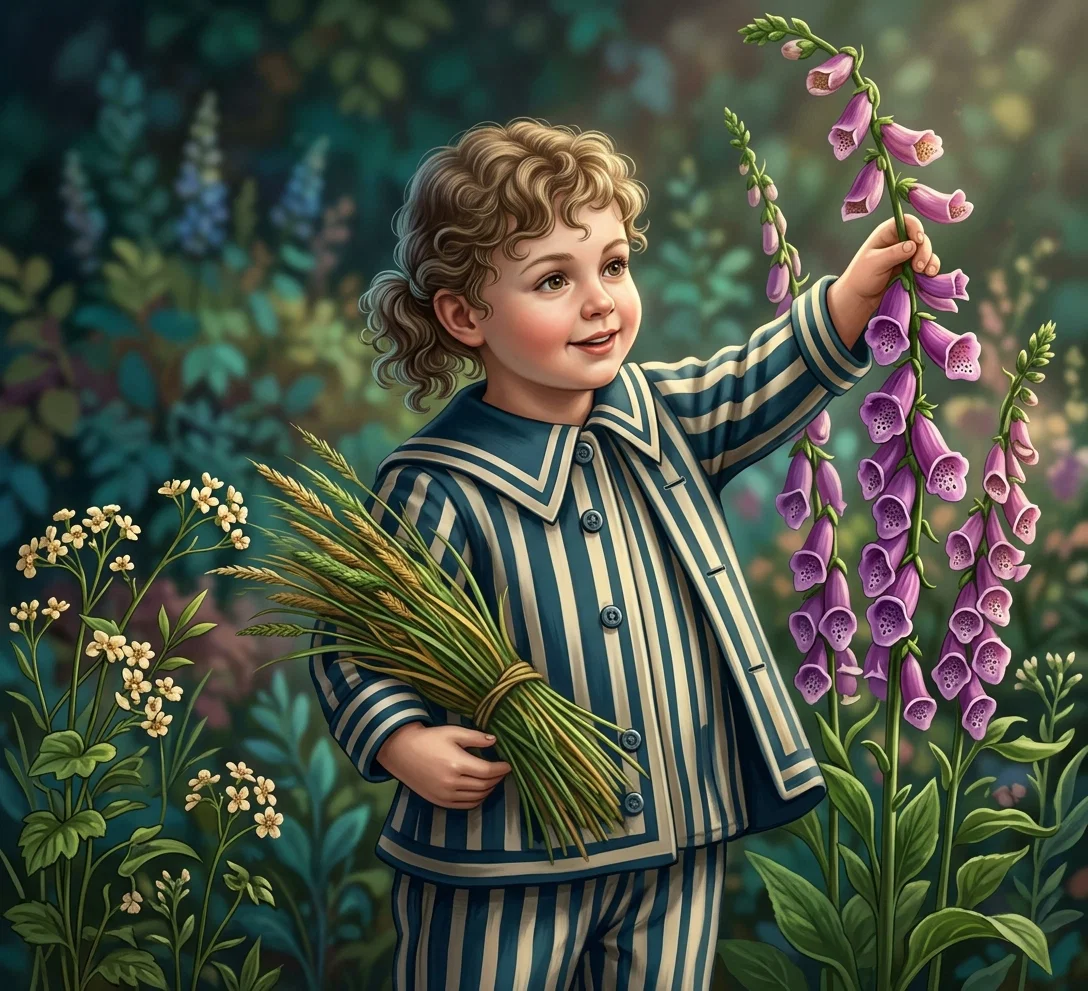
CHILD STUDY has quite revolutionized many methods of teaching children. Instead of considering alone the demands of society and the wishes of those in charge of the child in education, his natural tendencies of mind and body are most taken into consideration in what is taught him and in how it is taught—“a little child shall lead ‘them.’” The normal child indicates readily those lines of study in which he has a natural interest. He is continually telling by his actions what objects and things appeal to him most strongly. God has a purpose in the life of every child; and it is very possible so to direct the development of the child as to thwart the Creator’s purpose, and crush it quite fully out of his life.
It is indeed quite safe to take this spontaneous and natural development of the mind of the child as a guide in his education. Place him in the midst of the Creator’s manifold works to roam about, that he may observe, compare, and think, and he will return in time a discoverer,—nay, more, a conqueror.
But for these natural hints of the child’s mind to be of any real value to the parent and teacher, they must be studied critically and persistently. How may the child’s mind be studied?—By carefully noting what he says and does; a note-book is here of much value. What a child does and says are generally very easy of interpretation, and his motives are not far to seek, for he is open and frank. Rare indeed is the child who does not talk and act as he feels. In this is, perhaps, the greatest opportunity for directing the developing mind of the child; for his thoughts are almost entirely outside of his own personality. All too soon, however, they become reflective and self-centered, and then pass rapidly from sight and control. The first years of life are the all-important ones.
It is the spirit of open frankness that enables us to read in his freely-expressed thoughts his likes and dislikes of all life and nature around him—more likes than dislikes, however, in the normal, well-trained, and disciplined child. Surrounded by nature, the child becomes a king, reigning in his own realm. Why, O why can not all children live in the country, breathing pure, wholesome air, drinking into their souls the beauty of form and color, and filling them with love and good will? I say that in such an atmosphere the child becomes supreme; all things are his servants, ministering to his happiness. He is fanned by the soft breezes of spring and summer, filled with a delightsome vigor by the cold winds of autumn and the blasts of winter. He has covered himself with blankets of snow, and has reveled in the bath given him by the pelting rainstorm: creek, river, and lake are his boating and skating. The diamonds of the dew are his; so are the glories of the rainbow. The lightning’s flash and the thunder’s roar startle and awe him, yet fill him with an “I’m ‘not afraid’” spirit. For him many kinds of birds flit about, or sing amid the leafy branches of a great variety of shrubs and trees. Droning bees and whirring insects pass in, and out of, and among, many flowers of a great variety of shape, size, color, and perfume. The sun and moon have daily, all his life, been reviewed by him, as they have passed on their stately march through the glorious avenue of the stars. Each year, he has seen the world arouse from its slumbers and life-storing rest, and throw off its blanket of snow, don beautiful robes of green, go forth to the work of the year, become weary, and seek restoring rest,—apparently a great resurrection and death.
At no time in the life of an individual does he acquire so much knowledge as during those years before he reaches the age when he should attend school. What a great mistake many parents make in hurrying the children off to the school-building, with the idea that a child is not learning until he has a book in his hand.
Because of this mistake, the powers of observation are left undeveloped and untrained. If the child could only be kept growing mentally throughout his life at the same rate that he grows before he comes to the age when he is usually sent to school, it would seem that he might become a renowned scientist in whatever field of study his natural bent of mind should direct him. That this natural interest of the child does abate, is a fact evidenced in the life of nearly every child. Who is responsible for this change, which is nothing short of a calamity? Who indeed can be but parent and teacher?
How may this natural interest be prolonged?—By following carefully and persistently the laws of nature in the child’s development. Notice the character of the knowledge which the child acquires. Of a flower, he talks of its color or perfume; of an animal, its size or shape; of a bird, its song or plumage; and so on continually—all breadth and no depth. And this is considered all wrong by most parents and teachers, because they think it leads to superficiality; and consequently they set themselves at once to teaching the child of the structure and classification of the objects—often the classification before the structure. The child should come to all this, but in advanced work. But with the child these ideas about definite order are unnecessary—dog or elephant, tea-rose or pigweed, butterfly or earthworm—let him study where and what he will.
It must be remembered that I am speaking of children below twelve or thirteen years of age; and I am wishing to emphasize the fact that observation lies at the basis of knowledge-getting. How often does the word “Behold” occur in the Scriptures. If men will not behold, they can not learn; neither can children.
I would not convey the idea from what I have said that a desultory and aimless observation is advocated, passing thoughtlessly from object to object, as an insect from flower to flower. Thoroughness should early be taught the child. The bee, in passing from flower to flower, gets some sweetness from each, if it has to give; so should the child be taught to gather something of value from each object of its observation and study. FREDERICK GRIGGS.