THE PEOPLE OF FIJI

5%

Pacific Press Publishing Company · Oakland, California · Oct 9, 1901

FromSigns of the Times, Vol. 27, No. 41.

Read the full edition

THE PEOPLE OF FIJI.

[An address by J. E. Fulton before the Union Conference held at Cooranbong, N. S. W., July 11–28, 1901, and printed in the Union Conference Record.]
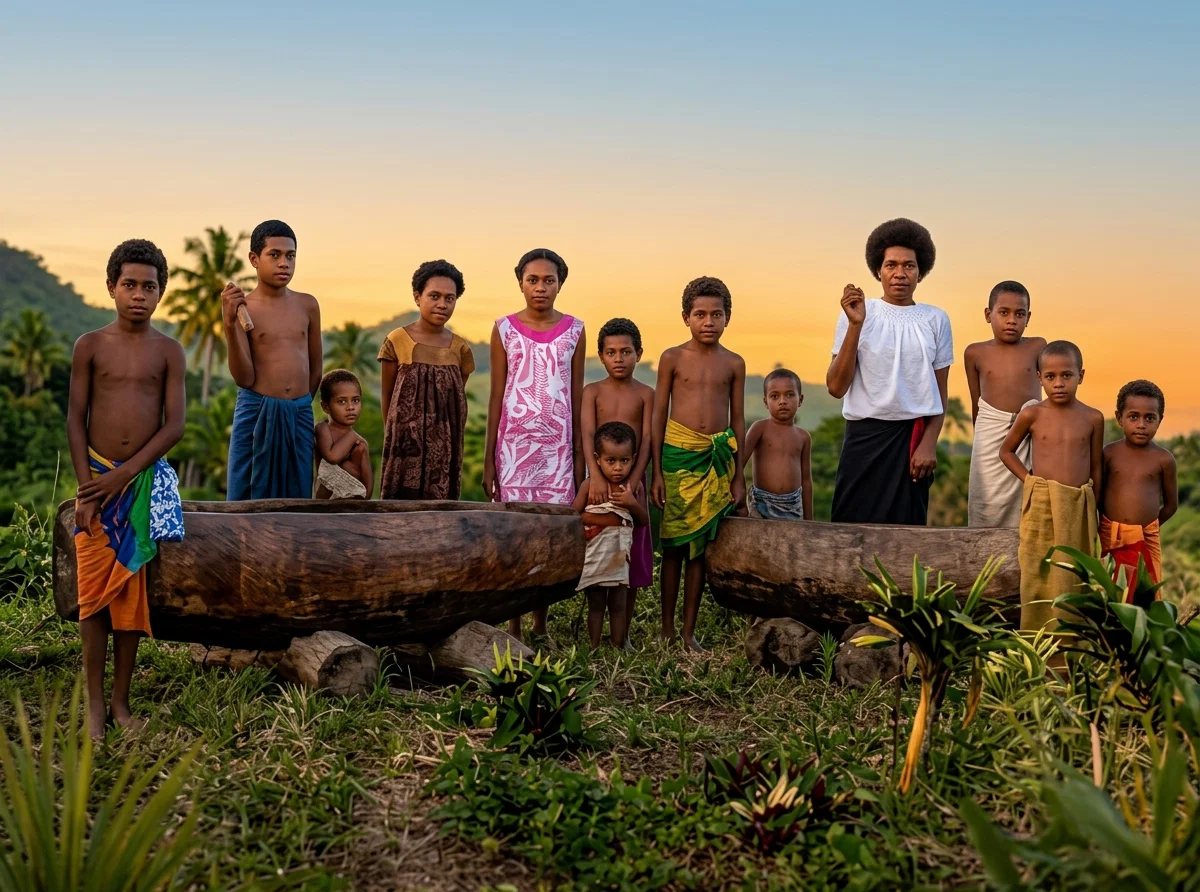
When I came to Australia, it seemed so strange to see so few services on the Sabbath. I will tell you about our services in Fiji. I told you the other evening that we had only two little tracts besides the Bible. We have also a small hymn-book, and that is one reason why the natives like to come to meetings. Sister Parker is here, and if she is willing we might sing you one. (The hymn “On Jordan’s stormy banks I stand” was sung in Fijian by Brother and Sister Parker and the speaker.) We commence our Sabbath services on Friday evening at the ringing of a bell. This bell is a hollowed-out log, which is beaten with two big clubs. This is done either by children or grown people, and can be heard a long way. This was the kind of bell that was formerly used to summon the people to their cannibal feasts. Now it is used to call them to the church services. At Suva we have such a bell. We have a prayer service at the beginning of the Sabbath. At sunrise the people come again. This is not only for a few Sabbaths, but is done throughout the year. At 10 A.M. we have our Sabbath-school. At 11 A.M. we have our preaching service. At 3 P.M. we have another preaching service, and at the close of the Sabbath we have a service for praise and prayer. On Tuesday evening we have our prayer and social meeting, and on Thursday evening we have an informal talk on health reform or other subject, or I try to answer any questions the people may ask.
There is a membership of about forty-five in our Sabbath-school. There are also a few scattered ones in other parts of the group; but the company I have been speaking of is at Suva Vou. The people sit on the floor. The men sit on one side of the building and the women on the other. They have no use for chairs or tables. They write their letters while lying on mats.
Ringing the Bell for Church in Fiji.
They eat their meals off mats which are spread upon the floor. Their plates are usually banana leaves, which need no washing. They use their fingers instead of knives and forks. Their food consists of various things. They eat yams, taro, and bananas, which are sometimes boiled in the green state and eaten. They often bake them. They make a pit in the ground, and put a fire in it and heat it. Then the fire is taken out, and the food put in. This is then covered with grass and left to cook. Pigs, tinned beef, and fish also are eaten. Taro is an article of diet,—a root which is eaten either boiled or baked. Vakalolo is a preparation of this root. It is beaten up fine, mixed with coconut milk and sugar-cane juice, and baked brown. It takes the place of pudding.
For beds one end of the house is raised like a platform. This is often fifteen feet wide, and its length is the width of the house. On this stage are placed long boughs or leaves of the coconut tree, and over these a large number of mats according to the wealth of the owner. Over these is a mosquito screen. Their mats are remarkable, and some are very beautiful indeed.
The breadfruit is eaten. It grows on a tree, but is more of a vegetable than a fruit. They sometimes preserve it, or rather rot it, by burying it in the ground for weeks. The Fijians esteem it a great delicacy. They make bread from a nut called ivi. It is soaked in dirty pools of water. If a native woman loaded with this were to see a white person coming, she would take a very circuitous route to pass him. The reason is that her burden does not smell very nice. After being soaked, the nuts are scraped and made into bread. Some of our people have put this kind of food away, but it is as hard for them to break off old habits as for us. Baker’s bread can be bought in Suva. The Fijians are in advance of other natives. They have good clean mats even in the houses of the poor.
I told you the other night that there are about 15,000 Hindus in the islands. Well, there are more Hindus than Fijians in the jail. This jail has a wall all round the grounds. The wall is composed of reeds from the bush. These are as large as a man’s finger and about ten feet high. Yet, although the walls are so flimsy that a man might break through them anywhere, it is very seldom that one escapes. The prisoners are treated very leniently, and are trusted as messenger boys to go miles into the interior. They wear their sulu like other people, and you would not recognize them only by the letters “S. G.” (Suva Gaol—English spelling of jail) printed on the sulu. The Fijians are a very reverent people, in form at any rate. When entering a church they will bow down, and when inside they will sit very quietly. Before the coming of Christianity, the Fijians had a religion of their own. They had their priests, and their heathen temples were all over the islands.
We find it a very hard task to discipline the children in school. When we are correcting one, all the rest join in correcting that one too. If they are close enough, they will give him a slap. When we turn round to the one who has slapped him and speak to him, then all the rest turn on him. It is very hard to make them understand that they must be quiet.
I have been asked if our work in the islands can not be made self-supporting. I do not know what the Lord may do. The chiefs get some money from the government, but the common people are poor. Their usual wage is a shilling a day. You can readily see that there is not very much to save up after purchasing clothing and a few necessaries. I often think of the text, “The poor ye have always with you.” It seems to me that we shall always have to help these needy mission fields.
One quarter our Sabbath-school contributions in Suva amounted to £3 14s. 7d. The people had paid their tithes, too, and had helped to make the mission quarters. Other quarters our contributions amounted to £2 ($10).
The government taxes these people very heavily indeed. They are required to pay £1 4s. per man in Fiji, and a boy is reckoned a man as soon as he reaches the age of sixteen years, or when he leaves school. Many are required to pay their taxes by raising sugar-cane for the mills. Where no sugar is raised, they must raise coconuts, dry them, and bring them to Suva or Levuka. Besides these things, they must work on the roads. They get no food supplied them, and as they are far from their homes, they are obliged to go out in the bush and dig roots for food. The Hindus and other islanders are free from all this taxation. Besides all these taxes, they must pay an indirect tax on store goods, such as cloth and tinned meats. If they get a few shillings, they always spend it. Sometimes the natives are required to get out timber for the government. It takes a very long time to get out this timber. Not long ago some of our brethren were nearly imprisoned over this thing. They were engaged in getting the timber; and as the Sabbath drew on, they saw they could not get to their destination without breaking the Sabbath. So they tied up their raft, left it, and went home. The chief threatened to report them to the government. They said that even if they were to be sent to jail, they would rather suffer that than break the Sabbath. The brethren there love the truth very much. If we could only be there at their family worship, we should hear them praying for this conference, and in their meetings they pray for the work in other parts of the world.
Two years ago, when Brother Irwin was passing through Fiji, I went on board ship and met him. The chief Ambrose saw him. The natives wanted to know who he was. I explained to them that he was the president of the General Conference, who had charge of the work all over the world. They now call Brother Irwin Qase Levu kei Varasura (the big man of all the world). They call BrotherGates Qase Levu kei Polynesia (the great man of Polynesia), while my name is Qase Levu kei Viti (the great man of Fiji).
They have a real love for the work, and I have heard them break down as they prayed for others in different parts of the world. A visitor to Fiji would be much struck by the sound of singing coming from homes of the natives as they engage in their morning and evening worship. This is true of the Wesleyans all over the group. The Wesleyans did a great deal of good among them in the early days.
I want to mention again about the launch. Calls continue to come from all parts for help. “Come and help us,” they cry. I believe there is a harvest to be reaped among these islands. I feel we must have a launch. If, after you have paid for these great institutions in Australia, you should have a few pence left, I trust you will remember us in Fiji. With the launch we can go inside the reef in any ordinary weather. We could also go outside the reef and visit the outlying islands. Inside the reef which surrounds many of the islands it is calm in almost any weather. The people are calling for the message; and whether they call or not, we must take it to them. It really seems as if we must have this launch, and I believe the Lord will give us means somehow.
At Bau, the great cannibal capital, about a month ago there was a large feast while my wife and I were visiting the place. They had large turtles, pigs, and yams. They had also fowls, taro, and other things. I went to see the chiefs and to distribute literature among them. I hardly dreamed of having an opportunity of preaching to them. They were asking me questions all the afternoon. Finally, one of them said, “Why don’t you preach? I will ring the bell.” I told them I would preach. There was a large building, their council-chamber. After the singing of a hymn, and prayer, the building was filled. Several hundred were present. Many seemed very glad of the meeting and wanted me to come again. I gave them some more tracts, and they said they wanted the book we are having printed. Now is the time to do work in Fiji. If we wait, the interest will grow cold. I want to see the work go there, and the Lord has told us that now is the time.
Just a word about the medical missionary work. Before going to Samoa, Dr. F. E. Braucht visited Fiji, but he could not practise there owing to British law. We asked the governor about it; but he said that, while nurses would be welcomed, the law forbade doctors to practise unless they had colonial or English diplomas. There is one circumstance that would militate against medical work on a self-supporting basis. The government gives free treatment at its hospitals. Yet we need and must have medical missionary workers.
I will tell you a little experience. Some little time ago I visited the island of Naironi. I got there in the evening and stopped at the house of a native. He was just going out to visit a sick man who was dying. He had been eating some hurtful thing. I asked if he would allow me to do something. I applied fomentations to his chest and back. In half an hour he was asleep. He slept on and on till 10 A.M. next day. Then he said to me, “I was dying. You’ve saved my life.” Brother and Sister Parker did good work in these lines. The natives were very grateful and brought mats and other things. Some, of course, are ungrateful. A native was going to die, but through medicine given him by a white man he got well. Then he came to him and said, “You have cured me. Now I need clothing and food and money. If you had let me die, I shouldn’t have needed these things.” There is a man in Fiji whom Brother Parker cured. He is around every day. We can’t get rid of him. Still we must work for them. Christ healed ten lepers, yet only one returned to thank Him. I think more than one in ten would be grateful in Fiji. I believe they are very good people. Some of them are growing in grace and knowledge of the truth, and will find a place in the kingdom. Some are growing up to be missionaries. We have also Hindus and Polynesians there. It is a good mission field. The other day a Hindu offered to interpret for me if I would speak to his people. May our hearts all be stirred to aid in answering the calls from this needy mission field.