ON THE WAY TO INDIA

6%

Pacific Press Publishing Company · Oakland, California · Jul 17, 1901

FromSigns of the Times, Vol. 27, No. 29.

Read the full edition

ON THE WAY TO INDIA.

At the large conference that was held in Battle Creek, Mich., April 3-23, 1901, there were delegates from all the important countries of the world, and from many of the islands of the sea. The meetings were very interesting, and afforded a rare opportunity for learning from eye-witnesses the real progress of the message of salvation among all the nations of the earth.
During our stay in Battle Creek there was held a convention of the physicians of the State. They seemed to enjoy and appreciate the hospitality and all the interesting features of the great Sanitarium, while Dr. Kellogg, the well-known physician-in-chief, seemed to be overflowing with good cheer as he led them, with hearty welcome, thru all the extensive and well-furnished departments of the institution. Visitors at the Sanitarium are naturally impressed with the thought that “the half has never been told,” as they view the great and excellent varieties of health foods, the extensive and complete facilities for preparing them, the numerous and very ingenious inventions for shaking life into every muscle of the body, and the great advancement toward perfection of all the arrangements for the most thoro treatment by the use of water, electricity, and all of nature’s remedies for the restoration and perpetuation of the precious boon of health.
During the health convention, long tables were spread with a bountiful supply of the flesh of animals affected by tuberculosis and other diseases, suggesting a caution to those who use such articles as a substitute for food.
I returned to Mississippi, expecting to spend another year in the South, and then try the climate of England; but a call came to go to India. Bidding adieu to my brother and his family, we were soon rolling northward once more, thru forests fully clothed in their new vernal robes, and by the lately planted fields of cotton, corn, and peanuts. A brief visit with friends in different parts of Michigan, and then our company of five was soon made up, our trunks were packed, our many friends at Battle Creek were assembled at the train to witness our departure; and after the farewell words were spoken, while we were taking the last lingering look at their familiar, friendly faces thru the windows of the car, their voices touched a responsive chord in our hearts as they suddenly burst forth in the farewell song of cheer:—
“Onward, Christian soldiers, Marching as to war.”
Then our train moved quietly out of the Sanitarium city, bearing us safely thru the darkness of the night in the care of invisible protectors.
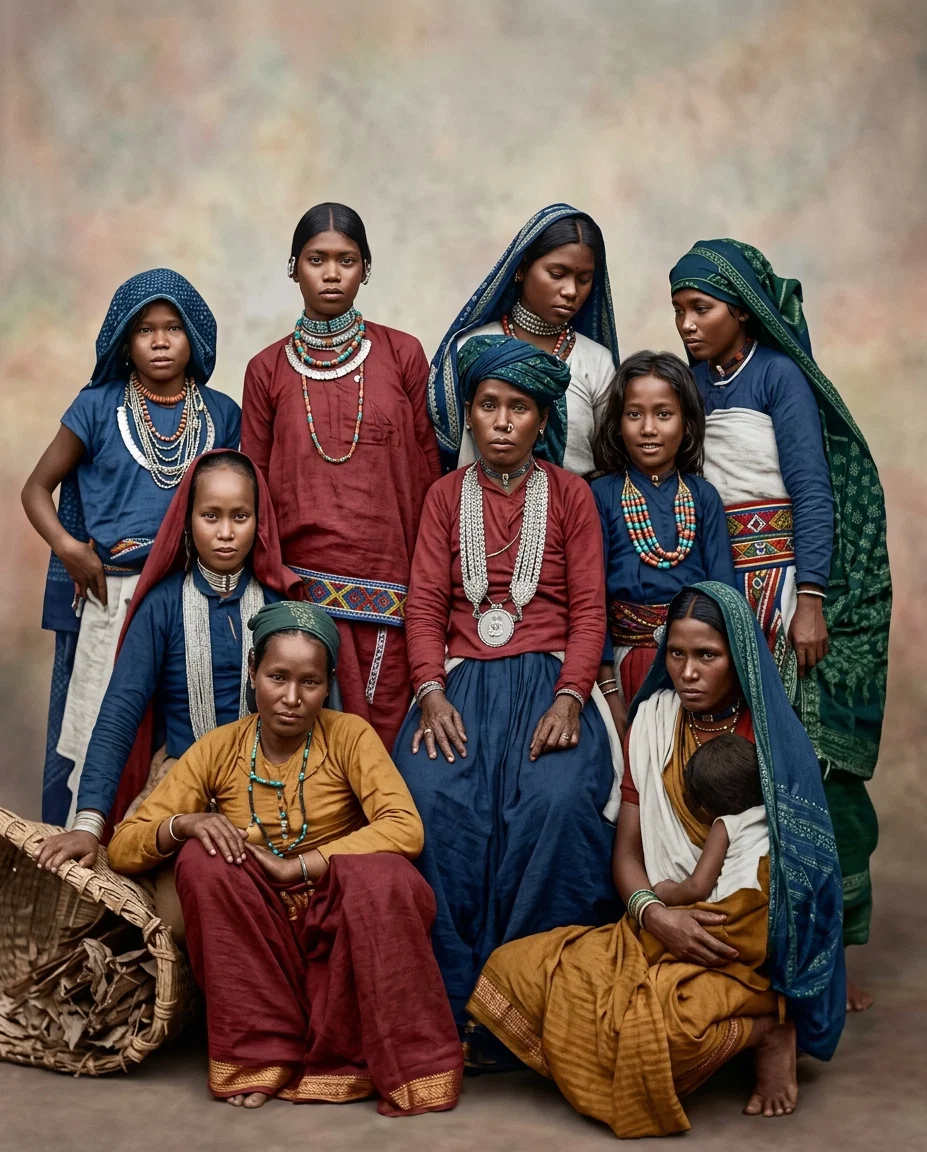
Native Women of India.
Monday, May 27, with the light of morning we found ourselves moving over the green fields of Canada, and soon the deep, swift Niagara River was flowing beneath our feet, and the bridge of wire cables held us suspended in the air while we passed safely to the other side. Then the voice of many waters sounded in our ears with increasing volume as we approached the mighty cataract. This immense sheet of water is forever pouring over the precipice with a fall of 158 feet, at the rate of 222,000 cubic feet per second. “It affords an immense water-power, of which 5,000,000 horse-power is readily available, and 85,000 horse-power has already been utilized.”
Crossing over the rapids on the foot-bridge, we had a fine view of the cascades above, and of the mountains of water tumbling together down the fearful rapids. Crossing Goat Island, we had a fine view of Horse Shoe Falls, where we took our lunch, and then returned and took the train for Buffalo. Here we enjoyed a hurried walk thru the grounds and principal buildings of the Pan-American Exposition. Our view of this expenditure of so many millions was too brief to permit us to judge of its merits. The outward appearance of the buildings seemed very characteristic of the nation that, in its extravagance, is following the footsteps of Rome on the downward grade.
Some of the exhibits were very interesting and instructive. In one department we found a large collection of pure and adulterated foods placed in contrast. In one division of this department were very remarkable samples of diseased flesh. One of the most interesting collections that we noticed was a very large and rare collection of a great variety of fishes and other inhabitants of the water, all of them living and playing about in large tanks of clear water.
Tuesday morning, May 28, we arrived in the city of New York. May 29, at 12 M., on board the steamer Teutonic, of the White Star line, we loosed from our moorings and began to move out upon the deep water. The Teutonic is 582 feet in length, 65 feet in width, 10,000 horse-power; tonnage, 9,984; speed, 19 knots per hour; and it is allowed to carry 1,521 passengers. For several days the weather had been cloudy and rainy; and as we moved out into the vapor and storm that were driven against us by a strong east wind, and the last view of our native land faded from our vision, what a multitude of thoughts came thronging into the mind! Around us are the “tumbling billows of the main” lashed into foam by the driving storm; behind us the new world and the great republic: before us the kingdoms and empires of the old world, with their various races, governments, and religions; behind us our friends and relatives, and all the scenes and walks of life from early childhood: before us the teeming millions of inhabitants of foreign countries, people with strange faces and “understanding dark sentences;” before us paths that we have not learned to tread, and perhaps trials that we have never yet had to meet.
And so, as voyagers on the stormy sea of life, we look back upon the dark shadows of the past, and from out the mists that hang over the present, welook forward, by an eye of faith, to a brighter day, when the storms will all be past, and the Sun of Righteousness will arise with brighter beams that will dispel every cloud of darkness and heal the seasick, sin-sick soul. Behind us are our burdens of sin, and the many sad experiences and mistakes of our past life; before us experiences in life yet to be revealed, but just a little further on a world of glory now almost in sight.
Thursday, May 30, the clouds and mists cleared away, and the warm sunshine embraced the bosom of a quiet sea, bringing hope and cheer into the hearts of many who had been having an experience in seasickness.
Friday and Sabbath, the misty curtain again hung over the wide expanse of water, just lifting during the middle of the day to give us a view of three sailing vessels in the distance.
Sunday morning, June 2, our fog-horn was still sounding its frequent faithful warnings as we plowed thru the heavy cloud floating upon the sea. Services were conducted in the forenoon by Mr. Brower, an Episcopal minister from Quebec. In the evening we all united in a song service.
One of my cabin-mates is a well-educated Scotchman, but an infidel. His first sentence after our introduction was, “We’ll have a big argument on this voyage.” To-night he commenced his part of the argument by severe criticisms of those who believe the Bible. We admitted the existence of very great inconsistencies on the part of many who claim to believe the Bible; but he was soon led to see that he was only antagonizing the faith of others; and as I inquired for the foundation of his own faith, he had to admit both faith and foundation to be wanting. I also obtained his acknowledgment that a well-grounded hope of a future life of happiness would be worth everything, and that he would be willing to give such hope candid consideration. This opened the way for letting the Bible talk, which resulted in his admission that the Bible truth presented was a very logical and harmonious chain of evidence. He is willing to give further attention to the subject at our next opportunity as we continue our voyage.
Monday morning, still heavier fog, and stronger, colder wind in our faces, as we move toward the northeast. June 4, fog lifted, but strong head-wind still blowing. All with good courage, expecting to reach Queenstown to-morrow. G. K. Owen.