The Tahitians are not of a savage or fierce disposition; on the contrary, they are mild and peaceable in their demeanor. They are inclined to be cowardly, and have great respect for persons. Being fearful of offending, they very seldom make any objection to what one is saying to them, even tho they may not agree with the speaker. They will listen attentively to what is said, responding occasionally with the words, “parau mau,” which mean truth. They think a great deal of what people, especially their own people, will think or say of them. This makes it hard for one to come out and do differently from the rest, so they usually move like a flock of sheep,—all together. When one does have courage to follow out his convictions of duty, and accept of religious views which are contrary to those held by the majority of the people, it is no light matter. A move of this nature is not easy in the United States, where there is so much independence of thought and action; but in a land where the people have been educated to believe that what the leaders think and say is right, it is harder still.
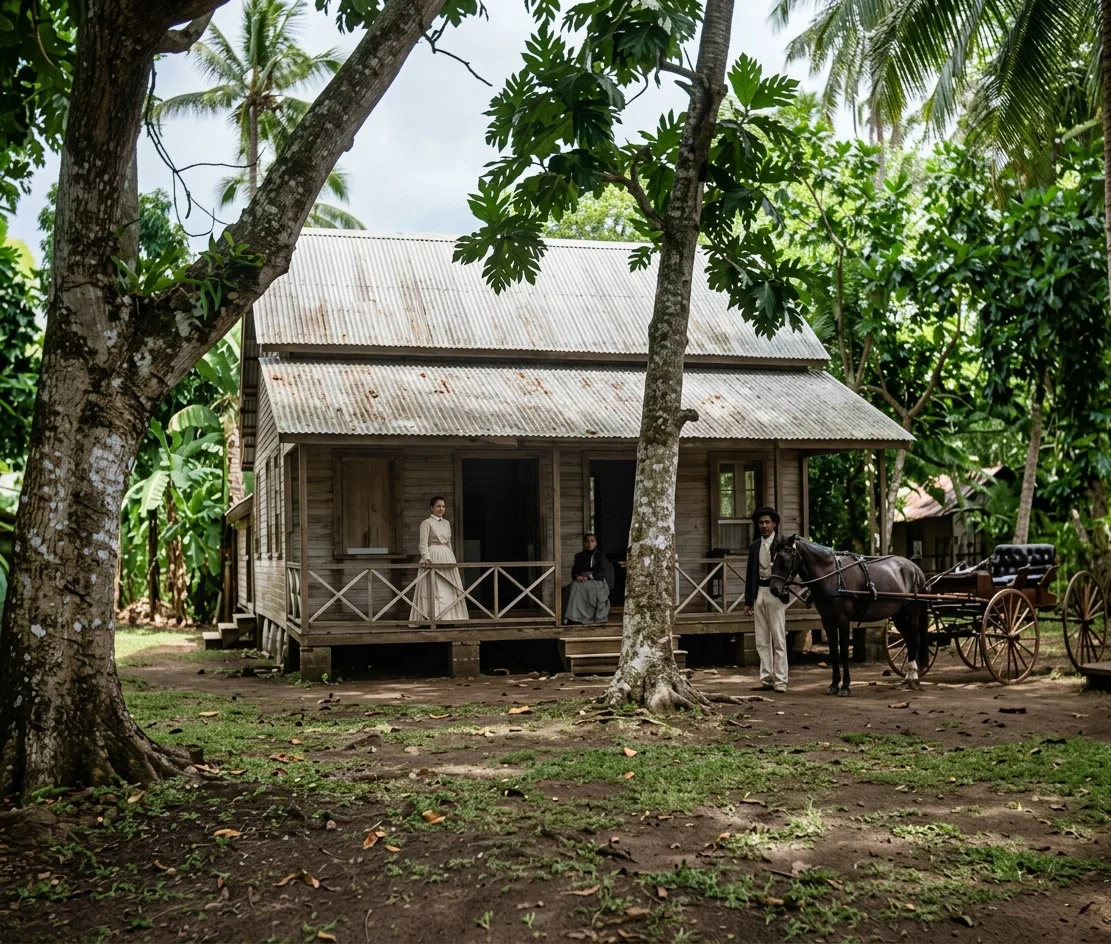
Seventh-day Adventist Mission House in Papeete, Tahiti.
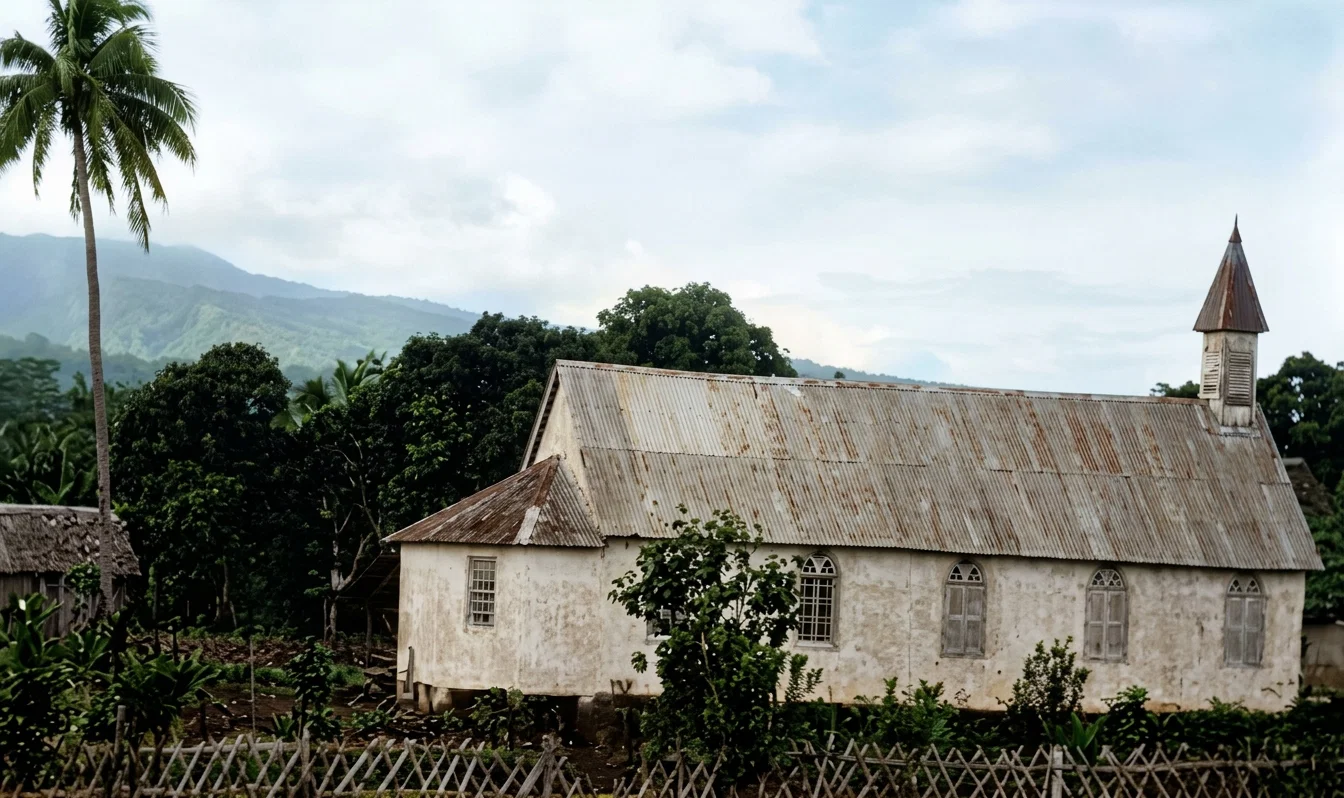
A Protestant Church on Tahiti.
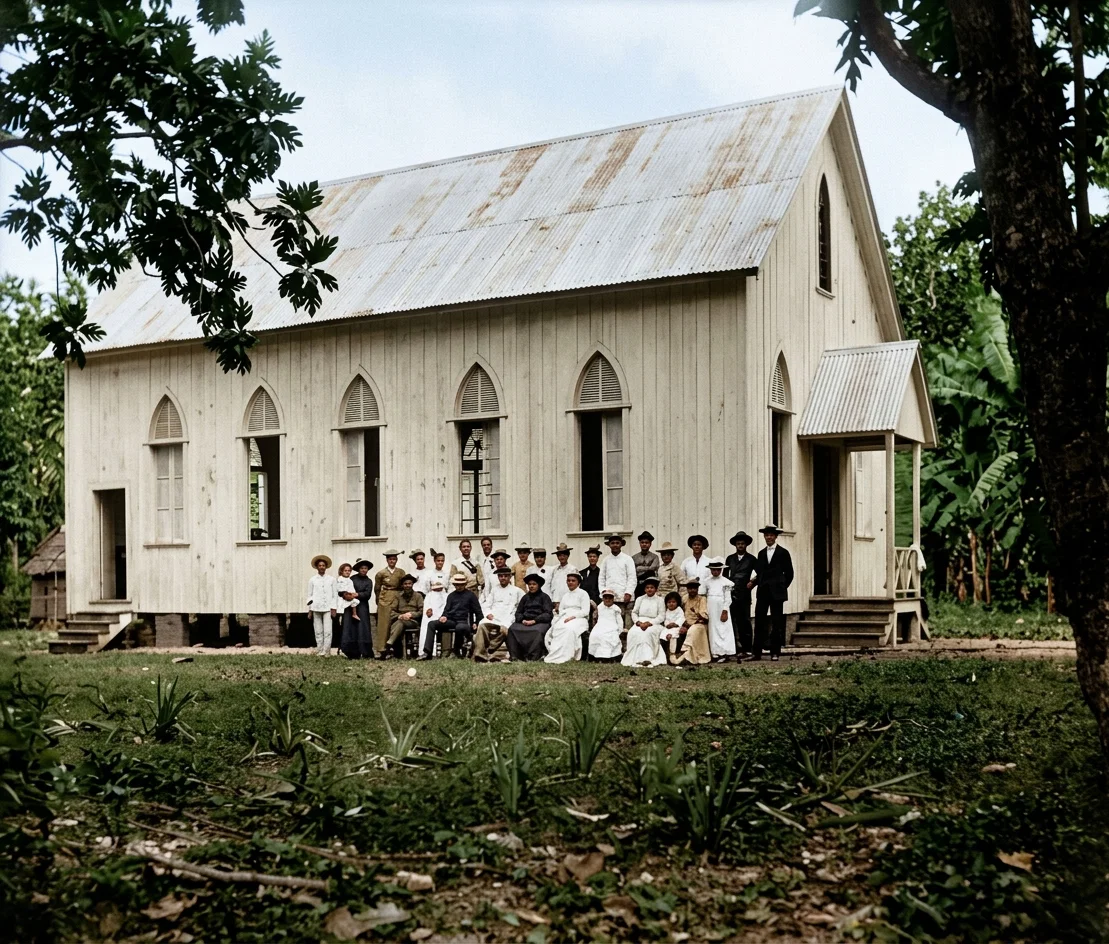
Seventh-day Adventist Church in Papeete, Tahiti.
The first missionaries, who went from England to Tahiti about a hundred years ago, found it hard to change established ideas and customs, and they labored for years before they were rewarded by even one convert to Christianity. Gradually others were added to the number of those who worshiped the true God, until at length it became more popular to be a professed Christian than otherwise. Then all came over on the side of Christianity, and so to-day all are nominal believers in Christianity, tho many are non-professors.
The early missionaries labored under the mistaken idea that church and state should be united, and that it was their duty to compel others to do what they thought was right. So as soon as they had gained sufficient influence over the people to have matters their own way, they got them to pass various religious laws. With few exceptions, the most zealous church-members were the ones who held the government offices. Of course this had a tendency to make hypocrites; for it never makes people better at heart to compel them to be outwardly religious. And so to-day, tho most of the people make a profession of Christianity, it is largely a form, and the power of godliness is sadly lacking.
Many church-members, as well as others, can not be trusted, but make a practise of lying, stealing, drinking, and breaking many of the commandments. They seem to think that if one does not get noisy and quarrel or fight after drinking, there is nothing wrong about it.
There was formerly a law forbidding any other than the established religion in these islands. Two Catholic priests came there, desiring to stay and propagate their religion. But the people would not allow them to remain; they put them into a boat and started them out to sea. As the priests were French, France found in this a cause of complaint against Tahiti. She already had possessions in this part of the sea, and wished Tahiti also, so took possession of the island.
So, now, French laws are in force, and give more liberty of conscience. Any religion is allowed an entrance, and several different sects are represented.
The first English missionaries taught the natives that Saturday was the seventh day of the week, and the Sabbath, and they observed the seventh-day Sabbath for many years. When the French came, they proposed that the people change and observe Sunday. The pastors of the church also used their influence to get the people to change, and in time they succeeded in making the change. The natives were then taught that Sunday was the seventh day of the week, and Saturday the sixth day. Saturday is also called “mahana maa,” or food day, meaning the day to prepare food for the Sabbath (Sunday).
It seems to be the custom of many missionaries, when they go into heathen lands, to teach their followers that the Ten Commandments are all binding, including the fourth commandment, which says, “The seventh day is the Sabbath of the Lord thy God; in it thou shalt not do any work.” But when a true seventh-day keeper comes, they have to acknowledge, as some have in the islands, that the day they keep is not the one taught in the fourth commandment. They then say that they keep the first day of the week because Christ arose on that day. But if this be true, why teach that Sunday is the seventh day? Why not teach them the commandment which tells them to keep the first day of the week as the Sabbath? The answer is plain. It is simply because there is no such commandment in the Bible. So the first day is substituted for the seventh day, tho it can not be otherwise than a counterfeit sabbath; for there is no commandment in Old or New Testament for keeping the first day of the week as the Sabbath.
At one of our meetings a priest was in attendance, with many others, to hear what we had to say. The13priest said to the Protestant people: “Those seventh-day people are true Protestants. You are not. The Bible tells you to keep the seventh day, and you do not do it. My father, the pope of Rome, says to keep the first day of the week, and you obey him. Now if you are going to keep the pope’s sabbath, and not the one the Bible commands you to keep, you ought to obey my father in Rome in other things, and become good Catholics.” The priest said to us, “If you will write to my father in Rome, and get him to change the Sabbath back to the seventh day, then I will keep it.”
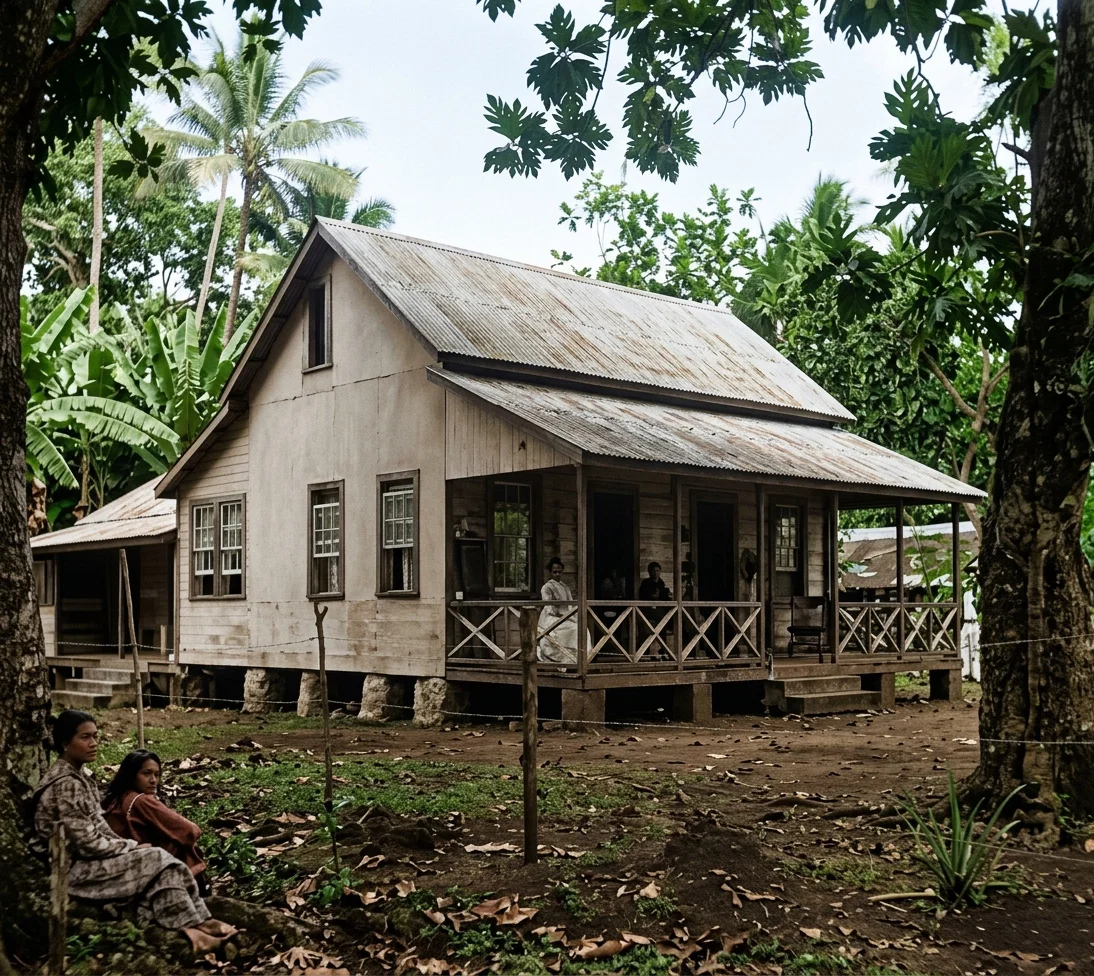
Side View of Mission House in Papeete.
Truly there has been a falling away in the keeping of God’s Word, and a substituting of man’s word in its place. But we have found in our experience that the islands still wait for God’s law, and we believe that many will choose to obey God rather than man. B. J. CADY.