IF we could truly realize the fearful fruit of a sinful act, the majority of us would quail at the thought of living. The acts we do and the words we utter are creating either sunshine or shadows for our fellow-pilgrims. In spite of all we can do to the contrary, these acts and words are dropping as wheat or are scattered as tares in the fields of our friends, neighbors, and enemies—scattering smiles or sorrows; giving sweet release from trials, or binding upon aching backs burdens grievous to be borne; lifting up into the sunlight, or casting down into gloom and sin. Who can weigh the result of an evil deed? Not man; only God alone is able to read the beam on the balances of eternity.
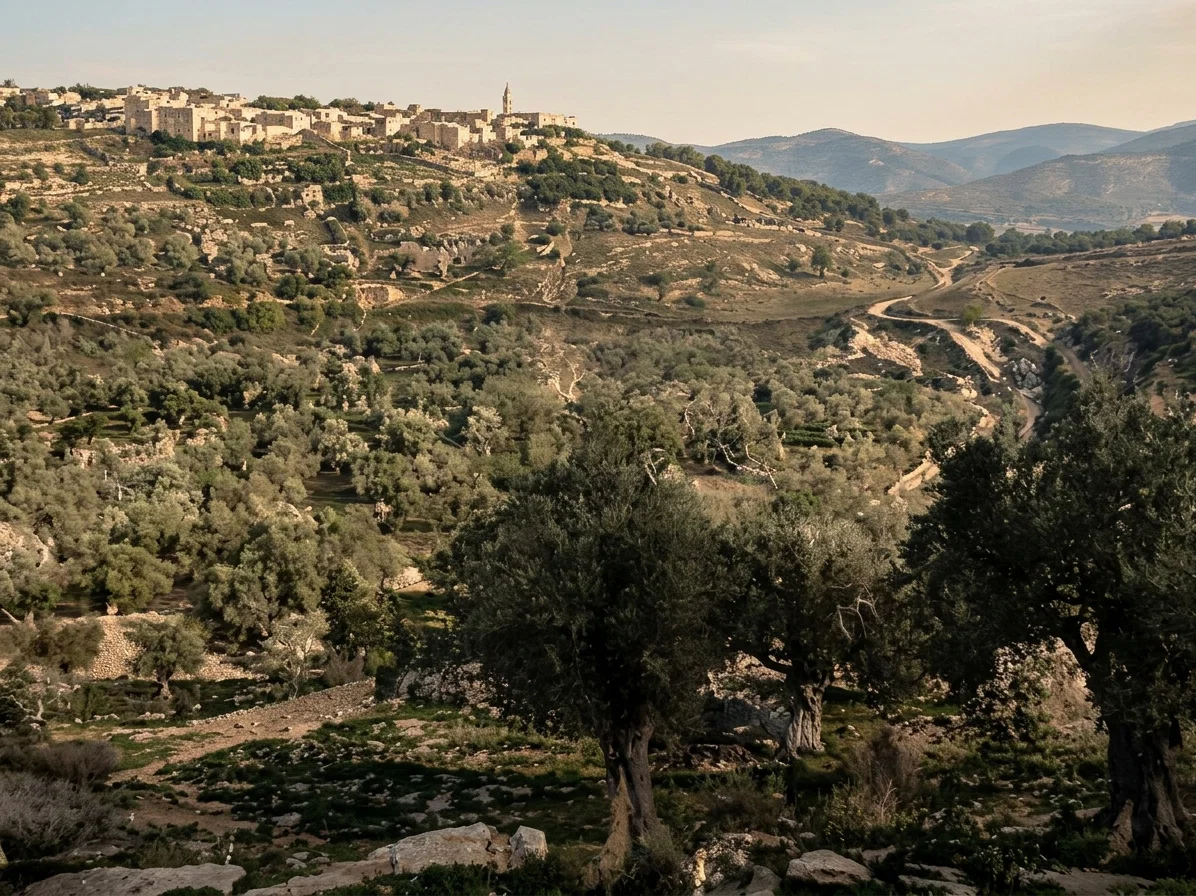
Samaria, capital of Israel, built by Omri about 925 B.C.; the city of Ahab and Jezebel, and the scene of the idolatrous practises which Jezebel brought from Tyre and Sidon to bewitch the people of God.
THE Word of God gives many striking illustrations of the fruits of evil deeds; but perhaps no more striking one is recorded than that of Jezebel in the land of Samaria. By one of the singular ironies of fate her name signified chaste, the same name that is now pronounced Isabel; while she herself was an enthusiastic promoter of that most unchaste heathen worship, the worship of Baal and Astarte. Jezebel was the daughter of the king of Tyre and Zidon, whose name, Ethbaal, contained also the name of his god, signifying “with Baal,” or “Baal with him.” Baal was the sun-god and Astarte the lunar idol; and Ethbaal, the “king of the Zidonians,” was the high priest of their wicked worship.
JEZEBEL the daughter, schooled in all the cunning sophistry of nature-worship, became, by her marriage with Ahab, king of Israel, a strong poisonous weed in the garden of the Lord’s people. Omri, the father of Ahab, built the city of Samaria and made it the capital of Israel. The record of him is that he “wrought evil in the eyes of the Lord, and did worse than all that were before him.” 1 Kings 16:25. But all the wickedness which Omri caused Israel to do in turning the worship of Jehovah into the worship of idols, is not to be compared with the sins which Ahab caused Israel to commit; and yet Ahab was not a man of strong will or masterful courage. Still the testimony concerning his reign is that he “did more to provoke the Lord God of Israel to anger than all the kings of Israel that were before him.” 1 Kings 16:33.
WHAT had Ahab done? In the first place he had broken the command of the Lord and married a woman who was an idolater; but many of the Jews had done this before Ahab’s time. But he “went and served Baal, and worshiped him.” To him it seemed to be “a light thing for him to walk in the sins of Jeroboam.” Jeroboam had set up the worship of calves in Israel, and thus promoted idolatry;2but this was a light thing to Ahab. “He reared up an altar for Baal in the house of Baal, which he had built in Samaria,” the capital of Israel. “And Ahab made a grove” (1 Kings 16:33); that is, he set up asheras in the groves; which is equivalent to saying he established that vilest rite of heathen nature-worship in the groves of Israel. Under his reign ordinary idolatry was supplanted by the genuine sun-worship of the darkest heathenism. Omri was wicked; but Ahab’s wickedness transcended his. Omri established more widely in Israel the worship of the golden calves; Ahab established there that root of all false worships—sun-worship. Omri “did worse than all that were before him;” and Ahab, coming after, did worse than Omri.
How was it possible that the vacillating Ahab should be able to accomplish so much more wickedness than all his predecessors? By the mouth of Elijah the prophet the Lord tells us, as He told Ahab at the time; and this is the Lord’s declaration: “But there was none like unto Ahab, which did sell himself to work wickedness in the sight of the Lord, whom Jezebel his wife stirred up.” 1 Kings 21:25. In Jezebel, then, was the mainspring of that excessive wickedness of Ahab. It was her purpose to plant the worship of Baal thruout all Jewry, and she would stop at nothing to accomplish her design. Not by proselyting, not by persuasion, not by the will of the people, would she accomplish her purpose; but by the most rigorous oppression and compulsion was her work carried on, until in all Israel there were but seven thousand who had not bowed the knee to Baal; and these were scattered in the wilderness and in the caves of the earth, hiding from the wrath of Ahab, “whom Jezebel his wife stirred up.” The prophets of the Lord were special objects of her fury; and we see by 1 Kings 18:4, 13 that by the order of Jezebel they were cut off, only those escaping evidently who were hidden in the caves or in the wilderness. When the prophets of Baal were confounded and slain, we hear her sending this defiant declaration to Elijah: “So let the gods do to me, and more also, if I make not thy life as the life of one of them by to-morrow about this time.” 1 Kings 19:2.
THUS we see a little of the wickedness that Jezebel had brought into the realm of Israel; but it did not cease when her servants threw her from the walls of Jezreel to be food for dogs, as the Lord had said. The influence of her wicked purpose went down thru the posterity of Ahab, and afflicted Israel from generation to generation. When Ahab fell at the hand of a Syrian archer, Ahaziah his son reigned in his stead; and the Lord tells us of him that “he did evil in the sight of the Lord, and walked in the way of his father, and in the way of his mother, and in the way of Jeroboam the son of Nebat, who made Israel to sin; for he served Baal, and worshiped him, and provoked to anger the Lord God of Israel, according to all that his father had done.” 1 Kings 22:52, 53. When Ahaziah was upon his death-bed after a reign of two years, we find him sending men to inquire of Baal-zebub the god of Ekron whether he should recover, notwithstanding the fact that the Lord had repeatedly warned Israel against seeking to the gods of the heathen, and had punished them for disobedience in this regard.
BUT Jezebel’s wicked influence did not extend thru Israel only, for Judah suffered as well. Jehoram, king of Judah, married a daughter of Ahab; and this is the record the Lord has left concerning him: “And he [Jehoram, king of Judah] walked in the way of the kings of Israel, as did the house of Ahab; for the daughter of Ahab was his wife; and he did evil in the sight of the Lord.” 2 Kings 8:18. Jehoram’s reign was followed by that of his son Ahaziah; and the record declares that he also “walked in the way of the house of Ahab, and did evil in the sight of the Lord, as did the house of Ahab; for he was the son-in-law of the house of Ahab.” Verse 27.
THIS is a gloomy record which is left us concerning the influence of one single evil purpose; and the Lord has left it for a purpose—that we may realize the fearful fruit that is being borne by every act of sin we do. The result of Jezebel’s life-work is a terrible monument of sin. By the influence of one woman were the hosts of two nations turned from Jehovah to the worship of idols, and made a byword and a reproach among the heathen. In view of this lesson should not a people seek unto their God, and walk humbly and softly before Him?