THE PROTESTANT EPISCOPAL CHURCH IN THE SOUTHERN FIELD.
By Lewis C. Sheafe
The following facts have been gathered from reports of the commission, and the Spirit of Missions, a monthly magazine published by the church. The work among the negroes is carried on thru a body known as the Colored Commission, which was organized at Chicago in October, 1886. It was then decided to appropriate for this board $12,100 per annum to be used for the negroes; in 1895 the general convention of the church appropriated for this work $70,000 per annum. Prior to 1886 there was no separate record kept of work among the negroes, except in two or three instances.
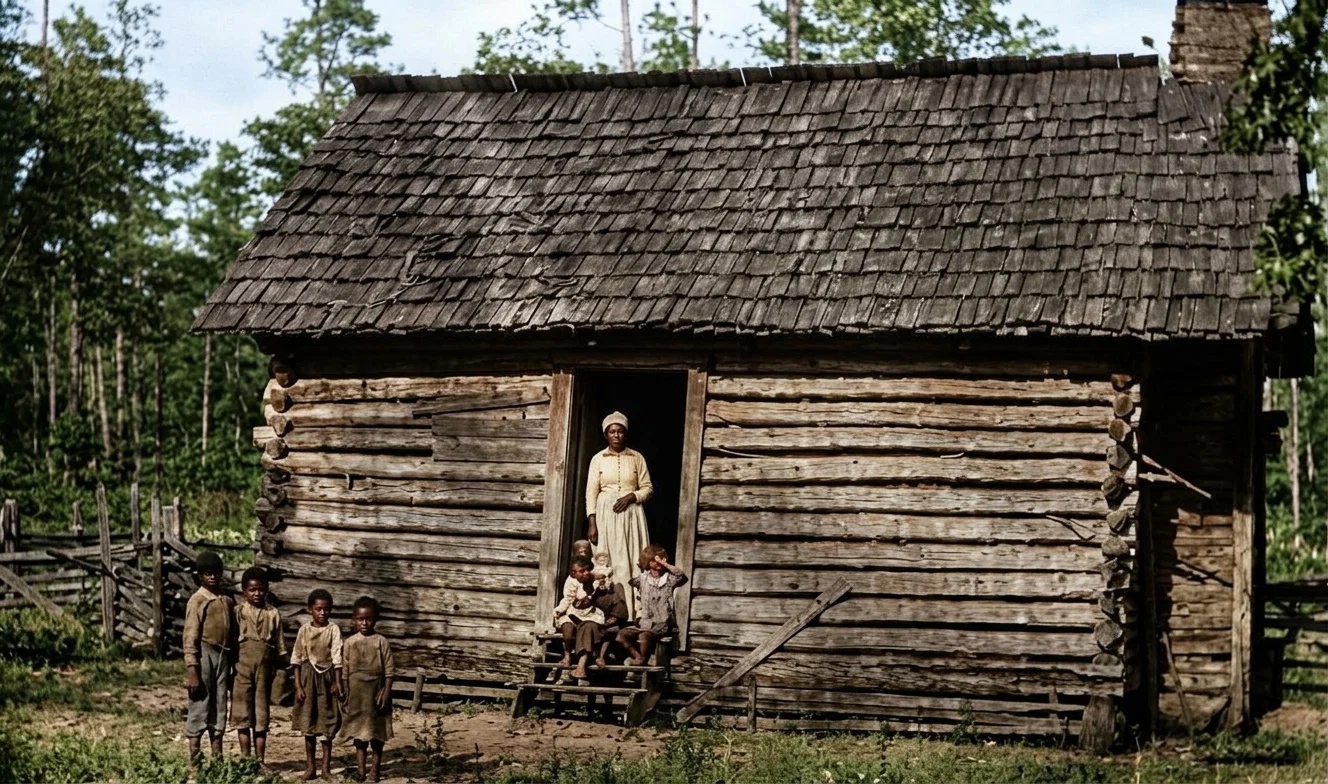
Cabin Life.
In 1866, just after the close of the war, $24,728 was expended in this work, and the following year $28,209; but the fund finally dwindled down to $8,000 or $9,000 per annum. Yet between the dates 1866 and 1895 the church expended for the work among the negroes, $793,008. There are now 116 stations, ministered to by 65 negro clergymen, with more than 60 white clergymen engaged in the work, and there are 7,500 communicants among the negroes. The church and school buildings number 146; value of church property, $460,000.
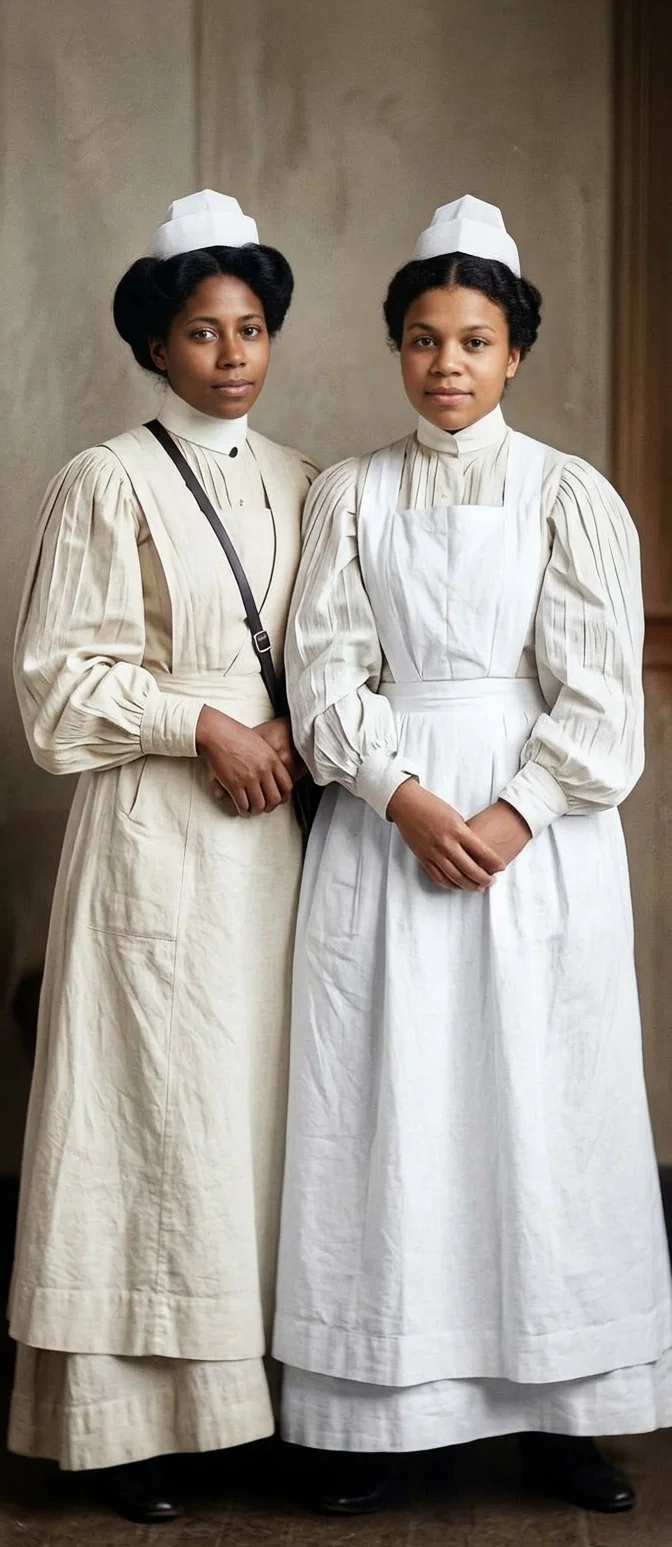
The educational institutions which are under the commission have done excellent work. Kings Hall, at Washington, D. C., is a general theological seminary, has a faculty of five; students, nine. Bishop Payne Divinity School, at Petersburg, Va., is also a theological institution; faculty, three; students, ten. Hoffman Hall, Nashville, Tenn., is a school for academic training, with a faculty of three. St. Augustine School, at Raleigh, N. C., was incorporated in 1867. It has done and is now doing excellent work in training the negro children, intellectually, morally, and industrially. Fifteen teachers are here employed. During the past year there were 125 boarders in the school and 52 day-scholars. The course includes not only a good, thoro preparatory and normal education, but a most excellent training for girls in domestic art, sewing, cooking, housekeeping, etc. St. Agnes Hospital is here, and has its training-school for nurses; this opens a large field of usefulness for the women. The male students receive instruction in bricklaying, and this school also prepares men to enter Kings Hall. Then, at Lawrenceville, Va., is Saint Paul's Normal and Industrial School, which is doing practically the same work as the St. Augustine School. During the year just closed this school has received 300 students, coming from 17 States in the Union. Here is provided thoro training for girls in all branches of their calling. For the boys, there are carpenter, blacksmith, and wheelwright shops, a grist-mill, sash-and-blind factory, a printing office, and instruction is given in bricklaying and cabinet-making. Like all the other industries, the agricultural department, besides giving practical training in farming and horticulture, contributes largely to the support of the institution.
By the generosity of Mrs. Wm. F. Cochran, of New York, there has been built and finished a model church for the negroes at Fayetteville, N. C., called St. Joseph's. This is a church, school, and rectory, combined.
There is a feeling that is shared by many of the communicants of this church that there is an unfulfilled duty to the negroes of the United States, and that the amount now granted the Colored Commission to be used in their work among the negroes, is not commensurate with the means of this church. The cause is needy, and beyond question is worthy; for it is the cause of Christ Himself. There is also a very reasonable guarantee of success, as the results compare favorably with those of similar work done among the whites.
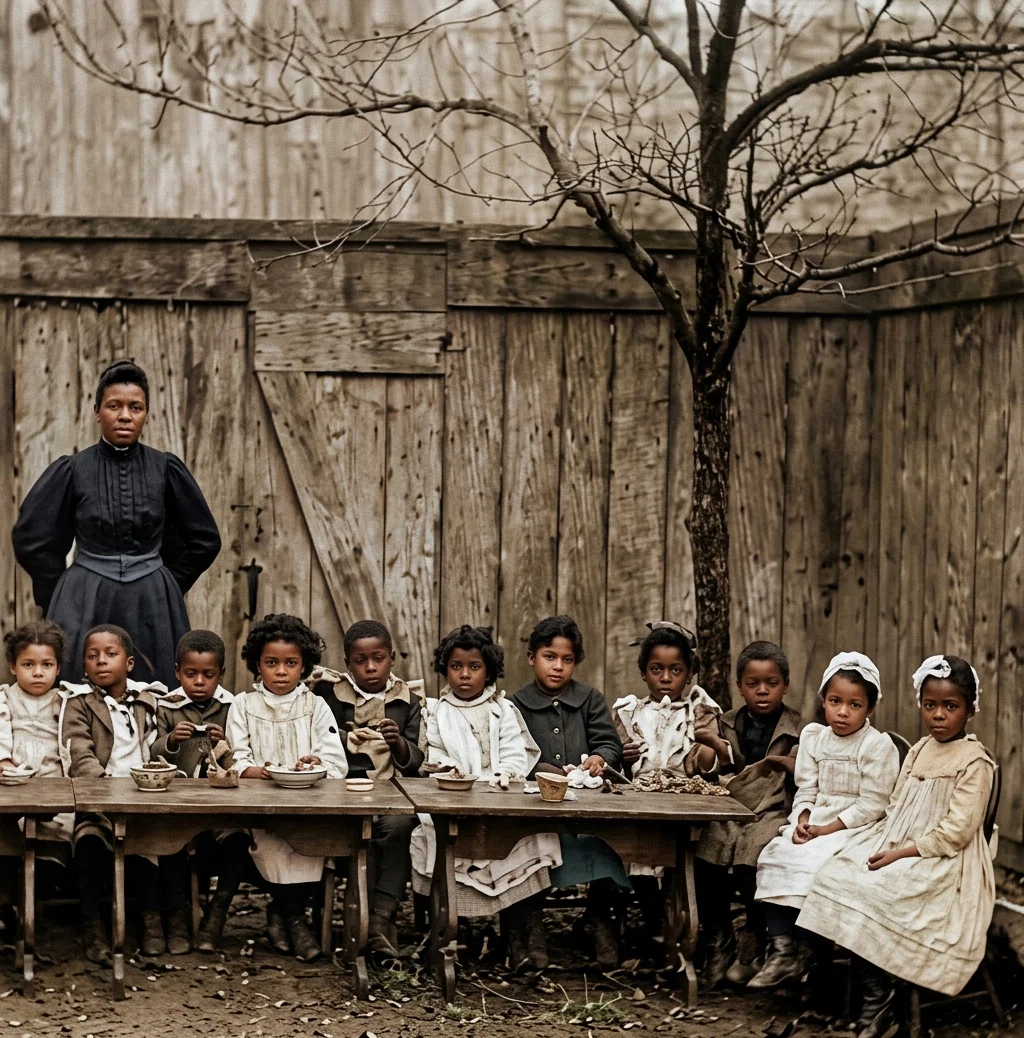
Kitchen garden, Savannah, Ga.
Then there is the work among this race that comes under the Woman's Auxiliary. Can any good work go on anywhere without one or more women being in it? In Baltimore, Md., is St. Mary's Home for Boys, which is well filled and cared for; and in connection with St. Stephen's Church in Savannah, Ga., is a parochial school. The little ones get their start here in the kindergarten, which was opened December, 1892, being the first one for negroes opened in the State. There are ninety children in attendance.
There have been wonderful transformations wrought among these little ones in neatness and cleanliness. The dispositions of many have undergone changes for the better, and the parents and homes feel the effect. The children are quick to take their parents to task for anything that is done in the home that is not in harmony with the teaching of the kindergarten.
After we have faithfully sowed the seed in well-prepared ground, let us wait for the early and the latter rain. This church believes that years must pass before the seed now sown in their schools can bear fruit; so they plan and work accordingly. They mean to carry in all their schools the industrial training for both sexes, to train the hand as well as the head and heart—for the boys a knowledge of tools as a means of self-support and advancement in life; for the girls, sewing and household industry. It is a fact that the church will be mainly fed through the children; for the adult population is largely alien to the church and its teachings. The workers believe in the Tuskogee idea, that all education enlarges a man's wants. A mere literary training enlarges his wants without increasing his ability, outside of professional life, to meet them. The common field hand goes to Tuskogee, and leaves there a mechanic and a scholar; and the girls go away skilled in their various callings, demanding and easily securing better compensation for their labor. From these larger wants and larger resources there soon comes the larger man and the better citizen.
An industrial training has a very elevating moral effect. No matter how bad the boy is,13if you get him thoroly interested in a machine-shop, in butter-making, or in designing and house-building, you have conquered him. Then there follow love of labor, manly independence, a race made useful as producers and manufacturers.
There is presented an opportunity to the church of lasting usefulness in the fact that seventy-five per cent. of the negroes of the South are renters of land under the system of mortgaging crops. This is really a system of slavery; for most of them have very little idea of the cost of the material they buy at the stores. The natural result is they pay very high prices and a high rate of interest. What they especially need is an opportunity to get their heads above water, so that they will have a living chance to own their places. This result will be hastened by sending among them men of their own race who can and will teach them not only the Sabbath, but, what is quite as important, ways of Christian living. Those who have looked into the condition and needs of the negro, feel that the welfare of the negro lies very largely in their making their homes in the country and having land of their own. So long as they continue to live on rented land, in one or two-room cabins, there is little possibility of greater progress.
Hospital Nurses, St. Agnes.
There is need of centers in the country districts from which there shall go light and help along all lines.
It has been proposed by this church to send out at an early date, as new helps among the negroes, consecrated Christian women, who shall be earnest, refined, intelligent; who know the people, and by education and long association have become acquainted with their condition. They will have no discretion in the choice of locality, but are expected to have all imaginable discretion when once located.
The outline of the plan includes two talks a week in schoolhouse, church, or hall, to any women or girls who will come. They are to follow up these talks with visits to the homes of the people, and there, by practical object-lessons, elucidate and exemplify the talks. These Bible women will give instruction in matters that are necessary to a well-regulated home. They will take up such subjects as what constitutes a home; its sanctity; mutual responsibilities, and place in the highest civilization; sanitary measures, including cleanliness, good air, sleep, health rules, and dietetics. They are also to give instruction in the proprieties of life, manners, how to make work light, evenings at home, care and government of children, dress, conduct on the street, and the language and literature of the home.
It is fully believed that if this proposed method, is extensively and thoroly applied, it will in a few years produce larger and better results than preaching and schools, because it will strengthen the weakest part of the negro's character, and thus purify the stream at the fountain-head.
There is another lesson that ought to be faithfully taught the negro, especially in places where he has long had light and help, that is, self-support. Show him that his self-respect will not permit him to continue to be an ecclesiastical pauper. Here are the reasons for this: self-support renders that particular mission or church more aggressive, intelligent, and capable; it is indicative of real appreciation for the kindly help bestowed, and commands the respect and esteem of the church at large; it increases largely the interest and money for that special branch of missionary work; it enables the church to extend the help hitherto given this mission to others, who anxiously await it; and, lastly, it is essentially right in itself. LEWIS C. SHEAFE.