A Kansas City paper has the following to say in regard to hot nights in the slums:—
A hot night in a city is a time of torture, and Kansas City has had several of them lately. The air has been heavy and moist, sticky and slimy, settling down over the town like a huge blanket of oppressiveness. The cable-cars and parks have been crowded, folks have lived on their porches and lawns, and have fought for sleep, leaving doors and windows open for the few faint, stray breaths of breeze that have filtered through the soggy atmosphere. Fans have been a necessity; cold baths have been a requisite; iced drinks have become the only thirst quenchers partaken of. The city—the parts of the city that the average man or woman reader knows—has suffered and whined and cursed through almost sleepless nights, till every one is cross and fretful and nervous with the strain.
But how about those who live in the other parts of town that one seldom sees—the slums, the vague “North End,” the indefinable “Little Italy,” the almost impenetrable “Hell’s Half Acre”? Does one think the nights are hot on the boulevards, in the cable-cars, on the south and northeast hills? Go to these other places and learn what a hot, sultry night means.
Down through the Slums.
The city last night was oppressed and heavy with moist, hot vapors and stagnant air. In its freer, roomier quarters it slept with difficulty, but its crowded districts through all the long hours were wakeful and suffering. The narrow streets in the North End districts, the alleys and paths and bare open places in the West bottoms and Hell’s Half Acre, were restless all night, and the saloons alive to doubtful purpose. Lights flared in the streets and flickered in the houses; earlier, the moon cast faint shadows, and under the lights the varied population walked up and down the streets, seeking for coolness and relief from the nightmares of their sleep. Men were disposed in various attitudes of rest. Some lay slumbering on their doorsteps; some were sprawled out on the pavement; others were asleep in chairs, tipped back against the house walls; but the most of them walked the streets until midnight.
The streets indeed were full of noises, of the slight, faint, inarticulate sounds of human voices, conversing in low tones.
The walk led past a crowded brick tenement where only Italians live, a whole family in a room. The doors and many of the windows even were shut and locked. Out of the stifling rooms came the thin wails of many children and the cooing, drowsy voices of the mothers. One window near the street was open, and a light, turned low, showed inside a kitchen of dirty pots and tin pans. On the floor, in the shadow, lay the husband, and across the room was his wife, the mother, with the children arranged in a circle about her.
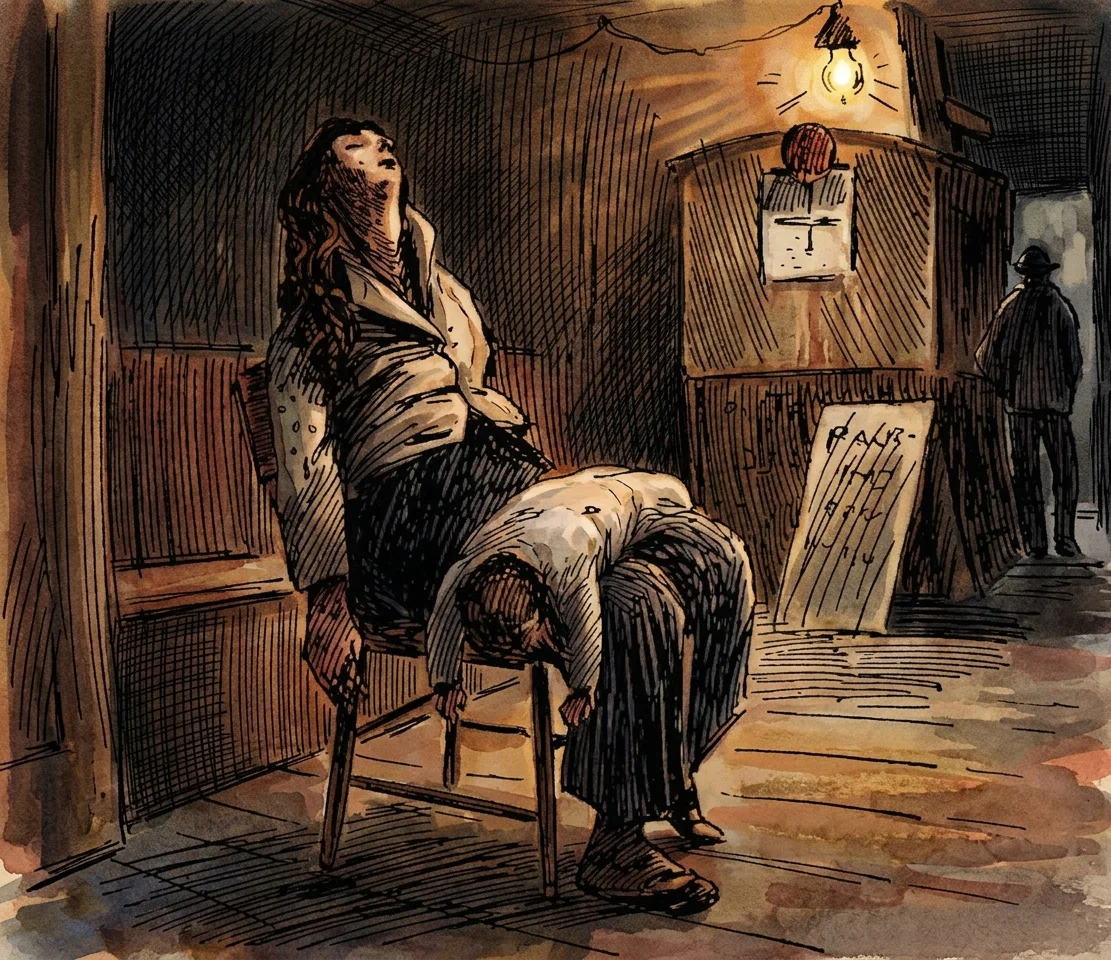
In the darkness of Third Street a tamale wagon, drawn up before a second-hand store, cast a circle of light, and in the circle sat a woman with her child. They made a strange and moving picture. Both were in the abandon of utter weariness. The woman lay back in her chair with the child across her knees.
Her collar was partly open in front, and her breast rose and fell with gasping breaths like a person in a fever. Her head had fallen back; her throat glistened, and the damp, loosened hair lay along her shoulders. The arms of the child, like those of the woman, were drooping till they almost touched the walk beside her.
The West bottoms and Hell’s Half Acre, too, lay under the spell of the heat last night. An arc light at each end of “The Patch,” made the alleys and narrow streets look like bars of shining steel. Out of some of the shanties a single pair of feet stretched into the lighter space, with the trunk concealed in the shadows, and across the sidewalk, his form blocking the way sometimes, was to be seen the body of a big negro, his head and shoulders in the street and the rest of the body extended on the walk.
There are very few of those in comfortable circumstances who know much about the misery and suffering that exist in the alleys and lanes of the great cities. Christian workers should hasten to relieve this distress so far as it lies in their power. And wealthy men and women, who have so much means that it is an incessant burden and worry to them, could find rest, peace, and relief by going to the rescue of these poor, unfortunate fellow-mortals. There is a great work that the Master is urging to have done for those who seem to be too far down and too insensible to moral worth to be reached. But just go among them and see how they will appreciate every attention and effort in their behalf.
To be sure, some of them will deceive you, and show themselves unworthy of your labors. But we must needs bear with this part of it in order to reach those who will respond to the helping hand extended to them. How much better it is to use our abilities and means in helping our helpless and poor fellow-men than to exhaust all our resources on our own selfish pleasures, and then find that after all we have secured no real enjoyment!
When we are enjoying all the comforts and blessings of life, it is hard for us to realize that others in the very town or city where we live may be suffering indescribable miseries. But if we go out among these poor, unfortunate ones, our hearts will be touched and we will be cheered and gladdened by the happiness that we see coming into their lives through our ministrations in the Master’s name.
Look about you. There is some one just near you who needs your help. If you would not do this work on your own account, do it for the sake of the Friend of sinners and the suffering humanity that He would have us relieve from their wo and distress. T.