BY REV. F. DE P. CASTELLS, GUATEMALA, CENTRAL AMERICA.
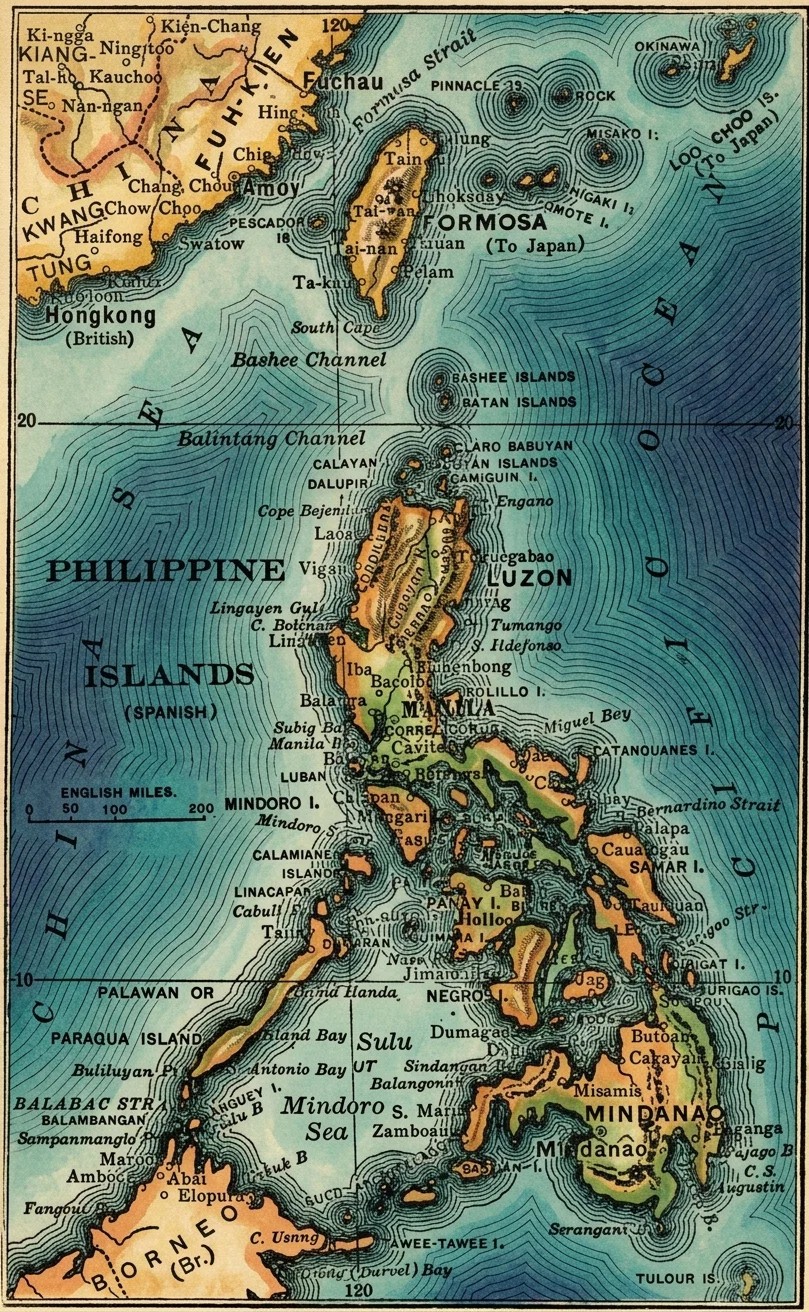
The eight millions of souls in the Philippine Islands have been deprived by Spain of religious as well as political freedom, and have never yet heard the pure message of the Gospel. Since Admiral Dewey’s overwhelming victory there are indications that Spanish authority in those islands is at an end, and that at last the rays of the Sun of Righteousness will shine upon them, dispelling the darkness and purifying the rotten social and religious life which has dominated the people thus far.
From the reports that reach us from time to time from Manila it is time that that nursery of tyranny and religious fanaticism were sunk in the sea, or swept clear of the lazy and cruel drones that make every act of honest men, every opinion different from their own sluggish and bigoted spirits, an act punishable with all the horrors of a lingering imprisonment or speedy death. That such men (the priests) should be permitted to wield such an enormous power for evil, is a disgrace to the Spanish nation; and an indelible stain on the administration of the Spanish Government.
Thus spoke the Siam Free Press and the Singapore Daily Advertiser some five years since. But we, as Christians, only exclaimed, “O Lord, how long?”
Discovered by the celebrated Magellan in 1521, when on his voyage of circumnavigation, these islands were named in honor of the crown prince of Spain, the sanguinary monster that has become famous as King Philip II. No sooner had the friars heard of them than they flocked thither and began the work of baptizing the natives with great vigor, becoming from the first the virtual rulers of the new colonies.
The Spaniards wonder at times that the priests should have gained so much influence over the natives. How has this come about? It was simply through the king lending them his authority and military power, and allowing, what we find even now in Spain, a servile subordination of the civil to the spiritual power. The maxim underlying all their “mission work” was this: All the king’s subjects shall be Catholics. And no territory was considered altogether conquered until its inhabitants had been baptized. When once the friars had obtained control of the islands, they were careful not to let their power be lessened. Orders came, indeed, from the Spanish Government for the establishing of schools and the teaching of Spanish to the natives, but these laws were disobeyed. It was proposed that the Mohammedan populations of the south should be subjugated, but the friars invariably hindered this by turning the expeditions into a sort of religious crusade. In spite of all the precautions taken, however, some of the natives have learned to read Spanish, and have imbibed Western ideas. It is this class which started the revolution—a revolution which was more social than political—and their attitude to the Church of Rome is shown by the fact that whenever they capture convents, the inmates are ruthlessly butchered.
The revolution in the Philippines created more astonishment than indignation in Spain. The Philippine islanders were supposed to be most fervent Catholics, men who fairly worshiped the parish priests, and, therefore, no one could explain this uprising against the “holy fathers.” Foreseeing how detrimental all this would be to their prestige, the priests hastened to announce that the revolution was the work of the Free Masons and the Protestants. The people did not believe this, however, because they knew that the laws of those colonies made it impossible for any dissenting body, or for the Masonic order, to get a footing there. Accordingly, not very long since, the bishop of Oviedo (Spain) gave to the public a more plausible explanation:—
It would be difficult just now to point out the causes of the Separatist uprising in the Philippines, and still more to indicate the remedy. It was the idea that there was once of granting the colonization of Mindanao to a foreign syndicate that led the Jesuit fathers to occupy that island. On coming they were offered the parishes, which had been founded and administered by the Franciscans, and the latter, in compensation, received some livings in the archbishopric of Manila, which had been in the possession of native clergy ever since the extinction of the Jesuits’ order in the last century. The colonization of Mindanao did not take place, as it was not right that it should either. Then the transfer of the benefices in question has been effected, and is being effected very slowly. And it is in this wise that, from the sore that was opened there, has been flowing blood for the last thirty-six years. The native clergy, their relatives, and the friends of these, have formed a band of discontented people, whose well-known workings were abruptly brought to a standstill by the earthquake of 1863, when, it may be remembered, the leaders of the incipient filibustering party were buried in the ruins of the cathedral of Manila.
This throws the blame on the Jesuits, but as the bishop is a friar, it is probable that he only gives us part of the truth.
What makes all this of interest to Christians, however, is the high probability that the Lord is using recent and coming events to show the evil tendencies of papal priestcraft, and the necessity of religious as well as political freedom for the true development of those islands. In endeavoring to quell the revolution, the Spanish forces have been officered with priests and one bishop. It is not surprising, however, that the Spanish clergy should devote themselves to the work of subduing the rebellion, since they derive a revenue of nearly $24,000,000 in gold from the islands.
There is great need of united prayer for this portion of the Lord’s vineyard, that it may be opened to the Gospel, that God may raise up suitable workers for it, and that souls may be saved there.—Missionary Review of the World.