A SUM IN DIVISION

6%

Pacific Press Publishing Company · Oakland, California · Apr 28, 1898

FromSigns of the Times, Vol. 24, No. 17.

Read the full edition

“A SUM IN DIVISION.”

WE were waiting on the shore for our rustic ferry-boat to cross and carry us over for an afternoon in the grove. Mrs. Leighton looked dainty and stylish as usual—the embodiment of wealth, culture, and luxurious ease, I said to myself as I watched her. Her dresses always suited her, and nothing could have been more becoming than this simple one with its collar and vest of soft white silk. I noticed it all with an involuntary sigh.
“You are tired,” she said quickly. “Let me take baby.”
“O, no!” I answered, holding him closer. I felt a half jealousy of her that afternoon—a little feeling of resentment because she had so much. But baby was my treasure; she could not have him.
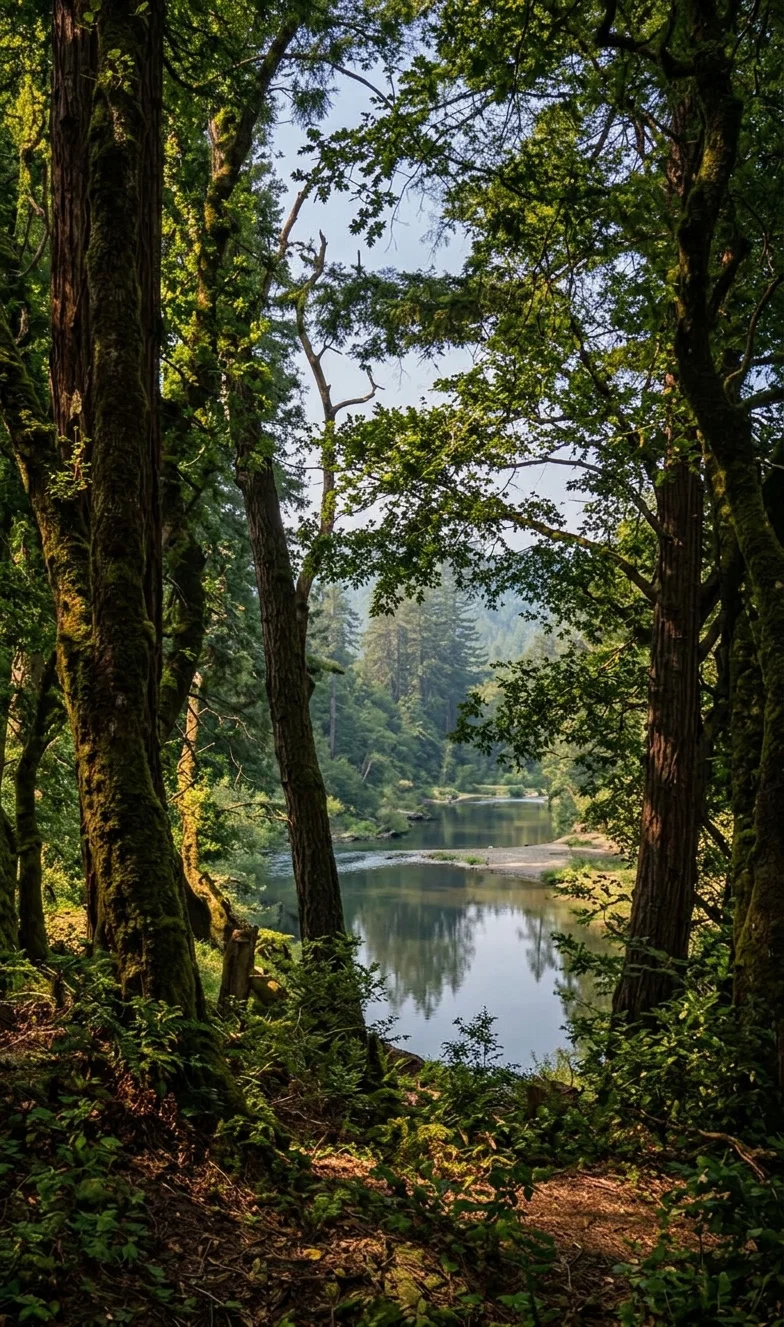
CALIFORNIA SCENERY, No. 15.—The Russian River rises on the western slope of the Coast Range, in Mendocino County, flows south and west amid diversified mountain scenery, cultivated farms, and through redwood forests, into the Pacific Ocean. The above view is of the river a few miles from its mouth, near Guerneville, Sonoma County, 100 miles north of San Francisco, on the North Pacific Railway. It is one of the many beautiful spots of nature.
She had seemed to me like some tropical bird when she fluttered down into our quiet village that summer. She was a semi-invalid in search of rest and pure air; and she found both at the home of my neighbor, with its old-fashioned rooms, quaint garden, and wide orchard. I had not expected to see much of her, but, tho the advances were all on her side, we grew quite friendly as the weeks went by. She seemed to enjoy coming to our little house. It was pretty and pleasant, and I had thought it almost perfect before she came. I hardly knew why it was that I began to find flaws in it now—to be fretted because the paper was cheap, and the engravings so plainly framed, and to find the planning and contriving to which I had always brought such enthusiasm, growing irksome. I do not know whether Robert noticed the change, but I fear he did. And dear Grandma Ellis—Robert’s grandmother, who had always lived with us—used to watch me with a shadow on her sweet face, and say, “Don’t let your blessings grow dim, child; don’t let your blessings grow dim.”
But they seemed dim that day—pale and faded things scarce worth the counting, and my life pinched and narrow, while others were so full. I had just the monotonous round of home care and enjoyments, and the few social pleasures a sleepy village could offer. Every little luxury in the way of books and pictures must be carefully planned for in our home, and journeys were hardly to be thought of. I felt restless and discontented—“not dissatisfied, but unsatisfied,” I persuaded myself, by way of covering up some thoughts I did not care to own. I loved all beautiful things as well as Mrs. Leighton did, if I could but have leisure and means to enjoy them.
As we sat under the trees that afternoon, I drew from her the descriptions of the places she had visited and the things she had seen. She talked well, and the life she pictured fascinated me.
“You are free, and you have so much,” I cried. “I wish some things could be more evenly divided.”
The laugh with which I spoke could not have veiled the feeling, for she suddenly turned and looked at me.
“Would you care to be so free that your coming or going would make no difference to any one—that no one would miss you or watch for you?” she asked slowly. “I come and go at will because I have no kindred anywhere, no home in any land on earth. But all the marvels I have seen do not seem so beautiful to me as a little home like yours. Sometimes when I have watched you and others like you, I, too, have thought things were not evenly divided.”
All at once the woman’s lonely heart and desolate life stood revealed. Her world looked so wide and empty that I shuddered and clasped my baby closer.
“No, no, not that—I did not know,” I faltered. “I thought you were so happy”—
“Because I did not go about mourning? I must make the most and the best of what I am and have for myself and others. There is many a hungry heart that obeys the command to anoint the head and wash the face, and appear not unto men to fast, but the Father who seeth in secret knoweth how starved it is, for the sweetness it sees all around it.”
She smiled, tho her eyes were wet.
“Little woman, the divisions of this world make a long, hard sum, and only when we reach heaven shall we be sure of the right answer.”—Kate W. Hamilton, in Church Evangelist.