24 “Now a certain Jew named Apollos, an Alexandrian by race, a learned man, came to Ephesus; and he was mighty in the Scriptures. 25 This man had been instructed in the way of the Lord; and being fervent in spirit, he spake and taught carefully the things concerning Jesus, knowing only the baptism of John; and he began to speak boldly in the synagogue. 26 But when Priscilla and Aquila heard him, they took him unto them, and expounded unto him the way of God more carefully. 27 And when he was minded to pass over into Achaia, the brethren encouraged him, and wrote to the disciples to receive him; and when he was come, he helped them much which had believed through grace; for he powerfully confuted the Jews, and that publicly, showing by the Scriptures that Jesus was the Christ.”
1 “And it came to pass, that, while Apollos was at Corinth, Paul having passed through the upper country came to Ephesus, and found certain disciples; and he said unto them, Did ye receive the Holy Ghost when ye believed? And they said unto him, Nay, we did not so much as hear whether the Holy Ghost was given. And he said, Into what then were ye baptized? 4 And they said, Into John’s baptism. And Paul said, John baptized with the baptism of repentance, saying unto the people, that they should believe on Him which should come after him, that is, on Jesus. 5 And when they heard this they were baptized into the name of the Lord Jesus. 6 And when Paul had laid his hands upon them, the Holy Ghost came on them; and they spake with tongues, and prophesied. 7 And they were in all about twelve men. 8 “And he entered into the synagogue, and spake boldly for the space of three months, reasoning and persuading as to the things concerning the kingdom of God. 9 But when some were hardened and disobedient, speaking evil of the Way before the multitude, he departed from them, and separated the disciples, reasoning daily in the school of Tyrannus. 10 And this continued for the space of two years; so that all they which dwelt in Asia heard the Word of the Lord, both Jews and Greeks. 11 And God wrought special miracles by the hands of Paul; 12 insomuch that unto the sick were carried away from his body handkerchiefs or aprons, and the diseases departed from them, and the evil spirits went out. 13 But certain also of the strolling Jews, exorcists, took upon them to name over them which had the evil spirits the name of the Lord Jesus, saying, 14 I adjure you by Jesus whom Paul preacheth. And there were seven sons of one Sceva, a Jew, a chief priest, which did this. 15 And the evil spirit answered and said unto them, Jesus I know, and Paul I know; but who are ye? 16 And the man in whom the evil spirit was leaped on them, and mastered both of them, and prevailed against them, so that they fled out of that house naked and wounded. 17 And this became known to all, both Jews and Greeks, that dwelt at Ephesus; and fear fell upon them all, and the name of the Lord Jesus was magnified. 18 Many also of them that had believed came, confessing, and declaring their deeds. 19 And not a few of them that practised curious arts brought their books together, and burned them in the sight of all; and they counted the price of them, and found it fifty thousand pieces of silver. 20 So mightily grew the Word of the Lord and prevailed.
QUESTIONS.
1. What eminent man is introduced in the scripture before us? What was his birthplace? and what natural and acquired talents had he? To what place did he come? Acts 18:24.
2. In what was he instructed? What is said of his zeal? What did he do? To what was his knowledge of the things of the Lord limited? Verse 25.
3. How was his knowledge perfected? Verse 26.
4. Where did he afterward go? How was the way prepared for his reception? On his arrival, what good did he accomplish? Verse 27.
5. How did he accomplish this? Verse 28.
6. While Apollos was laboring in Corinth, to what place did Paul come? Chapter 19:1.
7. What question did he put to certain disciples whom he found there? What was their reply? V. 2.
8. What did they say about their baptism? V. 3.
9. What did Paul then tell them about the baptism of John? Verse 4.
10. When they heard this, what did they do? V. 5.
11. What followed their baptism? What did they then do? Verse 6.
12. How many men were there who had this experience? Verse 7.
13. What work did Paul then engage in? For how long? Verse 8.
14. What effect did his preaching have on some? What did Paul therefore do? Verse 9.
15. How long did he continue this work? With what result? Verse 10.
16. What wonderful power did God manifest through Paul? Verses 11, 12.
17. Who tried to imitate this work? How many of them were there? Verses 13, 14.
18. How did they proceed? What was the result of their effort? Verses 13, 16.
19. How far did the news of this spread? What gain resulted to the truth? Verse 17.
20. What were many believers led to do? Verse 18.
21. To what had they been addicted? How real was their renunciation of magic? What was the value of the books thus destroyed? Verse 19.
22. What power was it that effected this wonderful change? What is said of the Word of God? Verse 20.
NOTES AND QUESTIONS.
“We have not so much as heard whether there be any Holy Ghost.” What had John proclaimed in his preaching? Matt. 3:11. Could these twelve men, then, ever have seen or heard John the Baptist? Could they have been at all acquainted with John’s teaching? Had they, judging from Acts 19:4, 5, even heard anything about Christ? In whom, then, had they been blindly believing?
“Have ye received the Holy Ghost since ye believed?” The two verbs are in the aorist tense, and therefore denote instantaneous acts. The Authorized Version therefore gives an entirely wrong idea, as there is no question about what happened after believing; but the question relates to what occurred when they believed. Hence (Revised Version), rightly, Did ye receive the Holy Ghost when ye believed? “We have not heard.” Also the aorist. We did not hear, referring back to the time of their beginning. “Whether there be any Holy Ghost.” But, as Bengel observes, “They could not have followed either Moses or John the Baptist without having heard of the Holy Ghost.” The words, therefore, are to be explained, not of their being unaware of the existence of the Holy Ghost, but of His presence and baptism on earth. The word estin, there be, is to be taken in the sense of be present, or be given, as in John 7:39, where it is said, ‘The Holy Ghost was not yet (οὐπώ ἦν),’ and where the translators rightly render, ‘was not yet given.’”—Vincent.
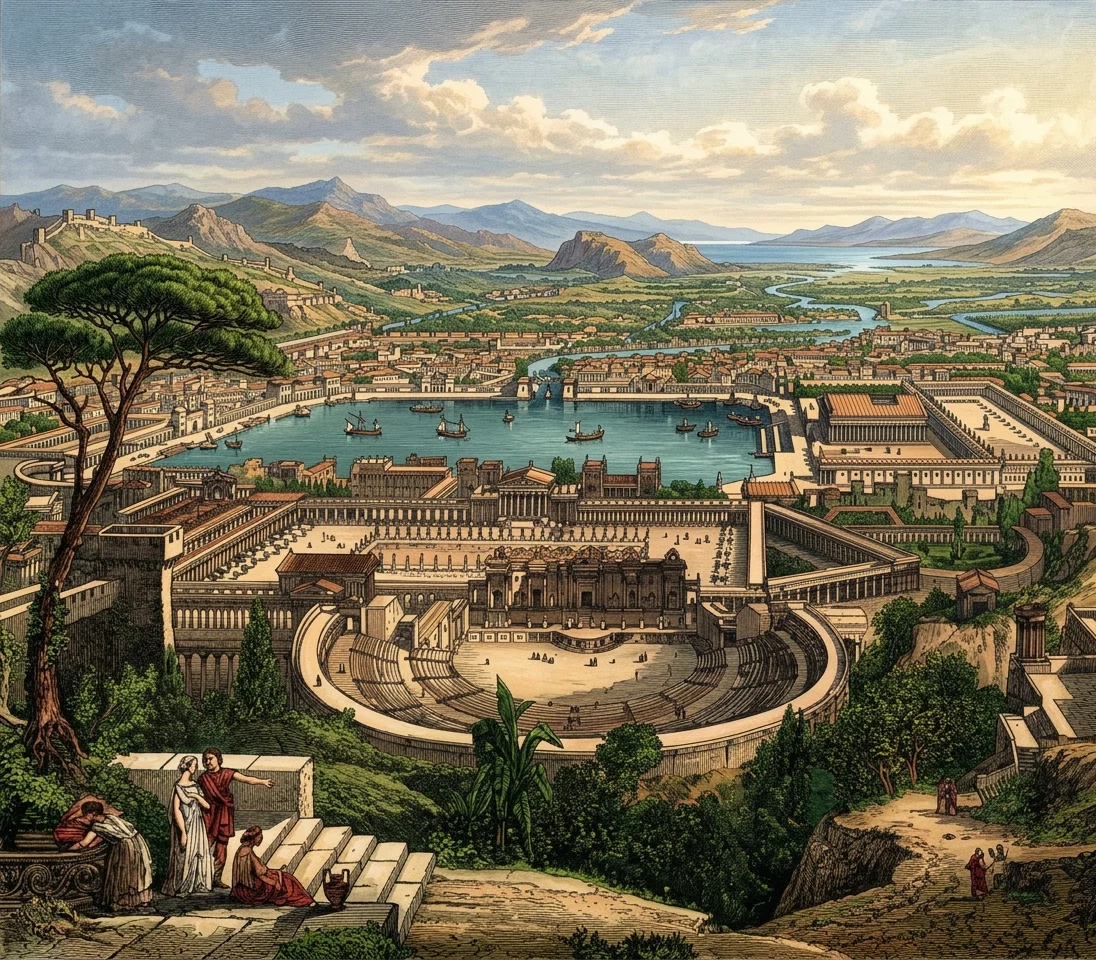
EPHESUS was the most important city of Asia Minor, noted in the apostles’ time for three remarkable buildings: (1) Temple of Diana, one of the seven wonders of the world, 425 feet long, 220 wide, of purest marble; 127 Parian marble columns, 60 feet high supported the roof. (2) The theater (Acts 19:29), capable of seating 50,000. (3) The Stadium, or circus, an arena 685 feet by 200, where fighting, wrestling, racing, etc., were carried on. All that is now left beside its magnificent ruins is a little village called Ayasalouk.