1 “And after the uproar was ceased, Paul having sent for the disciples and exhorted them, took leave of them, and departed for to go into Macedonia. 2 And when he had gone through those parts, and had given them much exhortation, 3 he came into Greece. And when he had spent three months there, and a plot was laid against him by the Jews, as he was about to set sail for Syria, he determined to return through Macedonia. 4 And there accompanied him as far as Asia Sopater of Berea, the son of Pyrrhus; and of the Thessalonians, Aristarchus and Secundus; and Gaius of Derbe, and Timothy; and of Asia, Tychicus and Trophimus. 5 But these had gone before, and were waiting for us at Troas. 6 And we sailed away from Philippi after the days of unleavened bread, and came unto them to Troas in five days; where we tarried seven days.
7 “And upon the first day of the week, when we were gathered together to break bread, Paul discoursed with them, intending to depart on the morrow; and prolonged his speech 8 until midnight. And there were many lights in the upper chamber, where we were gathered together. 9 And there sat in the window a certain young man named Eutychus, borne down with deep sleep; and as Paul discoursed yet longer, being borne down by his sleep he fell down from the third story, 10 and was taken up dead. And Paul went down, and fell on him, and embracing him said, Make ye no ado; for his life is in him. 11 And when he was gone up and had broken the bread, and eaten, and had talked with them a long while, even till 12 break of day, so he departed. And they brought the lad alive, and were not a little comforted. 13 “But we, going before to the ship, set sail for Assos, there intending to take in Paul; for so had he appointed, intending himself to go by land. 14 And when he met us at Assos, we took him in, and came to Mitylene. 15 And sailing from thence, we came the following day over against Chios; and the next day we touched at Samos; and the day after we came to Miletus. 16 For Paul had determined to sail past Ephesus, that he might not have to spend time in Asia; for he was hastening, if it were possible for him, to be at Jerusalem the day of Pentecost.
QUESTIONS.
1. Relate the circumstances of the uproar at Ephesus.
2. How did it arise, and how was it quieted?
3. After it had ceased, what did Paul do? Where did he go? Verse 1.
4. Where did he stay for a short time? Verse 2.
5. What caused him to alter his route on his return? Verse 3.
6. Who accompanied him back to Asia? Verse 4.
7. Having left Paul behind, where did they wait for him? Verse 5.
8. At what time of the year did Paul sail from Philippi? How long were they on their voyage to Troas? Verse 6.
9. How long had it taken them to make this distance the first time? Acts 16:11.
10. How long a time did they spend at Troas? Acts 20:6.
11. What kind of meeting was their closing meeting? When did the disciples come together? What time of the day was it? How long did Paul continue his discourse? Verse 7.
12. What serious accident took place while he was preaching? Verse 9.
13. What did Paul do and say about the case? Verse 10.
14. How did the company spend the rest of the night? What did Paul do at break of day? Verse 11.
15. What about the young man who fell from the window? Verse 12.
16. While Paul had been preaching, what had his traveling companions been doing? What arrangement had Paul made as to the journey? Where were they to meet? How did he reach the place? Verse 13.
17. What was their course after they again met? Verses 14, 15.
18. What place had Paul determined not to visit? Why? Verse 16.
NOTES AND QUESTIONS.
1. Since the special meeting spoken of at Troas was on the first day of the week, in the night, when, in the ordinary language of the present day, was it? What day was it when he resumed his journey?
2. Note that Paul was much delayed on his voyage from Philippi to Troas; since he was at Troas seven days, at what time must he have arrived there?
3. Note the change in pronouns in verses 6–14. The writer says “we” till the close of verse 6; then in verses 7–12 he says “the disciples,” and “they;” and from that point onward he says “we” again; what does this show? Compare verses 13, 14.
4. Since Paul was so anxious to get to Jerusalem, why should he have tarried at Troas just seven days? Does the time when he arrived there, throw any light on this?
5. Note the harmony of the narrative throughout. Paul was so anxious to get to Jerusalem; having been hindered by the slowness of the vessel from spending the Sabbath that he had designed to with the church at Troas, he waited there seven days, so that he could spend one Sabbath with them; yet in order to lose no more time than was absolutely necessary, he sent his traveling companions on with the boat as soon as the Sabbath was past, while he himself remained to hold one last meeting, knowing that he could overtake the others by a shorter route the next morning on foot.
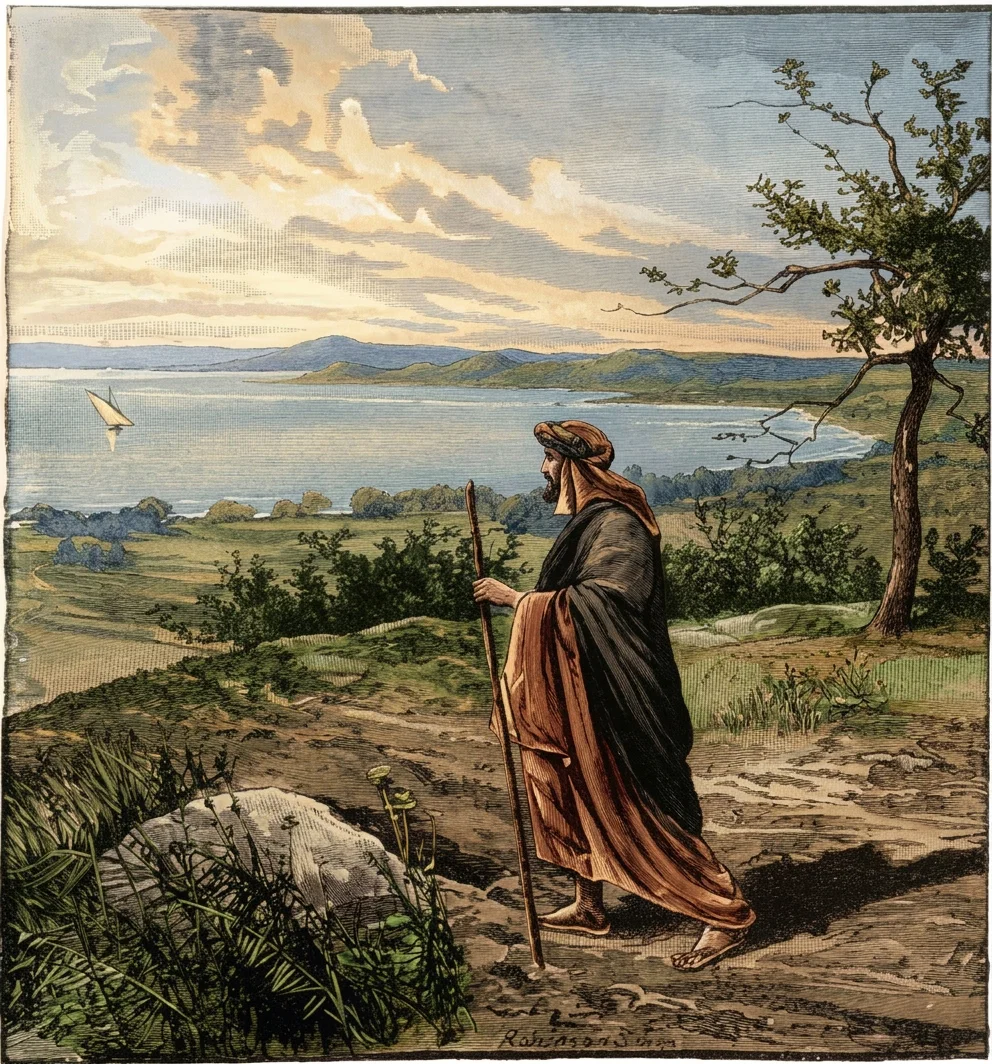
PAUL'S JOURNEY FROM TROAS TO ASSOS. Copyrighted, 1888.