RHODES

14%

Pacific Press Publishing Company · Oakland, California · Aug 26, 1897

FromSigns of the Times, Vol. 23, No. 33.

Read the full edition

RHODES

A short distance to the west of the island of Cyprus, in the Levant, lies the island of Rhodes, but twelve miles from the mainland of Asia Minor. Tho but 20x45 miles in extent, this island attained great wealth and power during the last few centuries before the Christian era. It is believed to have been first settled from Greece; however this may be, it is certain that the Greeks obtained possession of Rhodes in the twelfth century B.C., shortly before the Trojan war, and to the present constitute the principal part of the population. Situated in the line of commerce between three continents, and possessing the most delightful climate of all the islands of the Levant, Rhodes attained great importance as a trading center, and was noted for its learning, art, and architecture.
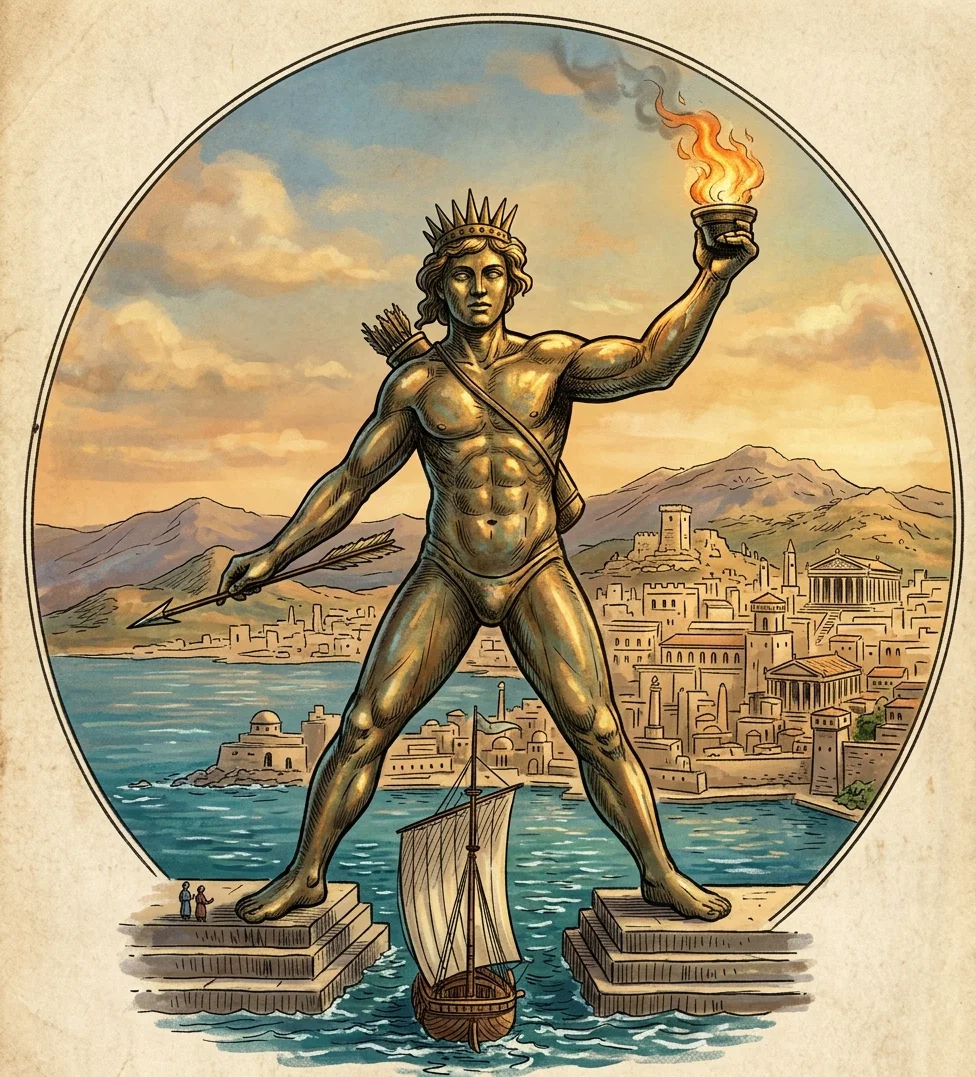
At the close of the fifth century B.C. the city of Rhodes was founded for a new capital, and soon rose to importance. It possessed two good harbors, at the entrance of one of which was the famous brazen statue, known as the Colossus of Rhodes. The Greeks called it the statue of Helios (the Greek word for sun). The Greeks had temples to the sun at Corinth, Argos, Elis, and many other cities, but their principal seat of sun-worship was at Rhodes. It will be remembered that the island of Cyprus, near by, was noted for the worship of Ashtaroth, or the Greek Astarte and Roman Venus, the female deity corresponding to the male sun-god Baal, and the Hercules, Apollo, etc., of the Greeks and Romans. Hence it is not surprising that the chief seats of worship of the sun-god and goddess should be on neighboring islands.
The Colossus of Rhodes was 70 cubits, or 105 feet, high, and was considered one of the seven wonders of the world. It was completed in 280 B.C. and was thrown down by an earthquake in 224 B.C. Besides this Colossus at the entrance to the harbor, there were about 3,000 other statues in the city of Rhodes, 100 of which were colossal. Rhodes was also noted for the beauty and strength of its architecture. Art continued to flourish here for some time after the beginning of its decay in Greece. Its power was broken by the Romans in the year 42 B.C. In 1310 A.D. the Knights of St. John of Jerusalem, headed by the Crusaders, captured Rhodes and held it till 1523, when they were driven out by the Turkish sultan Solyman. Having so long held the island of Rhodes, they are often called the Knights of Rhodes.
These Knights of St. John were a religious order which originated 1048 A.D. in the Hospital of St. John the Baptist, established to aid poor pilgrims who visited the holy sepulcher at Jerusalem. They are noted for having been the most powerful religious and military order of the Middle Ages. Having been expelled from Rhodes by the Turks, the emperor Charles V. assigned them the island of Malta (Melita, where Paul was shipwrecked on his way to Rome, Acts 28:1), where they remained till 1798, when the island was captured by the French. They were long considered as a bulwark against the Turks.
At the present time, Rhodes, like Cyprus, is much depressed. The entire population, mostly Greek, is but 30,000, two-thirds of these being in the city of Rhodes. So far as known to us, the truth has not yet been represented on this island. But as we gain Greek members in Turkey, doubtless the truth, through them, will soon find its way to Rhodes, and at the last the Sun of Righteousness, whose name is Wonderful, will stand as its ensign instead of the pagan wonder, the colossal brazen sun-god. H. P. H.