WESTERN AFRICA

17%

Pacific Press Publishing Company · Oakland, California · Sep 16, 1897

FromSigns of the Times, Vol. 23, No. 36.

Read the full edition

WESTERN AFRICA.

A LADY, recently returned from western Africa, writes concerning the life of European settlers there:—
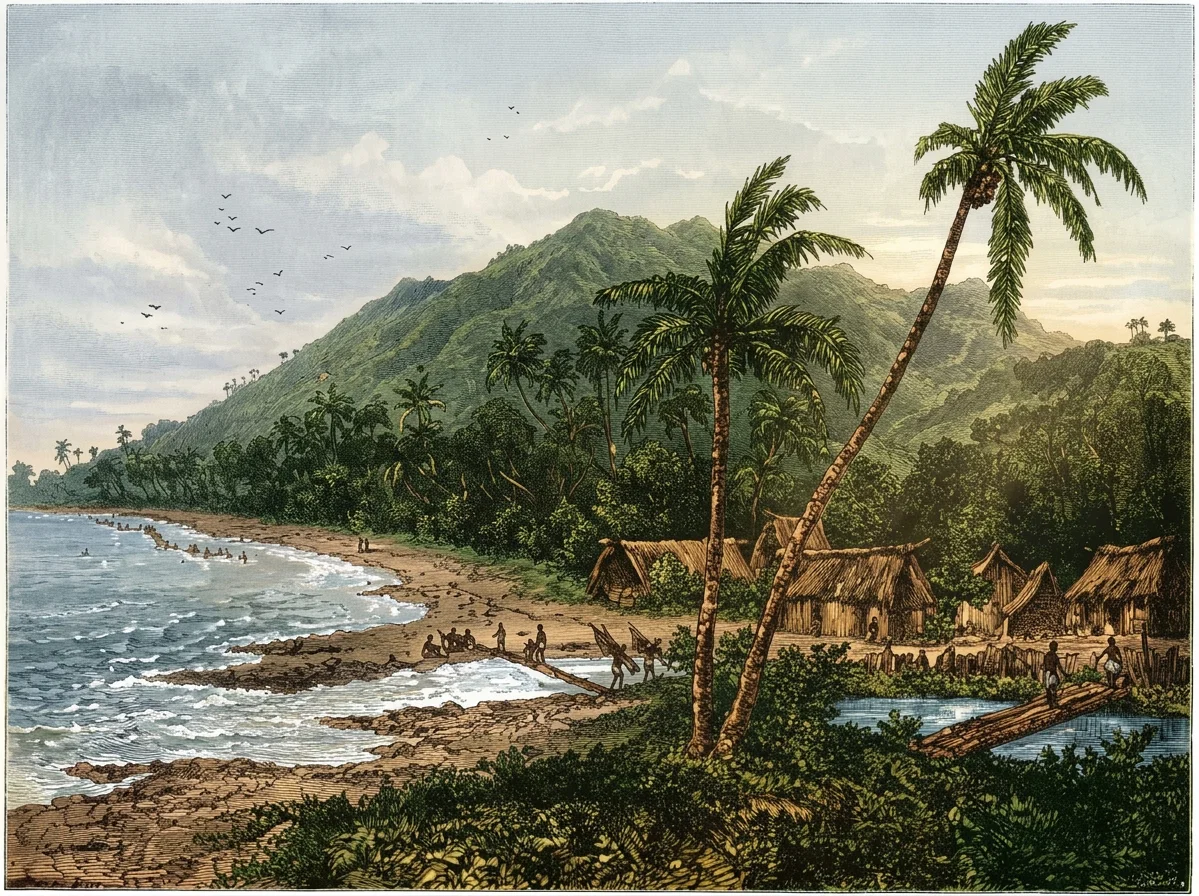
“A VILLAGE IN AFRICA.”
“Nearly all the traders, officials, and explorers rule the natives with a rod of iron and commit the greatest cruelties, especially upon the girls and women. It is no wonder that death often cuts them off in one of their sprees; but, altho this happens often, it has no effect upon those who remain. They are a little subdued until the funeral is over, but even when returning from the grave, they joke about their dead friend and return to their regular ways of life. The ‘woman’ of the dead man changes masters often before the funeral. Every imaginable vice exists among the white people who are the exemplars of the natives. The immoral lives of the European merchants and officials make hard work for the missionaries. To say that the missionaries are hated by the white people is putting it mildly. To be sure, they turn to us when there is sickness among them, or their dead must be buried, but at other times they hinder our work whenever they can.
“Protestant missionaries seldom get credit for the work they do. At least, officials and explorers hardly ever give them their just dues, altho they often praise the Catholic missions. It is true that the Catholic missions, in most places, have nice buildings and a large school, and these outside appearances give rise to glowing reports. The explorers remain only a few days at a station, and have not time to find out the inside workings of the different missions, nor the treatment which the children receive. The whip of hippo hide, which is the means of persuasion in the Catholic missions and is frequently used on the natives, disappears when visitors are present. More than half of the children hardly learn to read, but have to work hard on the farm. The brighter ones are exhibited in the schoolroom to the passing stranger . The natives are not slow in finding this out, and the Catholics can not get freeborn native children in their neighborhood. So they carry on a slave trade with the interior. The slave children are compelled to stay in the mission until of age, and in most cases even longer. These things can not be learned during a short visit, and since the hospitality of the Catholic missions and the quality of their wines are famous all along the coast, explorers and others sound the praises of these establishments.
“Explorers carry black girls with them into the interior and bring them back with them, if convenient. I know whereof I speak and can confirm it at any time. Civilized nations would have stricter laws if they only knew, but it seems as if they did not want to know, about the true state of affairs, and if the real facts reach the ears of European governments they are quickly hushed up, and the public at large knows nothing about them. The only remedy for these outrages seems to be for white men to take their wives with them, and through the influence of educated women a different atmosphere will be found in African society.”—Missionary Review.