THE SOCIETY ISLANDS

8%

Pacific Press Publishing Company · Oakland, California · Apr 3, 1901

FromSigns of the Times, Vol. 27, No. 14.

Read the full edition

THE SOCIETY ISLANDS.

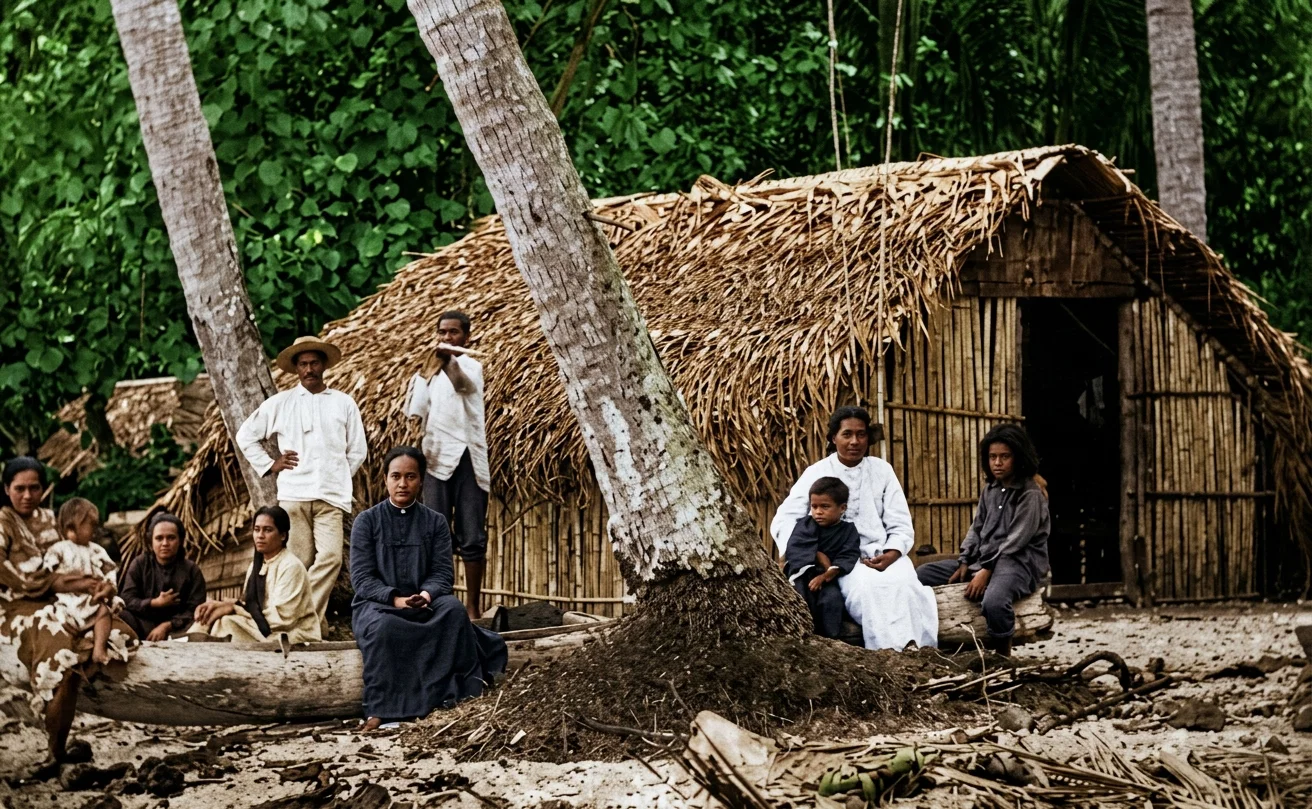
A Tahitian Hut.
A Tahitian Hut.
THESE islands are found in the South Seas, between 155° and 148° west longitude, and between 16° and 18° south latitude. They were named by Captain Cook, who visited Tahiti in 1768 to observe a transit of Venus. The group is composed of thirteen islands, the largest being the island of Tahiti, which is said to contain 412 square miles. Its circumference is about 120 miles. Raiatea lies 120 miles northwest of Tahiti, and is next in size. It has a circumference of 50 miles.
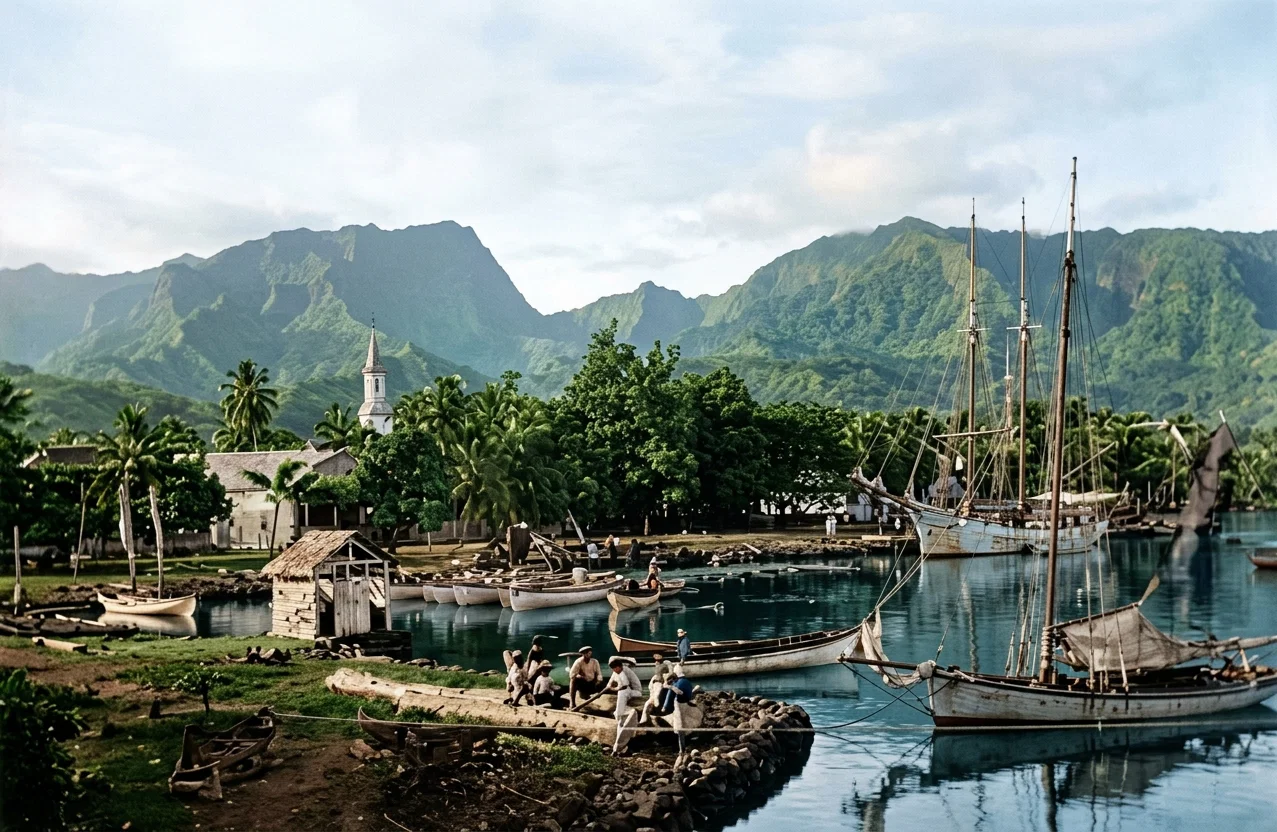
The islands of this group are supposed to be of volcanic formation. They are all high and mountainous in the center, but usually have a level strip of low land along the beach. Each island is surrounded by a coral reef, except in the case of Raiatea and Tahoa, where one reef encloses both islands. These reefs serve as barriers, and are a natural protection to the isles within. The water between the reef and the island is called a lagoon. It affords an excellent harbor, as the force of the ocean is broken by the reef.
The water is so deep that large vessels can enter in safety, and yet not too deep for casting anchor. The vessels find an entrance to these quiet harbors thru natural openings in the reef. Some of the passages are narrow and crooked; for the coral rock is not confined simply to the reef, but often extends out some distance from it, and is found in patches here and there all thru the lagoon. As it usually can not be seen above the surface of the water, it is the more dangerous. For this reason pilots are found at each port, who go out to meet strange vessels and direct their way in and out.
The city of Papeete, Tahiti, is the principal seaport in this part of the island world. It is visited every thirty-three days by a 3,000-ton steamer from San Francisco, belonging to the Oceanic Steamship Company, and every twenty-eight days by a steamer from Auckland, New Zealand. Large sailing vessels from Europe are often found in its harbor, where they come for cargoes of copra and pearl shells. Numerous small vessels are continually plying back and forth between it and the surrounding islands, as it is the center of commerce for the Marquesas, Tuamotu, Gambier, and Austral groups, as well as for the other islands of the same group.
A Scene in Papeete Harbor.
The population of Papeete has been estimated by some at about 5,000; but this estimate includes many transients, natives of the country districts and adjacent islands, who come to spend a few months in the “great” city of Papeete. Papeete is to the natives what London is to the English people. It can not boast of fine edifices, or of grandeur in any form, excepting in nature itself. The buildings are very plain, and not large, and in the suburbs can be seen many primitive Tahitian huts. The streets are narrow,
but are kept clean, and the roads are very good. All garbage and other rubbish is carried away by men with carts. But there is no sewerage; and as one passes along the street on a damp morning, the nose will often detect uncleanliness which is not apparent to the eye.
The luxuriant foliage and the gorgeously tinted flowers add much to the beauty of the scene. Large trees and vines covered with blossoms have an appearance of mammoth flower beds. The scenery is indeed grand, whether we look at the verdure-covered hills, the sparkling ocean, or the blue sky and fleecy clouds above; and I have often thought that the words of the hymn aptly apply to this place as one—
“Where every prospect pleases, And only man is vile.”
B. J. CADY.