Its Strategic Value

6%

Pacific Press Publishing Company · Oakland, California · Jul 22, 1897

FromSigns of the Times, Vol. 23, No. 28.

Read the full edition

Its Strategic Value

THE TURKS AND ARMENIANS. No. 4.
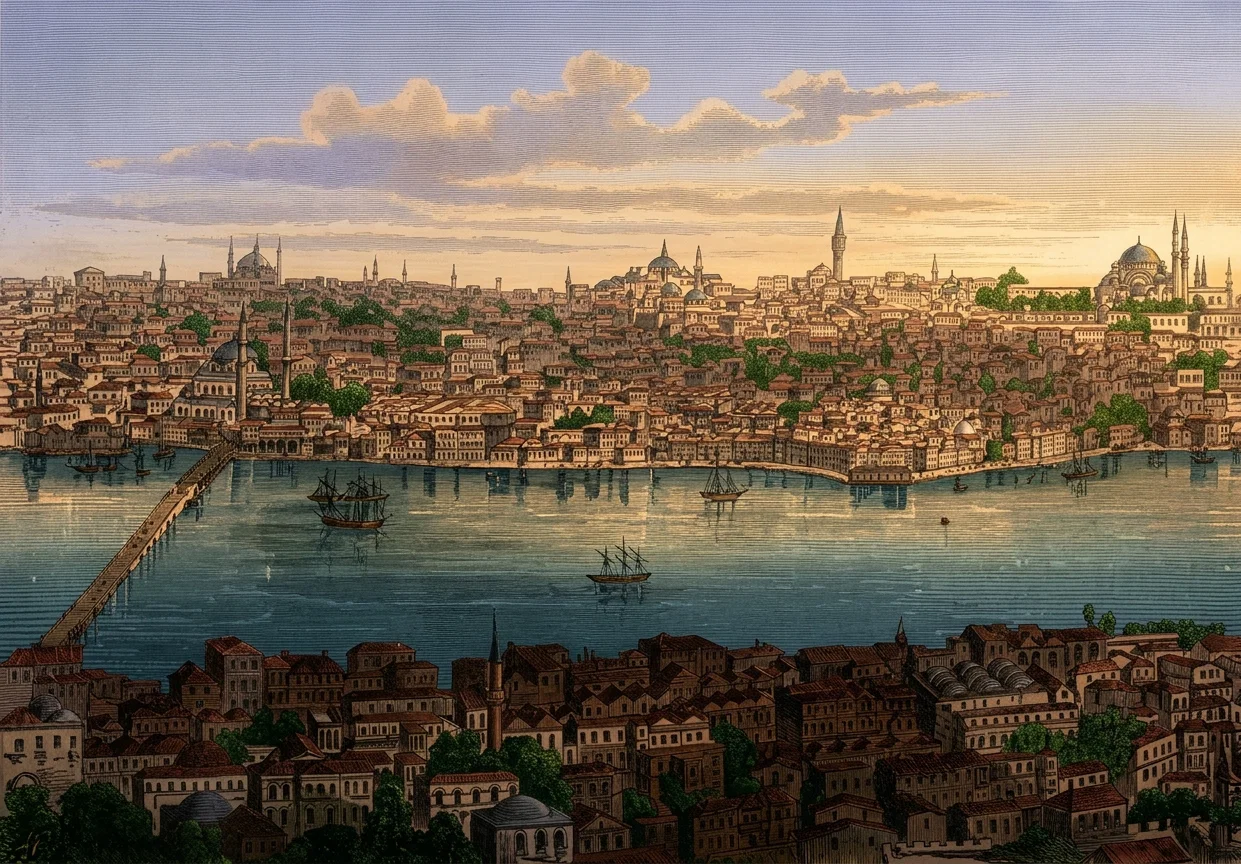
The last part of Dan. 11:45 reads, “Yet he shall come to his end, and none shall help him.” Our previous study showed that the Turkish power is the subject of this verse. Like all statements of prophecy, this expression is full of meaning. The fact is, the Turk would long ago have come to his end had he not been helped. It has long been the policy of the powers of Europe that the integrity of the Turkish Empire must be maintained. And there is a reason for this. It is not out of love for the Turk, for all alike despise him. To understand the reason, it will be necessary to review briefly the attitude of Russia towards Turkey.
CONSTANTINOPLE, THE KEY OF THE NATIONS.
When Peter the Great came to the throne, Russia was far behind the other nations of Europe. Peter recognized the fact, and purposed to bring up his nation nearer to date, and make of it one of the greatest, if not the greatest, nations of earth. He went to Holland and other countries to become thoroughly familiar with their ways, even working in the shipyards. He became a practical ship-builder. At St. Petersburg stands to-day a boat made with his own hands, and Peter is called the father of the Russian navy. He founded a new capital for his empire, and brought in by special encouragements a large number of artisans from Germany and other countries, to teach his people the trades and industries of Europe. He made giant strides towards the realization of his project; and when his days were about to be numbered, he sketched in his will his plan for developing the nation for the guidance of his successors to the throne. Among other matters expressed in this will, the following has an important bearing on the question under study:—
Take every possible means of gaining Constantinople and the Indies (for he who rules there will be the true sovereign of the world); excite war continually with Turkey and Persia; establish fortresses in the Black Sea; get control of the sea by degrees, and also of the Baltic, which is a double point, necessary to the realization of our project; accelerate as much as possible the decay of Persia; penetrate to the Persian Gulf; re-establish, if possible, by the way of Syria, the ancient commerce of the Levant; advance to the Indies, which are the great depot of the world. . . . Interest the House of Austria in the expulsion of the Turks from Europe, and quiet their dissensions at the moment of the conquest of Constantinople by giving to Austria a portion of the conquest, which afterwards will or can be reclaimed.
A study of Russian diplomacy since the days of Peter the Great shows that his nation has closely followed this advice. Since that time Russia has had seven wars with Turkey, and has steadily advanced towards the realization of her grand object. This great colossus of the north has been gradually and steadily coming down on Turkey with the resistless on-moving force of the glacier. Portion after portion of Turkey has been sliced off, till Russia has been under the walls of Constantinople itself, as in 1878.

Its Strategic Value.

But the great powers of Europe have seen in Constantinople precisely what Peter the Great saw. A moment’s consideration will show the importance of Constantinople as a capital. It lies at the juncture of the two greatest continents, Europe and Asia; it is connected by sea with all the world, and yet has in its immediate vicinity the lands which have supported the richest and most powerful nations of the world’s history. It has unequaled facilities for fortifications, besides an unrivaled climate. No other city combines so many important advantages. This fact was recognized by Constantine the Great, who made it his capital in preference to Rome. Any great nation holding it as its capital would have such advantage as to make it dangerous to all the rest. All the nations of Europe have realized this, and for that reason they have adopted the policy that the integrity of the Turkish Empire must be maintained.
The power of the Turk has long been broken, so that he is not a menace to the peace of Europe, tho he occupy this favorable situation; and the powers have helped him, kept him, in this position, for the sole purpose of keeping stronger nations out. Again and again the Turks would have been driven out had not the powers of Europe prevented it. In 1840 the independence of the Turkish Empire practically came to an end, and since that time its affairs have been largely controlled by the powers of Europe. The nation has continued to grow weaker and more helpless, till the wonder is how it can survive any longer; but it is explained by the fact that it is upheld by these powers, and that not out of love for the Turk, but in order to keep one another out of his favored position.

“None Shall Help Him.”

But the prophecy states plainly that the time is coming when he will not be helped, and then will come to his end. He comes to his end because none help him. It has for years been plain that if he were not helped he could no longer subsist; the moment his help is taken away, he is sure to come to his end. And when he comes to his end, all nations come to an end; hence the end of the Turk is a most momentous event in which every individual is concerned, and should be studied with more than casual interest. We therefore ask,

What Are the Present Prospects

with reference to this help being continued or withdrawn? Recent events have brought about a decided change in the attitude of the powers, and have caused an unusually acute crisis. Down to the present, the chief help of Turkey has been England. In 1878, when the Russians had penetrated to the walls of Constantinople, and the powers called the Berlin Congress, England played an important part; and in connection with this settlement she was assigned the part of protecting Asiatic Turkey and securing reforms in the government of the Armenians. As aid and recompense, she received possession of the island of Cyprus, as already observed.

Trouble with Armenia.

Since that time the relations between the Turks and Armenians have become more strained, until 1895, when open difficulty broke out, and many massacres of the Armenians took place. England at once interfered and demanded of the sultan certain reforms for the Armenians. Negotiations were carried on for more than a year; but nothing definite was effected; the massacres did not abate, but grew worse, until the feeling in England became most intense. The people became much agitated because their government did not act more vigorously. The journals were filled with articles against the Turks; the ministers preached against them, and many large mass meetings were held. The writer attended one held in Manchester, in January, 1896, which was attended by some 6,000. The large meeting was addressed by several orators, but all uttered the same sentiments, which in substance were as follows:—
As a nation we have pledged ourselves to protect the Armenians, and have received possession of the island of Cyprus as a bond of that pledge; but what have we done for them?—Only irritated the Turk and increased the massacres; thus we are before God responsible for the slaughter of the Armenians, our brethren. Why have we remained inactive?—It is because of our commercial interests, our own selfish interests as a nation. If we do not do our duty, we fear that the wrath of God will fall on our nation; our only safety is to draw the sword and strike, and not wait for the concert of Europe. If we strike, the God of justice will vindicate our cause, and we can be sure that America will stand by us; the seventy American missionaries in Turkeyare as good as seventy pledges that America will aid us if we take the Turk vigorously in hand.
The feeling expressed in this meeting was the general feeling of the people all over England. Gladstone, who so vigorously held a few years ago that the integrity of the Turkish Empire must be maintained, is now among those that call most loudly for the chastisement of the Turk. But what is the meaning of all this? To the present, as before noted, England has been the chief help of Turkey; indeed, had it not been for her, the Turk would long ago have been overthrown; and now this nation that has been the chief help has completely changed in sentiment, not only demanding that this help be withdrawn, but that they themselves be the first to draw the sword in chastisement of the Turk. This looks as tho we were standing on the eve of the accomplishment of the last great drama. H. P. H.