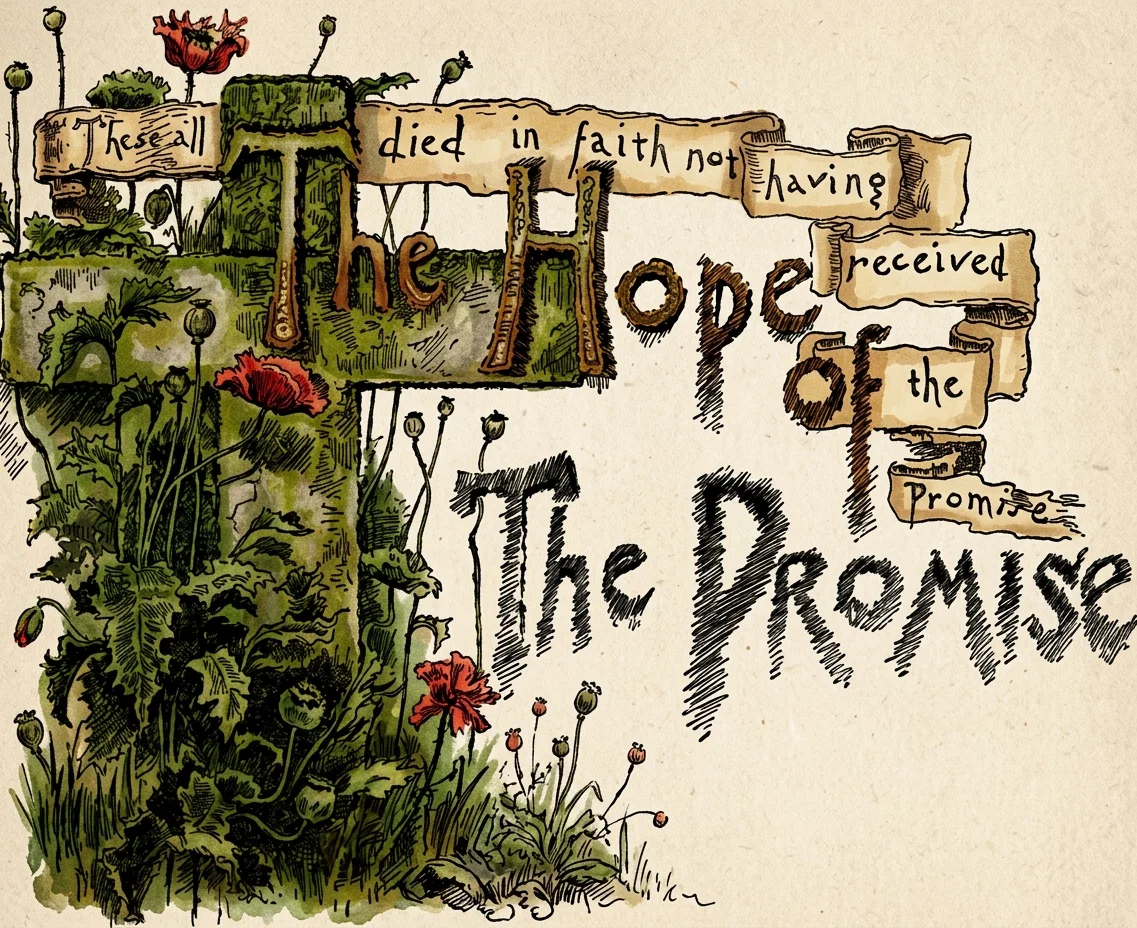
CHRIST IS COMING AGAIN

4%

Pacific Press Publishing Company · Oakland, California · Apr 15, 1897

FromSigns of the Times, Vol. 23, No. 15.

Read the full edition

CHRIST IS COMING AGAIN.

What the Word Says.

It is said by those who have given the subject study that every twenty-fifth verse of the New Testament, on an average, speaks directly or indirectly of the second coming of Christ. It is placed second to no other event in the plan of salvation. Every writer of the New Testament Scriptures spoke of the second advent of our Lord.
The Son of God in the person of Jesus of Nazareth once walked this earth among men. In “the fulness of the time” “God sent forth his Son, born of a woman, born under the law, that he might redeem them which were under the law.” He was born among men. He grew up as did other boys. For thirty years he lived at the house of Joseph in Nazareth. As he grew older, he learned the trade of carpenter, and thus identified himself with all honest and honorable labor. He glorified God in being subject to his parents, and learning the lessons of the Holy Word.
When thirty years of age, he entered upon his mission of prophet and teacher to the world. He was baptized of John in Jordan as others were baptized. There God owned him as his Son. He fasted for forty days while enduring the fierce temptations of the devil. At the end of that triumphant conflict he entered upon his work among the people. He gathered out his disciples, twelve of whom he ordained apostles. He traveled with them throughout Judea, Samaria, Galilee. He taught the people the things of God. He healed their sick, comforted the sorrowing, brought hope to the despairing, light to the blind, and freedom to the bound. He talked with men and women, sat in their houses, ate at their tables. Finally, after he had given three and one-half years of his life, nay, all of it, pouring out his very soul in their behalf, they crucified him. He was buried in the rock-hewn tomb of the Arimathean. The third day he rose again; and for forty days thereafter he was seen of his disciples, talked with them, and ate with them. They heard his voice; they saw him with their eyes; their hands handled him. 1 John 1:1. All this the Sacred Record assures us was literal. He was an actualman among men, albeit he was God incarnate.

He Will Come Again.

At the end of the forty days this same Man ascended to heaven, and as he arose, drawn by a power which overcame the force of gravitation, the wondering disciples gazed with longing after him until a cloud of angels received him out of their sight. But the Lord did not leave them to doubt. He had before told them, but he did not leave the comfort to be recalled by an uncertain memory. Two of the shining host remained behind, and thus addressed the sad-hearted disciples:—
“Ye men of Galilee, why stand ye gazing up into heaven? this same Jesus, which is taken up from you into heaven, shall so come in like manner as ye have seen him go into heaven.” Acts 1:11.

A Literal, Personal, Visible Coming.

“Ye men of Galilee;” the words were spoken to them, but they are written for his disciples of all generations to follow, even to us; for he is our Saviour. We did not see him walk in Judea, nor transfigured on the mount, nor bowed in Gethsemane, nor crucified on Calvary. Yet we know him by his truth, by the presence of his Spirit, by his sweet words of reproof, instruction, and comfort, made living words to us by faith. We saw him by faith ascend; we look for his return the second time unto eternal salvation. Heb. 9:28.
“This same Jesus;” yea, the very same, waiting disciple, who sat in Peter’s fishing shallop and taught the people. The very same that bade the funeral procession of the only son of the widow of Nain pause just outside the city gate that he might restore the son to the mother. The “same Jesus” who sat weary and thirsty by the well of Samaria and yet gave the woman who came to the well, of the water of life. The “same Jesus” who hungered with his brethren, the sons of men, yet who fed the multitudes with the few barley loaves and little fishes. The very self-“same Jesus” who went the long weary journey to Sidon to heal the demoniac daughter of the “stranger” mother, who raised Lazarus from the dead, who bowed in prayer and sweat great drops of blood in his agony in Gethsemane, who was nailed to the cruel tree, and died, who was buried, and who rose again triumphant over death and the grave, triumphant for him and for us—and forever more. “This same Jesus” is coming again.
“In like manner” as he went into heaven so will he come. “While they beheld, he was taken up; and a cloud received him out of their sight.” Acts 1:9. “And he led them out as far as to Bethany, and he lifted up his hands, and blessed them. And it came to pass, while he blessed them, he was parted from them, and carried up into heaven.” Luke 24:50, 51. “This same Jesus” is going to return as literally as when he ascended; the only difference will be the added forth-shining of his glory. When he ascended, a cloud of angels, a triumphal band, escorted him to the celestial city. Ps. 24:7–10. When he comes, it will be “this same Jesus,” “and all the holy angels with him” (Matt. 25:31), “in the glory of his Father” (Matt. 16:27). “Behold, he cometh with clouds; and every eye shall see him.” Rev. 1:7. This same Jesus is coming again, a personal, visible coming, “in like manner” to his going into heaven. “For the Lord himself [not another] shall descend from heaven with a shout.” 1 Thess. 4:16.

What His Coming Means.

Why is his coming important? Why should the Scriptures give it such prominence? Why should we teach it?—Because of what it means to those who have then rejected him, to the earth, to his people. That event will be the great climax of all events.
What Does It Mean to the Wicked?—It means their utter destruction. In God’s immediate presence is the purest, holiest place in all the universe. His presence purifies by abolishing and consuming the impure, the sinful. When God’s presence was manifest to Moses, to Joshua, to Israel, the very ground became holy. (See Ex. 3:4, 5; Joshua 5:15; Ex. 19:11, 23.) Jesus Christ desires to come into the flesh of every child of sin by his Word, his Spirit, and cleanse the whole being of sin. Thus he did to the leper. Matt. 8:3. Thus he did to his disciples. John 15:3. By thus coming in he cleanses from all sin, and makes the body the holy temple of God. 1 Cor. 3:16, 17; 6:19. He desires that the life of Jesus, which is the life of righteousness, may be manifest in the body of all. Titus 2:14; 2 Cor. 4:10, 11. But the Lord will not compel us to admit the Sin-destroyer, the Life-giver. Infinite Love stands at the door and knocks; but it must be our will that admits him. Rev. 3:20. So he came to Israel of old; they confessed their sin, their faith manifested itself by providing a sin-offering emblematic of their worthiness of death and their faith in the coming One who would become sin for all, that all might be made the righteousness of God in him (2 Cor. 5:21); they laid their sin, represented in that lamb, upon the altar; and the presence of God came down and consumed the offering, the sin of the people, and they were clean and holy through the presence of the Holy One. What wonder that they shouted for joy and fell upon their faces in humble adoration and reverent worship! Lev. 9:22–24.
But in the next chapter what a different record is given: Nadab and Abihu, priests of God, came before the Lord drunken and with strange fire, contrary to the Lord’s command. They identify themselves with sin, make of themselves a part of sin, and then come into God’s glorious presence. The result is, “There went out fire from the Lord, and devoured them, and they died before the Lord.” Lev. 10:1–11. Here is the lesson. Not always will Christ’s heritage, the earth, be the abode of sin. He is coming to his own—not vailed in mortal flesh, but in unvailed glory. Those who know not his presence in the heart at that time will fall and perish before the light of his overwhelming glory. “Who shall be punished with everlasting destruction from the presence of the Lord, and from the glory of his power; when he shall come to be glorified in his saints.” “Then shall that wicked be revealed, whom the Lord shall consume with the spirit of his mouth, and shall destroy with the brightness of his coming,” literally, “the forthshining of his personal presence.” 2 Thess. 1:9, 10; 2:8. Many other passages might be cited teaching the same thing. God pleads with the sinner now to renounce the sin and receive his indwelling Word and Spirit, that in that day he may be glad in the Lord’s presence.
What Does His Second Coming Mean to the Earth?—The earth was made for man. Ps. 115:16. God designed that it should be inhabited by Israel. Isa. 45:17, 18. It was made by him and pronounced good, and Adam was made its lord, given dominion over the earth and all therein. Gen. 1:26, 28. But Adam sold himself under sin, and the dominion passed to Satan, the “god of this world,” “delivered” unto him by sinful man, his slave. 2 Cor. 4:4; Luke 4:6. But Jesus Christ, the Second Adam, bought back the dominion, and to him, “the Tower of the flock,” shall it return (Micah 4:8), and Jesus will be King. At his second coming, the end of the age, will he begin the work of sending “his angels, and they shall gather out of his kingdom all things that offend, and them which do iniquity.” Matt. 13:41. Then at “his appearing” will be the beginning of his everlasting kingdom. 2 Tim. 4:1. Then the kingdoms of this world shall become the kingdom of our Lord and his Christ (Rev. 11:15), not by political schemes, not by the conversion of all sinners, however much that might be desired, but “the zeal of the Lord of hosts will perform this” (Isa. 9:7). Then will Christ sit upon the throne of his glory; then will the kingdom, prepared from the foundation of the world, be restored to man, to whom it was given.
What Does His Second Coming Mean to the Righteous?—It means life, immortality, peace, rest, and home. The Christian has life here, the everlasting life of Jesus Christ. By that life he serves in the “newness of Spirit,” and obeys God’s law of life and love. But he holds that life conditionally by faith. If he dies, he commits that life to God until the last day, and then eternal life, absolutely, forevermore, is given to the child of righteousness and faith. “He that believeth on the Son hath everlasting life.” John 3:36. “And this is the will of him that sent me, that every one which seeth the Son, and believeth on him, may have everlasting life; and I will raise him up at the last day.” John 6:40. It will then be everlasting life absolutely, for faith will be absolute.
It will be life not simply for the soul, but the body. Here God gives his children everlasting life, his life, in mortal bodies (2 Cor. 4:10, 11), but when he comes, it will be his life in immortal, incorruptible bodies; for then the righteous dead will be raised, and the righteous living changed to immortality. He gives us his life that we may do his will, and perfect an incorruptible character, of which the incorruptible body is God’s certificate. “For the Lord himself shall descend from heaven with a shout, with the voice of the Archangel, and with the trump of God; and the dead in Christ shall rise first; then we which are alive and remain shall be caught up together with them in the clouds, to meet the Lord in the air; and so shall we ever be with the Lord. Wherefore comfort one another with these words.” 1 Thess. 4:16–18. “We shall not all sleep, but we shall all be changed, in a moment, in the twinkling of aneye, at the last trump; for the trumpet shall sound, and the dead shall be raised incorruptible, and we shall be changed. For this corruptible must put on incorruption, and this mortal must put on immortality. So when this corruptible shall have put on incorruption, and this mortal shall have put on immortality, then shall be brought to pass the saying that is written, Death is swallowed up in victory. O death, where is thy sting? O grave, where is thy victory?” 1 Cor. 15:51–55. This is the blessed life which Christ gives to his people at his coming. As Jesus Christ was righteous, and it was not possible for death to hold him (Acts 2:24), so those who have upon them the righteousness of God by faith of Jesus Christ can not be held by death; they will come forth to immortality (Rom. 8:10, 11). It was this, the resurrection of the dead at the revelation of Jesus Christ, that inspired the song and cheered the heart of patriarch, prophet, king and priest, evangelist and apostle, in all ages of the church.
The people of God have peace in Jesus amid the tempest and strife of earth; there they “shall delight themselves in the abundance of peace.” Ps. 37:11. Here we have rest in the work of Christ from the weary work of sin; but there shall be rest, yea, “quietness and assurance forever.” Isa. 32:17. “And the inhabitant shall not say, I am sick; the people that dwell therein shall be forgiven their iniquity.” Isa. 33:24.
It means our eternal reward, our blessed, everlasting home. At Christ’s coming, we have learned, will his kingdom be established. Then, and not till then, will his people receive their reward, “at his appearing and his kingdom.” 2 Tim. 4:1. “For the Son of man shall come in the glory of his Father with his angels; and then he shall reward every man according to his works.” Matt. 16:27. “Then shall the King say unto them on his right hand, Come, ye blessed of my Father, inherit the kingdom prepared for you from the foundation of the world.” Matt. 25:34. “And the kingdom and dominion, and the greatness of the kingdom under the whole heaven, shall be given to the people of the saints of the Most High, whose kingdom is an everlasting kingdom, and all dominions shall serve and obey him.” Dan. 7:27. It was to this reward that the penitent thief looked when he prayed, “Lord, remember me when thou comest into thy kingdom, ” a request equivalent to, “Lord, remember me when thou comest again.” And our Lord’s reply is in harmony with the request: “Verily I say unto thee to-day, shalt thou be with me in Paradise,” the Eden of God restored as at the first. Luke 23:42, 43.
It was an example of wonderful faith. Christ’s own nation had rejected him; his disciples had forsaken him and fled; he was dying upon the cross, with seemingly no power to help even the weakest; and yet the dying thief saw in the victim of Pharisaic hate the Saviour of the world. And as he had faith to ask Jesus that day, the great day of his humiliation, Jesus had the faith and the power to promise on that day, that when he came into his kingdom, when Paradise should be restored, then should divine power bring back to life the penitent one beside him.
To this day did the apostle Paul look for his reward. As he was about to lay down his work in this life, he writes: “I have fought a good fight, I have finished my course, I have kept the faith; henceforth there is laid up for me a crown of righteousness, which the Lord, the righteous Judge, shall give me at that day; and not to me only, but unto all them also that love his appearing.” 2 Tim. 4:7, 8. Again he writes, “Looking for that blessed hope, and the glorious appearing of the great God and our Saviour Jesus Christ.” Titus 2:13. In all ages, from Enoch, the seventh from Adam, to John, on the isle of Patmos, has the prayer arisen, “Even so, come, Lord Jesus.” Rev. 22:20.
The effect of a genuine hope in that coming will not lead to fanaticism or worldliness; for “every man that hath this hope in him purifieth himself, even as he [Christ] is pure.” 1 John 3:3. Why should not such a hope purify the heart? When we know a dear friend is coming, we prepare for that friend. We set our house in order. We prepare the best room. We place sweet and beautiful flowers where they will attract his attention, and make his room bright and cheerful. As the hour draws near, we watch for his coming. We listen for his familiar footstep, for the opening of the gate; we spring to the door to meet him with glad welcome. Will we not treat the Lord of glory, our Saviour, as well?
Christ is coming again—not a helpless babe, not with the infirmities of the flesh, not to suffer and die; but a mighty conqueror, glorified, to gather his people home, and place upon them his own divine image. But he is the “same Jesus.” Will you not receive his Word, his Spirit, now, that you may be ready to receive him then?
“There is a King of glory, Erelong on earth to rise, Sung in prophetic story, Descending from the skies; The babe of Bethlehem, ’tis He; It is the Man of Calvary,— Not crowned with thorns and gory, But crowned with glory now! Not crowned with thorns to-day, Not mocked and led away, But crowned with everlasting glory now.”