Faith

9%

Pacific Press Publishing Company · Oakland, California · Feb 4, 1897

FromSigns of the Times, Vol. 23, No. 5.

Read the full edition

Faith

Editorial

Faith.—“The fruit of the Spirit is . . . faith.” The Revised Version and Rotherham has “faithfulness.” Murdock’s Syriac reads “fidelity.” It refers to faith in operation in the Christian life.
Faith is more than Belief. Belief may be no more than mere assent to a truth. “Thou believest that there is one God; thou doest well; the demons also believe, and tremble.” But the demons do not have faith; theirs is nominal, dead belief. Faith is a living principle, which makes real the thing believed. It is “the giving substance to things hoped for, the proving of things not seen.” Heb. 11:1, R. V., margin. To mere belief there is but the empty form; faith sees it filled out, a living reality.
Faith is based on God’s Word. “Faith cometh by hearing, and hearing by the Word of God.” Rom. 10:17. It sees in God’s Word not a dead, dry form, a mere letter; but it accepts that Word for what it is, spirit and life. John 6:63. It takes that Word, not as the word of men, but as the Word of God. It sees God in his Word. It matters not tho to man the things seem to be impossible; faith does not consider the hardness, the difficulty, the impossibilities, to human sight. It merely inquires, Is it God’s Word? and if it is, it sees, it knows, it lays hold, of the power of God.
Faith respects God’s Promises. It finds life by them; it finds life in them. The sinner is delivered from this present evil world and translated into the kingdom of the Son of God’s love through faith in the promises of the Gospel. Col. 1:13, margin. By faith he finds the righteousness of God. Rom. 1:16, 17. By faith in the Son he receives the peace of righteousness. Rom. 5:1. By faith in that same love he drinks of the Fountain of eternal life. Gal. 2:20. In fact, all the way, at all times, faith, living faith, makes its possessor a partaker of the divine nature through the exceeding great and precious promises of God. 2 Peter 1:4.
Faith also respects God’s Precepts. That is not faith which holds to the promise and despises the precept. And yet there are many who hope to be forgiven of transgression, and in the last great day to be made immortal, who are continually despising, or regarding as of no account, the commandments of God. They hope in his promises, and deceive themselves into believing that their hope is sure, but they sit in judgment on the divine precepts, and consider them as not worthy of observance, especially if inconvenient, inexpedient, unpopular, or demanding sacrifice. The obedience rendered is the indicator of faith. The murderer, the thief, the idolater, the profane swearer, the proud, the covetous, the wicked of every class and degree, want prolongation of existence, and peace, and prosperity; and many are led to hope that if they believe God’s promises all these things are theirs. But no man has true faith in God’s promises who does not have true faith in God’s precepts. No man has sure hope in God’s promises who does not have true submission to God’s precepts. God is in the one as truly as the other. Nay, more, the precept is a promise. He who by faith submits with all his heart to a command of God, will find and know the implied promise that what is commanded, with all its beneficent results, is wrought in his character. He who accepts with all his heart the promise of God accepts with it the righteousness of God which makes the promises possible.
Without Questioning.—Faith must accept without questioning. Not that the Lord demands blind unreason. He always gives enough evidence on which to base faith, that is, to the soul which longs to do God’s will. That all men do not believe is no proof of this. The majority of men want God’s blessing, but in their own way; yet this is impossible. God’s blessing must come in God’s way, or it is not his blessing. Received as a matter of course, accepted in unbelief, the blessing is perverted, and works out evil instead of good. So with God’s Word. The man who adds or subtracts from the promises of God, who changes their conditions, does not have the promises of God, but his own. He who seeks to mold, or change, or curtail, or add to one commandment of God, does not possess God’s precept, but one of his own making. He has limited God’s wisdom by his own. He has said that God’s law needed amending, his wisdom supplementing. He who obeys nine precepts out of the ten of the Decalogue does so, not to please God, but to please himself. The test of faith always comes over that which is contrary to carnal desire and wisdom.
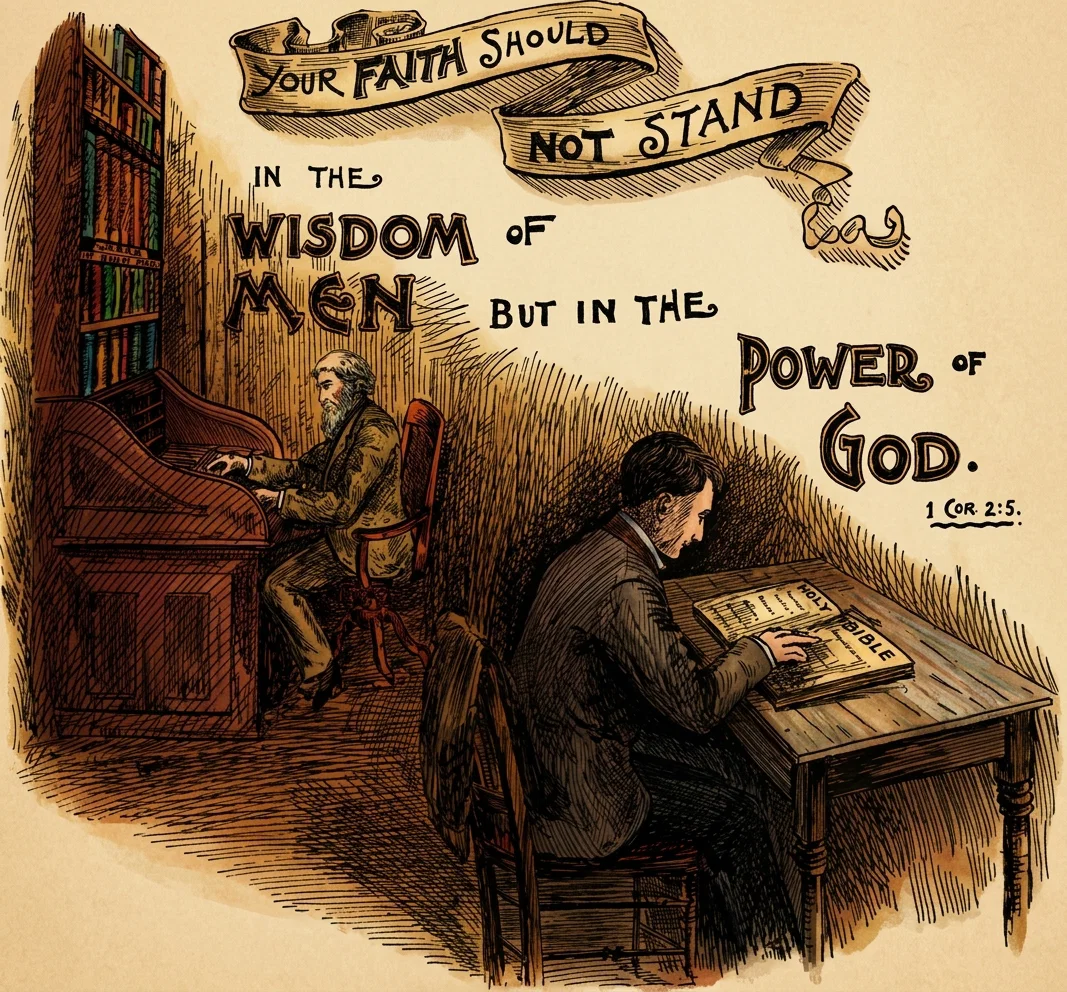
Illustrations.—The test of faith to King Saul was the command of God to slay the Amalekites and devote their property to destruction. The wisdom and policy of man said, Spare Agag the king to grace a triumph, and the flocks for sacrifice, lest the people be offended. Saul’s faith was found wanting; it stood in the wisdom of men rather than in the power of God. The result was the loss of a throne and his soul. (See 1 Sam. 15:1–23.) It was simple faith for the ministers of the sanctuary to carry the sacred ark on their shoulders as God commanded; it was the wisdom of men to build a new cart, and let the holy chest be drawn by oxen. The former would have led to glory and blessing; the latter led to dishonor and death. (See Num. 4:15; 7:9; 2 Sam. 6:3–9.) It was simple faith for Naaman to dip seven times in Jordan according to the word of the Lord by the prophet; it was the wisdom of man to prefer the brighter, clearer, colder waters of the rivers of Damascus, to the tortuous and at times roilyJordan. Yet the former meant leprosy till death; the latter, healing and life. And why seven times? is not one dipping sufficient? Nay, it must be seven. (See 2 Kings 5:1–14.) All through the Book of God are revealed illustrations of faith and its fruits, and unbelief and its consequences.
The Power of Faith.—And yet the power is not in the mere accepting of itself or the mere submission of itself. One man may submit to man, and even to the dumb idol. He receives no benefit. It does not remove sins, give peace, or make righteous. His submission is simply to wisdom and power but little if any higher than his own. But he who accepts with all the soul God’s promises, who yields with all his heart to God’s precepts, comes into harmony with the life of God, the will of “him who worketh all things after the counsel of his own will” (Eph. 1:11), who “doeth according to his will in the army of heaven, and among the inhabitants of the earth; and none can stay his hand, or say unto him, What doest thou?” (Dan. 4:35). The power of faith is the power of God, because it is placing him who has the faith in the channel of the working of God’s will; it is bringing him into harmony with God’s “eternal purpose.” But he who allows man to come between his soul and God; who allows tradition however hoary to supersede the Scriptures of truth, who permits commentaries however learned to usurp the place of the Spirit of God in the interpretation of the Word, who chooses the creed instead of Christ, will sadly find at last that the wisdom of men is foolishness with God, and a quicksand foundation instead of the living and eternal Rock. O reader, decide the questions of to-day by simple faith in the Word of God! Open the heart to receive of his fulness. Wholly submit to his every precept. As the electric car reaches up the arm of the trolley and takes from the power overhead, so let your faith connect with Jesus Christ, through the Word, and his life and power are yours. So shall your faith “not stand in the wisdom of men, but in the power of God,” and so shall you prove the faithfulness of him “who shall stablish you, and keep you from evil.”