ERRONEOUS doctrines crept into the Christian church at a very early period in its history. While the apostle Paul was yet on the stage of action, he said, “The mystery of iniquity doth already work.” 2 Thess. 2:7. He also gave warning to the elders of the church at Ephesus, in these words: “I know this, that after my departing shall grievous wolves enter in among you, not sparing the flock. Also of your own selves shall men arise, speaking perverse things, to draw away disciples after them.” Acts 20:29, 30. Of course the great adversary of souls is not only the originator of all false doctrines, but the instigator of those who promulgate them.
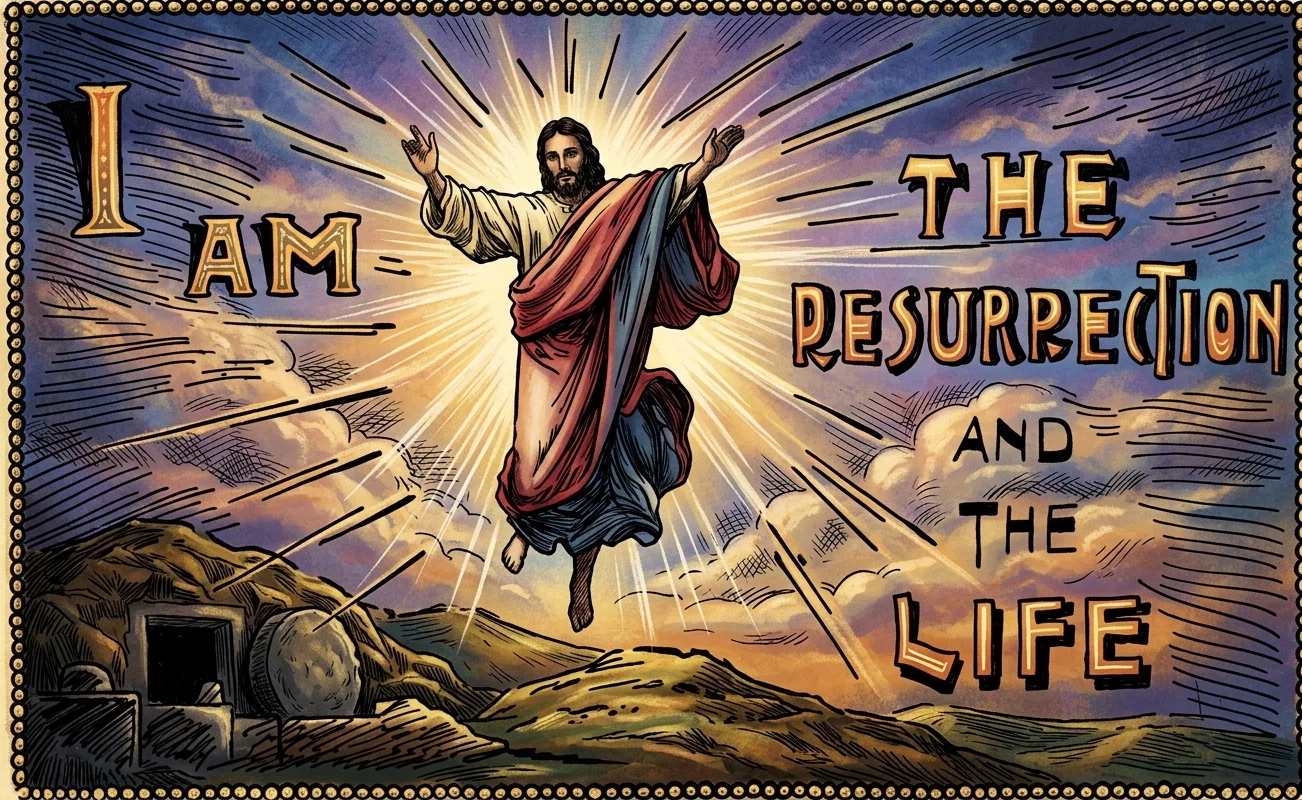
We would naturally suppose that in attacking Gospel truth, the enemy would attack some fundamental principle. We would also expect, from his well-known subtlety, that he would make the attack somewhat indirectly. The Gospel of salvation is positively presented to men as eternal life through Jesus Christ. This is very plainly stated in two familiar texts: “For God so loved the world, that he gave his only-begotten Son, that whosoever believeth in him should not perish, but have everlasting life.” John 3:16. “The wages of sin is death; but the gift of God is eternal life through Jesus Christ our Lord.” Rom. 6:21. To this idea of life through Christ, he himself adds positively that which is implied in the texts just quoted; he says, “I am the resurrection and the life.” Thus he places the resurrection as the practical means through which the object of the believer’s hope is obtained.
Then we are not surprised to find the adversary of souls striking at the Gospel hope by aiming to depreciate the importance of the doctrine of the resurrection. This we see by Paul’s second letter to Timothy: “But shun profane and vain babblings; for they will increase unto more ungodliness. And their word will eat as doth a canker; of whom is Hymeneus and Philetus; who concerning the truth have erred, saying that the resurrection4 (388)is past already; and overthrow the faith of some.” Chap. 2:16-18. In the first epistle to Timothy, Paul had given him a similar warning: “O Timothy, keep that which is committed to thy trust, avoiding profane and vain babblings, and oppositions of science falsely so called; which some professing have erred concerning the faith.” Chap. 6:20, 21. So we see that science—Christian science, if you please—interposing to depreciate the importance of the resurrection, is not by any means a new delusion.
But the extreme of the delusion was attained in the church at Corinth, where some went so far as to say that “there is no resurrection of the dead.” 1 Cor. 15:12. Satan had previously brought the aristocratic faction of the Jews, the Sadducees, to the point where they denied the resurrection, and did so in what to them was very superior wisdom. See Matt. 22:23-34. But the Lord soon put them “to silence,” showing them that they were in error, “not knowing the Scriptures, nor the power of God.” The wily enemy of truth had also fully imbued the heathen with beliefs entirely subversive of the doctrine of the resurrection. When Paul came to Athens and secured an opportunity to speak to the learned men of that renowned seat of worldly wisdom, they gave him respectful attention until he spoke of the resurrection. “And when they heard of the resurrection of the dead, some mocked; and others said, We will hear thee again of this matter.” Acts 17:32.
The continuous and persistent efforts of the adversary, even to the present day, to decoy both the world and the church away from the truth by means of doctrines which either deny the resurrection or make it a matter of secondary importance, are of themselves sufficient to show that it is a matter of more than ordinary moment. But the Scriptures place it where the believer can not ignore it, or even give it secondary consideration.
Man was created of the dust of the earth; he is “of the earth, earthy.” 1 Cor. 15:47. When he disobeyed God, his sentence was: “In the sweat of thy face shalt thou eat bread, till thou return unto the ground; for out of it wast thou taken; for dust thou art, and unto dust shalt thou return.” Gen. 3:19. The breath of life which he had was the life common to all animal creation. See Gen. 2:7; 7:15, 22; Job 27:3; Eccl. 3:19, 20. God gave the man life; he forfeited it by sin; he dies, and the spirit of life returns to God who gave it. Eccl. 12:7. Whatever it was before man was created, or was born, it is again; it is no part of the man. “His breath goeth forth, he returneth to his earth; in that very day his thoughts perish.” Ps. 146:4. “Their love, and their hatred, and their envy, is now perished; neither have they any more a portion forever in anything that is done under the sun.” Eccl. 9:6.
We give these extended quotations (and there are others) to show the nature and ultimate extinction of man without a Saviour. Now comes the plan of salvation. God gave his Son that men might be saved, might have life. Notwithstanding this, however, man must die. They still have the Adamic nature; and “in Adam all die.” Job asks, “If a man die, shall he live again?” And he answers, “All the days of my appointed time will I wait, till my change come.” Chap. 14:14. Where would he wait? Let him answer: “If I wait, the grave is my house; I have made my bed in darkness.”
But what about the promise of eternal life? “As in Adam all die, so in Christ shall all be made alive.” The word “resurrection” means a rising again, life from the dead, and Christ says, as before stated, “I am the resurrection.” Why is he the resurrection?—Evidently because it is necessary to resurrect the dead in order to fulfil the promise of life. In death man is extinct; a resurrection is a recreation, without which there could be no life for the dead. Jesus made it very clear to the Sadducees that a resurrection was necessary because he was the God of Abraham, and Isaac, and Jacob; and he is not the God of the dead, but of the living. They live in his purpose, and the resurrection will complete the promise. They “all died in faith, not having received the promises.” Heb. 11:13. The children of God are “the children of the resurrection.” Luke 20:36.
But the apostle Paul places the absolute necessity of the resurrection in the consummation of the plan of salvation beyond all question. Referring to the idea that had obtained in the Corinthian church that “there is no resurrection of the dead,” he says: “But if there be no resurrection of the dead, then is Christ not risen; and if Christ be not risen, then is our preaching vain, and your faith is also vain.” 1 Cor. 15:13, 14. Emphasizing the importance of the thought, he repeats it: “For if the dead rise not, then is not Christ raised; and if Christ be not raised, your faith is vain; ye are yet in your sins. Then they also which are fallen asleep in Christ are perished.” Verses 16-18.
Then there must be a resurrection, or there is no salvation. The fulfilment of the promises, which are all yea and amen in Christ, depend upon it. And the risen Christ sends back this comforting assurance from his Father’s presence: “I am he that liveth, and was dead; and, behold, I am alive forevermore, Amen; and have the keys of hell and of death.” Rev. 1:18.