God in Nature

9%

Pacific Press Publishing Company · Oakland, California · Apr 16, 1896

FromSigns of the Times, Vol. 22, No. 16.

Read the full edition

God in Nature

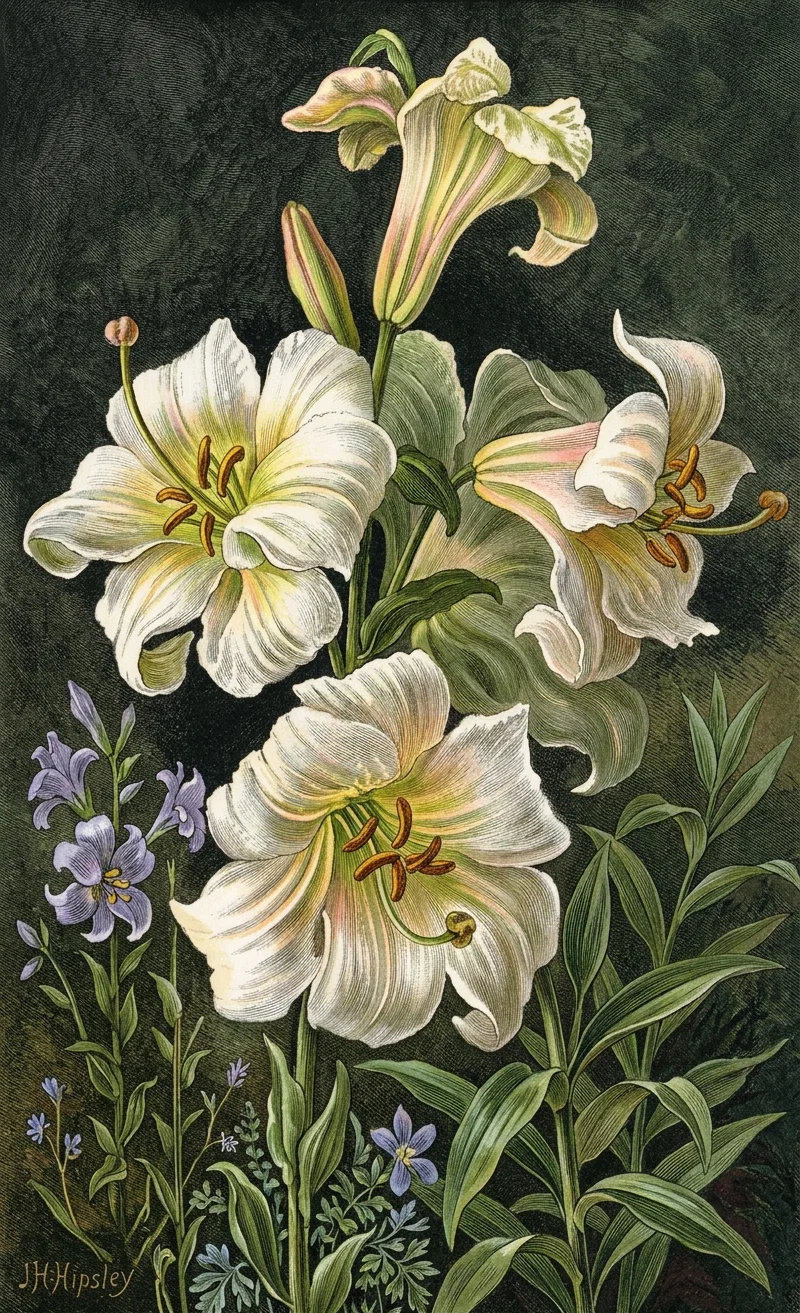
“Consider the Lilies.”—These are the words of our Lord in Luke 12:27. We do not understand that he meant that the lily alone of all the flowers should be considered, any more than the raven alone of all the birds (verse 24); but one in each class was taken as a type of all others, and why not the lily among flowers and the raven among birds?
God in Nature.—God reveals himself not alone in his word or his church, or in marvelous miracles of power or grace, but in all nature. “The heavens declare the glory of God; and the firmament showeth his handiwork. Day unto day uttereth speech, and night unto night showeth knowledge. There is no speech nor language, where their voice is not heard.” And yet, while contemplating the wonderful glories of the sky by night or by day, we may say with the old Idumean emir, “Lo, these are parts of his ways; but how little a portion is heard of him!” God is revealed in all creation.
“It Was Very Good.”—Such was this earth and all upon it when it came from the hand of the Creator. The All-wise One in the contemplation of his work was refreshed, delighted, and gave his children the Sabbath as its memorial. (Ex. 31:17; Eze. 20:12.) All bore the stamp of the Creator. Upon everything was his character written. With vision undimmed by sin or tears or age, man could read on mountain and plain, on hill and valley, on river and lake, on sea and sky, on grass and tree and fern and flower, “God is love.” Every voice declared the glad truth. Every image mirrored forth some one of his excellences. Heaven and earth sang his praise.
Blinded by Sin.—But sin came, and the moral vision of man was dimmed, inanimate nature became subject to vanity, the beneficent laws of the Creator were perverted, and God’s image was marred, and his message of love was mingled with the groans and curses of woe and wrath. Man could no longer read God in nature, and angels and prophets were sent with more frequent message and miracle. Types and ceremonies shadowed forth the fearful results of sin and the love and power of a mighty Redeemer. The clearer, fuller revelations of the written word and the living law in Christ Jesus became necessary to the failing moral vision, and now, clear as God’s revelation is, man, rejecting the aid of the Spirit, abides in darkness where it is light, and imagines light where darkness reigns.
Light and Healing in Christ.—But there is light and healing in Christ. He came to open the eyes of the blind, to heal the defective vision. To the spiritually blind who will come to him, he will give the anointing which will enable them to see, even as he anointed the eyes of the physically blind when on earth. (See Rev. 3:16, 17; John 9:6, 7.) The heavenly anointed eyes can see light in God’s light. They know that Christ is the light of the world; that his word is a lamp and a light to our path; that his prophecies are a light in a dark place; and, knowing these things, they know that it is by this light of Christ that the moral worth of other things is discerned. An eye single to God’s glory lets in God’s light, and thus in him are they “children of light.”
Reading by This Light.—By this light is their moral vision healed. In this light they see new beauties never seen before. They gaze into the heavens, and there they read God’s glory in the marshaled hosts of shining orbs. They look upon the earth, and, marred as it is by sin, they see God’s goodness written there. The words of Christ take on new meaning, “Consider the lilies, how they grow.”
Consider the Lilies.—They are little things and frail, and comparatively unimportant, yet God’s power is manifest in them, that we may learn how it may be manifest in us. Consider the lilies; they may teach us precious lessons. Their Beauty.—But God gave their beauty; he clothed them, so that Solomon in all his glory was not arrayed so gloriously. And yet the seed from which the beautiful flowers sprang fell into the common dirt, was watered by common rain, warmed by common sun, fanned by common winds; yet it grew a lovely lily, telling the wonderful story of God’s love and power. So God can and longs to take us from among the common things of this sin-cursed earth, implant within us the incorruptible seed, make us new creatures, and clothe us with his own royal robes of beauty. A prayer which Inspiration teaches us is, “Let the beauty of the Lord our God be upon us,” and if it be offered in simple faith, the result will be, “I will greatly rejoice in the Lord, my soul shallbe joyful in my God; for he hath clothed me with the garments of salvation, he hath covered me with the robe of righteousness, as a bridegroom decketh himself with ornaments, and as a bride adorneth herself with her jewels.” So Christ longs that his beauty of character shall be upon us. He clothes the lilies; “shall he not much more clothe you, O ye of little faith?”
“Consider the Lilies;” Their Purity.—Look at the pond lily, with its waxen white petals, with its broad, beautiful leaves of living green spread out upon the surface of the water. How beautiful is the flower! How many have endangered their lives to pluck “just one”! And yet how ignoble are its surroundings. Its roots are deep down in the oozy mire, where swarm a million impurities. The water in which it floats is sometimes indescribably foul. When agitated, noisome vapors fill the air with their unwholesome presence. But the lily is white and pure. Its life is from God. The divine alchemy transmutes the base and vile into living beauty. The power of God’s word, which gave the lily its existence, brings from out the foul water and fouler mire the pure white flower. When the storm disturbs the filthy pool, the foul water washes over the face of the flower, but leaves it unstained, pure and radiant, a witness to the power and love and wisdom of God.
“Grow as the Lily.”—So God promises concerning a faithful, obedient child. Hosea 14:5. Feed upon “the sincere milk of the word, that ye may grow thereby.” 1 Peter 2:2. The Christian is born again by receiving that word. He is cleansed by applying that word. He grows by feeding upon its blessed, life-giving truths. He may not know how this can be, any more than he knows how God brings lilies out of foul pools; but that does not matter. Let him feed upon God, and “he shall grow as the lily.” In the place where God has put him, there may be unwonted corruption, vile influences may exist on every side, but if he feeds on the word, if heart and mind and soul are open toward God, longing after God, as the flower does the light, he will grow Godward day by day. He may be vexed and pained at the evil around him; it may be so prevalent as to lead him to almost identify himself with it, but if he feeds upon the Living Bread, if he drinks from the Fountain of Life, he will grow. Neither the foul waters of sin nor the turbulent waters of strife will defile or uproot him. He has the life of Him who “is able even to subdue all things unto Himself.” But if of choice we drink in the immoral miasmas of our surroundings, we can not be pure. Satan fell in heaven; Enoch, and Noah, and Elijah stood when all around was corrupted. Wherever God bids us go, if we follow his biddings, whether in licentious Sodom or the city of the Great King, he will keep us. Let heart and mind be open toward him. God cares for you, reader, more than the flowers; will you not trust him? “Consider the lilies.”