The word of God is the highest authority to which we can appeal in matters pertaining to the Christian life. “To the law and to the testimony; if they speak not according to this word, it is because there is no light in them.” Isa. 8:20. The commendation of the apostle to the church at Thessalonica was that they received the word of God as divine: “Ye received it not as the word of men, but as it is in truth, the word of God, which effectually worketh also in you that believe.”51 Thess. 2:13. To this same church he said, “Ye are the children of light, and not of darkness.” What is this light?—“Thy word is a lamp unto my feet, and a light unto my path.” Ps. 119:105. “The entrance of thy words giveth light.” Verse 130.
Not only is the word of God a light, but it is pure. “The words of the Lord are pure words, as silver tried in a furnace of earth, purified seven times.” Its purity consists in its unerring counsel. When God speaks there need not be any question in regard to what he says. When darkness was upon the face of the deep and there was not one single ray of light to pierce the inky darkness, God said, “Let there be light, and light was.” His word has power to bring to pass whatever he says, therefore it is infallible. It is exempt from error in judgment or in expression.
There need be no trouble in regard to the will of God, if we understand what he says. Then the only question that we need to settle is, How can we know what he says? We have the Scriptures, and of them it is said: “All Scripture is given by inspiration of God, and is profitable for doctrine, for reproof, for correction, for instruction in righteousness; that the man of God may be perfect, thoroughly furnished unto all good works.” The Scriptures seem to be all that is needed to make man wise unto salvation. It is not some man’s interpretation of the Scriptures that will save men and women. It is the Scriptures.
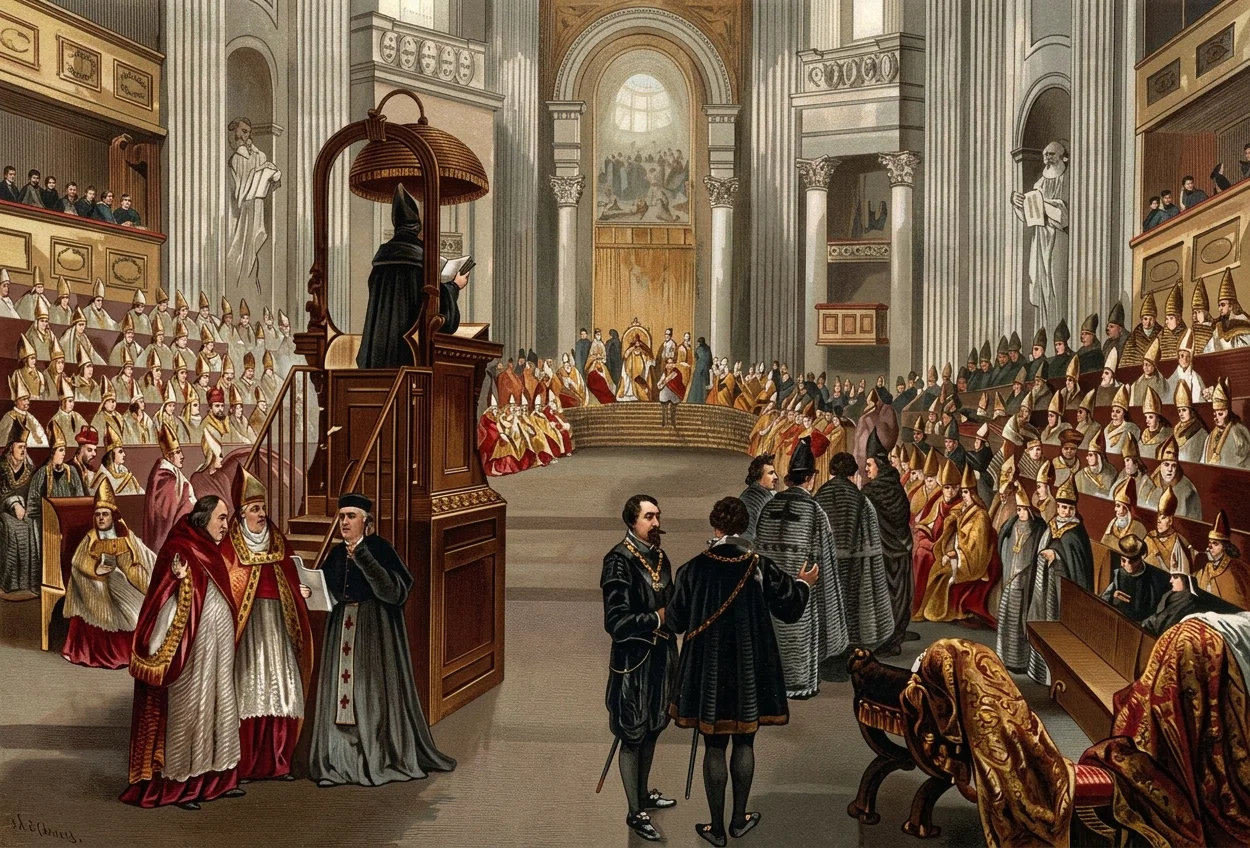
Proclaiming the Dogma of Papal Infallibility.
Does Man Need an Interpreter?
This is an important question. Can man understand the Scriptures sufficiently to save him, without an interpreter? Or is there one class of men that can understand the word of God, and another class that cannot understand it? Did the Lord choose one class of his creatures to understand his word, and another class, who must depend entirely upon the former class for a knowledge of what he says? It does not look reasonable that such is the case. God gave his Son to save the world, and he is no respecter of persons. One person may understand the teaching of the Scriptures better than another, because he has studied it more. But the person in ignorance could have understood it just as well if he had had the same opportunities and had improved them.
The word of God is spiritual in its nature. “The words that I speak unto you, they are spirit, and they are life.” But it is also said: “The natural man receiveth not the things of the Spirit of God; for they are foolishness unto him; neither can he know them, because they are spiritually discerned. But he that is spiritual judgeth all things, yet he himself is judged of no man.” 1 Cor. 2:14, 15. Then, it is evident that the human can not be the interpreter of the divine. The natural man, whatever his position, can never occupy the place of God, or the Holy Spirit, to his fellow man. Whenever, and wherever, man has made an effort to be an interpreter of the Scriptures to his fellow man, persecution has followed. In the early apostasy, when men drew others after themselves, one class of men presumed to act as conscience for others, becoming interpreters of the Scriptures for them. Those who received this so-called priestly service, soon became worshipers of men. Those who decided to think for themselves were denounced as heretics, and sentenced to severe punishment for their refusal to accept these human interpreters. It has been clearly proved that the persecution of those days was not of God. But it grew out of the claim of a class of individuals to become the interpreters of the Scriptures for the masses. If it was not in harmony with God’s plan then, it can not be so now.
“But ye have an unction from the Holy One, and ye know all things.” 1 John 2:20. The unction here mentioned is the same as the anointing in verse 27: “But the anointing which ye have received of him abideth in you, and ye need not that any man teach you; but as the same anointing teacheth you of all things, and is truth, and is no lie, and even as it hath taught you, ye shall abide in him.” This anointing must be the same anointing that Jesus received when he came to this world. “The Spirit of the Lord is upon me, because he hath anointed me to preach the Gospel to the poor.”
The Pharisees and Scribes thought themselves the expositors of God’s word to the people. But when Jesus met them in the temple, they could not teach him, but were led to ask him questions, thus acknowledging his superior knowledge of the Scriptures. As his anointing, or the reception of the Holy Spirit, led him to understand what was revealed in the Scriptures of truth, so will the believer’s anointing give him the true meaning of God’s written word. “Howbeit, when he, the Spirit of truth, is come, he will guide you into all truth.” It matters not how weak the believer is, if he has the presence of the Holy Spirit, and will follow its leadings in the study of the word, he can understand the Lord’s message to him. The Holy Spirit is the Divine Interpreter of the Infallible Word.