Had man never sinned, there would have been no use for that species of social regulation known as civil government. The difference between the government of God and that of the civil power is that God governs by love, the civil ruler by force. The government of God is spiritual and eternal, while civil government is temporal and temporary. Behind all civil authority is the sword as the ultimate resort. Man became a sinner because he refused to be governed by the law of love, as designed by the Almighty. But, when the plan of salvation gave a new probation to the race, there must needs be some kind of government, in order that there might be some measure of security in society during the probationary period. And this improvised government, or the temporary expedient, must needs be a government of physical restraint, from the fact that man had refused to be controlled by other means. The murder of Abel by his brother Cain shows that even the right to life would not be voluntarily respected by sinful man.
Aside from the positive assertion that “the powers that be are ordained of God” (Rom.513:1), we have the example of the government of Israel. When God brought his people out of Egyptian bondage, and would make them a “peculiar treasure” unto himself, “above all people,” he gave them a civil government for the regulation of their temporal affairs, in addition to the moral law and regulations for religious services. Again we have a most emphatic illustration in the kingdom of Babylon. When Israel, under the government which God had given them in detail, became “worse than the heathen” (2 Chron. 33:9), the Lord gave them into the hands of the heathen king Nebuchadnezzar. Although this king took the holy vessels from the temple of God at Jerusalem and placed them in the house of his god at Babylon, yet the Lord made him ruler over all the earth. Dan. 2:37, 38.
These instances are sufficient (altho there are many others) to show that civil government is an ordinance of God, and to show that it is ordained without reference to religion,—without reference to the religious convictions of the people or of the ruler. And this fact also shows that civil government is but a temporary arrangement for the preservation of a measure of order during the probation of a sinful world.
In view of these facts, what are the relations of Christians to civil government? Answer—Christians will of course view it just as God does; they will recognize it, and honor it, without reference to the religion of the people or the religion of the ruler. A Christian is a follower of Christ, and he recognized the civil government of Pagan Rome. He enjoined the people to render unto Cæsar the things which were Cæsar’s, and he did not resist the power of the civil government even to save his life, altho every step in his arrest and trial was illegal, and the judge who gave sanction to his execution had previously pronounced him innocent of the charges brought against him.
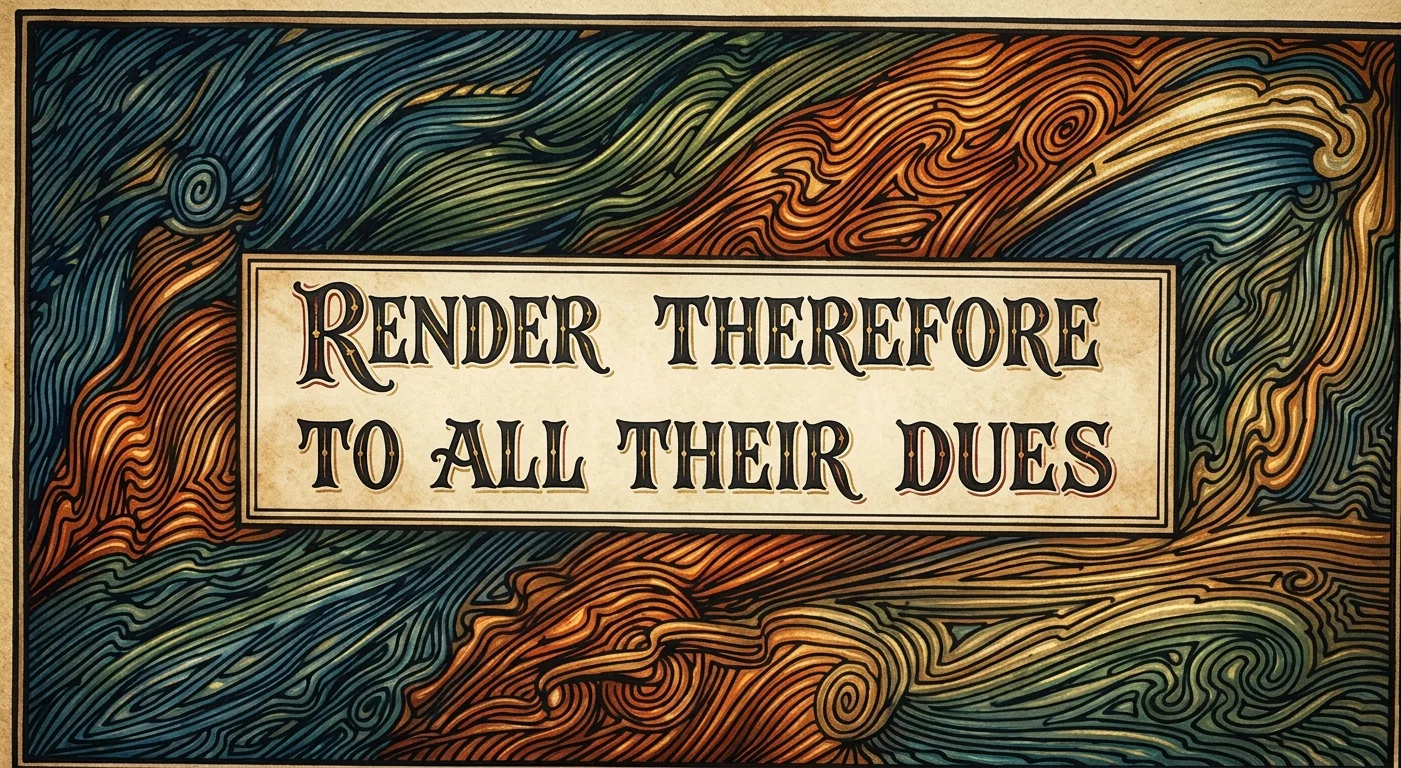
The apostle Paul is very explicit as to the duty of the Christian toward civil rulers. He writes as follows to the church at Rome: “Let every soul be subject unto the higher powers. For there is no power but of God; the powers that be are ordained of God. Whosoever therefore resisteth the power, resisteth the ordinance of God; and they that resist shall receive to themselves damnation. For rulers are not a terror to good works, but to the evil. Wilt thou then not be afraid of the power? do that which is good, and thou shalt have praise of the same; for he is the minister of God to thee for good. But if thou do that which is evil, be afraid; for he beareth not the sword in vain; for he is the minister of God, a revenger to execute wrath upon him that doeth evil. Wherefore ye must needs be subject, not only for wrath, but also for conscience’ sake. For, for this cause pay ye tribute also; for they are God’s ministers, attending continually upon this very thing. Render therefore to all their dues: tribute to whom tribute is due; custom to whom custom; fear to whom fear; honor to whom honor.” Rom. 13:1-7.
This is the theory of civil government from the standpoint of the Spirit of God. The Christian will view it in the same light, and relate himself to it accordingly. He will so far interest himself in the welfare of rulers as to pray for them—“for kings, and for all others in authority.” But while the foregoing is the theory of civil government, as showing the purpose for which it was ordained, it is a patent fact that many times civil rulers have abused the power placed in their hands and perverted the government from its legitimate sphere. For this reason God has overturned the greatest of them, and in his providence others have taken their places.
For this reason also God’s people have been brought into conflict with civil government many times. When the civil government promulgates laws requiring the people to transgress the law of God, he has repeatedly sustained his servants in their total disregard of such laws. But they are not to resist the power, they are to submit to the consequences, and leave the matter of vindication in the hands of the Lord. In such cases we have the example of Daniel when he was doomed to the lions’ den for disobeying the king’s decree; also the example of Meshach, Shadrach, and Abed-nego, when they were consigned to the fiery furnace for a like offense. We have also the example of Peter and other apostles when they suffered scourging and imprisonment rather than to obey the mandate of the Jewish council not to preach any more in the name of Jesus of Nazareth. Their answer was, “We ought to obey God rather than men;” and this position is good for Christians for all time. They are always to obey the civil government unless such obedience involves disobedience of the law of God. Peter gives us this further exposition of the mind of the Lord: “Submit yourselves to every ordinance of man for the Lord’s sake: whether it be to the king, as unto them that are sent by him for the punishment of evil-doers, and for the praise of them that do well. For so is the will of God, that with well-doing ye may put to silence the ignorance of foolish men.” 1 Peter 2:13-15.
But what part may the Christian take in the civil government? We answer by asking, What part did Christ and his apostles take in the matter of civil government? The command of Christ is, “Follow me.” It is emphatically stated that the business of the civil ruler is the punishment of evil-doers. How much can the Christian do of that kind of work? His Master devoted all his time to the advancement of the kingdom of God, a restoration in the earth of a rule of love. He positively declined any part in judging the affairs of this life (Luke 12:14; John 6:15; 8:3-11); he would not even judge those who deliberately rejected his teaching (John 12:47). The principle inculcated by him is: “Bless them that curse you, and pray for them which despitefully use you. And unto him that smiteth thee on the one cheek offer also the other; and him that taketh away thy cloak forbid not to take thy coat also.” Luke 6:28, 29. And the apostle Paul gives inspired instruction as follows: “Thou therefore endure hardness, as a good soldier of Jesus Christ. No man that warreth entangleth himself with the affairs of this life.” 2 Tim. 2:3, 4.
The man who diligently follows these plain instructions will have little time or inclination for participation in the governments of this world, which are so soon to be “broken to pieces together,” and become “like the chaff of the summer threshing floors.”