Christ’s Mission

4%

Pacific Press Publishing Company · Oakland, California · Feb 27, 1896

FromSigns of the Times, Vol. 22, No. 9.

Read the full edition

Christ’s Mission

“PEACE BE UNTO YOU.”
“Peace Be unto You.”
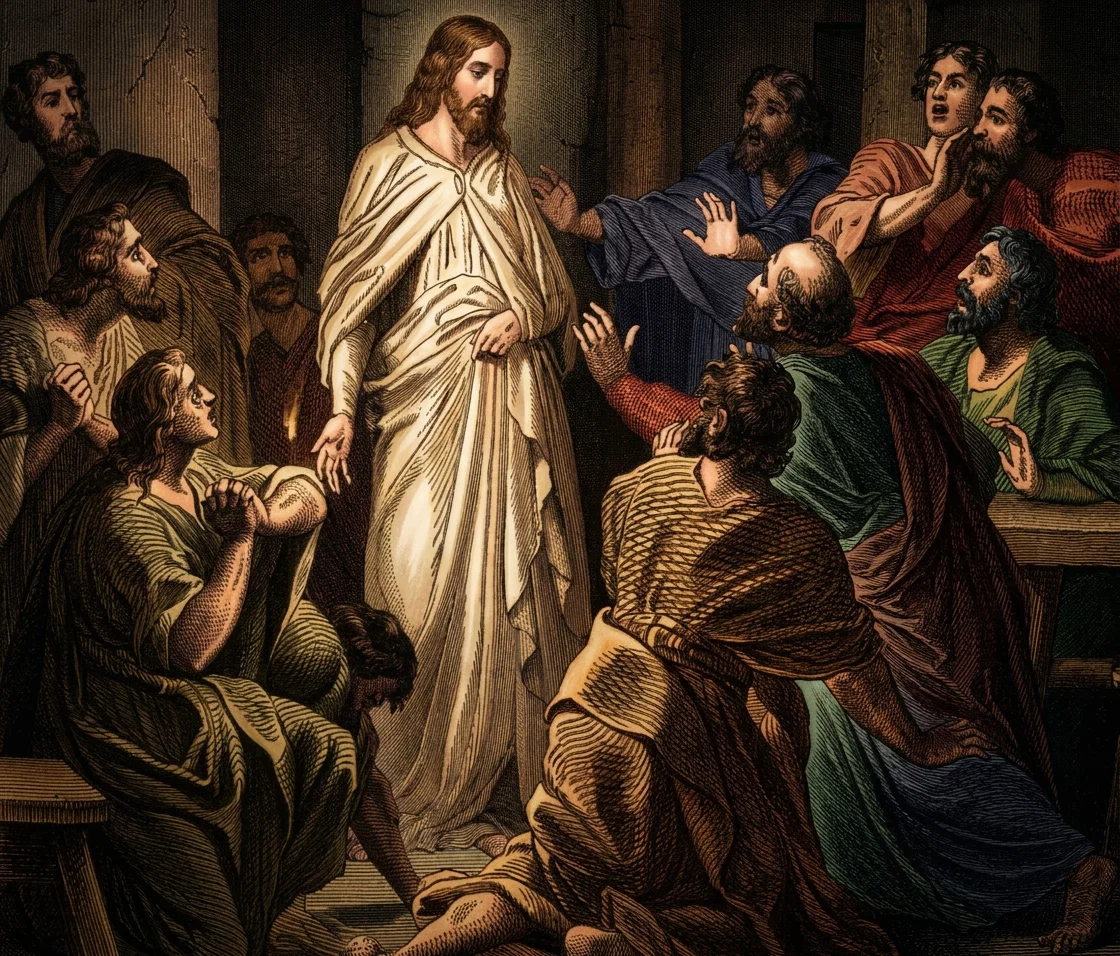
—After his resurrection from the dead Jesus twice appeared to the doubting and desponding disciples, bearing the blessed thrice-spoken message, “Peace be unto you.” See John 20:19–26. Truly it must have been a message of peace to the souls of the eleven on the tempest-tossed sea of doubt.

Christ’s Mission.

—And yet to bring peace to man is the mission of Christ. Among the names given him by the Gospel prophet is “The Prince of Peace.” The apostle declares (Eph. 2:14), that “he is our peace.” And many times do we read the message, “Grace be unto you, and peace, from God our Father and the Lord Jesus Christ.” His universal and everlasting message to all mankind is, “Peace, peace to him that is far off, and to him that is near, saith the Lord; and I will heal him.” Isa. 57:19.

The Opposite of Peace, and Why?

The opposite of peace is war, strife, agitation, unrest. Out of it grow worry, wear, sickness, discouragement, despair, death. Its cause is sin and rebellion against government. Cuba is not at peace with Spain, and the fruits of the strife are seen in the island. Armenia is at war with Turkey, and the dire results are known all over the world. The cause of civil unrest and strife is rebellion against constituted authority. The lack of peace with God means rebellion against his government. But rebellion against God’s government is opposition to his holy law, or transgression of his law. And transgression of his law is sin. Sin, therefore, transgression of God’s law (1 John 3:4; Rom. 7:7), is the remover of peace from the heart, and the source of all the unrest, strife, doubt, and despair within. “There is no peace, saith my God, to the wicked.”

Righteousness in God.

—God is righteous; that is his essential character. Righteousness belongs unto God (Dan. 9:7); it is inherent in him. “The righteous Lord loveth righteousness.” Ps. 11:7. God’s government is, like himself, righteous; for the law of his government is righteousness; that is, it is the expression of the righteousness which is in God. And therefore we read, “All thy commandments are righteousness.” Ps. 119:172. For “the law is holy, and the commandment holy, and just, and good.” Rom. 7:12. “Hearken unto me, ye that know righteousness, the people in whose heart is my law.” Isa. 51:7. And as God is infinite and eternal in all perfection, his law of righteousness must be perpetual and eternal also. And this, too, the prophet declares. “My salvation shall be forever, and my righteousness shall not be abolished.” Isa. 51:6. “All his commandments are sure. They stand fast forever and ever, and are done in truth and uprightness.” Ps. 111:7, 8. “Thy righteousness is an everlasting righteousness, and thy law is the truth.” Ps. 119:142. “It is easier for heaven and earth to pass, than one tittle of the law to fail.” Luke 16:17. These and a multitude of Scripture texts declare that God is righteous, that his righteousness is expressed in his law, and that his holy law in the very nature of the case is unchangeable.

In Righteousness Is Peace.

—God being what he is, there can be only peace with him. We can not conceive that he was out of harmony with the perfect creation he brought forth. He was peace itself; it can not even be imagined that the perfect creation could be at war with its Author. As long as man walked with God, there was absolute peace. No pulse beat of pain or strife touched the great heart of responsive nature. All was submitted to God’s will in animate and inanimate creation, and God’s will is righteousness and peace. “And the fruit of righteousness is sown in peace.” James 3:18. “And the work of righteousness shall be peace.” Isa. 32:17. And had man ever walked in God’s law, there would have been demonstrated the word of the Lord by the prophet, “O that thou hadst hearkened to my commandments! then had thy peace been as a river, and thy righteousness as the waves of the sea.” Isa. 48:18.

The Choice of Strife.

—But as a righteous character can not be formed without choiceand as a righteous character is the most precious thing in the sight of God, man was therefore given his choice of good or evil, righteousness or sin, life or death, peace or strife. Man chose the latter, and since that time humanity has been well represented by the great restless sea, continually in motion, engulfing in its treacherous waves the hopes of millions. “The wicked are like the troubled sea, when it can not rest, whose waters cast up mire and dirt. There is no peace, saith my God, to the wicked.” Isa. 57:20, 21. Man is at war with his Maker, his King. The law that “was ordained unto life” by the Creator, worked wrath and death in sinful man. Rom. 4:15; 7:10. In that law was the righteousness and therefore life of God. It must work; all life is operative. But when man threw across the law of its working his own selfish way, his own carnal or fleshly heart, the law of life was perverted, and became the law of death. Righteousness perverted is sin. Peace perverted is strife. And when man chose his own way in preference to God’s way, he chose the way of strife and unrest instead of peace.

“The Enmity.”

—The enmity is, therefore, not of God, but of man. “Because the carnal mind is enmity against God; for it is not subject to the law of God, neither indeed can be.” Rom. 8:7. God is a God of love. He loves not only the righteous, but the sinner; so much he loved him as to give his only-begotten Son to die in the sinner’s behalf, and purchase reconciliation with God. “And all things are of God, who hath reconciled us to himself by Jesus Christ. . . . To wit, that God was in Christ, reconciling the world unto himself, not imputing their trespasses unto them.” 2 Cor. 5:18, 19. The only reason, therefore, why any man is not at peace with God is because of the enmity which lurks in his own heart against God and his law. Are you at peace with God, reader? Why? and why not?

Be at Peace.

—How be at peace?—By becoming righteous, or, in other words, coming into harmony with God. How?—By yielding up all of your will and way—all of self—and choosing God’s way as revealed in his word through our Lord Jesus Christ. It must be through him. You can not work out peace. You can not manufacture it in a carnal workshop. The righteousness can not be wrought by you in sinful flesh. Faith, choice of God’s way, must let Christ in; for Christ Jesus is the personification of God’s righteousness. He was a living example in sinful flesh of just what God’s law would do, of just the kind of character the law would make when left absolutely free to work out God’s righteous will. So said our Saviour: “I delight to do thy will, O my God; yea, thy law is within my heart.” Ps. 40:8. “I have kept my Father’s commandments, and abide in his love.” John 15:10. “Who did no sin [did not transgress the law, 1 John 3:4], neither was guile found in his mouth.” 1 Peter 2:22. Accept him. Give up all of self, and take his own perfect life for all the past. This is what the Lord offers. See Rom. 3:21–26; 4:3–8. God freely gives it all, covers all the past sins with Christ’s own perfect life, and accepts that life instead of yours.

The Mind of Christ.

—More than this God does to the child of faith: He destroys the carnal mind of enmity yielded to him, and he gives a new heart, a new spirit, a new mind. (Eze. 36:26; John 5:20.) The mind of Christ is placed within (Phil. 2:5); Christ by his spirit takes up his abode in us (Gal. 2:20; Eph. 3:17; Rom. 8:9, 10). “The enmity” is gone, and Christ, “our peace” with God (Eph. 2:14), dwells within, in order that he may live in us the same life he lived on earth, develop in us the same character that was developed in him, and keep in us the same commandments which he kept. Apart from this there is no hope; “for to be carnally minded is death; but to be spiritually minded is life and peace,” and “the righteousness of the law” (its normal working, its primal object) is fulfilled in those “who walk not after the flesh, but after the Spirit.” Rom. 8:6, 4. The Spirit of God, wherever it may be, will ever honor the law of God.

A Condition.

—Peace is not a feeling, an emotion, but a condition. Settle this fact forever: God is not at enmity with us. Then, if we yield to him, in his way (there is no other way to yield), there is peace between us. Satan may tempt us, his minions may try to vex us, remembrances of past sins may return as a flood, but we have given all to God—there is peace. Rejoice in the peace, yea, rest in his love, poor soul, tossed upon sin’s billows, ever remembering that God loves, and that your arms of rebellion are surrendered. This is peace. Rest is its blessed antepast.

“Peace Be unto You.”

—This is God’s message to you, sinner. It is not a compromise, but an honorable, righteous peace. He has purchased it for you. He brings it to you in hands of infinite love, hands wounded by your sin. His message is peace, “the peace of God, which passeth all understanding,” and which, if accepted, will “keep your hearts and minds through Christ Jesus.” Phil. 4:7. It is not for a day, or a year; but “the work of righteousness shall be peace; and the effect of righteousness, quietness and assurance forever. And My people shall dwell in a peaceable habitation, and in sure dwellings.” Isa. 32:17, 18. “I will make thy officers peace, and thine exactors righteousness.” Isa. 60:17. Yea, a foretaste of that blessed peace begins now. Men may be at war with us, but we are at peace with God. Our boat may seem to be tempest-tossed on the sea of life, but He who bade the wild waves of Galilee, “Peace, be still,” will calm the wild tempest within, and bring his own blessed calm. “Peace be unto you,” dear sinner, whoever you are. Jesus Christ has purchased it, and offered it to you; will you not accept it? Can you spurn him away?