Desire for Freedom

13%

Pacific Press Publishing Company · Oakland, California · Jan 9, 1896

FromSigns of the Times, Vol. 22, No. 2.

Read the full edition

Desire for Freedom

Desire for Freedom.—There is no one thing more desired in this world than freedom, and it follows that there is nothing more galling than the opposite of freedom—bondage. Some men are in bondage to others, some are bound by debts, by disease, by chains of law. Men who are bound by financial obligations desire to be free from debt. Men in the bonds of disease desire to be free from pain and weakness. The prisoner desires to be released from his cell. The sufferer under unjust and tyrannical laws desires political freedom.
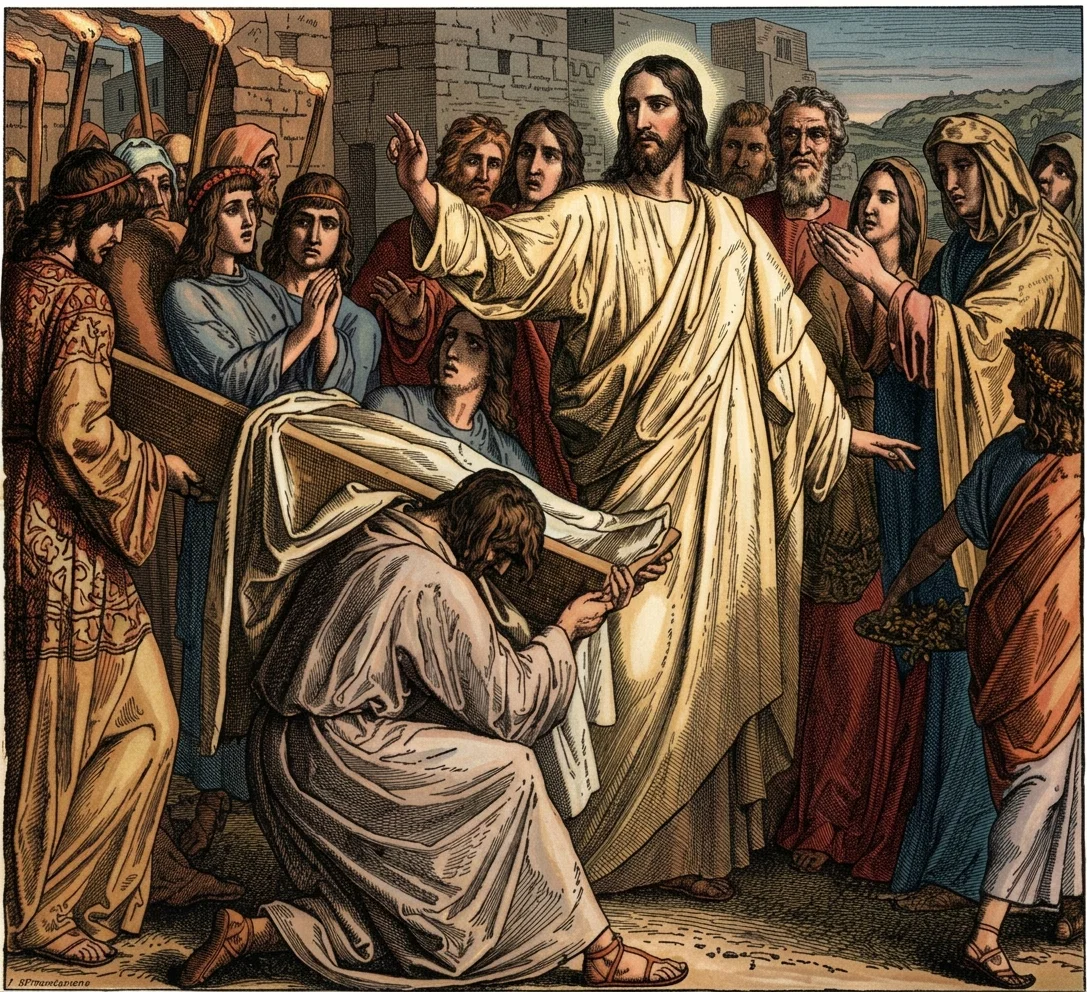
THE GREAT DELIVERER.
The Worst Bondage.—But the worst of all bondage is sin; for sin is responsible for all other bondages, all woes, sufferings, and deaths. It is the most deceptive bondage, the most alluring, yet the most cruel and pitiless. A legendary tree of Madagascar furnishes the draught that intoxicates and thus deceives its victim till its piercing, poisonous fangs close round him in his death struggle. So sin allures, deceives, intoxicates, blinds, till it brings into a bondage that to an aroused conscience is worse than the death in which the victim often voluntarily seeks relief.
Proclaim Liberty.—Yet from this bondage there is freedom as glorious and joyous as is the bondage baleful and terrible. This freedom is found in Christ Jesus, and is expressed in the following scriptures: “And ye shall know the truth, and the truth shall make you free.” “If the Son therefore shall make you free, ye shall be free indeed.” John 8:32, 36. Christ Jesus the Son makes us free through faith in the truth. “Purifying their hearts by faith,” says the apostle Peter. Acts 15:9. Again, “Seeing ye have purified your souls in obeying the truth through the Spirit.” 1 Peter 1:22. In all these scriptures different agencies are mentioned, yet it is Christ in all. The Spirit is his Spirit. The truth, the word, is his word, which is spirit and life (John 6:63), and he is in it all. But he was the revelation of the Father to men (John 14:9, 10), and therefore the receiving of Christ, of the truth, the Spirit, is by faith taking God into our heart and life, to reign and rule. This is faith—to submit to God, to receive God, to let God reign within, to choose his way and will. And this is freedom, because it is wholly voluntary. God coerces no one. He who is coerced by fear or by force to yield to God does not choose God. To choose God we must voluntarily, willingly, gladly choose his service.
“Servants.”—“But to do his service makes us servants, does it not?”—It does. It makes us “bond slaves,” for the original is as strong as that, to Infinite Love. Love is the chain that binds us. Love is the rule that guides us. Love is the instruction that directs us. Love is the boundary that circumscribes us. Love is the master that restrains us. Love it is that chastises us when we are out of the way. Love warns us of the danger, and the free soul yields to the service, the glad free service of love. Thus yielding to the service of our beloved Lord, we “stand fast” “in the liberty wherewith Christ hath made us free” (Gal. 5:1), and we walk in obedience to God’s great royal law of liberty (James 2:8–12); but if we refuse and rebel, we voluntarily choose sin and become entangled again in “the yoke of bondage” (Gal. 5:1; Rom. 6:16).
How Choose Sin?—To reject Christ is to choose sin. We may not, can not, say that we will not choose sin. To not choose God’s way is to choose our own way, and our way is the way of sin. Of the children of men in their natural state it is truly said: “They are all gone out of the way,” “and the way of peace have they not known.” “All have sinned, and come short of the glory of God.” Rom. 3:12, 17, 23. The end of man’s way, of the way of sin, is death. James 1:15; Prov. 16:25. To rescue men from sin and death, Christ, the Way, the Truth, the Life, came to this earth. He walked in the way of God’s perfect law. In other words, God’s law walked in him. He was its personification. He was also personified truth and consistency, his character showing just what truth will produce of itself. His life was lived here in truth that it might be lived out in every soul who would renounce sin and choose his way. And his way is the way of freedom, joy, and love.
Service of Freedom.—“One is your master, even Christ; and all ye are brethren.” “Ye are bought with a price; be not ye the servants of men.” But does this mean that we are not to obey kings, governors, rulers? Does it mean that the employee should not obey his employer, the maid the mistress of the house? Does it mean that we shall be conspirators against government, foes to order, murmurers against those in authority?—No, indeed; the liberty of Christ, the freedom in obeying God’s law, means none of these things. It requires obedience and subjection to kings, to rulers, to governors (1 Peter 2:13, 14; Rom. 13:1–4), to father, to mother, to masters (Eph. 6:1, 2, 5), to the church and its ordainedofficers, to the counsels of brethren (Heb. 13:7, 17; 1 Peter 5:5); but it does not mean a servile service of fear (Rom. 8:15); it does not mean service given for the mere sake of money, fear, reward, policy, or expediency; but “for conscience’ sake,” “for the Lord’s sake.” That is the mainspring of the Christian’s motives and actions. Others may ill-treat us; unjust service may be demanded; others may be treated better than we are; there may be unreasonable exactions in the levy of tribute, taxes, or service; yet, if we are Christians, we will not rebel; we will submit to it all as long as it does not interfere with our duty to God. Do the rulers of earth interfere with our worship, our duty to God?—We ought to obey God rather than men. Do they demand what in conscience toward God we can not perform?—We shall have to say, “Whether it be right to hearken unto you more than unto God, judge ye,” and we will hearken and obey God, let the consequences be what they may. But we will not rebel nor resist the government by force. We will not plot nor conspire against the government. We will, if Christians, simply do our duty. If we have cruel, unappreciative earthly employers, foremen, or overseers, we will simply do duty, “not with eye-service, as men pleasers; but as the servants of Christ, doing the will of God from the heart; with good will doing service, as to the Lord, and not to men; knowing that whatsoever good thing any man doeth, the same shall he receive of the Lord, whether he be bond or free.” Eph. 6:6–8. If the service is hard, we will soften it with love for the Master above. He called us there in his providence; we will render glad service to him. Whether earthly wages are adequate or fair, God will do right and we will trust him.