WE MAY KNOW

6%

Pacific Press Publishing Company · Oakland, California · Nov 28, 1895

FromSigns of the Times, Vol. 21, No. 47.

Read the full edition

WE MAY KNOW.

BY W. N. GLENN.
“Surely the Lord God will do nothing, but he revealeth his secret unto his servants the prophets.” Amos 3:7.
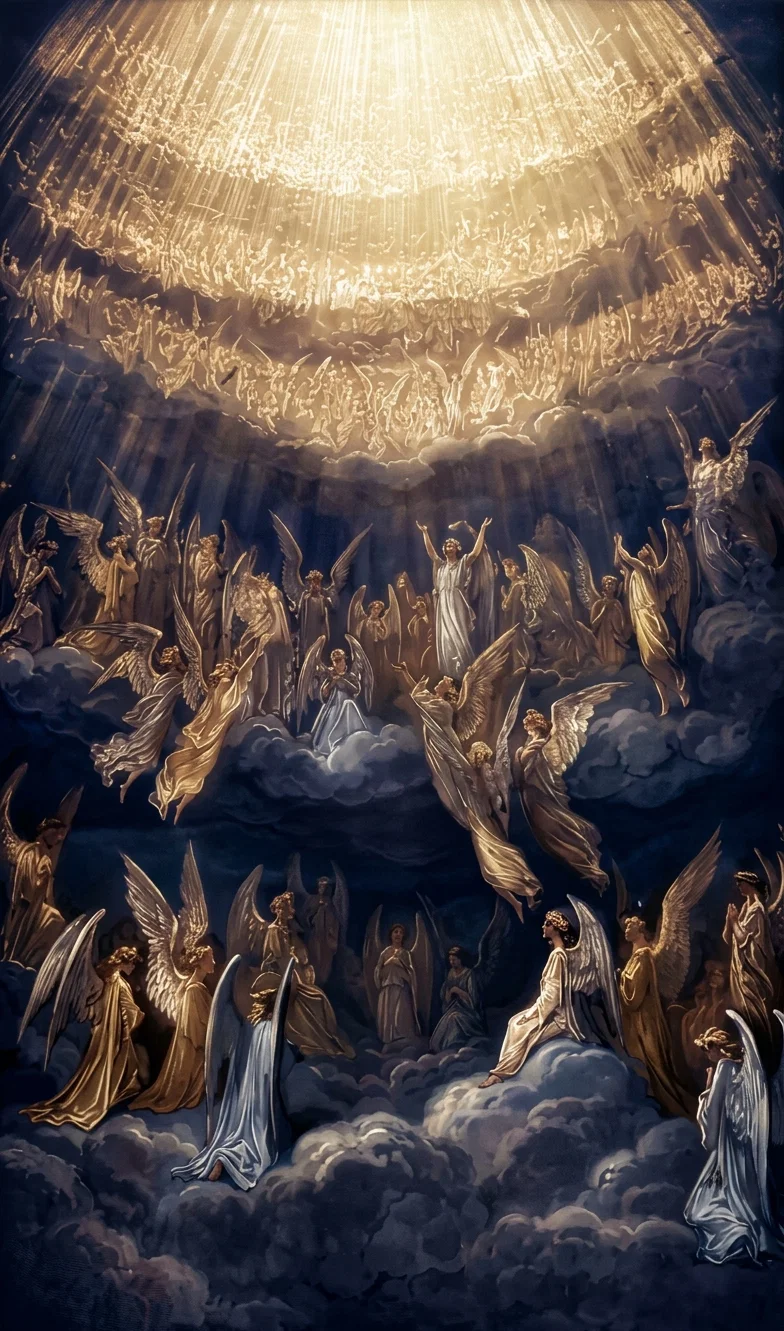
“When the Son of man shall come in his glory, and all the holy angels with him, then shall he sit upon the throne of his glory.” Matt. 25:31.
When the Lord would destroy the ungodly antediluvian world, he made known his intention to his servant Noah. It was definitely stated that in 120 years a flood of waters would come upon the earth. With full faith in the word of God, the patriarch gave the warning message and preached the Gospel of salvation to the people, while he “prepared an ark to the saving of his house.” Then when the preparation of the ark was finished, the Lord informed Noah of the definite day when the rain would begin to descend. “For yet seven days, and I will cause it to rain upon the earth forty days and forty nights; and every living substance that I have made will I destroy from off the face of the earth.” Gen. 7:4.
When it had been determined to cut off the wicked, incorrigible inhabitants of Sodom and Gomorrah, the Lord said: “Shall I hide from Abraham that thing which I do; seeing that Abraham shall surely become a great and mighty nation, and all the nations of the earth shall be blessed in him? For I know him, that he will command his children and his household after him, and they shall keep the way of the Lord, to do justice and judgment; that the Lord may bring upon Abraham that which he hath spoken of him.” Chapter 18: 17–19. Then Abraham was informed of the doom of the place where lived the family of his kinsman, Lot, and the Lord heard his petition in behalf of the people, that they might be spared if ten righteous persons could be found among them.
The Lord had before made known to Abraham the future servitude of his descendantsin a strange land, and their final deliverance: “Know of a surety that thy seed shall be a stranger in a land that is not theirs, and shall serve them; and they shall afflict them four hundred years; and also that nation, whom they shall serve, will I judge; and afterward shall they come out with great substance.” Chap. 15:13, 14. It was possible for the people of Israel to have known when the time of their deliverance was at hand, if they had kept in touch with the promise to Abraham, their father; for the covenant with Abraham had been renewed to Isaac and to Jacob. Ex. 2:24. It seems that Moses had received instruction regarding the time in the earlier part of his life, for when, at the age of forty years, he went to pay his brethren a visit, “he supposed his brethren would have understood how that God by his hand would deliver them; but they understood not.” Acts 7:25. The reason they did not know the approximate time of their deliverance was because of their unbelief. If it was possible for Moses to know, it was also possible for others. In Bliss’ “Analogy of Sacred Chronology” it is shown that from the weaning of Isaac, when Ishmael mocked him, to the exode, was just 400 years. In Gal. 4:29 the mocking of Isaac by Ishmael is called persecution, and Bliss reckons the 400 years of affliction upon Abraham’s seed from that occasion.
Daniel said that he “understood by books the number of the years, whereof the word of the Lord came to Jeremiah the prophet, that he would accomplish seventy years in the desolations of Jerusalem.” Dan. 9:2. It is highly probable that the masses of the Jewish captives did not so understand the situation, notwithstanding the plain declaration of the prophet. They did not believe Jeremiah when he had foretold the captivity, and he was most cruelly treated by the rulers because he had so proclaimed. In fact, it was a rare thing for them to understand their prophets, because they did not believe them.
There were some faithful servants of God who had knowledge of the time of the first advent of Christ. If even one, by diligent study of the word of God and faithfulness in duty, could know of the time concerning which it was the privilege and duty of all to be prepared, then it was possible for all. Zacharias and his wife “were both righteous before God, walking in all the commandments and ordinances of the Lord blameless.” Luke 1:6. This is the same character that was attributed to Abraham, and for which reason the Lord took him into his confidence concerning the judgment upon Sodom and Gomorrah.
So an angel of the Lord showed Zacharias concerning the time of the advent of the Messiah. The angel told him that his wife would bear him a son, who should “be filled with the Holy Ghost, even from his mother’s womb.” Luke 1:15. This son was to be named John, and his mission was to “make ready a people prepared for the Lord.” Verse 17. The angel also appeared to Mary, espoused to Joseph, “a just man,” and told her of the birth of the coming Saviour. And Joseph himself was likewise informed concerning the advent. Matt. 1:18–21.
When the parents of the child Jesus presented him at the temple in conformity to the law, he was recognized by a man named Simeon, a “man just and devout,” who was “waiting for the consolation of Israel.” Evidently he believed the prophecies, and was watching for their fulfillment. Therefore “it was revealed unto him by the Holy Ghost, that he should not see death, before he had seen the Lord’s Christ.” And Anna, a prophetess, who “served God with fastings and prayers night and day,” recognized the child as the coming Messiah, and “spake of him to all that looked for redemption in Jerusalem.” Thus all who believed the word of God and were looking for Christ, were informed of his coming thirty years before he was publicly manifested as the Messiah.
Six months before the anointing of Christ, John the Baptist was proclaiming to the people of Judea: “Repent ye; for the kingdom of heaven is at hand. For this is he that was spoken of by the prophet Esaias, saying, The voice of one crying in the wilderness, Prepare ye the way of the Lord, make his paths straight.” How did John know that the kingdom was at hand?—Evidently he studied and believed the prophecies, and the Spirit of the Lord led him to a life commensurate with his calling. Therefore he had knowledge, and confidence to proclaim the message due to the people.
Thus we see that such just, righteous, obedient, devout persons as are here cited have been able to discern the approach of the prominent times set forth in the word of God as pertaining to his purpose. On account of their close walk with God—their diligent study of his word and obedience to his commandments—he has revealed his secret unto them. For “the secret of the Lord is with them that fear him; and he will show them his covenant.” Ps. 25:14.
Now God never changes, nor is he a respecter of persons; “but in every nation he that feareth him, and worketh righteousness, is accepted with him.”—Acts 10:35. The word of God says, ‘If ye be Christ’s, then are ye Abraham’s seed’ (Gal. 3:29); and Jesus said to the Pharisees, “If ye were Abraham’s children, ye would do the works of Abraham” (John 8:39). From this we may conclude that if we do the works of Abraham we will share with him the confidence of God; for all the promises to Abraham are to his seed also. Therefore, if God would not “hide from Abraham” the thing which he was about to do in bringing judgment upon the wicked and deliverance to the righteous, we may know that he will not hide from Abraham’s children the approximate time of the far greater judgment and deliverance, of which the case of Sodom was but a miniature representation. 2 Peter 2:6.
Again, Abraham was the “friend of God” (James 2:23); therefore his children are the friends of God. Christ says: “Ye are my friends, if ye do whatsoever I command you. Henceforth I call you not servants; for the servant knoweth not what his lord doeth; but I have called you friends; for all things that I have heard of my Father I have made known unto you.” John 15:14, 15. He told his disciples of the coming destruction of Jerusalem by a Roman army, and gave them explicit directions that they might know when to flee. Why then may his people not know of the approaching doom of the entire wicked world and the redemption of all the righteous, at his second coming?
Not only may we know when the coming of the Lord is near, but we are positively enjoined to know. In the twenty-first chapter of Luke are given certain physical signs of the second advent of the Saviour; and upon the announcement of these signs, the Lord continues as follows: “And when these things begin to come to pass, then look up, and lift up your heads; for your redemption draweth nigh. . . . Behold the fig tree, and all the trees; when they now shoot forth, ye see and know of your own selves that summer is now nigh at hand. So likewise ye, when ye see these things come to pass, know ye that the kingdom of God is nigh at hand.” The Lord does not expect, much less enjoin, impossibilities at the hands of his disciples.