THE ALL-SEEING EYE

7%

Pacific Press Publishing Company · Oakland, California · Oct 24, 1895

FromSigns of the Times, Vol. 21, No. 42.

Read the full edition

THE ALL-SEEING EYE.

Marvels of the Human Eye.
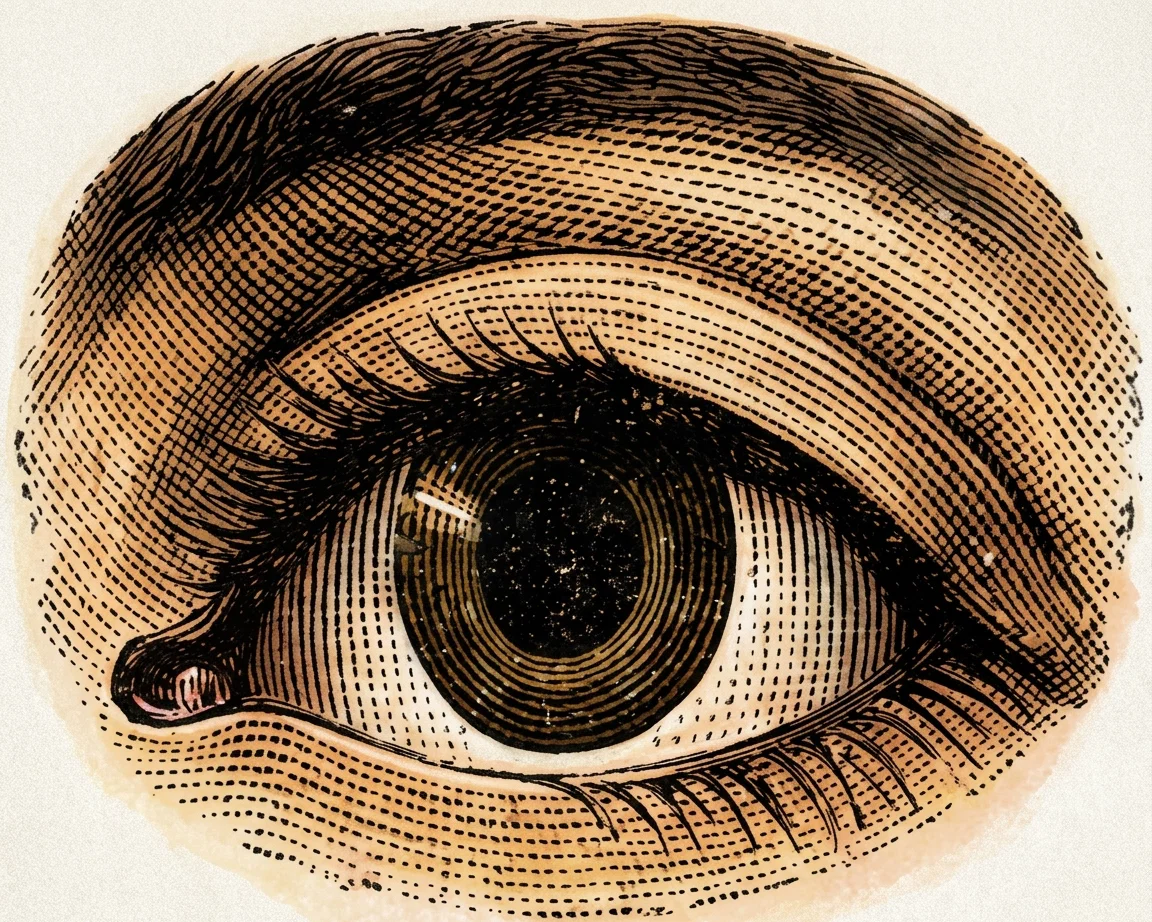
“He that formed the eye, shall He not see?” Ps. 94:9.
The imperial organ of the human system is the eye. All up and down the Bible God honors it, extols it, illustrates it, or arraigns it. Five hundred and thirty-four times it is mentioned in the Bible. Omnipresence—“the eyes of the Lord are in every place.” Divine care—“as the apple of the eye.” The clouds—“the eyelids of the morning.” Irreverence—“the eye that mocketh at its father.” Pride—“O, how lofty are their eyes!” Inattention—“the fool’s eye in the ends of the earth.” Divine inspection—“wheels full of eyes.” Suddenness—“in the twinkling of an eye, at the last trump.” Olivet sermon—“the light of the body is the eye.” The surgeons, the doctors, the anatomists, and the physiologists understand much of the glories of the two great lights of the human face; but the vast multitudes go on from cradle to grave without any appreciation of the two great masterpieces of the Lord God Almighty. If God had lacked anything of infinite wisdom, he would have failed in creating the human eye. We wander through the earth trying to see wonderful sights, but the most wonderful sight that we ever see is not so wonderful as the instruments through which we see it. It has been a strange thing to me for forty years that some scientist, with enough eloquence and magnetism, did not go through the country with illustrated lectures on canvas thirty feet square, to startle and thrill and overwhelm Christendom with the marvels of the human eye.
“He that formed the eye, shall He not see?” I suppose the text referred to the human eye, since it excels all others in structure and in adaptation.
In the first chapter of Genesis we find that God, without any consultation, created the light, created the trees, created the fish, created the fowl, but when he was about to make man, he called a convention of Divinity, as though to imply that all the powers of Godhead were to be enlisted in the achievement. “Let us make man.” Put a whole ton of emphasis on that word “us.” “Let us make man.” And if God called a convention of Divinity to create man, I think the two great questions in that conference were how to create a soul and how to make an appropriate window for that emperor to look out of.
See how God honored the eyes when he made a roof for them, so that the sweat of toil should not smart them, the eyebrows not bending over the eye, but reaching to the right and to the left, so that the rain and the sweat should be compelled to drop upon the cheek, instead of falling into this divinely protected human eyesight. See how God honored the eye in the fact presented by anatomists and physiologists that there are 800 contrivances in every eye. For window shutters, the eyelids opening and closing 30,000 times a day. The eyelashes so constructed that they have their selections as to what shall be admitted, saying to the dust, “Stay out,” and saying to the light, “Come in.” For inside curtains the iris, or pupil of the eye, according as the light is greater or less, contracting or dilating. The eye of the owl is blind in the daytime; the eyes of some creatures are blind at night; but the human eye, so marvelously constructed, can see both by day and by night.
What an anthem of praise to God is the human eye! The tongue is speechless and a clumsy instrument of expression as compared with it. Have you not seen it flash with indignation, or kindle with enthusiasm, or expand with devotion, or melt with sympathy, or stare with fright, or leer with villainy, or droop with sadness, or pale with envy, or fire with revenge, or twinkle with mirth, or beam with love? It is tragedy and comedy and pastoral and lyric in turn. Have you not seen its uplifted brow of surprise, or its frown of wrath, or its contraction of pain? If the eye says one thing and the lips say another thing, you believe the eye rather than the lips. The eyes of Archibald Alexander and Charles G. Finney were the mightiest part of their sermon. George Whitefield enthralled great assemblages with his eyes, though they were crippled with strabismus. Many a military chieftain has with a look hurled a regiment to victory or to death. Martin Luther turned his great eye on an assassin who came to take his life, and the villain fled. Under the glance of the human eye, the tiger, with five times a man’s strength, snarls back into the African jungle.
This morning, in my imperfect way, I have only hinted at the splendors, the glories, the wonders, the divine revelations, the apocalypses of the human eye, and I stagger back from the awful portals of the physiological miracle, which must have taxed the ingenuity of a God, to cry out in your ears the words of my text, “He that formed the eye, shall He not see?” Shall Herschel not know as much as his telescope? Shall Fraunhofer not know as much as his spectroscope? Shall Swammerdam not know as much as his microscope? Shall Dr. Hooke not know as much as his micrometer? Shall the thing formed know more than its master? “He that formed the eye, shall He not see?”
The recoil of this question is tremendous. We stand at the center of a vast circumference of observation. No privacy. On us, eyes of cherubim, eyes of seraphim, eyes of archangel, eyes of God. We may not be able to see the inhabitants of other worlds, but perhaps they may be able to see us.
It passes out from the guess into the positive when we are told in the Bible that the inhabitants of other worlds do come as convoy to this. Are they not all ministering spirits sent forth to minister to those who shall be heirs of salvation? But human inspection, and angelic inspection, and lunar inspection, and solar inspection, are tame compared with the thought of divine inspection.
O, the eye of God! It sees our sorrows to assuage them, sees our perplexities to disentangle them, sees our wants to sympathize with them. If we fight him back, the eye of an antagonist. If we ask his grace, the eye of an everlasting friend. You often find in a book or manuscript a star calling your attention to a footnote, or explanation. That star the printer calls an asterisk. But all the stars of the night are asterisks calling your attention to God, an all-observing God. Our every nerve, a divine handwriting. Our every muscle, a pulley divinely swung. Our every bone sculptured with divine suggestion. Our every eye, a reflection of the divine eye. God above us, and God beneath us, and God before us, and God behind us, and God within us. What a stupendous thing to live! What a stupendous thing to die! No such thing as hidden transgression.
But you say, “God is in one world and I am in another world; he seems so far off from me, I don’t really think he sees what is going on in my life.” Can you see the sun 95,000,000 miles away, and do you not think that God has as prolonged vision? But you say, “There are phases of my life, and there are colors—shades of color—in my annoyances and my vexations that I don’t think God can understand.” Does not God gather up all the colors, and all the shades of color, in the rainbow? And do you suppose there is any phase or any shade in your life that he has not gathered up in his own heart?
Besides that, I want to tell you that it will soon all be over, this struggle. That eye of yours, so exquisitely fashioned and strung, and hinged and roofed, will before long be closed in the last slumber. Loving hands will smooth down the silken fringes. So He giveth His beloved sleep. A legend of St. Frotobert is that his mother was blind, and he was so sorely pitiful for the misfortune that one day in sympathy he kissed her eyes, and by miracle she saw everything. But it is not a legend when I tell you that all the blind eyes of the Christian dead under the kiss of the resurrection morn shall gloriously open. O, what a day will that be for those who went groping through this world under perpetual obscuration, or were dependent on the hand of a friend, or with an uncertain staff felt their way, and for the aged of dim sight, about whom it may be said that “they which look out of the windows are darkened,” when eternal daybreak comes in!—T. De Witt Talmage.