In Anterior Tibet

6%

Review and Herald Publishing Association · Takoma Park Station, Washington, D. C. · Dec 14, 1911

FromReview and Herald, Vol. 88, No. 50.

Read the full edition

In Anterior Tibet

Tibet is still known to many throughout Christendom as the Forbidden Land. How truly applicable this is, only those know who are waiting and watching around its doors.
Reproduced from the Bible in the World
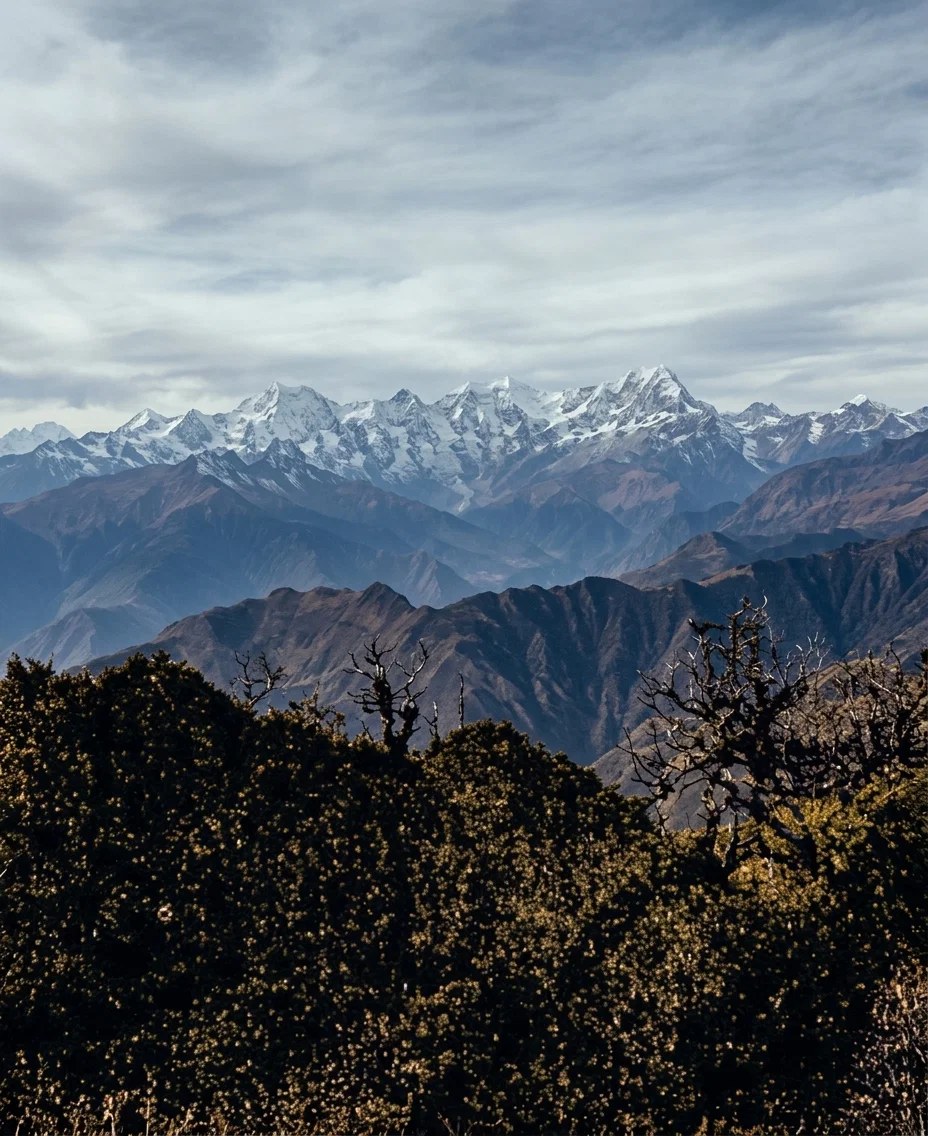
SNOW RANGE IN ANTERIOR TIBET, 23,000 FEET HIGH
Reproduced from the Bible in the World SNOW RANGE IN ANTERIOR TIBET, 23,000 FEET HIGH
Why Tibet remains in seclusion, the haunt of the recluse, may, I think, be fully explained by the one word darkness. Its inhabitants shun civilization. Their minds and hearts are darkened; they are following a false ideal; they are trying to be and do good without divine strength. As a result, they are groping in dense night and searching in vain for the very light which is shining on the borders of their land.
Mission work on the Tibetan border is very difficult, but not discouraging. The missionary does not here meet raw heathen, uncivilized pagans, or wild cannibals. He meets something harder than any of these; he sets his face and life against a well-organized system of “enlightened darkness.” The Tibetans as a people are ultrareligious, and yet they live in as gross ignorance as the most pagan nation on earth.
On our recent journey through Anterior Tibet we were away two months, covering twelve hundred English miles, and riding thirty-eight different horses. The country through which we traveled lies to the northwest and west of Tatsien-lu, and has been ruled until recently by native princes, who pay tribute to China. Through the kindness of Mr. Fergusson, the Bible Society’s subagent at Chang-tu, we took with us a yak-load of Tibetan Scriptures.
The Tibetan Gospels that we carried were neatly bound, and printed in clear type, making a striking contrast to the Tibetans’ own books, many of which are blurred and indistinct. Our books were well received in many important temples and lamaseries, and in many of the larger towns and villages. Several of the lamaseries in Anterior Tibet are very large and influential; some of them contain as many as two thousand, three thousand, and four thousand lamas. Into these strongholds of Lamaism we were privileged to carry the living Word of God.
Our reception by the lamas was not always warm and friendly. During our short stay at Drang-gu we visited the large and opulent lamasery which stands some little distance outside that place. The temple buildings look very picturesque when seen from the top of the pass just before entering the city. We followed our usual custom of first asking permission from the Chinese official before visiting the lamasery; on doing this, we were accompanied by an official guide, who saw that no harm came to us. Within the lamasery we visited the chief places of interest, including the main buildings and shrines. We then waited for an opportunity to distribute our books, expecting the lamas to gather round us as they had done in other temples; but no opportunity presented itself, as the lamas left us severely alone. This lamasery has always been very conservative, and although there are nearly two thousand lamas resident in the buildings, we were unable to distribute more than one or two books.
How different was our warm reception by the lamas at Litang! Here we were received in a very friendly manner, and shown through the various places of interest. This lamasery is one of the largest in Anterior Tibet, and contains about four thousand lamas and priests. Much work has already been done in this place, and thousands of Tibetan Scriptures have been circulated.
We took advantage of a recent fair in Litang, and distributed the Scriptures among thousands of lamas who had gathered there. God is blessing this work, and much prejudice is being broken down. With every visit we make, the lamas become more and more friendly to us.
The present opportunity in Eastern Tibet is certainly a glorious one for the circulation of the Scriptures. Regions until recently fast closed against the missionary are now open wide. Minds once fiercely prejudiced are now willing to listen to the gospel. Lamaseries thata few years ago closed their doors at the approach of the missionary, are now left open to bid him welcome. The change is truly marvelous, and we thank God for it. The precarious condition of Lamaism, combined with the willing attitude of the people, presents a unique opportunity for spreading the gospel message.
And who can say that the message will stop there? Without doubt, many of the Gospels we distributed were carried away into the very heart of Tibet. Numbers of lamas returning to and from Lhasa take many portions with them into places where no missionary can penetrate.
During our long journey we ourselves conveyed the Bible Society’s little Gospels into many strange and interesting places—to prince’s palace and hermit’s cell, to head man’s house and mountain cottage, to nomad’s tent and wealthy temple; to all these we carried the message of God’s love to man.
On one occasion we halted about midday to change our Ula animals. [Under the Chinese government, the local Tibetan chiefs are required to maintain a system called Ula, which provides transport animals at regular stations along the chief routes, for the use of official and other travelers; these animals are generally mules, horses, oxen, and yak.] In the village near by, a lama was living who evidently knew our purpose and mission to his country, for he soon inquired if we carried books with us. On our informing him that we had books, he showed great eagerness to obtain one, and remained close by us till the loaded animals arrived. When our boxes came up, we found ourselves surrounded by a great crowd of villagers, all eager for books. Many of them would not be satisfied till they had secured copies of all four Gospels. When all had been supplied, we tied up our boxes, remounted our horses, and continued our journey.
During our short visit at Derge, we were invited to stay in the prince’s palace, a commodious and stately building. We feared that our stay in this magnificent residence might to some extent hinder our intercourse with the people. But our whereabouts was soon discovered, and we were besieged from morning till night for copies of the Tibetan Scriptures. Lamas, Drabas, Yobos, nomads, head men, and all kinds of people soon found out our rooms, and kept our door on the swing the whole day. When we went out into the street, the Tibetans gathered round us in large numbers, and in a few minutes all the books we had with us were distributed. This happened in most of the towns and villages we visited. The people in the streets were much more willing to take our books than the lamas.
Derge was the terminus of our journey westward. We had the privilege of going thus far, but no farther. From beginning to end the expedition was full of interest; the roads and experiences were all new; during the whole two months the weather was delightful, and we were very fortunate in getting back before the rainy season commenced. Amid many dangers we were very conscious of God’s guiding and protecting hand. He led us by a way we knew not, and brought us back home in safety.—Robert Cunningham, in the Bible in the World.