OUR LONDON LETTER

3%

Pacific Press Publishing Company · Mountain View, Cal. · Mar 20, 1907

FromSigns of the Times, Vol. 33, No. 12.

Read the full edition
OUR LONDON LETTER

THE NEW THEOLOGY.
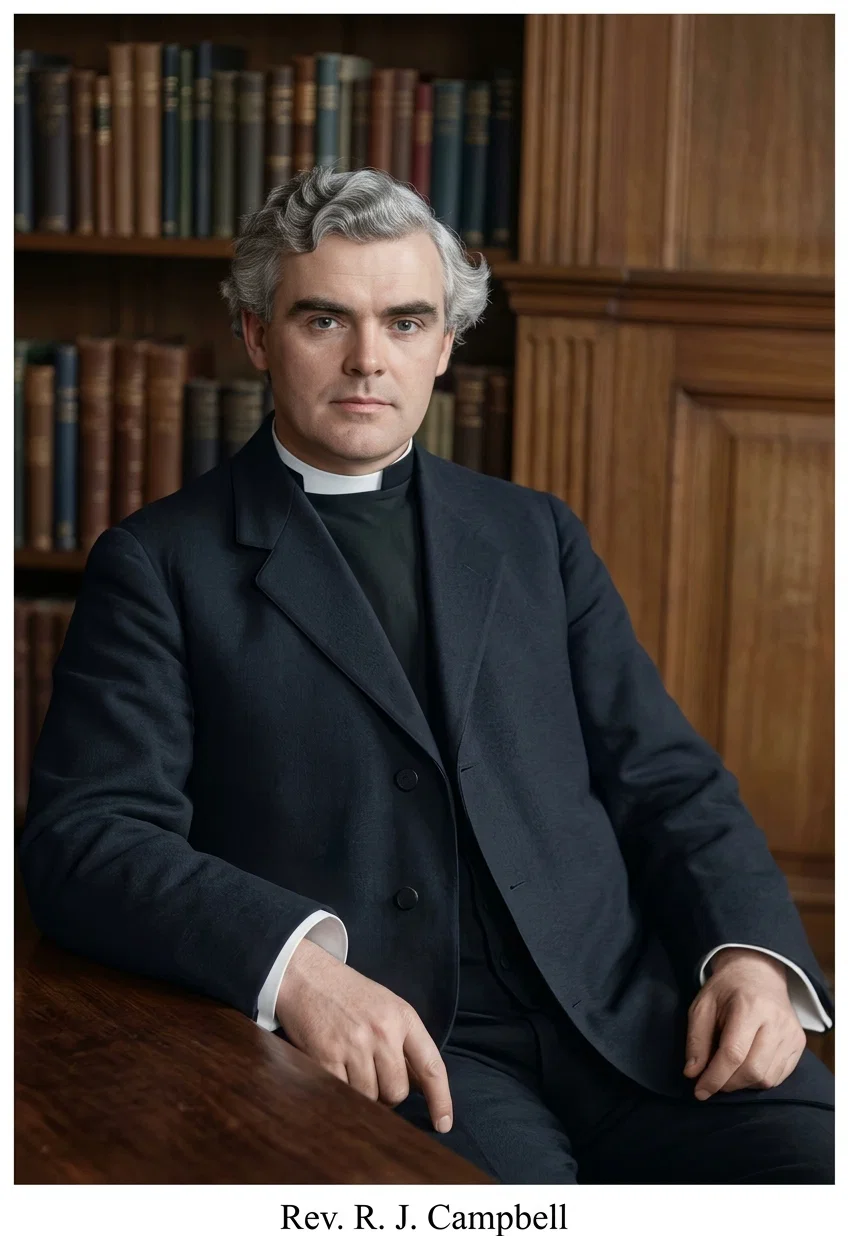
BRITAIN is in a turmoil over the New Theology. It furnishes texts for ministers of all denominations, and is discussed in the finest drawing-rooms as well as by the man in the street.
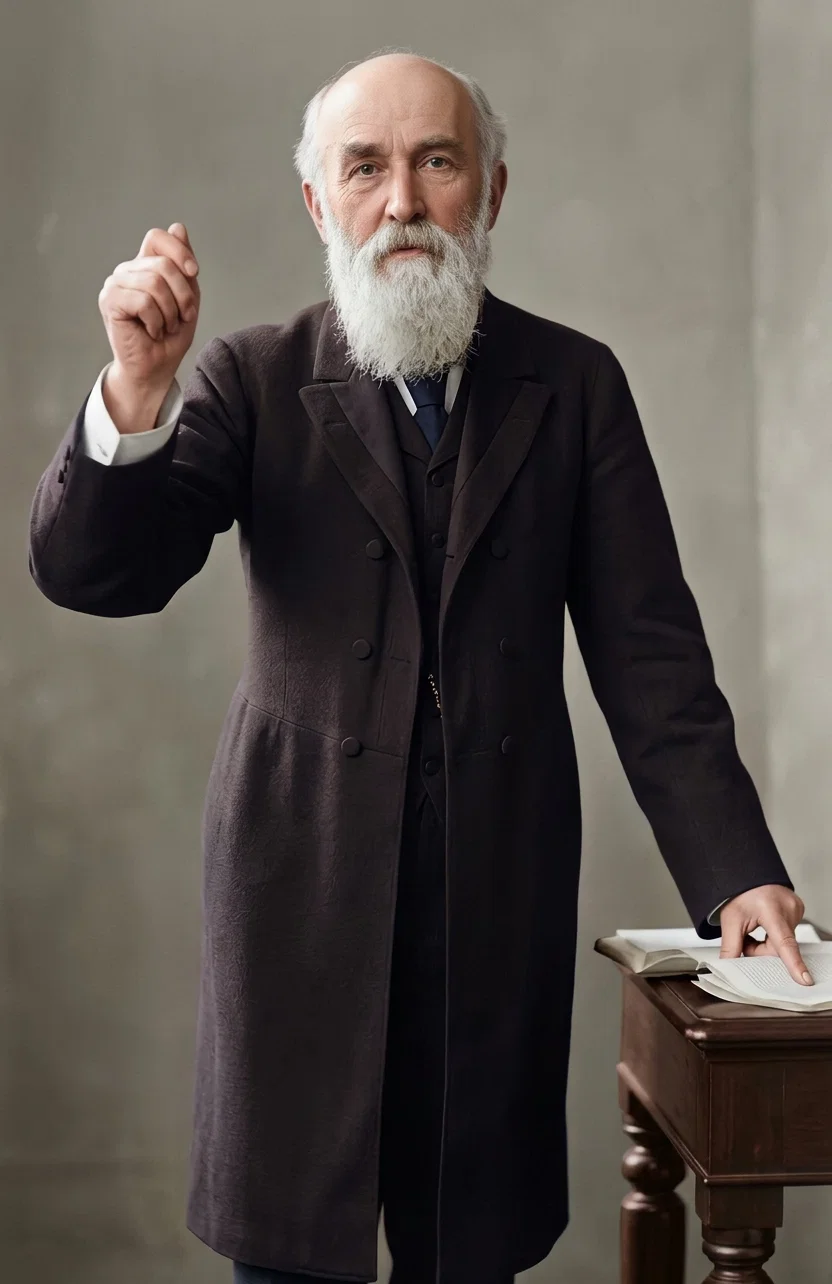
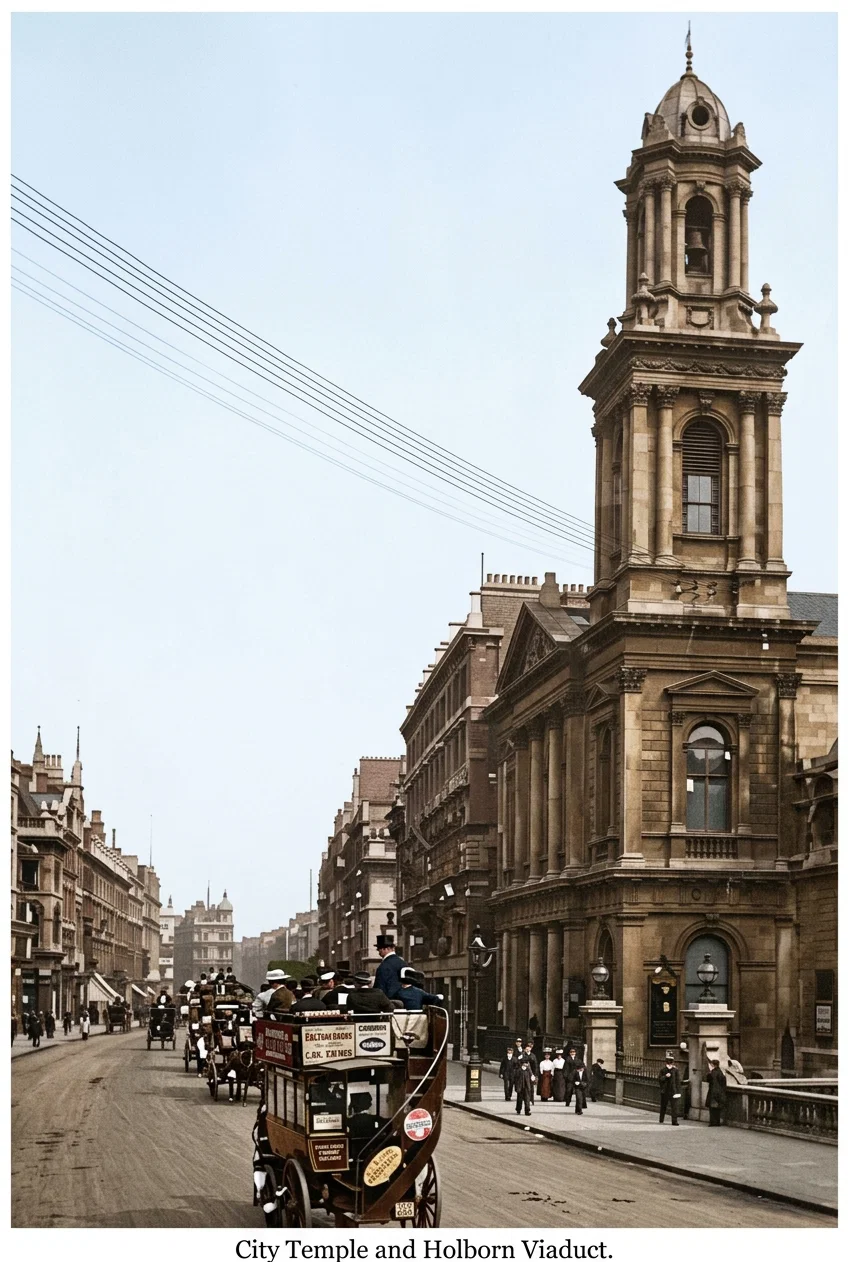
Rev. R. J. Campbell, the author of the new movement, is pastor of the City Temple, a Congregationalist church, and the leading Nonconformist place of worship in London. He has occupied this pulpit since the death of Dr. Joseph Parker in the autumn of 1902, and his wide-spread popularity and winsome personality are important factors in creating this tremendous sensation. There are, however, other contributing factors. Charles Spurgeon noted, even in his day, a "down-grade movement" in theology, and in the last few years several steps have been taken, each under some protests, which have led farther and farther away from true Gospel teaching.
Half a dozen years ago the Encyclopedia Biblica was issued from the press, being a complete Bible dictionary in four large volumes, edited by Dr. Cheyne, a minister of the Church of England. Its leading articles were written by German professors belonging to the extreme school of the higher criticism, and upholding just such doctrines as Mr. Campbell is now presenting from the pulpit. Dr. Freemantle, the Dean of Ripon, made some sensational statements about the same time, which roused a good deal of criticism. A year or two ago, a petition was circulated amongst the ministers of the Church of England, asking that permission be given to introduce the results of scholarship, as it was expressed, in their public teaching. The petition received a number of influential signatures, but nothing definite came of it.
Rev. R. J. Campbell.
Dr. Clifford.
Dr. Clifford.

WHAT THE NEW TEACHING IS.

Now we have the pastor of the City Temple, a man who, perhaps, enjoys more popularity than any preacher since Spurgeon's time, preaching views which are so far removed from Gospel truth that they may well be said to form a metaphysic or a theosophy rather than a theology. No wonder Christian Scientists, Pantheists, Unitarians, and even Mohammedans and Buddhists are claiming Mr. Campbell as an adherent of their respective creeds.
Some brief statement of the New Theology may be proper here, in order that the reader may understand whatever comment may follow. The main points, summed up practically in Mr. Campbell's own words, are as follows:
"To say that Jesus was born without a human father, is untrue." "Whatever Jesus is now, He certainly was not co-equal with God when on earth. What popular theology says of Jesus is true of the ideal humanity which is ever in the heart of the Father. Jesus was and is divine, but so are we; His mission was to make us realize our divinity; that is, our oneness with God." "We believe that the story of the Fall, in a literal sense, is untrue. It is literature, not dogma; the romance of an early age used for the ethical instruction of man." "We reject wholly the common interpretation of the atonement—that another is beaten for our fault." "Ultimately every soul will be perfected." "Sin is simply selfishness. It is that which makes against lifewardness for the race."
Even the leader-writer of the "Referee," a weekly sporting paper, can see that these views involve a departure from the fundamentals of Christianity. He says that the New Theology, to his mind, is uncommonly like the old Free Thought, and adds: "The only thing which makes it in any degree remarkable is the fact that it emanates from one who is still content to describe himself as a Christian and a minister of the Gospel." He continues: "The plain truth is that the New Theology wants to run with the hare and to hunt with the hounds; to have its cake and eat it; to destroy its foundations and to have its superstructures standing. . . . Nothing can be hoped from the half-hearted and self-deceiving attempt to abolish the mysteries of the faith and to retain their significance in their original sense."
City Temple and Holborn Viaduct.
Thomas Spurgeon, son of Charles Spurgeon, and preacher at the Metropolitan Tabernacle, is horrified at what he describes as Mr. Campbell's "open and full declaration of disbelief." Writing in "The Sword and Trowel" of the New Theology, he refers to the anomaly of "so-called Christian teachers denying and destroying the Christian faith," and says that this is done, unfortunately, "not only in the City Temple, but in SCORES OF OTHER CHURCHES." He continues:
"The church of God is only half awake, and the enemy has been busy sowing tares. Concerts have taken the place of prayer meetings, and matters social and political have preponderated over things purely spiritual. We are on the wrong track. The world is to be won for Christ, not by philanthropies, still less by philosophies, but by telling men plainly of their lost andruined state, by earnestly warning them to flee from the wrath to come, by the uplifting of the Son of the Highest as a Crucified Substitute for sinners, and by tearfully entreating men to be reconciled to God."
These are sound words, and they are needed just now when the New Theology, in some form or another, is penetrating into nearly all the popular churches.

WIDE-SPREAD UNBELIEF.

The fact is that Mr. Campbell's position differs from that of many of his colleagues merely in that he has expressed his views freely and openly, while they have temporized with theirs, often for very unworthy reasons. This becomes evident in the criticism directed against his new movement. Very few of the ministers who have attacked Mr. Campbell have referred to the word of God as their authority. IT HAS BEEN TRADITION, CREED, CUSTOM, AND ECCLESIASTICAL SANCTION they have opposed to the new views, and the result has been that the people are at a loss to know where the truth really lies. Some of them think, it would seem, that if they are to have a man-made theology, they prefer Campbell's to that offered by his critics. Mr. Campbell himself declares that he has not given up the Atonement. He says: "On the contrary, I have little else to preach about. The New Theology is an attempt to restate the Atonement in terms of the ETHICAL IDEAL." Another apologist for the movement calls it "a reasonable attempt to restate, in the light of modern thought, the saving truths which Jesus Christ brought to men." Such statements are not very intelligible to the man in the street; but so far as they refer to man-made portions of the creeds now held by the popular churches, they may be seen to have some weight. The unscriptural doctrine of natural immortality and what may be called its corollary, everlasting torment, no doubt will need a good deal of restating before people will be satisfied. When men go outside the Bible for their creeds, they must expect to get something temporary and liable to change.

AS FOR THE ATONEMENT

It is a part of all the evangelical creeds, but in many cases this is as far as it goes. Higher critics have scoffed at the idea for years, and it is a mere convention in thousands of churches where it is not formally denied. How could any true sense of the value of the Atonement exist alongside the utter disregard for God's holy law which is so prevalent? So also with sin and the fall of our first parents. Mr. Campbell comes out openly and denies in a set statement what hundreds of his colleagues are denying in a more quiet way. This, to be sure, does not justify him. No lover of the Gospel can help feeling very sad that a man of such fine attainments and one so well fitted in some ways to minister to the needs of the hungry multitudes, should be so grievously led astray. But for people who live in glass houses it is not seemly to throw stones, and some of Mr. Campbell's critics have been needlessly harsh and severe in their statements, and have not scrupled to attribute more unworthy motives.

THEOLOGICAL TRAINING.

Dr. Forsyth, head of a large Congregational college in London, attributes Mr. Campbell's heresy to lack of theological training. (Mr. Campbell, it may be said in passing, holds the degree of Master of Arts from Oxford University, and has not taken work at a divinity school.) Of course this is poor reasoning. Many of the most eminent theologians have gone astray in much the same way. Professor Adolf Harnack, the famous Berlin theologian, interviewed by a London journalist, said it was "utterly inexplicable" to him how such theories as Mr. Campbell has put forth "should
have provoked such a storm in the English religious world." The Church of England, he went on to say, seemed to him a very comprehensive one. "If a man will only hold to the historic episcopate, he may believe almost as little as he pleases or as much as he pleases. In its all-embracing comprehensiveness, it is indeed like Noah's Ark, which included both clean and unclean, both wild and tame. Accordingly I take it, it must be in the nonconformist circles that so much agitation prevails, and even there it would not have occasioned so much discussion had it not issued from the pastor of a church—the City Temple—which has always been a great stronghold and bulwark of extreme orthodoxy."

PROPHETIC WORDS.

It is quite true that the City Temple has stood, hitherto, for the theology of the Bible. Some of its friends see something almost prophetical in the following paragraph taken from a sermon preached by Dr. Parker on November 29, 1900:
"The house in which we are now assembled may one day be as a den of wild beasts. We have had our opportunities of meeting God here, of reading the holy word, and besieging, as an army might besiege a fortress, the altar, known by its crimson hue; and yet some day a man may arise who will deny the Lord that bought him, who will preach a gospel without a Saviour, a salvation without a cross; then write Ichabod upon the frontals of the place, and let it be forgotten as a thing of shame, a memorial of unpardonable treason against the throne of God."

VARIOUS VIEWS.

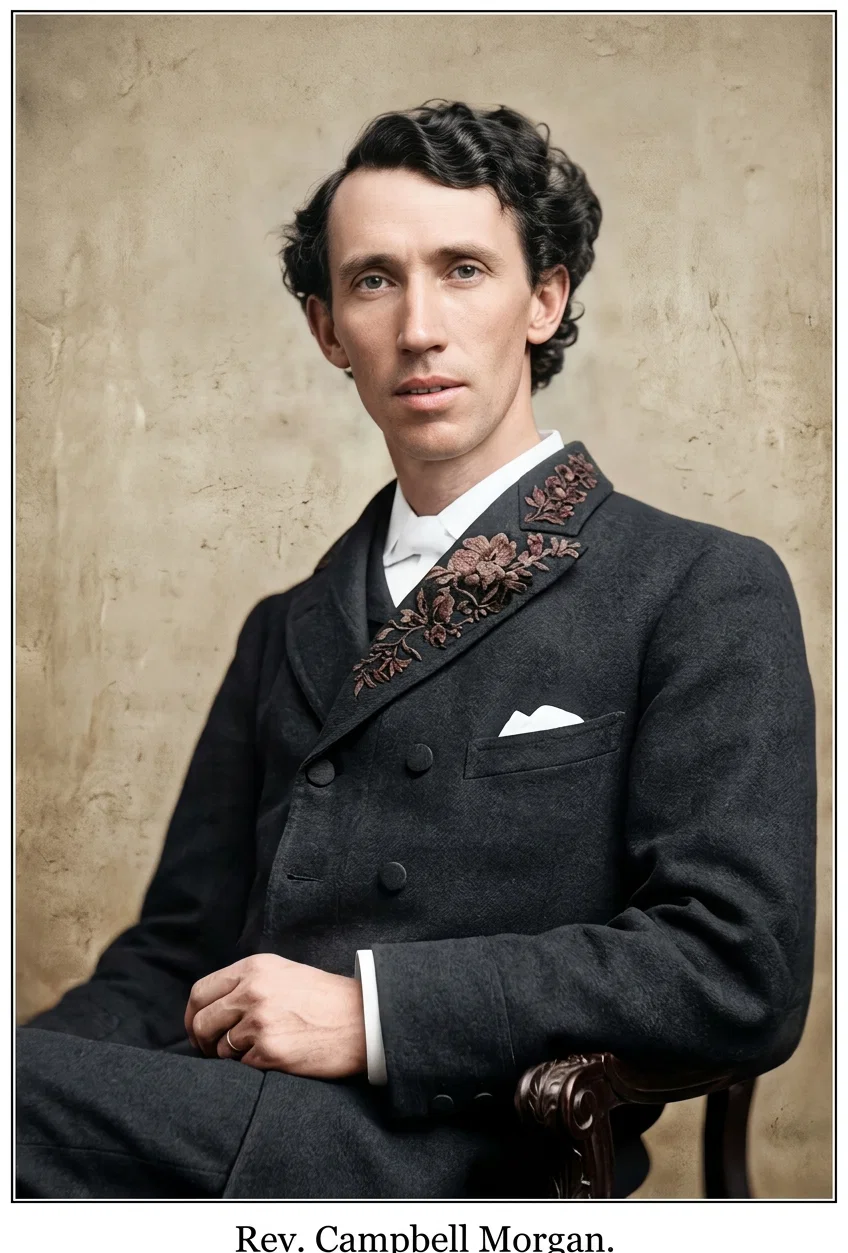
Dr. Clifford, a very prominent Baptist preacher, took sides with Mr. Campbell at the first; but owing doubtless to pressure brought to bear upon him from various quarters, he has since issued a disclaimer, so far as doctrines are concerned, tho he still expresses his warm friendship for the man. But Dr. Clifford's preaching and writings are of very much the same general stamp as Mr. Campbell's, and it is well known that he accepts the main conclusions of the higher critics; so he does not have very good ground to stand on. On the other hand, Dr. Campbell Morgan, the pastor of Westminster Chapel has been a consistent upholder of the authority of God's word. He is the man who, of all the popular preachers, has done the most so far to give the trumpet a certain sound, and it is good to be able to say that his church, which accommodates some three thousand, is packed to the doors, and many are the fervent "amens" as he lays down the fundamental propositions of what he is pleased to call the "old theology." Dr. Morgan said in a recent sermon that the many voices heard might be divided into two camps—those who believed the Bible to be the infallible word of God and those who did not. His own ministry was based on the former conviction, and he was glad to state his reasons for that view. Among other points he showed the danger of depriving the people of the Bible by giving the impression that only the higher critics could understand it. Just at present Mr. Campbell is taking a much-needed vacation in Cornwall, occupying part of his time in writing a book on the New Theology. When he comes back, no doubt the conflict will be renewed even more vigorously. Meanwhile there are most beautiful opportunities for preaching the glorious Gospel which alone can save from sin, which needs no restatement in order to meet the needs of all earth's struggling children—which is a message fresh from heaven, committed as a precious charge to the true minister of the Lord Jesus. Truly the situation today can not but remind us continually of our Saviour's solemn words: "When the Son of Man cometh, shall He find faith on the earth?"

OPENING OF PARLIAMENT.

Parliament opened last Tuesday. The address from the throne foreshadows a constitutional struggle between the Commons and the Lords. The reference is but brief, and the line of attack that the Government may take is yet unknown.

THE SUFFRAGETTES

have made another raid on the House of Commons, resulting in fifty-nine arrests. This movement is not merely an effort to secure the vote for women. It seems to include a desire for notoriety and a dislike for the simple, yet beautiful and highly important, domestic duties in which women have hitherto found their chief joy. As such it is not a good omen. M. ELLSWORTH OLSEN. London, February 15.
Rev. Campbell Morgan.