IN the background, clearly defined against the winter sky, are the mountains, sober-hued with the dark gray of the leafless woods, yet lighted by the snowdrifts that nestle in the hollows and lie white in the clearings. Half way up their sides have crept the houses, pretty country residences some of them, set off by stolid-looking square buildings of red brick, whose matter-of-fact slate or shingle roofs, constructed without regard to beauty of appearance, are now covered by a tidy snow blanket. The interlacing boughs of bare trees, shivering in their winter undress, form a screen which half hides them from my view.
On the far side of the road, which has just left off calling itself a street, lies the still Monocacy, never a rapid stream, and now ice-bound—having holiday. Winding along the high bank of the stream and crossing it lower down, is the quondam street, whose brick pavements have subsided into a modest plank walk, with picturesque railing on the streamward side.
This road is well traveled, being the main thoroughfare connecting the northern and southern portions of dear old Bethlehem. Far over the Lehigh it stretches, sometimes street and sometimes highway, till it reaches the mountains,—the beautiful "everlasting hills."
These are always lovely, not grand enough to be terrible, even in their sternest winter aspect. They are my great comfort. Their stillness rests me when I am weary; and when faint, they remind me of the strength that is mine for the asking; for "the strength of the hills" is His who has promised: "As thy days, so shall thy strength be."
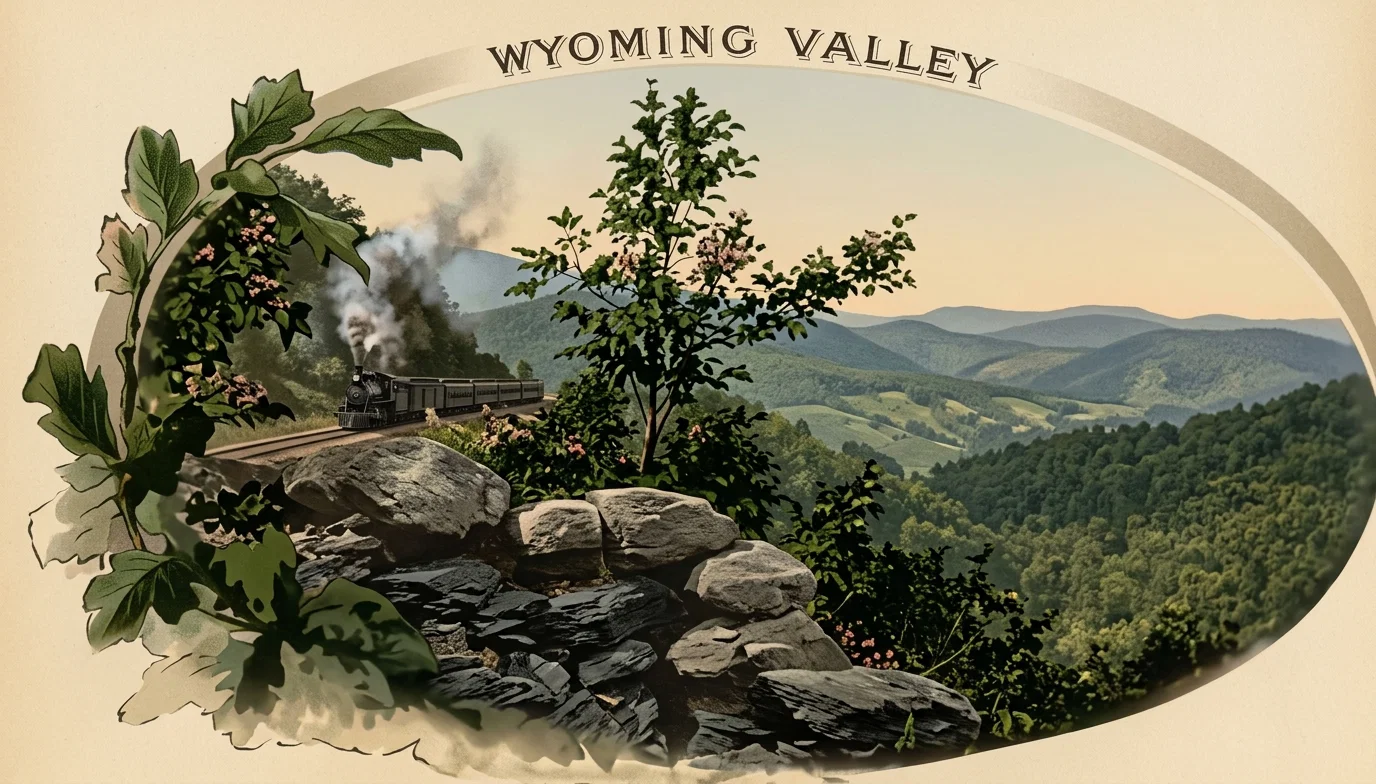
A Scene on the Lehigh Valley Railway.
I see them as I lie upon my sick-couch, and in my sharpest pain am comforted. They have a voice and a special message for me: "For the mountains shall depart, and the hills be removed; but My kindness shall not depart from thee, neither shall the covenant of my peace be removed, saith the Lord that hath mercy on thee."
Sweet human associations also cluster around these Lehigh hills. Among the trees which look so dark from my window, I roamed a blithe-hearted midget, serenely happy in the companionship of my scholarly father, who brought to this country his English love of rambling, and taught it to his child.
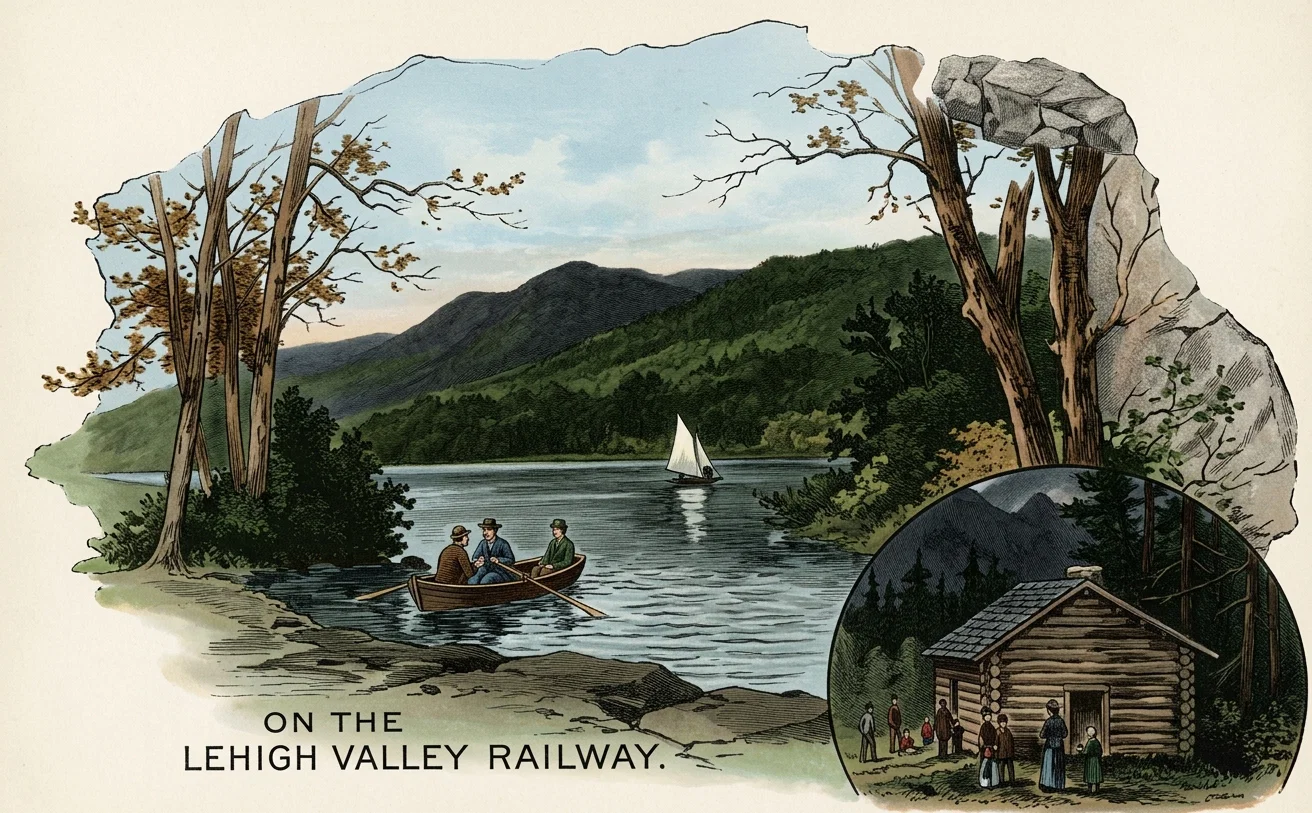
On the Lehigh Valley Railway.
Later, when he "slept in Jesus," I scrambled up these same hills with groups of merry-hearted schoolgirls, who little dreamed that I trod hallowed ground, and that the gleesome laughter of their frolicsome mood was not half as musical to me as the measured tones of the dear voice that would never again break the silence there.
Stopping short of the mountain path, and branching off at "the old bridge," is the graveled walk by the Lehigh River, in summer-time shaded by tall trees, and grass grown to the water's edge. But I must not tempt you thither, as it forms no part of my window picture, tho I can see the smoke of the locomotive lazily curling upward and marking the track of the railroad on the opposite bank.
Ah, the weather has moderated! See, the little stream that slept so quietly when I began to write now sparkles in the sunshine, its brief holiday ended. Thus it is ever in this work-a-day world. What we call repose is but the interval of rest between periods of labor.
Even nature is full of unrest. Let us learn the lesson she teaches, and, trusting in Him who "by His strength setteth fast the mountains," make sure of the "rest that remaineth." "Here we have no continuing city;" we must "seek one to come."