IV. The Cleansing of the Earthly Sanctuary — Our Great High Priest
Now when these things were thus ordained, the priests went always into the first tabernacle, accomplishing the service of God. But into the second went the high priest alone once every year, not without blood, which he offered for himself, and for the errors of the people. Heb. 9:6, 7.
On the tenth day of this seventh month there shall be a day of atonement. Lev. 23:27.
THE daily ministration, examined in last week's article, was the means by which sins were borne into the sanctuary; the Day of Atonement reversed the process, and shows us the means by which they were borne out.
The principal feature of the service of this day was the ministry in the second apartment, or most holy place. The description of this is found in Leviticus 16.
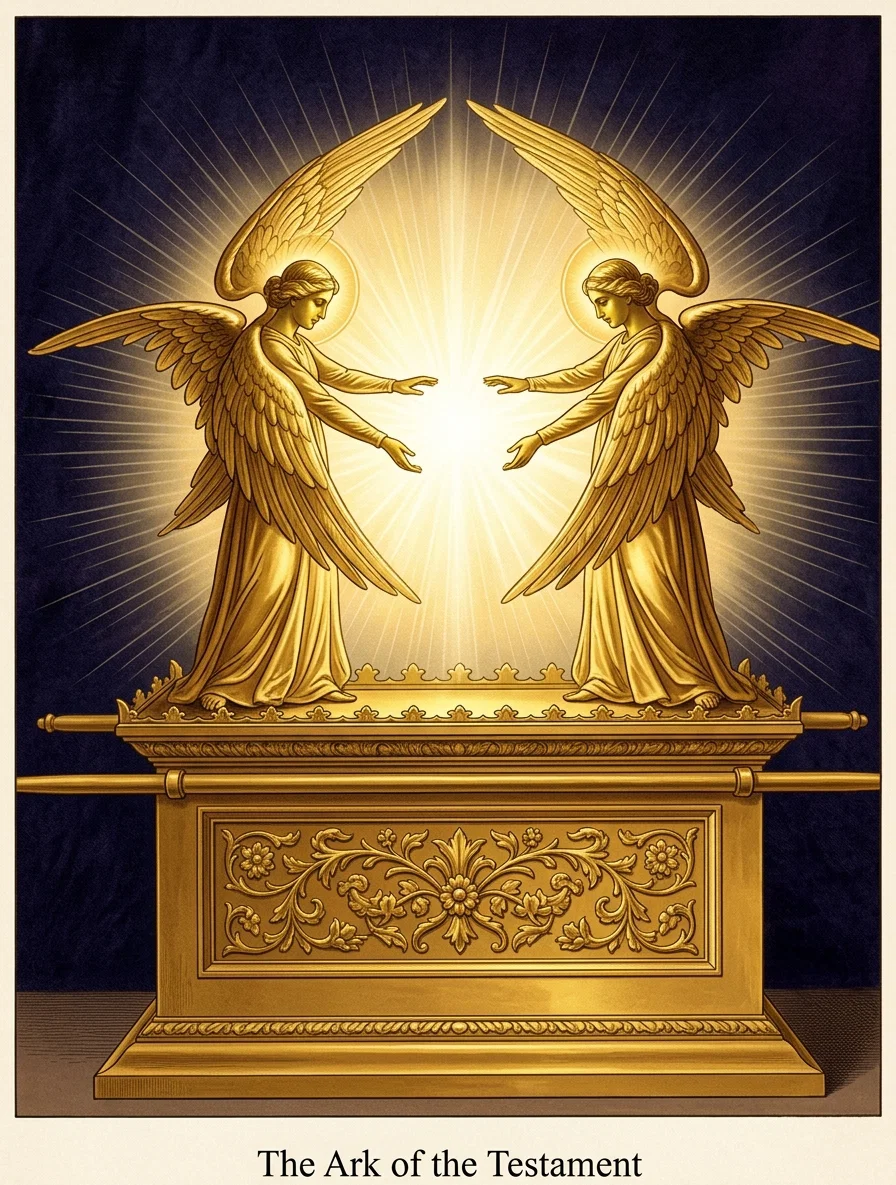
Aaron was to make an atonement for himself. Two kids of the goats were then brought to the door of the tabernacle, and lots were cast upon them, "one lot for the Lord, and the other lot for the scapegoat." The high priest was to slay the goat upon which the Lord's lot fell, for a sin-offering for the people, and bear his blood within the veil, and sprinkle it with his finger upon the mercy-seat and before the mercy-seat seven times.
Two special purposes are stated for which this blood was offered: (1) to cleanse or make atonement for the sanctuary and altar; (2) to cleanse or make atonement for the children of Israel.
Facts Concerning the Atonement
These facts are clearly stated in Lev. 16: 16, 18, 19, 30. "And he shall make an atonement for the holy place, because of the uncleanness of the children of Israel, and because of their transgressions in all their sins: and so shall he do for the tabernacle of the congregation, that remaineth among them in the midst of their uncleanness. . . . And he shall go out unto the altar that is before the Lord, and make an atonement for it; and shall take of the blood of the bullock, and of the blood of the goat, and put it upon the horns of the altar round about. And he shall sprinkle of the blood upon it with his finger seven times, and cleanse it, and hallow it from the uncleanness of the children of Israel. . . . On that day shall the priest make an atonement for you, to cleanse you, that ye may be clean from all your sins before the Lord."
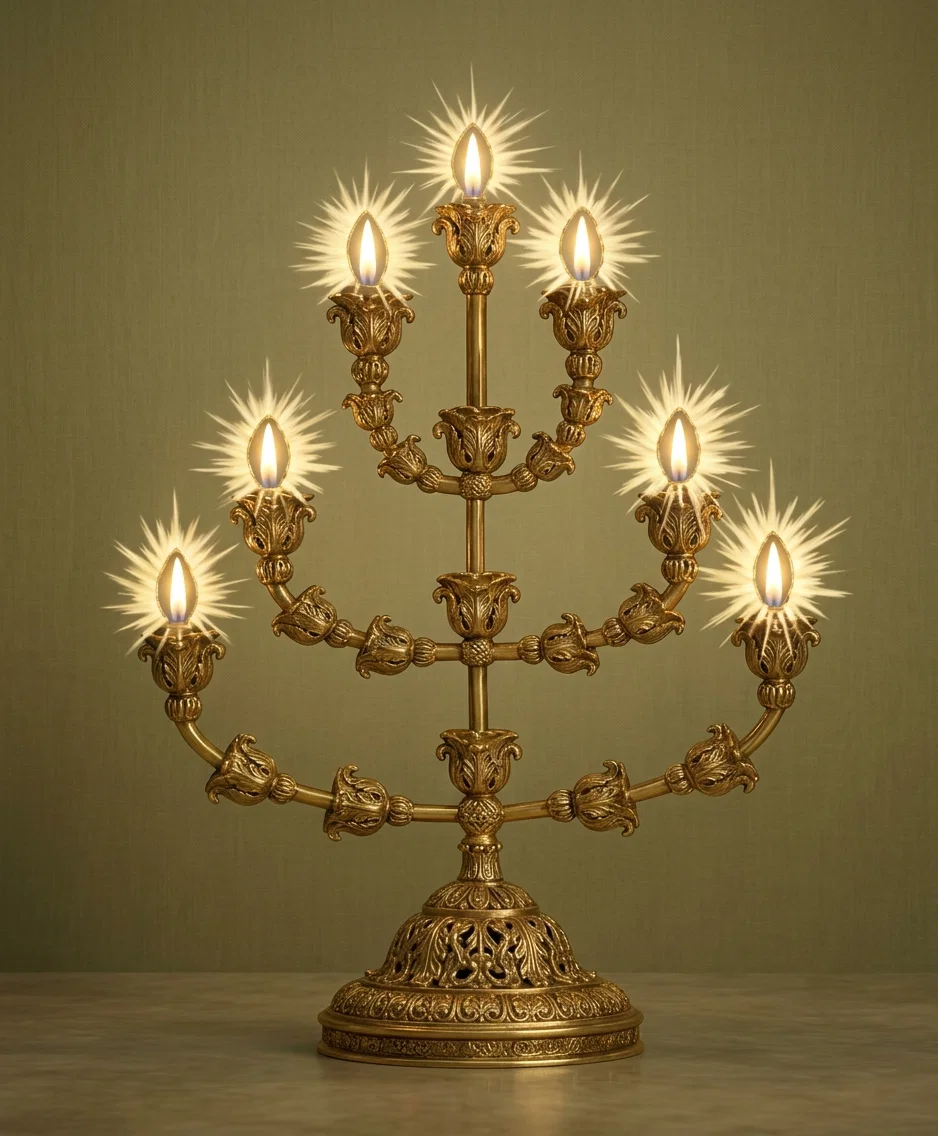
The Golden Candlestick
The Ark of the Testament
Notice that the blood of the sin-offering was sprinkled upon the mercy-seat directly over the broken law, to make full satisfaction for its claims. Its demands being thus met, the law released its hold of all the sins in the sanctuary, and through them of the sinners from whom they had come.
The Scapegoat
Those sins were canceled as related to the forgiven sinner, but were not even by this act destroyed. The high priest then gathered, as it were, the sins all upon himself and bore them from the sanctuary. Placing his hands upon the head of the scapegoat, he confessed over him all these sins, putting them upon the head of the goat; and the goat was sent into the wilderness, bearing all their iniquities into a land not inhabited, implying the destruction of the goat, in the death of which the sins of the people which he bore also perished.
This sending away of the scapegoat is a demonstration of the fact that sin is considered an entity, and as such is pursued by the avenging power of the law till it is chased out of existence. Such was the service performed "unto the example and shadow of heavenly things." Heb. 8:5. The earthly sanctuary was but "a figure for the time then present, in which were offered both gifts and sacrifices." Heb. 9:9. "The way into the holiest of all [the heavenly sanctuary] was not yet made manifest, while as the first tabernacle was yet standing." Verse 8.
According to the type, the ministration could not begin in the heavenly sanctuary until the offering was made and a high priest anointed for that work.
All Typical Offerings Pointed to Christ
That Christ was the offering to which all the sacrifices pointed from the time of Abel's offering to the death of our Saviour on the cross, further proof is unnecessary; and also that Christ's priesthood was typified by the service of the priests in the earthly sanctuary. It might be well, however, to note how and when Christ was made priest. We find from Heb. 7:21 that He was made priest by the oath of God. "The Lord sware and will not repent, Thou art a priest forever after the order of Melchizedek." "For the law appointeth men high priests, having infirmity; but the word of the oath, which was after the law, appointeth a Son, perfected forevermore." Verse 28, A.R.V.
The oath making Christ a high priest was spoken after the law of the Levitical priesthood was given, but not until Christ was made perfect. It was only through suffering that this was accomplished. "Though He were a Son, yet learned He obedience by the things which He suffered; and being made perfect, He became the author of eternal salvation unto all them that obey Him; called of God an high priest after4the order of Melchizedek." Heb. 5: 8-10. Again: "Christ glorified not Himself to be made an high priest; but He that said unto Him, Thou art My Son, to-day have I begotten Thee. As He saith also in another place, Thou art a priest forever after the order of Melchizedek." Verses 5, 6.
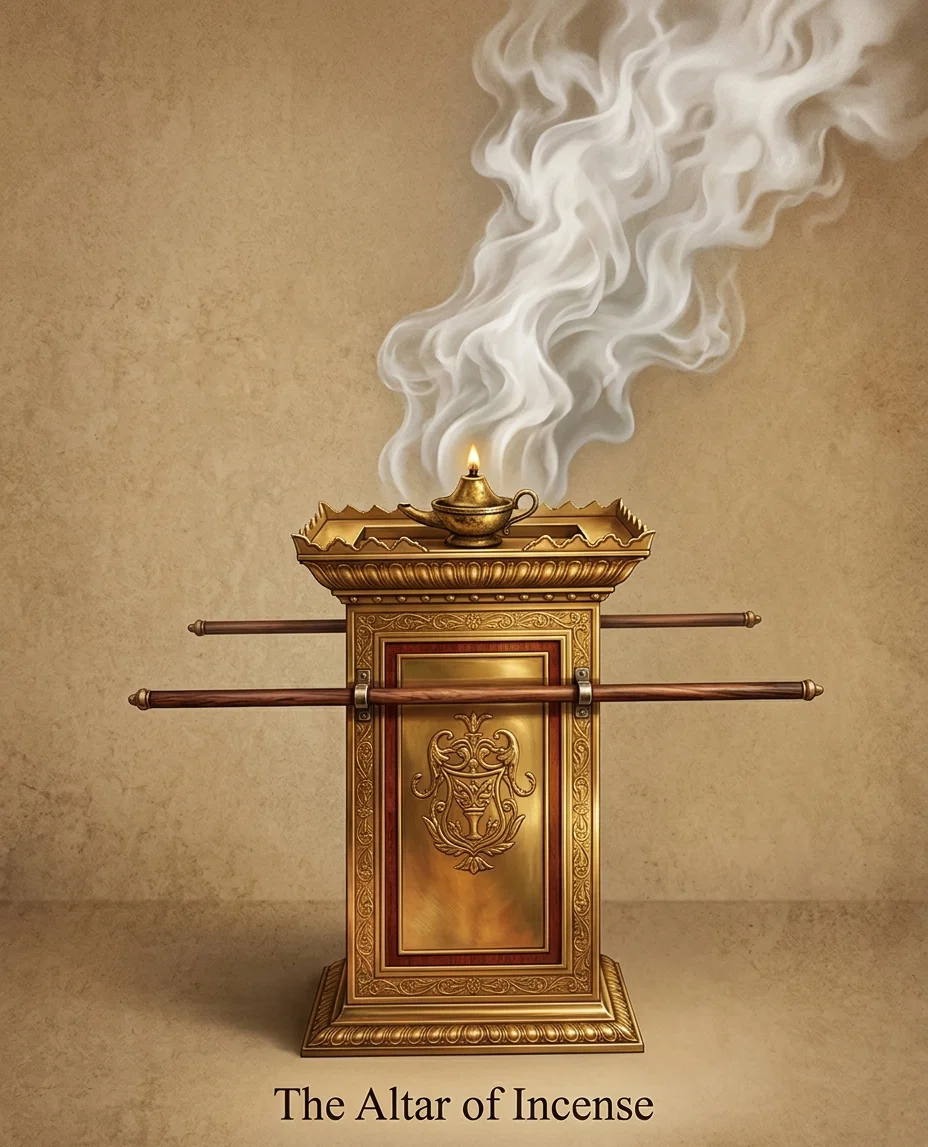
The Altar of Incense
These two statements were evidently made at the same time, which was at the resurrection of Christ, as proved by the following scriptures. Acts 13: 33; Rom. 1: 4: "God hath fulfilled the same unto us their children, in that He hath raised up Jesus again; as it is also written in the Second Psalm, Thou art My Son, this day have I begotten Thee." "Declared to be the Son of God with power, . . . by the resurrection from the dead."
Why Melchizedek and not Aaron?
But why was not the Saviour made a priest after the order of Aaron instead of Melchizedek?
Several reasons are given in the Scriptures, a few of which we will notice.
1. Perfection was not of the Levitical priesthood; for if it had been, says Paul, what further need was there that another priest should arise after the order of Melchizedek, and not after the order of Aaron? Heb. 7: 11.
2. Those priests were many, because they were not suffered to continue, by reason of death; but this Man continues ever, and has an unchangeable priesthood. Verses 23, 24.
3. It was necessary for the priests of the house of Levi to offer up sacrifices daily, embracing all the various offerings that were made by those who had transgressed. But all this Christ did by one act when He offered up Himself. Heb. 9: 25, 26, 28; 10: 11, 12, 14.
The Melchizedek Priesthood
A short study on the priesthood of Melchizedek will enable us to see many other reasons why Christ should be a priest after that order. Altho so little apparently is said about him, yet Paul says there were "many things to say, and hard to be uttered, seeing ye are dull of hearing." Heb. 5: 10, 11. This should encourage us to study this subject diligently.
The first and only mention of Melchizedek in the Old Testament is where he appeared to Abraham and blessed him, and it is stated that Abraham "gave him tithes of all." Gen. 14: 18-20.
Paul in Hebrews 7 shows how great Melchizedek was, and also the superiority of his priesthood over that of the Levitical order. He also gives us a clue as to who he was.
Let us examine carefully a few expressions: "For this Melchizedek." Verse 1. The word "this" implies that there were others; as indeed there must be, for it takes more than one to constitute an order.
"Now consider how great this man was." Verse 4. Here Melchizedek is called a man.
There are two ways through which men have come into existence,—by birth and by creation. Melchizedek was created, hence was "without father, without mother, without descent [or pedigree], having neither beginning of days, nor end of life; but made like unto the Son of God; abideth a priest continually." Verse 3. He was "made," or created.
Had Adam never sinned, inspiration itself could have given no truer picture of the
first created being of this world. "God said, Let Us make man in Our image." He was made "like unto the Son of God," also without "beginning of days." Adam did not begin life as an infant of days, but in the prime of manhood. But because of sin he ceased to abide "continually." And as there has never been a man since in this world to whom this could apply, we must of necessity look to some other world for "this Melchizedek."
Other Worlds and Their Heads
That there are other worlds is shown from the expression in Heb. 1: 2, which states that God has spoken to us by His Son, "by whom also He made the worlds."
In peopling one of those worlds, there must be a first created being who stands in the same relation to the inhabitants of that world as would Adam to ours had he not transgressed, which would be that of father or priest-king—“king of righteousness, . . . king of peace.” Heb. 7: 2. In other words, he would be the Melchizedek of that world.
Notice, further, that the Melchizedek that met Abraham still lives. It is said of him that he "abideth a priest continually."
"Here [under the Levitical priesthood] men that die receive tithes; but there he [Melchizedek] receiveth them, of whom it is witnessed that he liveth." Verse 8. Which is further proof that Melchizedek was not an inhabitant of this world. We must therefore conclude that the Melchizedek order of priesthood is a priesthood composed of those who are rulers of worlds; that it is a perfect priesthood, as the father and priest imparts by birth the righteousness and peace that he himself has, and so is called "king of righteousness, king of peace." Christ through the new birth imparts the same to His children. That He will become the ruler of this world, and hence its Priest-King, or Melchizedek, is clearly stated in the following text: "I will declare the decree: the Lord hath said unto Me, Thou art My Son; this day have I begotten Thee. Ask of Me, and I shall give Thee the heathen for Thine inheritance, and the uttermost parts of the earth for Thy possession." Ps. 2: 7, 8.
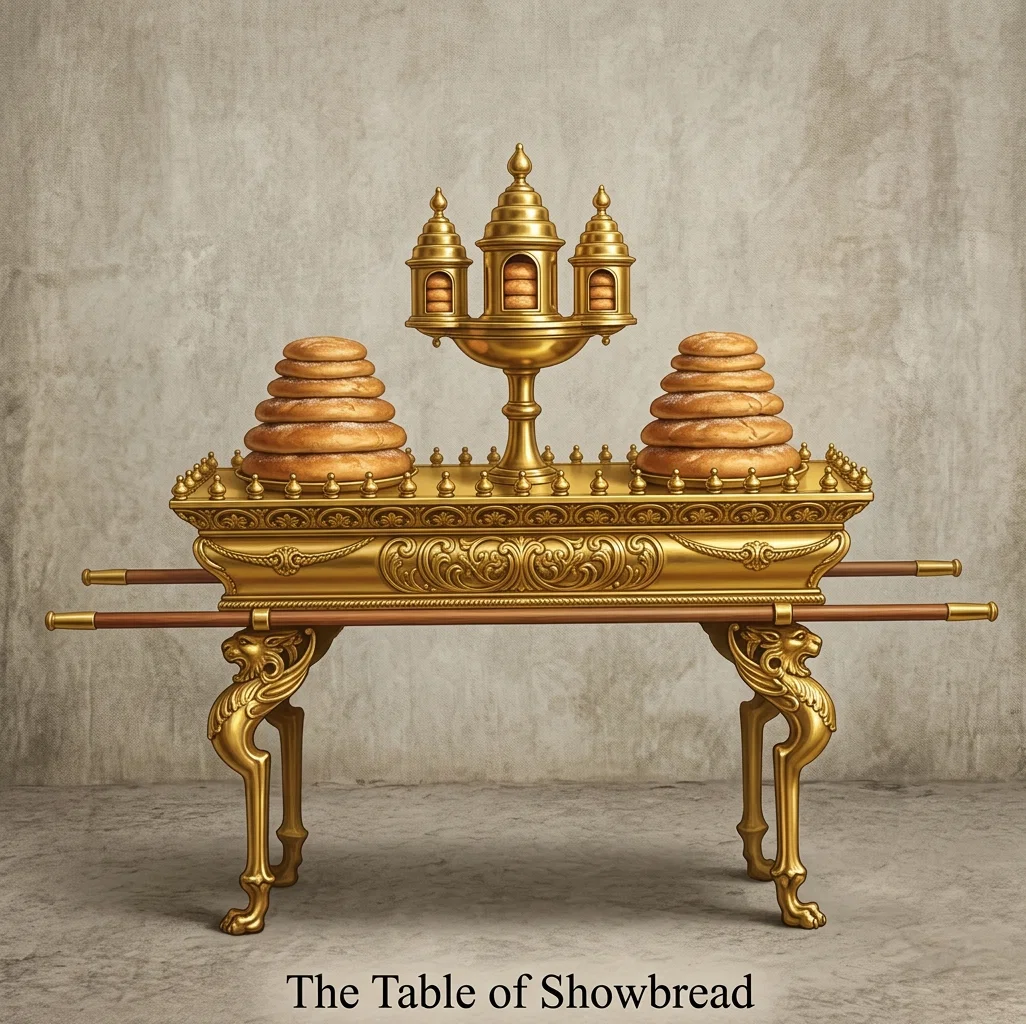
The Table of Showbread
Adam Lost His Place as Head
When God created Adam, He called him His son (Luke 3: 38), and gave him dominion over all the earth (Gen. 1: 26). But Adam through disobedience turned the dominion over to Satan (Rom. 6: 16), who is therefore termed "the prince of this world." John 14: 30.
In Job 1: 6-8 we find that the sons of God (rulers of worlds) came to present themselves before the Lord, and Satan, as the ruler of this world, came also among them. God recognized him as such, and asked him concerning some of his subjects on this earth.
But was Satan always to be its ruler? Let the Saviour Himself answer: "Now is the judgment of this world: now shall the prince of this world be cast out. And I, if I be lifted up from the earth, will draw all men unto Me. This He said, signifying what death He should die." John 12: 31-33; Rev. 12: 10, 12.
Christ Takes the Lost Headship
At the death of Christ Satan was conquered and lawfully cast out as prince of this world; and when our Lord rose from the dead, God called Him His Son, and gave Him the dominion over all the earth. The question might be asked, Was not Christ always the Son of God? To be sure He was, but not in the sense that Adam or the first created beings of other worlds were.
When God said, "Thou art My Son," He spoke to humanity. He adopted human nature in the person of His Son, and has carried the same into the highest heaven. It is the Son of Man whose name shall be called "Wonderful, Counselor, The mighty God, The everlasting Father, The Prince of Peace."
"And so it is written, The first man Adam was made a living soul; the last Adam was made a quickening spirit. . . . The first man is of the earth, earthy: the second man is the Lord from heaven. . . . And as we have borne the image of the earthy, we shall also bear the image of the heavenly." 1 Cor. 15: 45, 47, 49.
In amazement I stop and ask, Can all this be true? The answer comes back, "The Lord swore and will not repent, Thou art a priest forever after the order of Melchizedek."
The second Adam does not take immediate possession of His dominion. Being made a quickening or life-giving spirit, He is seeking to woo the lost sons and daughters of the first Adam back to life and immortality, that they may become the willing subjects of the restored kingdom; and in so doing, He is but carrying forward His priestly work in the sanctuary above, as shadowed forth by the Levitical service in the earthly, which work will be the subject of the next article.