Studies in Daniel

3%

Pacific Press Publishing Association · Mountain View, California · Dec 5, 1911

FromSigns of the Times, Vol. 38, No. 48.

Read the full edition

Studies in Daniel

God the Teacher—A Lesson for the Ages
VIEWED from a temporal and politic standpoint, it was to no mean education that Nebuchadnezzar called the royal Judean youth. In many respects it would compare favorably with much of the education of to-day. In fact, some of the things then known in natural science are now lost to the world, and neither Yankee ingenuity nor European persistence has been able to restore them. Babylonia was a great educational world center. Great universities were established at Borsippa—a suburb of Babylon—and at Ur, or Orchoe. Great Babylonian libraries existed, written by Chaldeans and by the magi. Says the Schaff-Herzog Encyclopedia: “The contents of the inscriptions [in these libraries], as well as the materials inscribed, are most various. Stone slabs, gems, clay tablets, glass, and metals are all employed; and the subject-matter is historical, mythological, religious, official, commercial, astronomical, and mathematical,”—just what we would find in our great libraries of the present day. Some of these works are translations of older works in other languages, the original and translation occupying parallel columns.
Art, also, the finest of which has perished, was manifest in various forms. Their sculpture, painting, and coloring show them to have possessed no small knowledge of metallurgy and chemistry. And stones used in sculpture, which were bored, shaped, or engraved, were not merely the softer kind of rock, but the harder kinds, such as carnelian, agate, quartz, jasper, syenite, lodestone, and green feldspar. To cut these, emery, or some similar substance, must have been used, as well as rapidly revolving drills and disks, such as lapidaries now use. The work, “sometimes exceeding delicate,” shows a complete mastery over tools and material. In fact, a lens has been found in Assyria, and it is well known that glass was used and cut into various shapes in Babylon. In metals gold and silver, bronze and copper, lead and iron were used. Solid, massive gates were cast of bronze. The pottery is of excellent quality. Their textile fabrics were of great celebrity even as early as the days of Joshua (see Joshua 7:21), standing in the ancient world as do the fabrics of Turkey and Persia now. These were composed of wool, cotton, and linen.
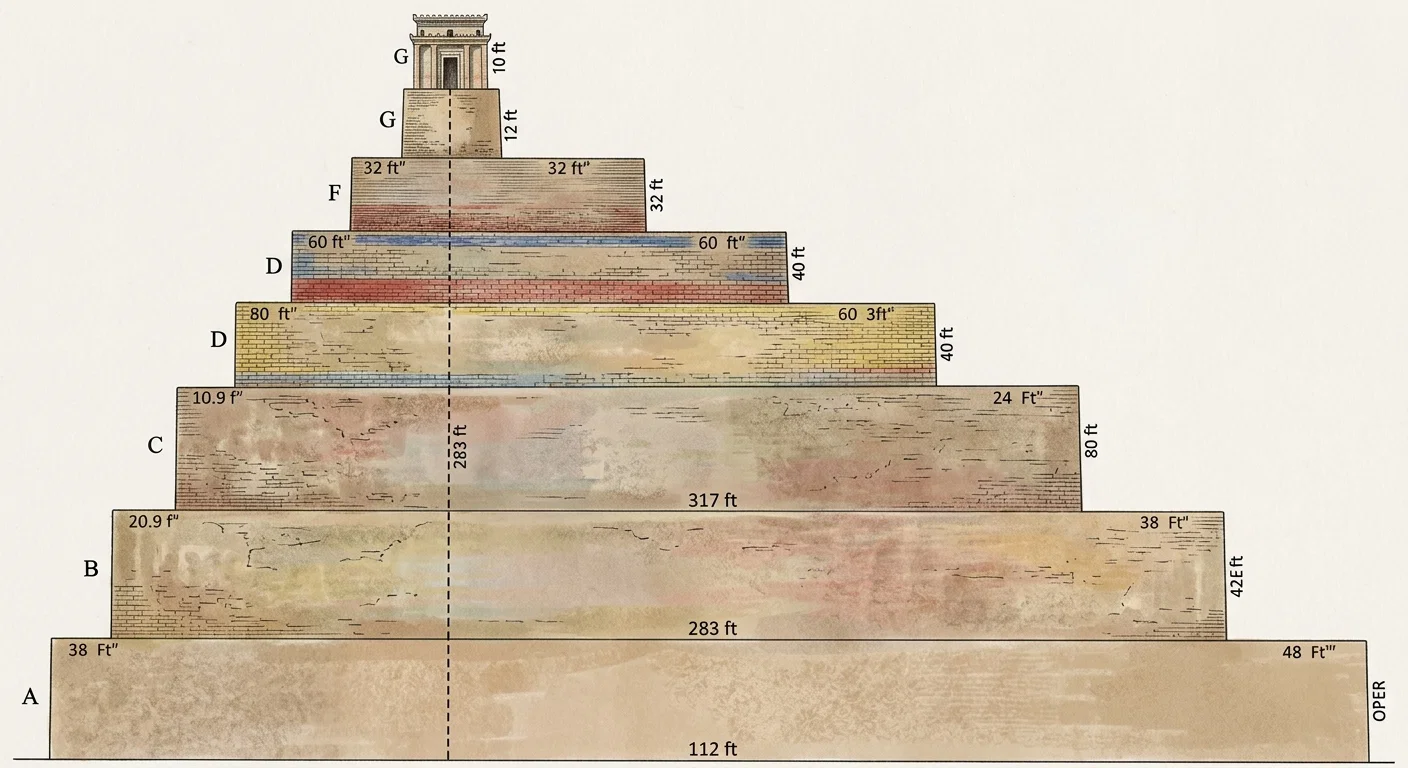
Plan of the Babylonian temple at Borsippa (Birs Nimrud) thought to be the Tower of Babel
Rawlinson tells us that in mechanical art they “decidedly excelled the Egyptians,” and “may challenge comparison with the most advanced nations of antiquity,” “falling little, if at all, short of the Greeks and Romans.”
In astronomy they distinguished between fixed stars and planets, mapped out the heavens into constellations as they exist to-day, computed eclipses, and learned the relative distances of moon and planets.
All these things were taught in their universities. The practical application of the wise men of Babylon is evidenced in the great works of the city of Babylon itself. The men who projected and directed in the construction of these works in that mighty city were not novices. In the days of Daniel ancient sun temples had been or were being repaired. Gold-covered temples and royal palaces exceeding imagination in their barbaric splendor had been erected. Colossal and beautiful hanging gardens containing rocks and forest trees had been constructed by Nebuchadnezzar in the heart of the city, that his wife, a royal mountain maiden, might enjoy the beauties of the country in the midst of the most luxurious metropolitan life. By mighty moat and wall the city was fortified against all known weapons of war which might be wielded by an attacking foe. This wall was said to be sixty miles in length, fifteen miles on each side of the city, 350 feet high and 87 feet thick. Flowing through the city was the Euphrates River, and on each side of the river there was a wall equal to one half the cubic contents of the outer wall. It was such a city as this that Nebuchadnezzar surveyed when, in his pride of heart, he exclaimed, “Is not this great Babylon, that I have built for the house of the kingdom by the might of my power, and for the honor of my majesty?” It was to this glorious city, teeming with works of art and grandeur, that the children of exile, mourning for desecrated Jerusalem, were carried, there to witness even in their humiliation to the truth of God.
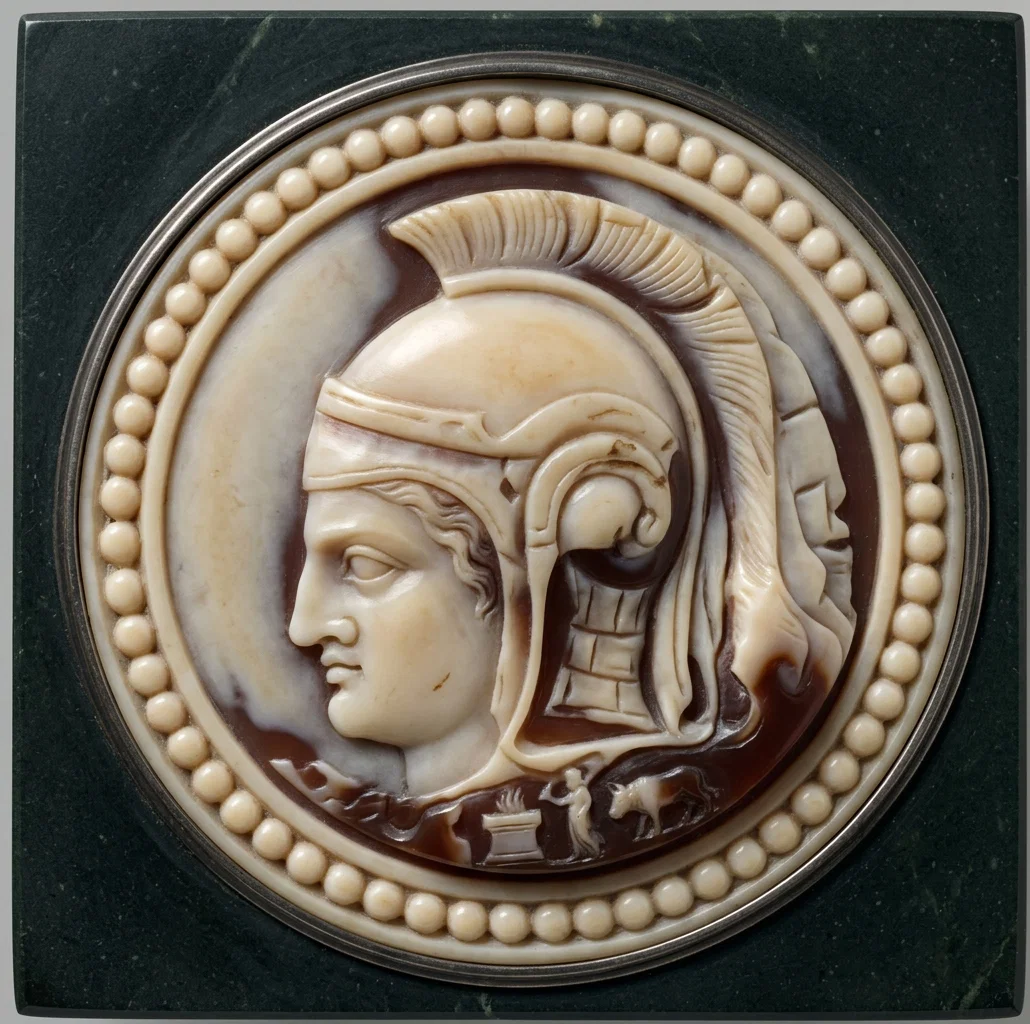
A cameo portrait of Nebuchadnezzar, made as a votive offering to his god
Nebuchadnezzar purposed that they should be educated in the best schools the world knew. How the king’s purpose affected the Judean youths is told in the Scripture. Let us—

Question the Text

1. What selections did the king instruct the master of his eunuchs to make from the children of Israel?
And the king spake unto Ashpenaz the master of his eunuchs, that he should bring in certain of the children of Israel, even of the seed royal and of the nobles. Verse 3. Note 1.
2. What were to be the character and qualifications of those selected?
Youths in whom was no blemish, but well favored, and skilful in all wisdom, and endued with knowledge, and understanding science, and such as had ability to stand in the king’s palace; and that he should teach them the learning and the tongue of the Chaldeans. Verse 4. Note 2.
3. What did the king appoint them?
And the king appointed for them a daily portion of the king’s dainties, and of the wine which he drank, and that they should be nourished three years; that at the end thereof they should stand before the king. Verse 5. Note 3.
4. What change did he make in the names of four of these youth?
Now among these were, of the children of Judah, Daniel, Hananiah, Mishael, and Azariah. And the princes of the eunuchs gave names unto them:
unto Daniel he gave the name of Belteshazzar; and to Hananiah, of Shadrach; and to Mishael, of Meshach; and to Azariah, of Abed-nego. Verses 6, 7. Note 4. (See last article.)
5. What purpose did Daniel form regarding the diet?
But Daniel purposed in his heart that he would not defile himself with the king’s dainties, nor with the wine which he drank; therefore he requested of the prince of the eunuchs that he might not defile himself. Verse 8. Note 5.
6. How had God’s providence overruled in behalf of this faithful young man?
Now God made Daniel to find kindness and compassion in the sight of the prince of the eunuchs. Verse 9. Note 6.
7. What reply did the prince of the eunuchs make to Daniel?
And the prince of the eunuchs said unto Daniel, I fear my lord the king, who hath appointed your food and your drink: for why should he see your faces worse looking than the youths that are of your own age? so would ye endanger my head with the king. Verse 10. Note 7.
8. What test did Daniel propose?
Then said Daniel to the steward whom the prince of the eunuchs had appointed over Daniel, Hananiah, Mishael, and Azariah: Prove thy servants, I beseech thee, ten days; and let them give us pulse to eat, and water to drink. Then let our countenances be looked upon before thee, and the countenance of the youths that eat of the king’s dainties; and as thou seest, deal with thy servants. Verses 11-13. Note 8.
9. How did the prince of the eunuchs receive this proposition?
So he harkened unto them in this matter, and proved them ten days. Verse 14.
10. What was the result of the test?
And at the end of ten days their countenances appeared fairer, and they were fatter in flesh, than all the youths that did eat of the king’s dainties. So the steward took away their dainties, and the wine that they should drink, and gave them pulse. Verses 15, 16. Note 9.
11. How did God work with these young men?
Now as for these four youths, God gave them knowledge and skill in all learning and wisdom: and Daniel had understanding in all visions and dreams. Verse 17. Note 10.
12. At the final examination in the universities at the close of the three years’ course, how did the young Hebrews stand as compared with others?
And at the end of the days which the king had appointed for bringing them in, the prince of the eunuchs brought them in before Nebuchadnezzar. And the king communed with them; and among them all was found none like Daniel, Hananiah, Mishael, and Azariah: therefore stood they before the king. And in every matter of wisdom and understanding, concerning which the king inquired of them, he found them ten times better than all the magicians and enchanters that were in all his realm. Verses 18-20. Note 11.
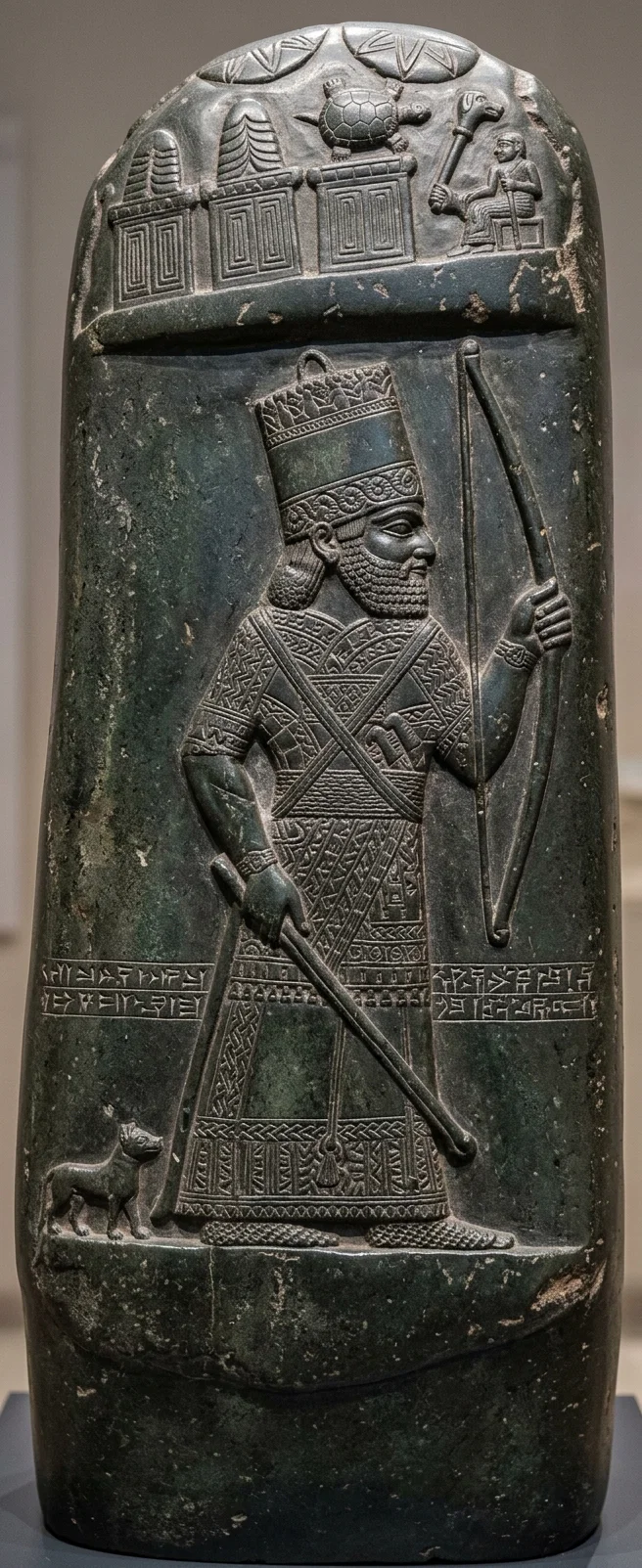
Babylonian landmark, inscribed with the purchase-deed of a plot of ground about B.C. 1100 (British Museum)
13. What is said concerning the further life of Daniel?And Daniel continued even unto the first year of King Cyrus. Verse 21.