The Rich and the Poor

8%

Pacific Press Publishing Company · Oakland, California · Nov 26, 1896

FromSigns of the Times, Vol. 22, No. 47.

Read the full edition

The Rich and the Poor.

Hundreds of times in his word the Lord speaks of the rich and the poor. In all these instances divine pity is ever manifest toward the latter. Nay, the merciful Lord identifies himself with them in their sufferings, deprivations, and oppressions by the rich. On the other hand, while the Lord has naught against the rich man as such, loving his soul as well as that of the poor, he is ever warning us against the danger of riches, and denouncing the getting of wealth by injustice, oppression, or fraud. He also points out the danger of money lovers, rich or poor, and places before those who possess this world's goods, the responsibility of using their wealth to his glory.

A Lesson for the Rich.

Our Lord has given us a lesson for the rich and the would-be rich in Luke 12: 15-21. In verse 15 is the emphatic warning: "And he said unto them, Take heed, and beware of covetousness; for a man's life consisteth not in the abundance of the things which he possesseth." "Take heed" is a term always used with reference to those things wherein lies the greatest danger. Reader, take heed.

"Beware of Covetousness."

Covetousness is unlawful desire; a desire to possess what is not ours; an overweening desire for the wealth or riches of the world. The evil of it is that it shuts out other things of more value. The little eyelid may shut out the light of the sun. As small a thing as a five-dollar gold piece, or even a smaller coin, may shut from the eye of the soul the eternal riches of God's grace, and blind it to the light of the Sun of Righteousness. Life means more than money. God's design in man's existence is greater than all the riches of earth. But when man's whole being is yielded to the pursuit of gain-getting, he makes a god of gold, and puts himself lower than the god he worships. In his own life he exalts the thing—gold—above the man—himself—created in the image of God.

Its Effect on Others.

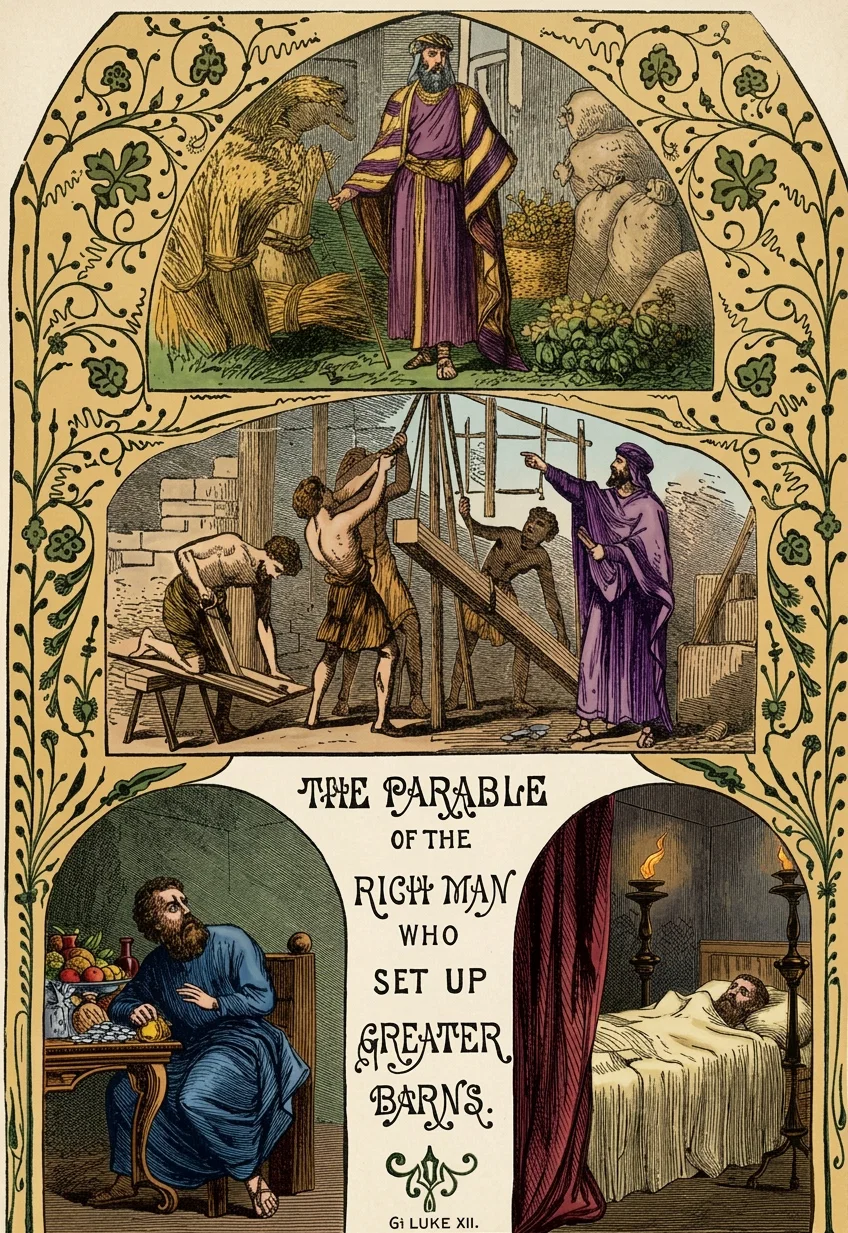
Doing thus in himself, he scruples not to do it as respects others. If he have power to control men, he uses them merely to increase his wealth. The men are of worth only as they increase the commodity. The grinding greed of many of the rich of these days, the great corporations by which men are made so many parts of a mammoth machine to grind out gold at the expense of blood, are all examples of what comes by not taking heed to our Lord's words, "Beware of covetousness." And yet unheeded are the words of the Master of life, while the grasping greed goes on enthraling nations in the chains of debt and poverty, and arousing envy, the twin sister of covetousness, on the part of the poor. Envy opens the door to malice and vengeful crime, but the root of all the evil lies in the covetousness, the love of money. O, there are better things than the things men may possess here! At the longest this life is as a vapor that appeareth for a little time and vanisheth away. Knowledge, wisdom, righteousness, and love eternal, are of more importance than all the gold of earth. God desires to make man more precious than fine gold, to develop in him a character which shall shine forth to all eternity to the praise of the glory of God's grace. Why, then, should man debase these glorious and eternal possibilities to the possession of the things of this life which perish with the using? An illustration of its folly is given in our combination picture and the scripture below it.

The Lesson.

The scripture and the picture speak for themselves. The parable is an object lesson which is reënacted by the million, and yet the lesson is unheeded. The Greek god Pluto may not be worshiped as such, but plutocracy, the worship of wealth, has grown apace. It is hated and its power is hated, but it is worshiped still. Gold is not only king, but gold is god, and the next thing to gold to be honored is the man who possesses it. And yet the Rothschild is no more precious in God's sight than the humble laborer at the plow, or the forge, or in the mine, or on the street. Let men hoard their wealth, as did the man in the parable. Let them build larger granaries, bigger banks, stronger vaults. Let them promise themselves leisure, and ease, and pleasure in the years to come. But in the midst of their thus planning, and in a short time, at the longest, God calls to him who has thus prostituted his life to sordid gain: "Fool, this night thy soul [life] shall be required of thee," and then what will you do with the railways, the brick blocks, the marble palaces, the stocks, the bonds, the gold,—the wealth wrung from the brain and blood and brawn of men? To such an one it all perishes with the using. "So is every one that layeth up treasure for himself."

"Rich toward God."

It is not a crime to produce or acquire wealth as long as it is done justly, manfully, righteously, with due regard to the rights of every one engaged in it. The ability to acquire wealth is one of the precious gifts of God, that he may be better served thereby. "Thou shalt remember the Lord thy God; for it is he that giveth thee power to get wealth." (See Deut. 8: 11-19.) The use to put these riches to is thus set forth: "Charge them that are rich in this world that they be not highminded, nor trust in uncertain riches, but in the living God, who giveth us richly all things to enjoy; that they do good, that they be rich in good works, ready to distribute, willing to communicate [ready to sympathize, margin, R. V.]; laying up in store for themselves a good foundation against the time to come, that they may lay hold on eternal life." This is the duty, as it is the salvation, of the men whom God has given ability to make money. Let them do good with it, be rich in good works, ready to distribute; let them see Christ in the suffering needy all around them. Let them not lay up treasure for themselves, but be "rich toward God." In ministering to the poor, in giving liberally to God's cause, in helping the worthy oftentimes at a loss here, they lay up a better foundation than this earth affords; they deposit in a bank that will never fail or be looted or robbed. Let the poor use the gifts that God has given him; mourning not to be rich, envying not. Let God be glorified in all. If thus we do, all may be rich with the exceeding riches of God's grace, and in the eternal inheritance and joy of souls saved to all eternity.