Our London Letter

4%

Pacific Press Publishing Association · Mountain View, California · Sep 12, 1911

FromSigns of the Times, Vol. 38, No. 36.

Read the full edition

Our London Letter

[Our correspondent, Mr. W. H. Bartlett, is the editor of "Present Truth," London, native-born, well informed, and thoroly reliable.]
PROMINENT among the events of the past few weeks are the coronation and the constitutional struggle over the powers of the House of Lords.
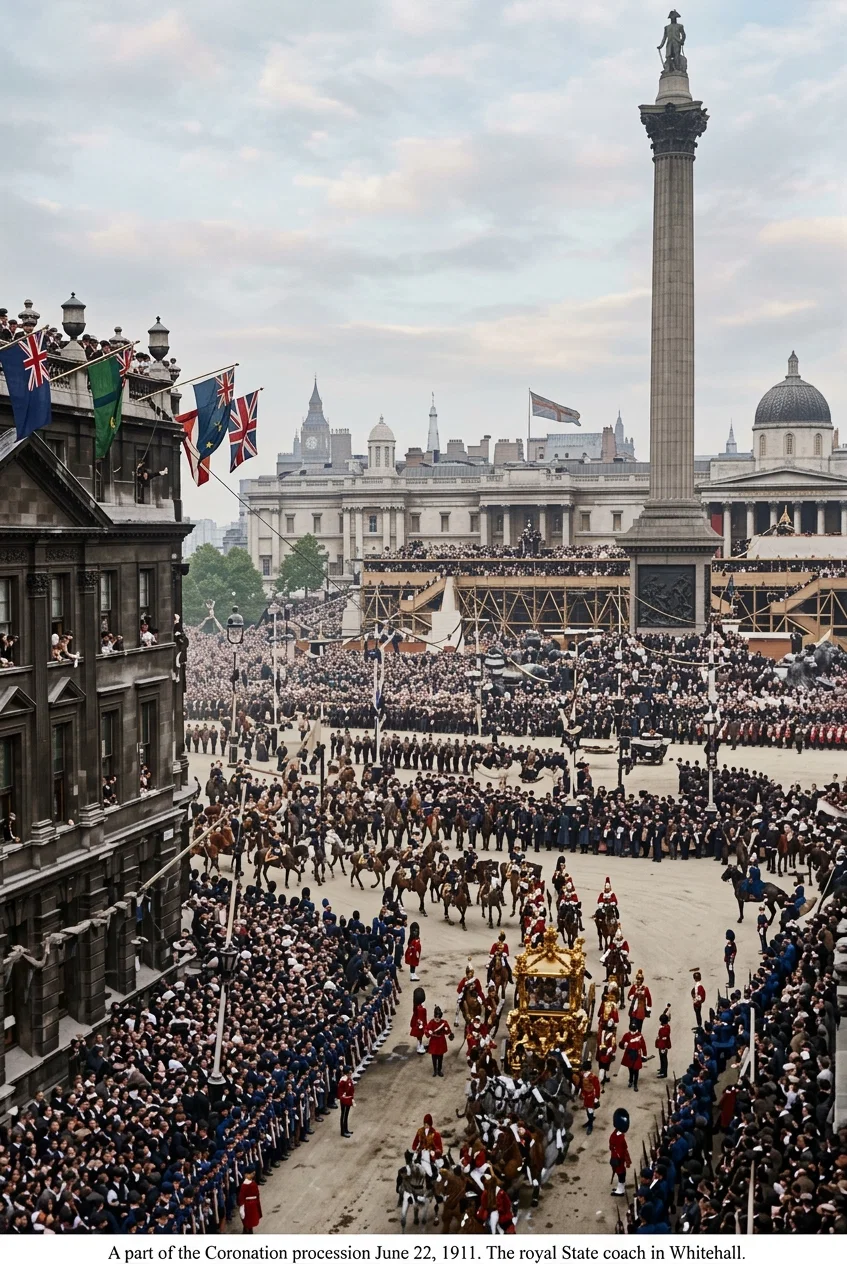
The coronation itself was a brilliant success, and the country entered with enthusiasm into the celebrations. Newspapers contained little else for weeks but elaborate descriptions of everybody and everything connected with the ceremony. All along the route of the royal processions huge banks of seats were erected, and exorbitant prices were asked for these and for windows and shop fronts. The police were evidently uneasy about their ability to control the enormous crowds that were expected to throng the thorofares, and massive barricades were erected on every street opening into the line of march. The nervousness communicated itself to the people; and many who had been planning to see the processions, decided to stay away, with the result that the crowd after all was only a moderate one. Very few of the barricades needed to be closed.
The speculators in seats were disappointed, and some of them lost heavily. At the last moment seats could be bought for one twentieth of the price previously asked.
Some adverse criticism found expression over the coronation ceremony itself, as being too medieval, not so much in its language and sentiment as in the fact that it gave undue prominence to the nobility and the clergy of the established church. In these days when the peerage is being forced to submit to the will of the people, it seemed somewhat incongruous that the monarch should apparently owe his enthronement to the consent and homage of the earls, marquises, and dukes of the kingdom. Other far more important elements of the national life were conspicuous by their absence from Westminster Abbey, or, if they were present by invitation, were relegated to an obscure position.

The Home Sentiment

On one point, however, there has been entire agreement. All beholders were impressed with the womanly dignity and charm of Queen Mary, and the wholesome simplicity and naturalness that marked the royal children. The king and queen are associated in the minds of their subjects with thoughts of a happy and affectionate home life, and this, as much as anything else, has warmed the hearts of the people toward them. It is recognized that the tastes of the present occupants of the throne do not lean toward sport or fashion or pleasure, and the more sober-minded section of the population is looking for quieter and more godly times as a result of the royal example. In many of their public utterances the king and queen have given reason for thinking that religion occupies a large place in their own thoughts and in their home life.

The Political Conflict

The coronation brought a brief truce in the political strife, but hardly were the decorations taken down before it broke out again with undiminished ardor. The bill restricting the veto of the Lords had been already passed through the House of Commons, and it remained for the Lords either to accept the situation and pass the bill, or take a firm stand for their privileges and throw out the measure.
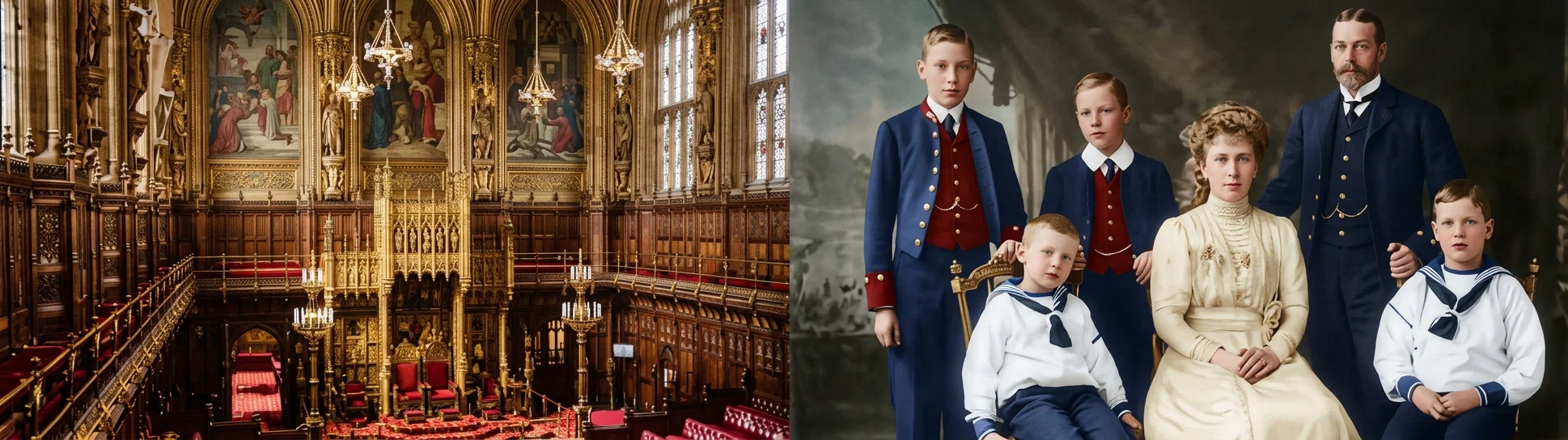
The Historic House of Lords, where meet the Peers of the English Parliament, who have been passing through a struggle for their very existence. The children of King George and Queen Mary. The back row, beginning at the left, Prince Albert, Prince Henry, the Prince of Wales. In front, Prince John, Princess Mary, Prince George.
They chose a middle course; the bill was accepted in form, and passed through its first, second, and third readings, but was radically changed in committee by certain amendments, and, so modified, it was returned to the House of Commons. Thus the battle was set in array. At this point Mr. Asquith, the Liberal premier, announced that if it became necessary to do so in order to enact the Parliament bill into law, he was prepared to advise the king to create sufficient peers to drown the hostile vote in the House of Lords, and that the king had already intimated his willingness to accept and act on such advice.
This announcement of course put an end to the struggle. Henceforth the game was in the hands of Mr. Asquith, whether the Peers capitulated or decided to struggle to the last. The only question was which course the Lords would elect to take. Their counsels were divided; some of them urged one policy, and some the other. The majority of the Conservative lords were exceedingly loath to witness the creation of a large number of new peers. To drive matters to this extremity would not help them in the least, and would only place them in a position of helpless and permanent inferiority in the second chamber. The leaders of the Conservative party, Mr. A. J. Balfour and Lord Lansdowne, announced that they would bow to the inevitable and would not further resist the passage into law of the Parliament bill; but an obstinate minority refused thus to surrender the fight, and proclaimed that they would maintain their position to the bitter end.
Under these circumstances, what was the Conservative party to do if they were to prevent the creation of new peers and the swamping of the Upper House with a Liberal majority? It seemed for a time as tho the bulk of the Conservative party would, after all, vote with the Liberals for the Parliament bill in order to carry it against the insurgents in their own ranks. At the time of writing, it is not yet clear what will be the precise course taken; but in any event, whether new peers have to be created or not, the triumph of the bill is certain, and the constitutional struggle terminates for a time at least in the undisputed supremacy of the House of Commons. Henceforth no legislation which that house passes and maintains for two successive years against the Lords, can be hindered from going into effect.

A Radical, Revolutionary Change

The change is a radical one. So far England has been safeguarded against rapid and revolutionary reforms by a system of constitutional checks and counterchecks. Henceforward it will be in the power of the majority of the House of Commons to enact legislation almost regardless of the vested rights and traditions hitherto entrenched in the House of Lords. We have doubtless entered upon an era of more violent and fundamental change than our recent past has witnessed.
Another important change which comes into effect about the same time is the payment of members of Parliament. In the past the House has been largely comprised of men of independent means, altho a gradually increasing number of members have been paid by trade-unions and other organizations. In future every member of Parliament will receive a salary of two thousand dollars per annum. One of the first results of this new departure will probably be to introduce into Parliament a larger number of Labor representatives, since the funds of the trade-unions will not now be burdened with the support of their representatives, no matter how many of them may be elected.

The Home Rule Question

The chief argument brought forward by the Conservative party in support of their hostile amendments to the Parliament bill has been that, without such safeguards as they advocated, the Liberals would be able to pass a measure of "home rule" for Ireland before another general election could take place. They have so persistently forced this question to the front in the debates, that the way is now fully prepared for a home rule bill. Then, too, the pledges given by Mr. Asquith and his associates, and the debt they owe to the Irish party for support rendered, will certainly compel the early introduction of a measure of home rule for Ireland.
The old cry that home rule will mean "Rome rule" is raised in Protestant quarters in the north of Ireland and elsewhere. Mr. John Redmond, however, the leader of the Irish Nationalists, has pledged himself most distinctly that this shall not be the case. As a matter of fact, it is within the bounds of possibility that the granting of home rule will mean the downfall of priestly authority in Ireland. As long as the Irish have felt themselves a downtrodden race, they have naturally sympathized with the priests of what proclaimed itself to be a downtrodden church. Priests and people have stood together in one common struggle; but when the aspirations of the people are gratified and they have a parliament of their own, they are very likely to be absorbed in political affairs and to resent any attempt to prolong the old domination of the priests. It is not at all improbable that home rule will bring in its train a considerable degree of emancipation from the power of the priests. In these days when the Gospel of the kingdom is preached in all nations, even Catholic peoples are getting their opportunity to hear the message. In Italy and France, in Spain and Portugal, the Romish church is losing its old-time influence, and the doors are opening to the preachers of a purer Gospel. Ireland will also certainly get its opportunity before the end comes; and it may be that home rule will mean the breaking down of the barriers that have hitherto to a considerable degree excluded the Gospel from that country.

Labor Discontent

Back of all the coronation rejoicings and the strife of parties during recent months, has towered the grim, menacing shadow of labor discontent. The coal-fields of South Wales have been a scene of rioting and bloodshed; over-sea commerce has been held up for weeks by a strike for higher wages on the part of the stokers and other ill-paid workers; several of the great railways go in constant dread of an outbreak among their employees; and at the present time cargoes of food are spoiling outside the London docks because a hundred thousand dockers, carmen, porters, and lightermen are out on strike. There has hardly been a week for several months when some such struggle has not been in progress. The unusual heat we are now experiencing in England makes the stoppage of food supplies a serious matter, as the merchants have been keeping their stocks at a low point, and in consequence the prices of meat and dairy products have already advanced considerably.

Weather, Peace, Etc.

The present summer has been one of almost unbroken drought, and in some parts of England only two or three showers have fallen in the course of as many months. The result is a great scarcity of vegetables and an almost total failure of the fruit supplies.
Perhaps on account of the torpidity induced by the excessive and unaccustomed heat (ninety-five degrees in the shade to-day), England is taking but a languid interest in some current events that would at another time provoke considerable discussion. Some of our newspapers endeavored to work up excitement over the Moroccan crisis, but the country seems well content that France and Germany should settle this dispute in their own way, so long as England's interests are respected. The reciprocity treaty between the United States and Canada has also aroused but little discussion. Even the signing of the peace treaty between the United States and England has been accepted quietly. At first numerous public meetings were held to further the movement; but as the country heard of other nations entering into the same relations with the States, and learned that even Germany might possibly come in, the conviction rapidly grew that the new development was too diffusive to amount to much. The people cordially welcomed the idea of a permanent and assured peace between this country and the United States; but if every other power was to be placed on the same basis, they could not maintain the same degree of enthusiasm for the project.
A part of the Coronation procession June 22, 1911. The royal State coach in Whitehall.
The great aeroplane race over the British Islands for a prize of 50,000 dollars has been a wonderful demonstration of the possibilities of flying-machines. Altho only two competitors succeeded in covering the thousand miles in a reasonable time, the fact that such a distance could be covered in less than twenty-four hours of actual flying, without inflicting any damage upon the machinery of the aeroplanes, proved unquestionably that the new mode of motion is now one to be definitely reckoned with. Henceforth the power that is best able to command the air will hold a tremendous advantage in its conflicts with other powers. With two such men as Messrs. Beaumont and Védrines, France might hope to cope successfully with an army otherwise superior to her own in numbers and organization. W. T. BARTLETT.
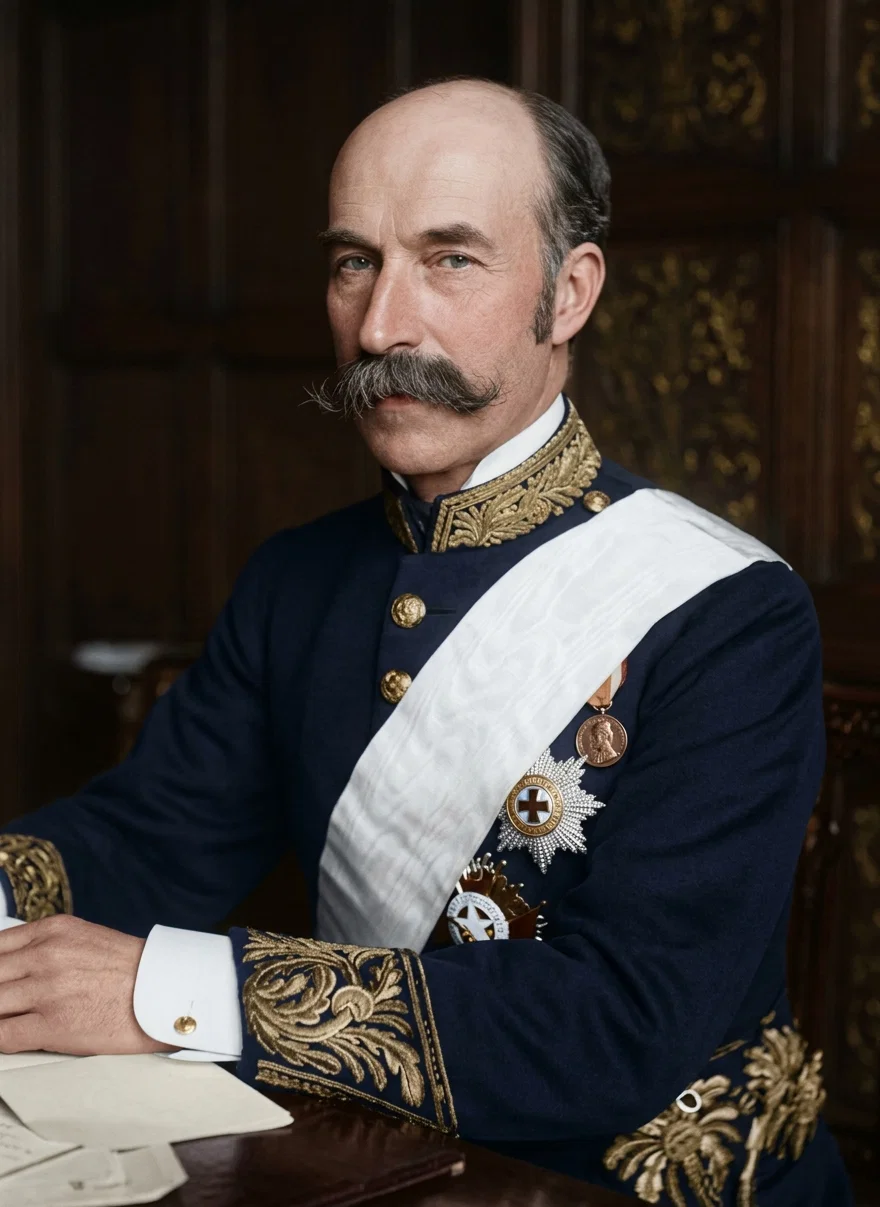
Lord Lansdowne, the leader of the opposition among the Conservative peers