By Charles Miles Snow, Author of "Rise and Fall of Religious Liberty in America"
IV—Forces of Retrogression in the Ascendancy
T was one hundred fifty-six years from the landing of the Pilgrims to the signing of the Declaration of Independence. And what was achieved in that long span of years? — Little. Their brightest minds and greatest souls groaned under the chains of a spiritual tyranny forged for them by a State Church.
It has been one hundred thirty-six years since the signing of the Declaration of Independence; and what has been accomplished?
Plockhorst Jesus, the Saviour of men; but He saves not by political enactment or civil law, but by His own intrinsic moral power of life and love. He will save every soul when like Peter he will cry, "Lord, save me."
Rather, what has not been accomplished? It would seem that the very flood-gates of knowledge and progress were opened with the adoption of the Constitution, which guaranteed to all men equality before the law, and recognized the realm of conscience as outside the jurisdiction of the State. That was the secret spring so long hidden, which, touched by the finger of destiny, has put before the world a nation unsurpassed by any and helping in the progress of them all. That Constitution, with its guarantees of religious and civil equality, struck the shackles from the mind and conscience, and we are to-day viewing the result of that mighty emancipation. As already intimated, it is not confined in its effects to the United States of America. The anvil sparks from that smiting have set the world on fire, and the people of every land are crying for liberty — and getting it, little by little.
But there has been and still is in this country a powerful influence for retrogression. There is a combination in the religious world which considers itself robbed of its prerogatives so long as it is unable to dictate to men in spiritual things and force compliance with its decrees under threat of pains and penalties. That combination is not confined to the Roman Catholic Church. It has grown up like the night-sown tares of the Bible among the good plants of a better sowing. It is at the hands of a combination of influential forces that our priceless heritage of soul-freedom is in danger. In the year 1863 that influence, or force, took definite form and shaped its purpose. Its allies in that particular field have increased to prodigious proportions, and at the present time the halls of legislation, both State and national, are echoing with their insistent demands.
This persistent, aggressive force has set itself the task of removing the very foundations of our national structure, and building upon the ruins thereof another edifice dedicated to the union of the sacred and the secular, making the conscience and the faith of men the football of religious and political majorities.
The danger is none the less because these forces do not openly ask for the union of Church and State. Rather the danger is greater because they deny the desire for such a union while they industriously go on with the effort to accomplish it. So long have we enjoyed the fruit of religious liberty that we have forgotten to nourish and guard the tree which has borne it. Americans are studying many questions, are absorbed in many undertakings; but while we have plucked the ripened fruit, we have given little heed to the worm that has been cutting away at the root of the tree. The danger is real, and the forces of retrogression are sedulously mobilizing for the attack upon that immortal document which speaks a great nation's purpose.
The National Reform Association
The forces of retrogression, in this particular, find their nucleus in, and draw their inspiration and their arguments from, that organization already referred to as having its origin in the year 1863 — the National Reform Association. The name signifies the purpose of the organization, and indicates at once that it has set itself against the fundamental principles of the Government. Its avowed purpose is to re-form the nation. The principles upon which the nation was founded and which have made it what it is — the wonder and admiration of the world — are out of harmony with the principles of that organization. The principles upon which the colonial governments were founded, and which made them the brooding places of persecution and intolerance, are the principles which are strenuously advocated by that association. The colonial governments were patterned after the theocracy of ancient Israel. The lecturers of the National Reform Association have repeatedly uttered a demand for the return of this nation to the theocratic form of government.
There may be no immediate danger that the nation will change its form of government to that of a theocracy; and yet principle after principle which that organization holds is being accepted and acted upon by other and larger organizations. While repudiating the theocratic idea, in name, these other organizations accept and urge forward the principles advocated by the National Reform Association which are theocratic in their nature, subversive of the principles of freedom, and inimical to the best interests of the whole people.
Why Divorced from Religion
It is a notable fact that the Constitution of the United States contains no recognition of any particular religion; that it forbids Congress to legislate in the interests of any religious establishment; that it nowhere declares the nation to be a Christian nation, and nowhere mentions the name of Jesus Christ or of the Almighty. This was not done4because of a feeling of disrespect on the part of its framers for religion or for Deity, but in order that the practise of religion might be free, and in order that the Constitution should give no excuse for men to interfere with other men in their relation to the Deity.
But the National Reform Association, repudiating the principle of liberty of conscience, has set for itself the definite and all-absorbing purpose of undermining liberty of conscience by remodeling the Constitution upon lines which will make it revoke what now it guarantees. From the preamble to the constitution of the National Reform Association we quote these words, which tell the association's vital intent:
"Believing that a written constitution ought to contain explicit evidence of the Christian character and purpose of the nation which frames it, and perceiving that the silence of the Constitution of the United States in this respect is used as an argument against all that is Christian in the usage and administration of our Government,"
"We, citizens of the United States, do associate ourselves under the following articles, and pledge ourselves to God and to one another, to labor, through wise and lawful means, for the ends herein set forth."
In the second article of the association's constitution, its purpose is further explained:
"Article II. The objects of this society shall be to maintain existing Christian features in the American Government; to promote needed reforms in the action of the Government touching the Sabbath, the institution of the family, the religious element in education, the oath, and public morality, as affected by the liquor traffic and other kindred evils; and to secure such an amendment to the Constitution of the United States as will declare the nation's allegiance to Jesus Christ, and its acceptance of the moral laws of the Christian religion, and to indicate that this is a Christian nation, and place all the Christian laws, institutions, and usages of our Government on an undeniably legal basis in the fundamental law of the land."
This would mean, in case of its adoption by the nation, a complete repudiation of the principles upon which the nation was founded. It is a blow aimed at the very foundation pillars of the national structure. It is, in fact, a declaration of war, not against the people, but against the Government itself, not for the acquisition of territory, but for the complete transformation of its character and the annihilation of its principles and purposes.
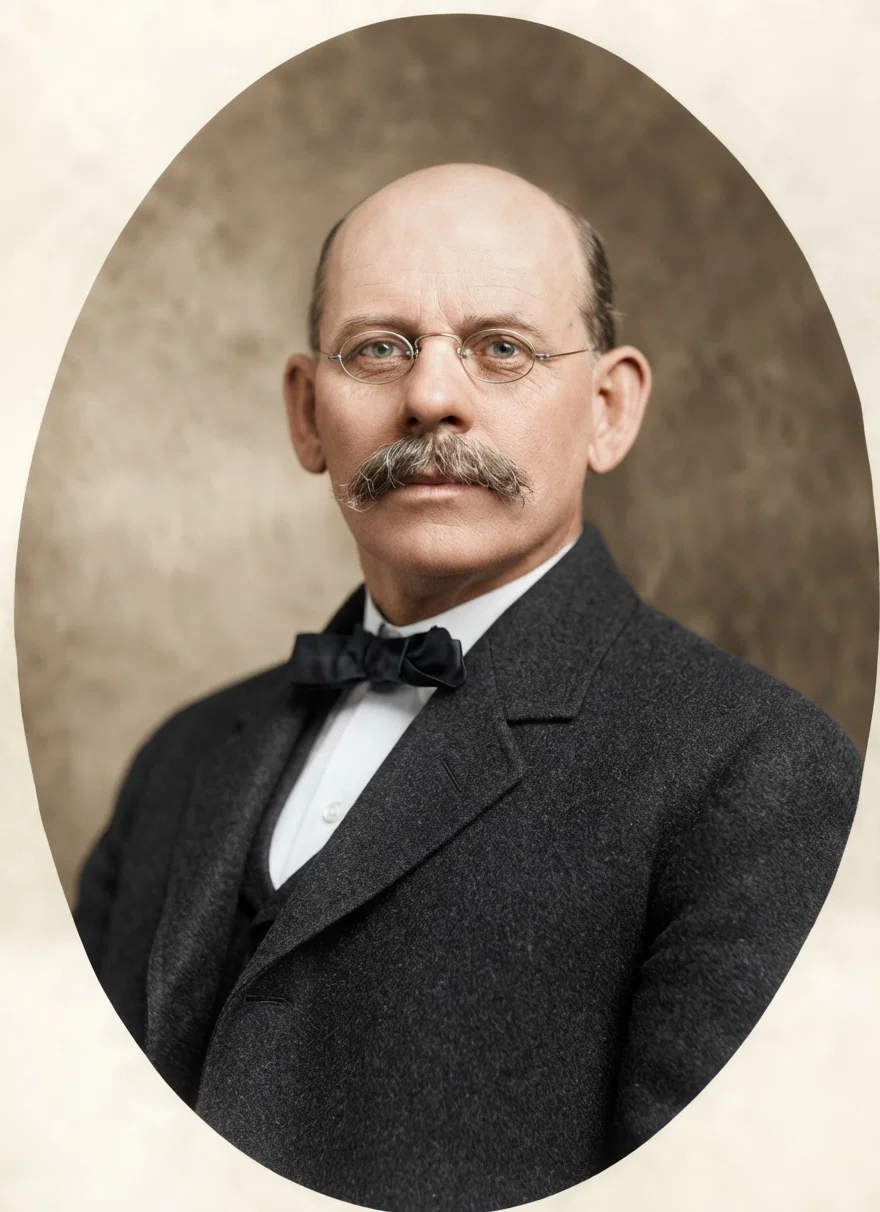
The Rev. J. S. Martin, General Superintendent of the National Reform Association
Where had stood the principle of the separation of Church and State, that would put the principle of the union of religion and State, or Church and State, which is unquestionably its equivalent.
Where the nation had refused to require a religious test as a qualification for any office or public trust, that would put the religious test as the chief test.
Where the nation refuses to permit the taxation of the general public for the promulgation of any religion or the support of teachers of religion, that would put the opposite principle, the teaching and support of religion by public taxation.
The nation establishes the equality of all its citizens without respect to their religion; but the National Reform régime would establish the superiority of the professor of religion by requiring the non-religious citizen to yield a certain amount of homage to religious practises in which he has no faith.
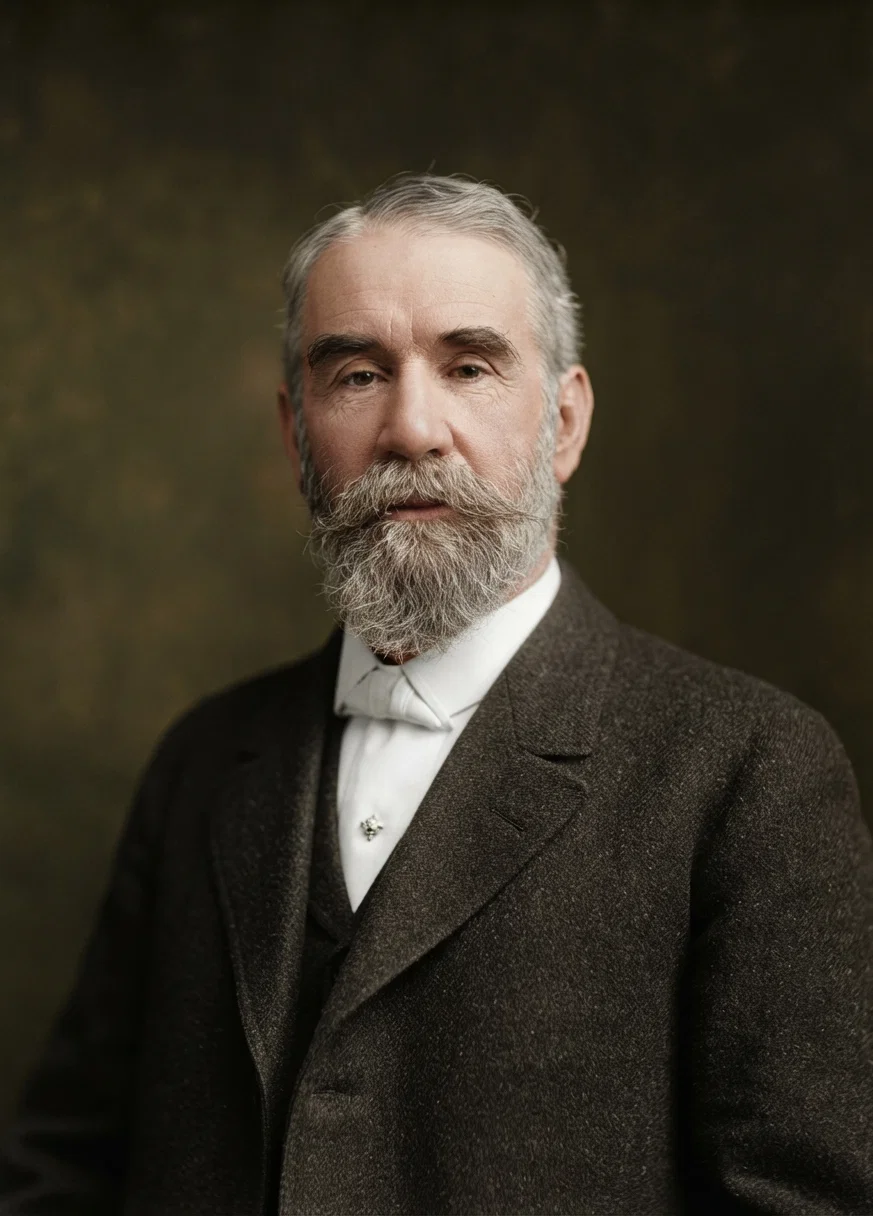
The Rev. S. F. Scovel, President of the National Reform Association
The nation, in refusing to Congress authority to establish any religion, makes it impossible for the nation constitutionally to enforce any religious ordinances; but the Government as remodeled in harmony with National Reform purposes, would require, among other laws, a law penalizing honest labor on the day which that transformed nation would select as its sabbath, and make liberty in the matter of religious belief and practise a thing of the past, outlawing conscience, making of religion a legal formalism, and instituting again the spiritual tyranny of the Dark Ages.
All in the Principles
This is not all "nominated in the bond," is not openly declared; but it is all in the principles espoused by that organization and its supporters, as truly as the chick is in the egg or the tree in the acorn. Dr. J. S. Martin, general superintendent of the association, in answering questions at the close of an address at Winona Lake, Indiana, in August, 1909, stated unequivocally that the no-religious-test guarantee of the National Constitution ought to be modified. The purpose of that organization to accomplish that modification was plainly expressed also in the program adopted at the World's Christian Citizenship Conference held in Philadelphia, Pennsylvania, November 16-20, 1910.
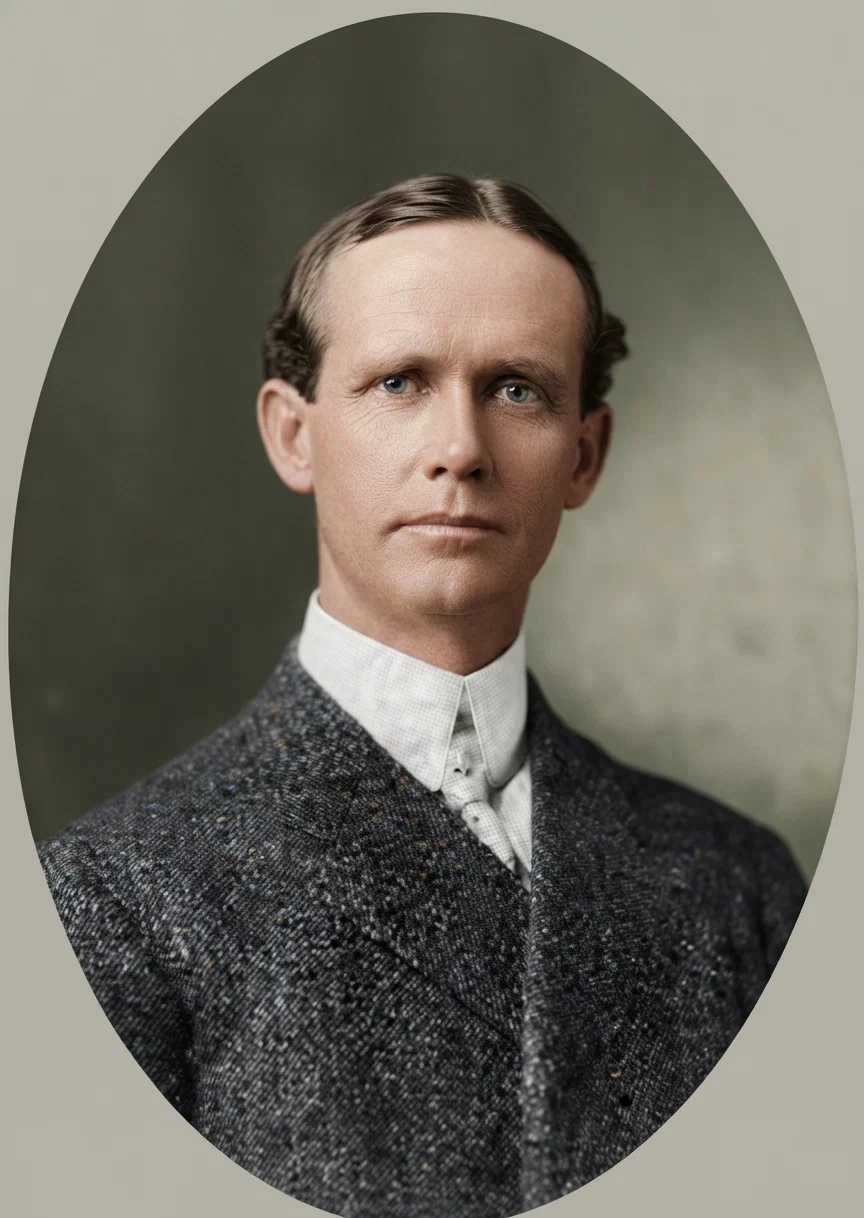
The Rev. John Royal Harris, a prominent National Reformer and Presbyterian Pastor of Philadelphia
It is perfectly apparent that should the purpose of the National Reform Association, as expressed in its constitution and preamble, ever be accomplished in this country, a national religion would be established, and laws regulating religious concernments would be as constitutional as laws relating to the tariff and interstate commerce. But when a nation legislates on religious things, it invades the realm of conscience, the citadel of the soul; and the distressful history of the Dark Ages and of the American colonies ought to be a sufficient warning as to what is involved in that. In view of what the Reformation did in bringing men from the darkness and misery of soul bondage, and in view of the further step and the fuller accomplishment in this country in freeing conscience from the penalties of law, the success now attending that disintegrating propaganda is marvelous and alarming.
The Working Out of Right Principles
The nation, since the adoption of the first amendment to the Constitution, has stood more squarely upon the Christian principles of civil government than any other nation in the world. It has done this without making any declaration of purpose to be Christian, or to favor one sect or religion above another. It has done this because it has made no such declaration, but in religion has left every individual free to follow the dictates of his own conscience. It has sought to guarantee to every inhabitant the greatest personal liberty consistent with the equal rights of all,—a thing it could never accomplish if it attempted to exercise jurisdiction over the souls of men.
The people are now asked to choose between a nation professing Christianity and scourging the bodies of men to save their souls, and a nation making no such profession and practising no such unchristian barbarities.
Referring to the lack of the acknowledgment of God and of religion in the Constitution, the Hon. George Shea, chief justice (Continued on page 9)5
America and Religious Liberty
(Continued from page 4)
of the Marine Court of New York, declares that the principles of Holy Writ were “not less understood, not less manifest, not less reverenced and obeyed, because not formulated by legislation.”—“Nature and Form of the American Government,” page 66. It is worthy of note in this connection that the constitution of the Confederate States of America did contain such an acknowledgment of Deity as the National Reform Association proposes for the National Constitution, and that its existence ceased in less than five years in spite of such a talisman.
Now, in State after State, branches of the National Reform Association are being formed; and one of the chief purposes of the organization’s existence is being espoused in every State in the Union. Wherever a law is demanded enforcing a sabbath upon the people, there a principle of the National Reform Association is being promulgated; and wherever that demand is acceded to, the people who urge it are accepting the principle of a union of Church and State, and the principle that the State is at liberty to legislate in the realm of religion. As that is the principle which dominated the Dark Ages and made them dark, it is to be hoped that Americans will rally to a defense of the principles of religions and civil liberty contained in the great American Bill of Rights—the Constitution of the United States.