Our London Letter

3%

Pacific Press Publishing Association · Mountain View, California · Feb 27, 1912

FromSigns of the Times, Vol. 39, No. 9.

Read the full edition

Our London Letter

By Our Own Correspondent
DURING the past three months Sir Edward Grey has been the most prominent figure in our public life. He stood to the front with his celebrated speech on England's relations with Germany, and for this utterance he received general applause. Since then, however, the plaudits have died away, and their place has been taken by unmistakable murmurs of displeasure. A loud clamor comes from certain sections of the Liberal Party for the resignation of their foreign secretary, on the ground that he has grievously compromised our national honor and dignity by the humiliating —

Alliance with Russia

It is said that Germany — our one great antagonist in Sir Edward's eyes — was doing us good rather than harm by her attitude in the affair of Morocco; that she was standing up for the general interest of all the nations that had commerce with that country; but that Russia, regardless of the good name of her devoted ally, is now dragging us unwillingly into the most shameful transactions. The outcry grows out of the situation in Persia. There we and Russia are mutually pledged to maintain Persia's integrity, yet Russia is obviously determined to seize a large part of the northern half of the country, and we are afraid to take up a firm attitude of protest for fear of driving our offended ally into the "single orbit" of German diplomacy. Indignant protests are uttered in this country against the violence done to Persia's nationhood, but Russia shows no disposition to moderate her avarice for territory.

Mongolia Adds to the Flame

Following the ruthless attack on Persia come the tidings that our Russian ally has virtually taken possession of Mongolia, and here again the sympathies of many people in England are outraged by the advantage taken of China's hour of internal struggle.
For this revival of the insatiable ambitions we used to associate with Russia in the days before the Japanese war, Sir Edward Grey is held responsible, since without our too complaisant sympathy, it is said, Russia would never have dared to act so tyrannically. One of our journals, the "Nation," writes thus ironically of the debt that Russia owes to our foreign secretary, once the most admired of English statesmen:
We have sometimes criticized Sir Edward Grey for his reticence, but this justice we must do him: On the rare occasions when he speaks, there is usually some phrase that reveals his mind. Six years ago he announced the necessity of restoring Russia to her position as a great power. The process is complete, and we may now view the policy in all the beauty of its articulated and organic perfection. We lent her money, and she destroyed her Duma. We exchanged royal visits, and she hanged her Socialists three a day. We guaranteed with her the integrity of Persia, and she occupied a third of it this month. We feted her parliamentarians, and she has destroyed the liberties of Finland.
We included her with France and Japan in the quadrangular group that assured the inviolability of Chinese territory. She has taken Mongolia this week. The symptoms of returning health and reviving appetite have followed each other with reassuring rapidity. At length one may pronounce the patient whole. Not since Tsushima has she eaten so heartily, and the credit of the cure belongs entirely to Downing Street. Left to her resources, she must have languished in a feverish decline, or adopted some regimen incomparably less robust.
Her army is still the force that was broken at Mukden; her new fleet is still on the stocks, delayed by periodical inquiries into the financial scandals which attend it. Her best brains are still in Siberia, when they are not in prison. If the Novoe Vremya can announce "that the long paralysis is gone, and Russia is herself once more," her gratitude is entirely due to the English practitioner who has achieved the cure and disdained to take a fee. The recrudescence of Russia must rank as the chief of Sir Edward Grey's achievements.
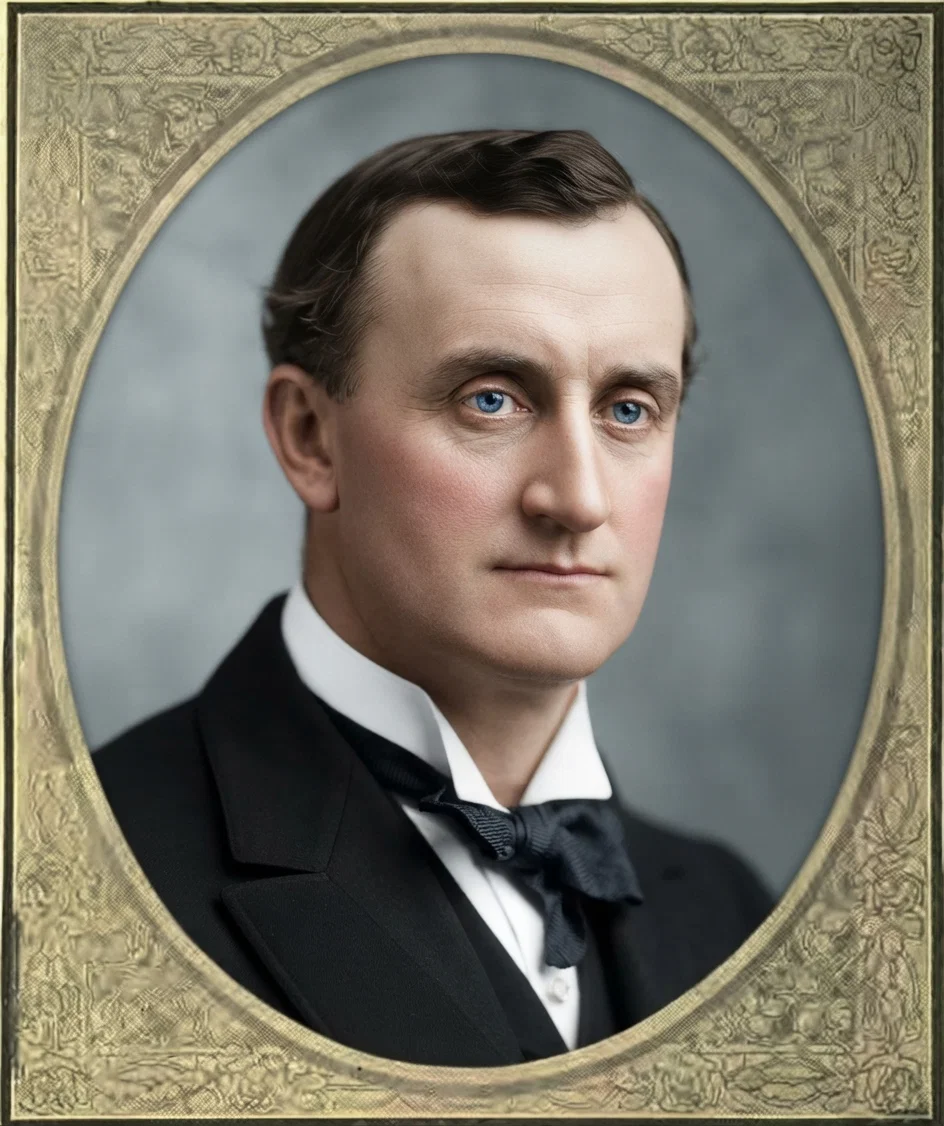
Whether the agitation against Sir Edward Grey will succeed, remains yet to be seen. He still commands powerful support, and is regarded in some quarters as the next prime minister.
From the "Illustrated London News"
Sir Edward Grey
From the "Illustrated London News" Sir Edward Grey

German Election Surprise

The newspapers have all been assuring us for months that the German people were absolutely incandescent with a blazing wrath against England for its interference in the Moroccean question, and that the forthcoming elections in Germany would see the Socialists swept aside by a national party, determined greatly to increase the fighting strength of the fatherland and so make instant preparation for wiping out in blood the wrongs endured at our hands. It is therefore a matter of some astonishment to find that the German people have been apparently too taken up with their own social problems to spend much thought on us. Their late election has resulted in a largely increased representation of the Socialistic element, which now forms the strongest party in the Reichstag. The laboring classes in this country are reading into the returns of the German election the message from their comrades in that land, "You settle with your war-loving capitalists, and we will do the same with ours."

Significance of France's New Government

France has also had a change of government, owing to uncomfortable disclosures in connection with the negotiations with Germany over the surrender of the French Kongo. There are therefore new elements to be reckoned with in both parties to the Morocco settlement.
Such continual changes seem to come much closer home to us of recent years than they used to do. We are no longer able to view serenely from a distance the game that is played on the chess-board of Europe, but are now ourselves a part of the game. Lord Rosebery sees in this fact cause for uneasiness. In a recent speech he said:
For good or evil, we are now embraced in the midst of the continental system. That I regard as perhaps the gravest fact in the later portion of my life. We are, for good or for evil, involved in a continental system the merits of which I do not pretend to judge, because I do not know enough about it, but which, at any rate, brings us into conflict with armies numbering millions, and our own forces would hardly be counted in such a war, as they stand at present.
"The present situation," Lord Rosebery added, "may lead us into one of the greatest Armageddons which sometimes ravage Europe, and which would be greater than any war that we have known since the fall of Napoleon."

Continental Armies and Conscription

This language means that in Lord Rosebery's judgment we can not expect to become a part of the continental system without having to raise an army on the continental scale. Conscription is drawing visibly and steadily nearer. The public mind has almost been prepared for the change, and it would take but little more to bring about the evil thing itself. Moral considerations are to a large extent thrown overboard by all the great nations. Everybody can see to-day that until the present fever of unrest subsides, truth and honor are likely to find little place in the policies of the great powers. Fighting strength is about all that counts. Says one of our leading weeklies:
The morals of the jungle are now so universal in the world which we used to call civilized when we were still at school, that one is somewhat at a loss for a criterion to apply to the exploit of this week. Russia has taken Mongolia, and one merely realizes that the hunt which began in Morocco is now world-wide. From Fez to Tripoli, from Tripoli to Persia, and from Persia to the farthest confines of China, the eye ranges, alarmed but not surprised, over the most comprehensive display of the predatory instinct which the world has furnished in modern times. One is conscious of absurdity in applying any ethical judgments to these performances.

In the Language of the Prophets

The outlook is certainly a gloomy one in Europe at the present time. Not a few only, but almost every one of the publicists of the day, comments upon the fact. Mr. W. T. Stead sums up his review of the situation this month with the Scriptural words, "Men's hearts failing them for fear." Who can doubt that the coming of the Lord is at the doors when the signs promised by the Saviour are thick about us, and even the children of this world deliberately describe the time in which they live by the very language employed by the prophetic word to designate the last days?
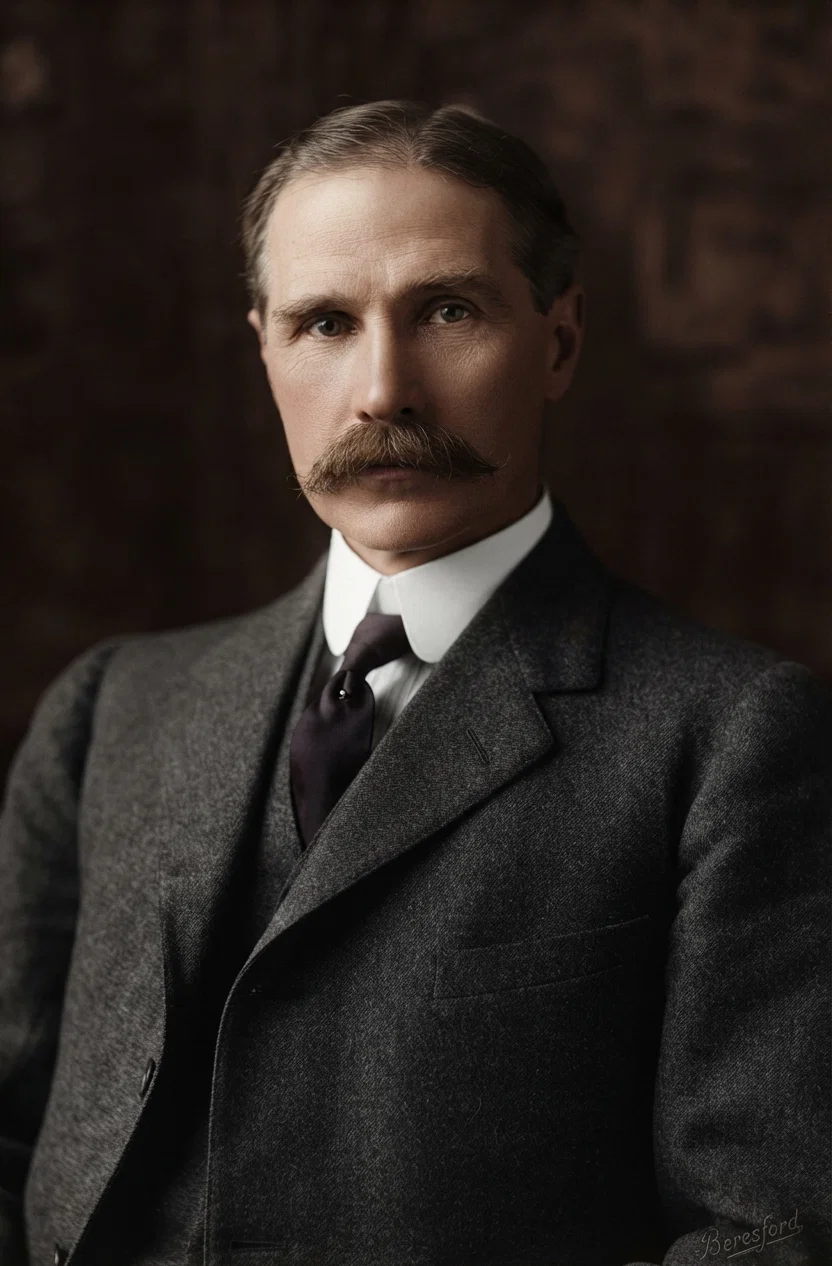
In Mr. A. J. Balfour, the Conservative Party has lost a distinguished and able leader. The succession was expected to fall on Mr. Walter Long or Mr. Austen Chamberlain; but as neither of these would give way to the other, a third man, Mr. Bonar Law, was elected. Mr. Law has come to the front of recent years as the ablest champion of tariff reform, which in this country means the imposition of taxes in aid of home industries. The same destiny that always interposed betweenMr. Joseph Chamberlain and the premiership, seems to dog the footsteps of his son.

The Labor Conflict

The unrest in the labor world continues. Every little disturbance now brings with it threats of a general stoppage and consequent wide-spread unsettlement. By a vast majority of votes, the colliers of this kingdom have decided to strike for the establishment of a minimum wage; and unless some terms of settlement can be devised before the strike notices expire, in the course of the next few weeks, every industry in the country will be crippled.
Already heavy losses are sustained through the serious rise in prices on account of the mere prospect of a strike. In the cotton industry 300,000 Lancashire operatives have been out on strike to compel the masters to get rid of all weavers who were not members of a union. The masters refused to yield on this point, and a long suspension of work appeared to be in prospect, when the government official who has been placed at the head of the new department for the purpose of dealing with strikes, Sir George Asquith, managed to reconcile the contending parties, and the work-people returned to the mills on a truce which will postpone any further outbreak for a year, provided the terms of peace are adhered to.
It is on this last point, however, that compacts are more and more frequently proving valueless. If the work-people are dissatisfied with the conditions of peace made on their behalf, they take matters into their own hands and go out again on strike, without waiting to consult their executive.
In the present instance the union representatives had agreed that there should be a truce over the question of employing non-unionists for the next six months; but when the work-people returned to their places and saw the few non-unionists in their midst again, they refused to resume work, and set up such an uproar that the non-unionists left the mill in disgust, declaring that they would starve before they would go back to experience such treatment. Thus, after all the prolonged discussion over terms, and notwithstanding the assurances given by their leaders, the unionists by their own lawless conduct gained their point.

A Busy Parliament

Parliament is to have a busy time this year. Both the Welsh Disestablishment Bill and the measure giving home rule to Ireland are to be put through side by side. Outlines of the former bill have now been made public. The State Church in Wales is to be not only disestablished, but disendowed, being allowed, however, to retain all gifts made to it since the year 1662, the famous year when 2,000 ministers of the Church of England were ejected from the benefices for refusing to obey the Act of Uniformity. Thus time brings its revenges. The present incumbents of Welsh benefices are to retain a life interest in the revenues of the church, and the church will also keep its cathedrals and churches. Welsh bishops will no longer sit in the House of Lords.

The Home Rule Bill

Strong feeling is manifested in Belfast and the province of Ulster against the expected Home Rule Bill. Mr. Winston Churchill is booked to speak in that city next week, but the Orangemen of Belfast are determined that he shall not speak, as announced, in the Ulster Hall, which they profess to regard as sacred to their principles. They protest that they will fight rather than submit to the domination of an Irish Catholic Parliament. The Orange element in the province of Ulster will undoubtedly prove the greatest difficulty in the way of a Home Rule Bill, but the feeling in that part of Ireland to-day is not nearly so strong as it was in Mr. Gladstone's time. A fair proportion of the electorate of Ulster is nationalist in its sympathies. [Mr. Churchill spoke under great difficulties, protected by the police. Ed. S. of T.]

Y. M. C. A. Work

An interesting event in the religious world has been the attempt to raise half a million dollars by American lightning methods for the new Y. M. C. A. in London. This association has put up a magnificent building in a prominent position, and Mr. Ward, organizer of many successful money-raising campaigns across the Atlantic, came over here to help secure the money to pay part of the debt on the building. After a strenuous, well-advertised effort, extending over twelve days, only two thirds of the sum had been raised. Mr. Ward would not admit defeat, but declared that under the circumstances a great triumph had been achieved; he found that the Y. M. C. A. in this country was laboring under the disastrous imputation of being associated with old-fashioned religion. When it gets rid of that stigma, he thinks it will be able to secure all the money it wants. He is doubtless right. If the world is asked to pay huge sums, naturally its tastes must be consulted. One of the first results of Mr. Ward's visit, it is expected, will be the addition of billiard-tables.
The Right Honorable Bonar Law
W. T. BARTLETT.