Editorial

5%

Pacific Press Publishing Company · Oakland, California · Dec 16, 1897

FromSigns of the Times, Vol. 23, No. 49.

Read the full edition

Editorial

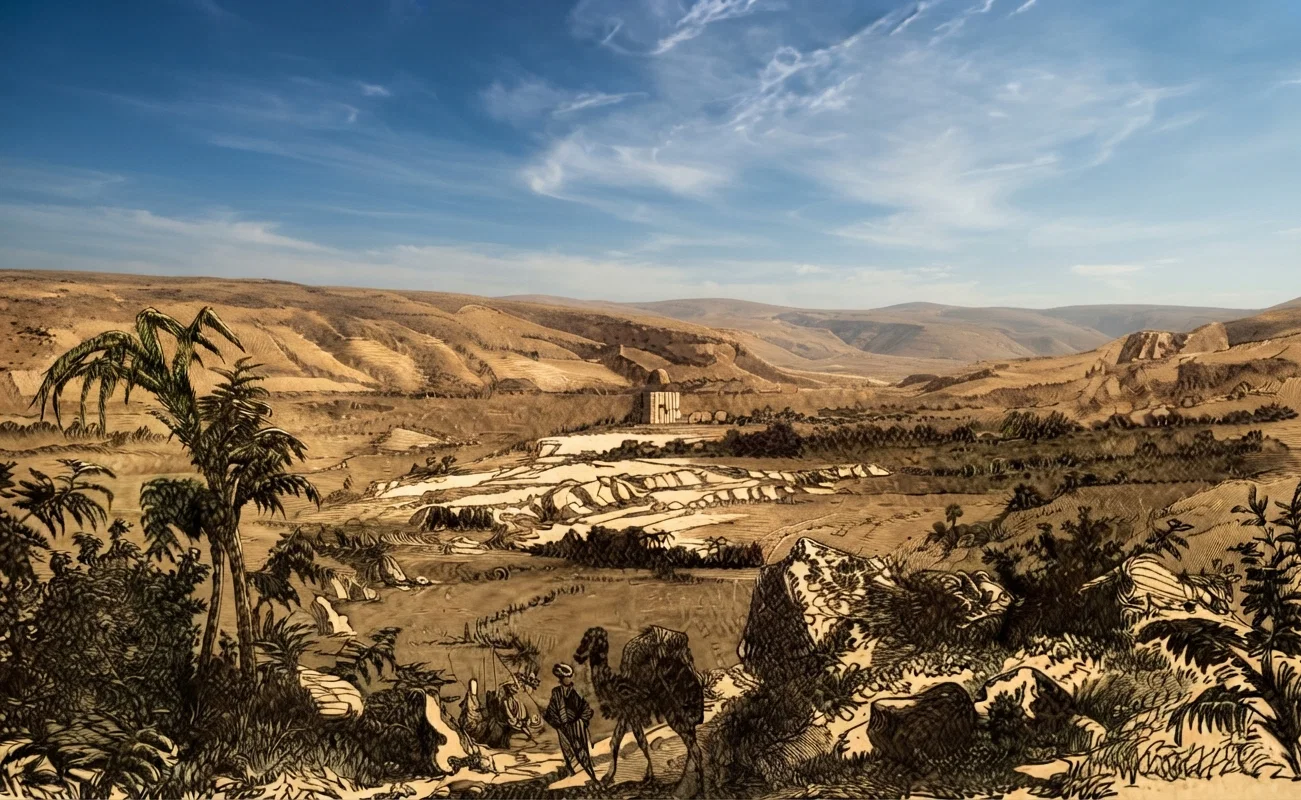
VALLEY AND SITE OF THE ONCE GREAT CITY OF JERICHO.

THE LESSON OF HISTORY.

WE do not say "a lesson from history," but "the lesson of history;" for there is but one great lesson that history teaches, yet it is one that is rarely learned. For want of learning this one lesson, thousands study history in vain; while he who learns the simple, fundamental lesson in the beginning of his study will read to profit.
The reason why the lesson referred to is so almost universally overlooked, is that the records that are usually studied are so crowded with details that the mind becomes confused; history becomes to the student only a mass of occurrences, in which the underlying truth taught by history is lost. This melancholy result would be avoided if people began at the right place to study, taking the simplest history first, and afterwards that which is more complex.
"The fear of the Lord is the beginning of wisdom," and the Bible is the book that teaches the fear of the Lord; therefore it is in the Bible that the beginning of wisdom is found. It is the simplest book in the world, as would naturally be expected of a book of beginnings. That it is really a book very easy to be understood is proved by the fact that it teaches the way to the kingdom of heaven, which can be entered only by children and those who become like children. See Matt. 18:3. It is manifest, therefore, that the Bible can be understood by children, and consequently must be an easy book. It is the first book that children should study. But the whole of a thing is found in the beginning, just as the entire tree exists in the germ; and so the Bible, which teaches the fear of the Lord, contains the sum of knowledge, and may be studied by the gray-haired sage as profitably as by the little child. Its treasure of wisdom is inexhaustible.
Now for the first lesson in history. Very fittingly it begins with the beginning of time. We will quote a page from it, that we may clearly see what is the simple, underlying truth taught by all history since the creation of the world. Here it is:—
"This is the book of the generations of Adam. In the day that God created man, in the likeness of God made he him; male and female created he them; and blessed them, and called their name Adam [man], in the day when they were created.
"And Adam lived an hundred and thirty years, and begat a son in his own likeness, after his image; and called his name Seth. And the days of Adam after he had begotten Seth were eight hundred years; and he begat sons and daughters; and all the days that Adam lived were nine hundred and thirty years; and he died. And Seth lived an hundred and five years, and begat Enos; and Seth lived after he begat Enos eight hundred and seven years, and begat sons and daughters; and all the days of Seth were nine hundred and twelve years; and he died. And Enos lived ninety years, and begat Cainan; and Enos lived after he begat Cainan eight hundred and fifteen years, and begat sons and daughters; and all the days of Enos were nine hundred and five years; and he died." Gen. 5:1-11.
Thus the record continues to the end of the chapter, of which we have quoted just one-fourth; yet the chapter covers a period of more than fifteen hundred years.
What is the sum of history, as indicated by this record?—Simply this, that men lived a certain number of years, and then died. With this first historical record agree all that have been written since. The whole of history can be summed up in the words, They lived so long, and then they died. The one thing, therefore, that history teaches, is that a man's life is but "a vapor, that appeareth for a little time, and then vanisheth away." Yet this is the thing that is seldom thought of in reading history. Histories written by man are so filled up with accounts of the incidentals,—the things that people did, the battles fought, the kingdoms established, the cities built, and the "glory" gained,—that unless one has begun the historical study with the primary book, that is, the Bible, he will lose the main point.
Secular history alone is sufficient, if one reads it thoughtfully, to show that it is utterly impossible for man to inherit or possess this earth. "For he seeth that wise men die, likewise the fool and the brutish person perish, and leave their wealth to others." Notwithstanding this, "their inward thought is, that their houses shall continue forever, and their dwelling-places to all generations; they call their lands after their own names." "This their way is their folly; yet their posterity approve their sayings." Ps. 49:10-13. Each generation imagines that it is an exception, and that its works will stand forever.

Dull Students.

People refuse to learn the lesson of history, even when it is spread out before their eyes. They contemplate the ruins of former greatness, and even while looking, think: "How superior we are to those who lived in ancient times! Their empires have all vanished, and their cities are in ruins, or utterly extinct." But that is most short-sighted reasoning. A man might as well claim to have more vitality than Methuselah, because he himself is living, in the possession of full strength, while Methuselah, forsooth, is long since dead! Ah, but wait, my friend, and time will tell a different story! You will not have to wait one-tenth the length of Methuselah's life, to learn your mistake.
So with the works of which men boast today. There are now no structures so massive and so strongly built as many of those of ancient days, that have been utterly demolished by time. Should time continue as much longer as it has already continued, nothing would remain of the glory of the nations that now inhabit the earth, and their names would be forgotten unless some new fragments of stone preserved them.
No; this earth is under a curse, and unsuited for man's dwelling-place. He can not live here. Do what he will to establish himself here, he is swept away before he can fairly get a foothold. The princes of the earth are brought to nothing, and the judges of the earth are as vanity. "Yea, scarce are they planted, scarce are they sown, scarce hath their stock taken root in the earth, when He bloweth upon them, and they wither, and the whirlwind taketh them away as stubble." Isa. 40:24, R. V., margin.
In spite of this truth, which is the one thing that is most evident in all history, men go on planning for this earthly life as tho they were to abide here forever. We see them throwing all their energies into a political struggle, fiercely excited over the outcome, scrambling and crowding for a place, perfectly oblivious to the fact that even if they succeed in attaining the coveted object, it will disappear, and they themselves with it, almost as soon as they seize it. So it always has been, and so it will be to the end. They are as foolish as children on the beach, fighting over the sand houses they have built, which the next wave of the incoming tide will wash away, and at the same time overwhelm them.
What hope is there then for man?—Much, every way. Go back again to our elementary history book. Surely we can believe a record that is so conclusively substantiated by facts. That tells us that God created the earth not in vain, but to be inhabited (Isa. 45:18), and that when he had completed it, with man upon it, he "saw everything that he had made, and, behold, it was very good." Gen. 1:31. The critical eye of the Master could detect no flaw, nothing that could be improved, either in man or his condition and circumstances. Everything was as good as God himself could make it.
Now we know that "whatsoever God doeth, it shall be forever." Eccl. 3:14. Therefore the condition of the earth in the beginning, and of man as well, is that which is to be through all eternity. God did not place men on the earth in order that they should be swept away like gnats, but that they should possess it forever, even forever and ever. Therefore, "we, according to his promise, look for new heavens and a new earth, wherein dwelleth righteousness." 2 Peter 3:13. Even tho there were not many repetitions of that promise, the fact that in the beginning God placed a perfect man in a perfect earth, is sufficient promise that so it will be. In view of this promise we can confidently say, even when about to be carried away by the flood of time, "God will redeem my soul from the power of the grave; for he shall receive me." Ps. 49:15.
Who will begin to read history from the beginning, and learn the great lesson that it teaches? Who will cease to chase the bubble that collapses as it is grasped, and begin to plan and live as citizens of a better country, that is, an heavenly, whose capital is a city that has everlasting foundations, whose builder and maker is God? E. J. W.