AFTER leaving Antioch, ten years after his conversion, to enter upon his mission to the Gentiles, the apostle Paul spent more time in Ephesus than in any other city. At that time Ephesus was the chief town of Asia, the Roman province which comprised the southwestern portion of Asia Minor. Ephesus was situated on the seaboard, and for several centuries had been the leading city and port of Ionia.
While Cyprus was noted for the worship of Ashtaroth, and Rhodes for the worship of Helios, the colossal sun-god, Ephesus was famous for the worship of Diana. So noted was the city as a shrine of this goddess that even Alexander the Great desired to share the honor of rebuilding her temple. In the days of Paul it could be said that "all Asia and the world" worshiped Diana. Acts 19:26. When Paul visited Ephesus, it was a Mecca of the heathen; and that the Ephesians were fanatical in their worship is evident from the speeches of Demetrius and the town clerk. Ephesus was also a center where Greek art and culture reached its highest point. In such a city Paul came to preach the Gospel. Surely, the enemy had all the advantage that it is possible for him to gain. Yet Paul preached boldly that "they be no gods which are made with hands."
After this long stay at Corinth, Paul came to Ephesus, and found about a dozen disciples that had not received the Holy Ghost, having been baptized only with the baptism of John. When they were baptized in the name of the Lord Jesus and received the Holy Ghost by the laying on of hands, they began to speak with tongues and prophesy. After Paul had taught in the synagog three months, and was driven out by the Jews, he taught about two years in the school of Tyrannus; and "all they which dwelt in Asia heard the word of the Lord Jesus, both Jews and Greeks. And God wrought special miracles by the hands of Paul; so that from his body were brought unto the sick handkerchiefs and aprons, and the diseases departed from them, and the evil spirits went out of them." Acts 19:10-12.
It was also here that the seven sons of Sceva, the Jewish priest, undertook to drive out evil spirits in the name of Jesus, and were torn by the spirits for their presumption. The people of Ephesus were noted for their practise of witchcraft and sorcery; and doubtless these sons of Sceva, like Simon, thought that they had found something out of which they could make capital. The remarkable work of the Lord through Paul, broke the spell in which the Ephesians had so long been held. "Many of them also which used curious arts brought their books together, and burned them before all men; and they counted the price of them, and found it fifty thousand pieces of silver. So mightily grew the word of God and prevailed." Verses 19, 20.
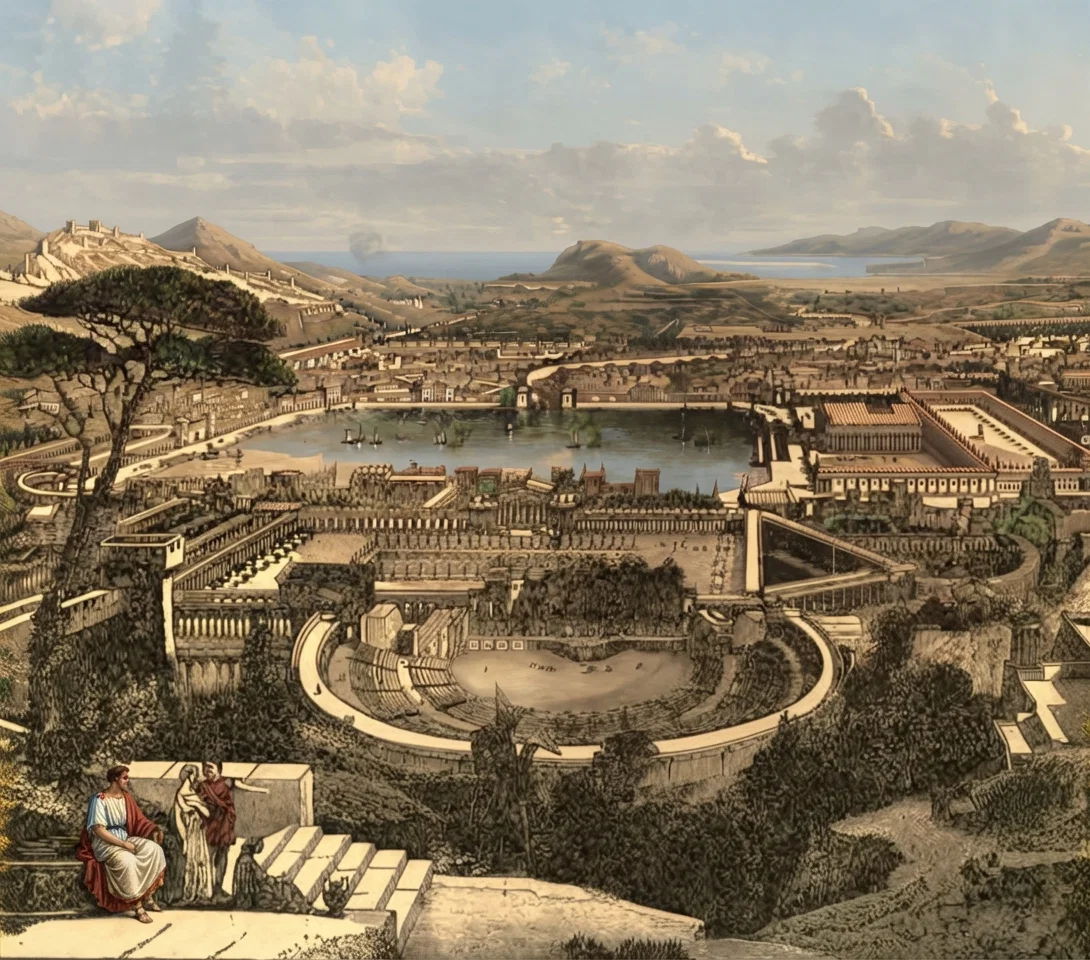
Headed by the Greek silversmith Demetrius, the craftsmen, who had much gain by making silver shrines for Diana, saw what the outcome of Paul's work would be; and, not being able to refute his work with fair argument, resorted to the more convenient method, still pursued, of playing on the superstition and fanaticism of the people; they raised a great uproar, "and the whole city was filled with confusion." Having caught and taken to the theater two of Paul's companions in labor, this public place was soon filled with a shouting rabble "and the more part knew not why they were come together." When the Jews tried to put forward one of their number to make an explanation, as soon as the people observed that he was a Jew, "all with one voice about the space of two hours cried out, Great is Diana of the Ephesians." It was with great difficulty that the town clerk could still the storm. It is only when one has been in the east and witnessed the excitable temperament of the people that he can fully appreciate this scene.
EPHESUS, THE THEATER IN THE FOREGROUND. ACTS 19.
After the uproar ceased, Paul left, and, so far as the New Testament record goes, did not return again, but wrote to the Ephesians that most remarkable epistle; and when on his way to Jerusalem for the last time, he stopped at Miletus, also a chief city of Asia at that time, situated about forty miles south of Ephesus, and called thither the elders of Ephesus and gave them final words of instruction and admonition. This interview reveals still other particulars about Paul's work at Ephesus, showing how ardently and faithfully he labored, and that he worked with his own hands for his support. His parting with the elders of Ephesus is the most touching of which we have any account in the New Testament; for the apostle knew "that they should see his face no more."
The great city of Ephesus has long been in ruins. There is but a small village near its site. Of late, much money has been expended by the British museum in excavating the ruins; some of the theaters, large squares, and public buildings are laid open to view. The city was built around a large rocky bluff several hundred feet high and several miles in circumference. The ruins testify to the former importance of the city. The arm of the sea which formed the harbor and which reached to the city walls is filled with sand, so that the sea is now several miles from the ruins.
But while this city is in ruins, the Gospel which here made such a stir in Paul's day has lost none of its primitive vigor, and it is again to be preached in power in this region. Through the medium of the Sabbath-school donations all our people are invited to take a part in sending the truth to this field. If our labors and sacrifices are as ardent and great as those of Paul's in behalf of this field, it will again be stirred by the Gospel. And so may it be. H. P. H.