SOUTH AMERICA

5%

Pacific Press Publishing Company · Oakland, California · Jun 28, 1899

FromSigns of the Times, Vol. 25, No. 26.

Read the full edition

SOUTH AMERICA.

THIS vast country consists of eleven different countries, and has an area of 6,800,000 square miles and a population of 33,342,700. The area is about twice as large as that of the United States.

Colombia.

The republic of Colombia occupies the most northwestern part of South America. It has an area of 502,000 square miles, and a population of 3,500,000. Bogota, the capital, has a population of 110,000, and is also the largest city. The laws respecting liberty of worship are somewhat conflicting, and so liberty to engage in evangelical work is a little uncertain. Among the people generally there is a strong feeling favorable towards liberty, light, and progress. What they need is light which the Gospel alone can give.

Venezuela.

This republic is situated in the northern portion of South America, and its area is 594,165 square miles and the population is 2,550,385. Caracas is the capital and has 70,466 inhabitants. Cojedes has 85,678 and is the largest city. The chief industries of the country are cattle raising and agriculture. Many of the inhabitants are composed of friendly Indians, whose hearts are ready to receive the truth.

Guiana.

This country is in the northeastern part of South America, and is divided into British, Dutch, and French Guiana. British Guiana has an area of 76,000 square miles and the population numbers 284,847. The area of Dutch Guiana is 46,072 square miles and has a population of 57,000. The area of French Guiana is 46,890 and the population numbers 25,596.

Brazil.

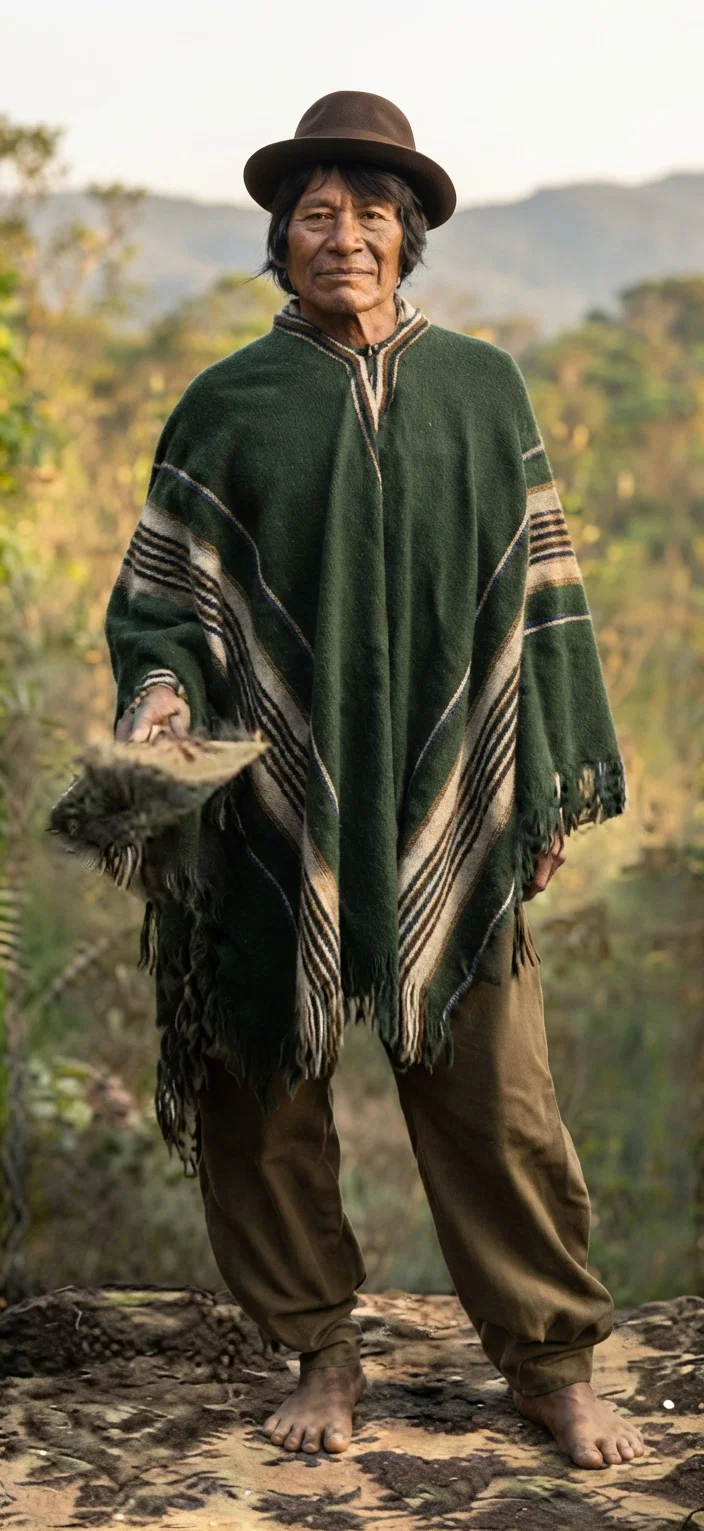
This republic is by far the largest of South America, and has an area of 3,219,000 square miles, and a population of 14,000,000. It is divided into twenty States. With the exception of some of its conquered territory and the foreigners who have moved into the country, the language that is spoken is the Portuguese, and therefore it is a separate mission field. The people, and especially foreigners who till the soil, are making a fair living. The country, because of its mountains and valleys and torrid location, is most beautiful, and its resources are almost unlimited. About forty natives have embraced the truth and were baptized, but generally our work has progressed mostly among the Germans. Brother W. H. Thurston, the chairman of the Brazil Mission Committee, writes as follows:
A Native of Southern Brazil.
"RIO DE JANEIRO, Brazil. "TO THE GENERAL CONFERENCE ASSEMBLED JAN. 25, 1899—Greetings: As we look over the work in Brazil and see what the Lord has done in the short time since laborers were called here to proclaim the message of peace, we feel to exclaim, 'God hath wrought wonderfully.' The work began May, 1893, with one colporter, and others have been added from time to time until we now have ten. About ten thousand dollars' worth of books have been sold, and the Lord has blessed these seeds of truth to the salvation of souls. Aside from the colporters, we have two ministers, one Bible worker, and four teachers, and our little flock now numbers a few over four hundred. "Our tithes are increasing year by year, amounting to over sixteen hundred dollars last year. One hundred and thirty were baptized during the year, and forty-six of these were Brazilians. The work is onward in Brazil, and all are of good cheer. We have many perplexing questions to grapple with, and some things are so void of justice that much patience is needed; but the Lord is our strength, and in Him we trust. In our finances we deal in six different moneys, and all have to be computed into money that has no basis. One month fifty cents may be worth seventy cents, and next month only thirty cents. "Our needs are many, and we are waiting on the Lord to supply them all. We are trying to develop workers here as fast as possible, but we would be pleased to have another German teacher, a man of age and experience in Bible teaching, as well as secular work. The medical missionary work should soon be started in Brazil, and for this work a man of faith and courage is needed. "Now, brethren, if the Lord calls any of you to go to Brazil and labor, please do not be afraid to come to this beautiful, warm country. Be sure that the Lord desires you to go, then come, and the Lord will never leave or forsake you, even in Brazil."
I met Brother Stauffer in Rio on my way here, and he told me to tell the brethren that he was glad to be in Brazil to labor for the Lord. Brother Thurston I also met there. The city of Rio de Janeiro has about 600,000 inhabitants. I traveled in Brazil for four months a few years ago, and enjoyed great blessings. Brother Thurston says that the "medical missionary work should soon be commenced," but a little delay may only be for the lack of means and suitable workers. There is vice and disease enough in Rio to most urgently call for medical missionary work immediately.

Chile.

This country is twenty-eight times longer than its average breadth, and has an area of 290,741 square miles. This includes what it has acquired by conquest from Bolivia and Peru. The national language is Spanish. In 1875 it had a population of 2,065,000. It has increased fifty per cent. since, so that now it has 3,300,000 inhabitants. The chain of the Cordilleras pass through its whole length and leave it but very little arable land, but it has great mineral wealth. The arid, rainless districts yield silver and copper in great abundance. In the north are the deserts of Antofagasta and Tarapaca, which yield nitrate of soda, borax, sulphur, and other minerals. The Lord has also some jewels in this country, and we have already seen the result, to some extent, of earnest missionary work. Brother Baber has reported from time to time, and we know that many are rejoicing in the truth. God has truly a people there that shall shine as bright jewels in His crown.

Bolivia.

This country is situated in the western portion of South America, and has an area of 567,240 square miles and a population of 2,330,000. Agriculture and mining are the chief occupations. It is a little difficult to say what the actual population is, for recent statistics give several of the most important cities only about half of what they were said to have thirty years ago. Potosi, at the census of 1611, had 160,000 inhabitants. Now it is reckoned to have 23,000. Bolivia is very rich in minerals—gold, silver, copper, tin, and lead. The products are chinchona, caoutchouc, amber, indigo, and many others of great value. The development of the country has taken a new start since the war, and it is rapidly increasing in importance. The inhabitants are divided into three classes—the descendents of the Europeans, the mixed class, and the pure Indians. Spanish is the official language, butQuichua is spoken not only by the Indians, but also by the mixed race, and even the whites. There are about 3,000,000 of these Indians. They have not been taught to read. Near the Lake Titicaca the Aimara takes the place of the Quichua language.

Peru.

This country is in the western part of South America, and has an area of 500,000 square miles. The population is 2,971,844. Fifty-seven per cent. of the settled population are domesticated Indians. These till the land and tend their flocks of alpacas, sheep and llamas. About twenty-three per cent. are mixed race, who speak both Spanish and Quichua or Aimara, while the Indians speak Quichua or Aimara alone. The entire coast of Peru, with the exceptions of the valleys watered by the mountain streams, is rainless and waste. Wherever irrigation can be applied the soil is capable of producing almost anything. A great variety of potatoes and barley are cultivated in the region called Sierra. That is in the valleys and mountains. On the eastern watershed, the vast region called in Peru the Montana, is a great extent of tropical forest abounding in caoutchouc, Peruvian bark, and many other products waiting to be gathered. The gold and silver mines are famous. Progress toward religious liberty has been made, and it seems that the time has come to preach the Gospel in Peru more or less undisturbed. Some of the clergy have been admonished by the authorities to so indoctrinate their members that their faith will not be destroyed by reading the Bible. The Lord has so arranged that all nations offer opportunities to preach the last warning message to the people.

Ecuador.

This republic is in the northwestern part of South America, lying to the south of Colombia. The area is 120,000 square miles and has a population of 1,200,000. Quito, the capital, has a population of 40,000, and Guayaquil, the chief seaport town, has 50,000 inhabitants. Liberty of worship is now offered by a new constitution that has been proclaimed. The vast Spanish territory has been wrenched from old Spain and doors have been opened for the last great work to be done among the children of men. By continued defeats the Spanish people have also been humbled and now is the time to lead them to the Saviour. F. H. WESTFALL.