Studies in Daniel

5%

Pacific Press Publishing Association · Mountain View, California · Dec 19, 1911

FromSigns of the Times, Vol. 38, No. 50.

Read the full edition

Studies in Daniel

God the Revealer—Divine Fore-view of the Kingdom of Man

Questioning the Text
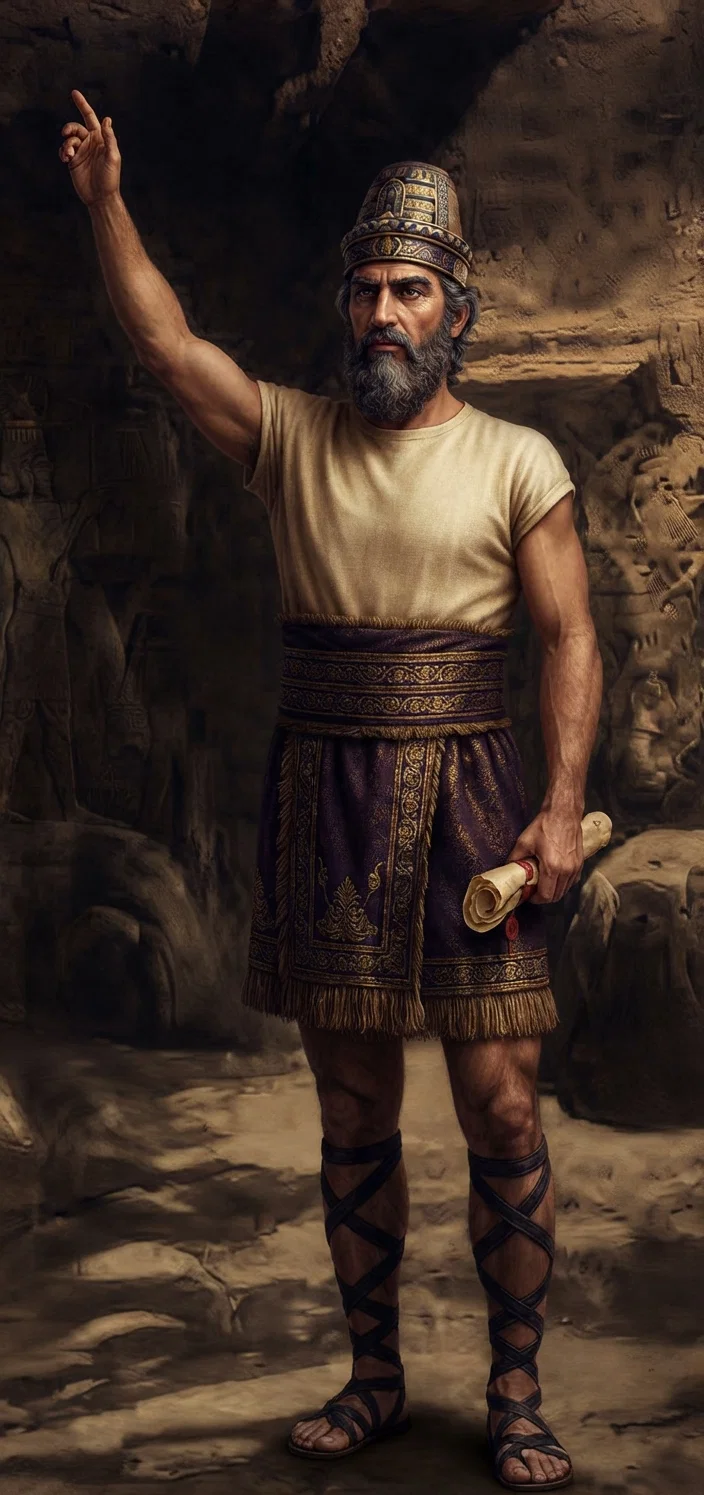
1. What experience did Nebuchadnezzar, king of Babylon, have in his second year? And in the second year of the reign of Nebuchadnezzar, Nebuchadnezzar dreamed dreams; and his spirit was troubled, and his sleep went from him. Verse 1. Note 1.
2. What steps did the king take to learn the meaning of his dream, and with what result? Then the king commanded to call the magicians, and the enchanters, and the sorcerers, and the Chaldeans, to tell the king his dreams. So they came in and stood before the king. And the king said unto them, I have dreamed a dream, and my spirit is troubled to know the dream. Then spake the Chaldeans to the king in the Syrian language, O king, live forever: tell thy servants the dream, and we will show the interpretation. Verses 2-4. Note 2.
3. What was the result of his negotiations with the wise men? The king answered and said to the Chaldeans, The thing is gone from me: if ye make not known unto me the dream and the interpretation thereof, ye shall be cut in pieces, and your houses shall be made a dunghill. But if ye show the dream and the interpretation thereof, ye shall receive of me gifts and rewards and great honor: therefore show me the dream and the interpretation thereof. They answered the second time and said, Let the king tell his servants the dream, and we will show the interpretation. The king answered and said, I know of a certainty that ye would gain time, because ye see the thing is gone from me. But if ye make not known unto me the dream, there is but one law for you; for ye have prepared lying and corrupt words to speak before me, till the time be changed: therefore tell me the dream, and I shall know that ye can show me the interpretation thereof. The Chaldeans answered before the king, and said, There is not a man upon the earth that can show the king's matter, forasmuch as no king, lord, or ruler, hath asked such a thing of any magician, or enchanter, or Chaldean. And it is a rare thing that the king requireth, and there is no other that can show it before the king, except the gods, whose dwelling is not with flesh. For this cause the king was angry and very furious, and commanded to destroy all the wise men of Babylon. So the decree went forth, and the wise men were to be slain; and they sought Daniel and his companions to be slain. Verses 5-13. Note 3.
4. What occurred in the case of Daniel? Then Daniel returned answer with counsel and prudence to Arioch the captain of the king's guard, who was gone forth to slay the wise men of Babylon; he answered and said to Arioch the king's captain, Wherefore is the decree so urgent from the king? Then Arioch made the thing known to Daniel. And Daniel went in, and desired of the king that he would appoint him a time, and he would show the king the interpretation. Then Daniel went to his house, and made the thing known to Hananiah, Mishael, and Azariah, his companions: that they would desire mercies of the God of heaven concerning this secret; that Daniel and his companions should not perish with the rest of the wise men of Babylon. Then was the secret revealed unto Daniel in a vision of the night. Then Daniel blessed the God of heaven. Daniel answered and said, Blessed be the name of God forever and ever; for wisdom and might are His. And He changeth the times and the seasons; He removeth kings, and setteth up kings; He giveth wisdom unto the wise, and knowledge to them that have understanding; He revealeth the deep and secret things; He knoweth what is in the darkness, and
the light dwelleth with Him. I thank Thee, and praise Thee, O Thou God of my fathers, who hast given me wisdom and might, and hast now made known unto me what we desired of Thee; for Thou hast made known unto us the king's matter. Therefore Daniel went in unto Arioch, whom the king had appointed to destroy the wise men of Babylon; he went and said thus unto him: Destroy not the wise men of Babylon; bring me in before the king, and I will show unto the king the interpretation. Verses 14-24. Note 4.
5. What was God's purpose in giving the dream? Then Arioch brought in Daniel before the king in haste, and said thus unto him, I have found a man of the children of the captivity of Judah, that will make known unto the king the interpretation. The king answered and said to Daniel, whose name was Belteshazzar, Art thou able to make known unto me the dream which I have seen, and the interpretation thereof? Daniel answered before the king, and said, The secret which the king hath demanded can neither wise men, enchanters, magicians, nor soothsayers, show unto the king; but there is a God in heaven that revealeth secrets, and He hath made known to the king Nebuchadnezzar what shall be in the latter days. Thy dream, and the visions of thy head upon thy bed, are these: as for thee, O king, thy thoughts came into thy mind upon thy bed, what should come to pass hereafter; and He that revealeth secrets hath made known to thee what shall come to pass. But as for me, this secret is not revealed to me for any wisdom that I have more than any living, but to the intent that the interpretation may be made known to the king, and that thou mayest know the thoughts of thy heart. Verses 25-30. Note 5.
6. What did the king dream? Thou, O king, sawest, and, behold, a great image. This image, which was mighty, and whose brightness was excellent, stood before thee; and the aspect thereof was terrible. As for this image, its head was of fine gold, its breast and its arms of silver, its belly and its thighs of brass, its legs of iron, its feet part of iron, and part of clay. Thou sawest till that a stone was cut out without hands, which smote the image upon its feet that were of iron and clay, and brake them in pieces. Then was the iron, the clay, the brass, the silver, and the gold, broken in pieces together, and became like the chaff of the summer threshing-floors; and the wind carried them away, so that no place was found for them: and the stone that smote the image became a great mountain, and filled the whole earth. This is the dream; and we will tell the interpretation thereof before the king. Verses 31-36. Note 6.

Note and Comment

1. IN THE SECOND YEAR. That is, in the second year of Nebuchadnezzar's sole reign. As before noted in these articles, he reigned with his father, Nabopolassar, for two years. On the death of Nabopolassar he succeeded as sole ruler in the kingdom, and it was in his second year as sole ruler that the events related in this chapter occurred. HE DREAMED A DREAM. As will hereafter appear, Nebuchadnezzar was no ordinary ruler. He had a thought beyond himself and his present surroundings. He seems himself to have appreciated that he was an empire builder. He thought of posterity as well as himself. He seems to have been a devout worshiper of the gods of Babylon. He had received his crown from great Marduk, or Merodach, the god of Babylon. He must build not only for himself, but for all the future, in honor of the god. He believed in the supernatural; therefore God came to him in a dream, and in such a dream that the king was thoroly aroused by it, so much so that he could not sleep, in thinking upon its meaning.
2. THE MAGICIANS, THE ENCHANTERS, THE SORCERERS, AND THE CHALDEANS were four different classes of wise men who pretended to knowledge of the supernatural. The magicians were the practisers of magic. Many of them were doubtless wise, shrewd men. This was especially true in Persia, and it was from the magicians (the term perhaps used in its generic sense) that men came from the East to find the infant Saviour. (Matt. 2:1.) The enchanters, or astrologers perhaps, professed to foretell the future, the good and the evil, by the reading of the stars. As far back as the sixteenth century before Christ there are regular astrological tables, with their meaning of good or evil, made for Sargon the king of Agane. The sorcerers held pretended communication with the dead — mutterers of incantations. The Chaldeans were doubtless the most noted class among them. They were not simply inhabitants of Chaldea, but they were THE Chaldeans — the very best, the wisest, the most learned, the spokesmen, seemingly, of all the other parties, for they were the ones who addressed the king. I HAVE DREAMED. Evidently in the king's experience with the wily, crafty wise men, he had learned some lessons. They professed to be revealers of the will of the gods; he would test them. He asks them not simply to tell the meaning of the dream, but the dream. But the wise men ask for the dream. They had their certain rules, like the foolish dream books of the present time, and they would have made up an equivocal and uncertain answer from the forecasts in their dream book. This did not satisfy Nebuchadnezzar. He really felt that if they could give a right interpretation of the dream, they could tell the dream.
3. THE THING IS GONE FROM ME. The word translated "thing" means word, command, decree, and is so translated elsewhere, and given thus in the margin of the A.R.V. The thought, it seems to the writer, is not that the dream had gone from the king, but that he had given word that the dream itself must be told, as well as the interpretation. But the wise men plead again that he shall tell the dream. It would not be reasonable to suppose that after the king had said he had forgotten the dream, they would ask him to show the dream. That would be tantamount to saying that he had told a falsehood in saying that the dream was forgotten. But they could plead for mercy, and when he said that the word had gone from him that the dream must be told, they plead that he will honor his wise men by telling them the dream. He says to them, "I know . . . ye would gain time," because they saw that the word or command had gone forth. They want him to forget the decree that he has made, and they would fix up some kind of answer. But he then tells them how much that decree of his implies. If they would make known the dream, great honors would be given them; but if they did not make known the dream, they would be cut in pieces and their houses brought to naught. Brought to this crisis, they are forced to confess that they have really no knowledge of the future. First they plead for themselves, in saying that no ruler has ever asked such a thing; and secondly they declare that only the gods, whose dwelling is not with flesh, are able to foretell. This arouses the full wrath of the king, and he commands that they shall be destroyed. As Daniel was counted among the wise men, of course the decree would include him also. And yet it seems very evident indeed that when Nebuchadnezzar summoned the wise men, the wise men were careful that Daniel and his fellows should be left out. But when the decree of extermination was to go into effect, they saw that Daniel and his companions would be among those slain — perhaps the very first.
4. WITH COUNSEL AND PRUDENCE. There was not only honor and integrity with Daniel, as we have learned regarding his education, but there was wisdom and tact, and therefore he returned answer "with counsel and prudence" to the captain of the king's guard, and said, "Why is the decree so hasty?" — so urgent? And then Arioch told him the reason. Daniel asks the king to appoint him a time, and the king does so. He shows himself to be a reasonable monarch. Daniel asks a reasonable thing. He does not say, Tell me the dream; but, Give me a time to learn the will of God. Then follows counsel with his companions, and a prayer-meeting, and they plead with God that, for the salvation of His people and the good of His truth, the secret shall be revealed. And God revealed it in a vision of the night. The first thing that Daniel does is to acknowledge God's goodness and wisdom and power as one who changes times and seasons, removes kings and sets up kings, giving wisdom to the wise and knowledge to them that have understanding, and who reveals the deep and secret things, knows what is in the darkness, and with whom the light dwells. O, the marvelous lesson that God not only would have Nebuchadnezzar learn, but all rulers of all time, and He has given this record for that purpose. And therefore Daniel is able to tell the king's captain that he is ready. It was no matter of conjecture, of guesswork, with him; God had revealed it, and he knew that it was true.
5. ARIOCH BROUGHT IN DANIEL. With characteristic human selfishness, he wishes to get honor himself. "I have found a man," said he, when he had had almost nothing to do with it. He seems to be ignorant of the fact that Daniel had already come before the king, and that the king had recognized Daniel as one of the wise men. But this seems to be a thing over which the king himself has questioned: Is Daniel really able to do it? The young prophet frankly tells him that no wise men, enchanters, magicians, or soothsayers can show the thing to the king; there is only One who can do it — THE GOD THAT REVEALS SECRETS. He had before shown and demonstrated in his own life that the true educator of mankind is God, that the education which God gives is worth more than all worldly education. Now he is to demonstrate in the king's own experience that the God of the Hebrews, in His revelations and counsels, was superior to all the wisdom of all the wise men that the king could gather together from all his dominions. It is the God in heaven that reveals secrets. MADE KNOWN. There was a twofold purpose in the making known of that vision: first, that the king, who was desirous to know what would be in the kingdom of man, should learn the future; and secondly, that God's children of all time to come might understand what should be in the latter days. God honors those who desire to know His will; honors the ruler who longs to build for the welfare of his people, and who is willing to seek that he may learn; and therefore God wished to reveal to Nebuchadnezzar the future. But He reveals the future not simply for Nebuchadnezzar's time and day, but also the generations which are to come. Daniel wishes the king, however, to understand that that secret is not revealed to him for any wisdom that he has more than any living man, but God in His goodness had done it that the king might know.
6. THOU, O KING, SAWEST. The whole history of empire is compressed, by the prophet's description of the king's dream, into six verses — a marvelously comprehensive view of the history of the world given to Nebuchadnezzar, not simply because he was a worshiper of images — the thought is not that. God would reveal to him His view of the kingdom of man, and so He showed him the image of a man — not simply his own kingdom, but the great, dominant empires which would rule the world. [The meaning of the dream will be given in our next.]